"Painters, Van Gogh"
Social & External
The film approaches the work of the Greek artist Nikos Koniaris. The particular way in which the painter depicts human suffering is presented through a film - a hybrid of real recording and directed material. The grief, the sick body, is reflected in self portraits, portraits of dying strangers and paintings of dead models. The paintings, apart from his work, also express a different version of himself. All together contribute to the depiction of man as a "garment of pain".
Dedicated to the portrait work of Paul Cézanne, the exhibition opens in Paris before traveling to London and Washington. One cannot appreciate 20th century art without understanding the significance and genius of Paul Cézanne. Filmed at the National Portrait Gallery in London, with additional interviews from experts and curators from MoMA in New York, National Gallery of Art in Washington DC, and Musée d’Orsay in Paris, and correspondence from the artist himself, the film takes audiences to the places Cézanne lived and worked and sheds light on an artist who is perhaps one of the least known and yet most important of all the Impressionists.
Chuck Close, an astounding portrait of one of the world's leading contemporary painters, was one of two parting gifts (her second is a film on Louise Bourgeois) from Marion Cajori, a filmmaker who died recently, and before her time. With editing completed by filmmaker Ken Kobland, Chuck Close lives the life and work of a man who has reinvented portraiture. Close photographs his subjects, blows up the image to gigantic proportions, divides it into a detailed grid and then uses a complex set of colors and patterning to reconstruct each face.
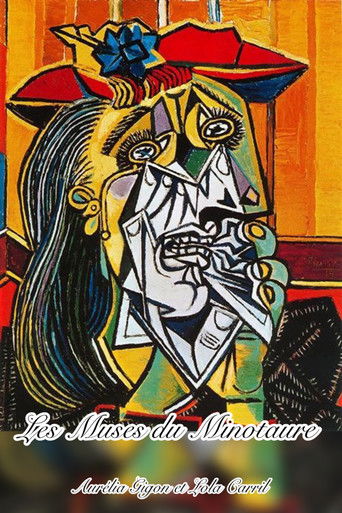
Cinema and painting establish a fluid dialogue and begins with introspection in the themes and forms of the plastic work of a woman tormented by the elongated specters, originating from her obsessions and nightmares.
TV-Documentary about the German painter Anselm Feuerbach
Few artist portraits give us the privilege of getting as close to the painter as if we had free access to his studio. Over a period of three years, Pepe Danquart got to accompany the painter Daniel Richter, watching him paint, negotiate with his gallerist, talk to his publisher and joke with fellow artist Jonathan Meese. Danquart interviews collectors, attends auctions and even visits record shops.
Mixing archival footage with interviews, this film celebrates one of Los Angeles's most influential painters and Chicano art activists from the 1970s.
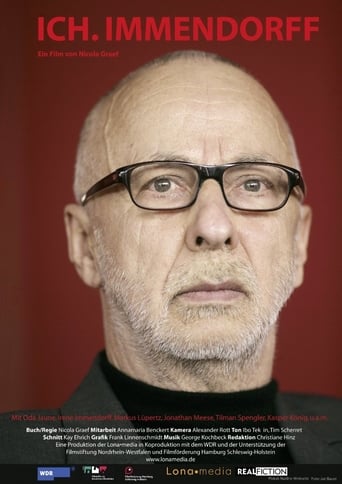
Documentary film about the painter and sculptor Jörg Immendorff who ranks among the most important German artists. The filmmakers accompanied Immendorff over a period of two years – until his death in May 2007. The artist had been living for nine years knowing that he was terminally ill with ALS. The film shows how Immendorff continued to work with unabated energy and how he tried not to let himself be restrained by his deteriorating health.
Bob Ross brought joy to millions as the world's most famous art instructor. But a battle for his business empire cast a shadow over his happy trees.
A unique documentary that follows artist Mark Waller and his family over 20 years. When Mark is diagnosed with a deadly Melanoma the fault lines in the Waller family erupt with surprising results.
A short documentary film about Czech-Bulgarian painter Ivan Mrkvička
Documentary film about Gothic painting and its representatives.
He was always busy making the absolute painting, one of Jaap Hillenius' sons says about his father. The artist who was killed in a car accident in 1999 steadily built, averse to conventions and trends, an autonomous oeuvre, indefatigably looking for the ultimate beauty. In daily life, he did so too; the artist wore out a throng of girlfriends, although in a sense he stayed faithful to both his wife and his only muse. He did not have the time to be a real father. 'With my father in the train with a Nuts bar', is the best childhood memory his sons have of him. Kees Hin tries to get closer to this complex man, who imputed a profoundly melancholic soul to himself, like the writer Marcel Proust, whom he admired so deeply. In three films, that play on the screen alongside each other and alternately appear in the foreground, via interviews - with people like his wife, his muse and his sons - and archive footage, we get to know more about his daily (emotional) life, his work and ideas.
A portrait of the visionary Dutch artist M. C. Escher (1898-1972), according to his own words, taken from his diary, his correspondence and the texts of his lectures.