Social & External
Self (Archive footage)
In Portugal, during the night of April 24-25, 1974, a peaceful uprising put an end to the last government of the Estado Novo, the authoritarian regime established in 1933 by dictator António de Oliveira Salazar (1889-1970), paving the way for full democracy: a chronicle of the Carnation Revolution.
"Africa Light" - as white local citizens call Namibia. The name suggests romance, the beauty of nature and promises a life without any problems in a country where the difference between rich and poor could hardly be greater. Namibia does not give that impression of it. If you look at its surface it seems like Africa in its most innocent and civilized form. It is a country that is so inviting to dream by its spectacular landscape, stunning scenery and fascinating wildlife. It has a very strong tourism structure and the government gets a lot of money with its magical attraction. But despite its grandiose splendor it is an endless gray zone as well. It oscillates between tradition and modernity, between the cattle in the country and the slums in the city. It shuttles from colonial times, land property reform to minimum wage for everyone. It fluctuates between socialism and cold calculated market economy.
Kibera is the largest slum area in Nairobi, and the largest urban slum in Africa. This documentary depicts three important problems; violence, drugs (miraa) and albinos killing.The 2009 Kenya Population and Housing Census reports Kibera's population as 170,070, contrary to previous estimates of one or two million people .Most of Kibera slum residents live in extreme poverty, earning less than $1.00 per day. Unemployment rates are high. Persons living with HIV in the slum are many, as are AIDS cases. Cases of assault and rape are common. There are few schools, and most people cannot afford education for their children. Clean water is scarce. Diseases caused by poor hygiene are prevalent.
Filmmaker Christopher Quinn observes the ordeal of three Sudanese refugees -- Jon Bul Dau, Daniel Abul Pach and Panther Bior -- as they try to come to terms with the horrors they experienced in their homeland, while adjusting to their new lives in the United States.
On November 1, 1954, the National Liberation Front of Algeria announced the war for the country's independence. France, colonizer since 1830, hastened to reinforce its military contingent in the four corners of the country and to prevent the advance of the rebels. A little Chaoui, born in a mountainous region of the country, sees his placid childhood collapse in the middle of a crossfire that he does not understand. The story, inspired by real testimonies, is constructed with images from the archives of the French army. From this apparently dissociated dialogue between image and word arises a sensitive homage to the memory that rests in the archives and to the ignored voice of its protagonists.
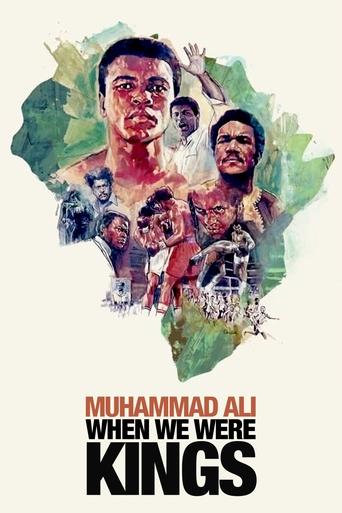
It's 1974. Muhammad Ali is 32 and thought by many to be past his prime. George Foreman is ten years younger and the heavyweight champion of the world. Promoter Don King wants to make a name for himself and offers both fighters five million dollars apiece to fight one another, and when they accept, King has only to come up with the money. He finds a willing backer in Mobutu Sese Suko, the dictator of Zaire, and the "Rumble in the Jungle" is set, including a musical festival featuring some of America's top black performers, like James Brown and B.B. King.
Across Africa, people are using soccer to lift themselves up, to create change in their communities and to pave the way for progress. "The Beautiful Game" follows several unforgettable Africans who are beating the odds on and off the pitch.
This film is the result of more than two years of work tracking down archive material and witnesses close to Mobutu in Africa, Europe and the U.S. More than 950 hours of footage have been seen by the world. Among the 104 hours selected as the basis for this film, are 30 hours of archives recently discovered in Kinshasa and never before released. Completing these exceptional documents, are more than 50 hours of interviews with those close to the former president and the events surrounding his reign, conducted by the director in Kinshasa, Brussels, Paris and Washington. Like a vast historical puzzle, this film pieces together the tragic history of a country, and its self-styled leader - the dictator, Mobutu Sese Seko, "King of Zaïre".
Many of them participated in the struggle for Algerian independence. There are "those who believed in heaven", priests, Christians committed against torture, friends of the "natives", there are "those who did not believe in it", communist activists, students, progressive intellectuals, others remained in this country because they could not imagine living anywhere other than in this land of all passions. They are European and chose to stay in Algeria after independence, most of them opted for Algerian nationality. The film is another vision of the history of Algeria from the end of the fifties to the present day, told by these Europeans filmed at home, or in the context of their activities, illustrated by unpublished archive documents.
Documentary edited from testimonies on the torture of people who experienced the war. Some witnesses were tortured by Jean-Marie Le Pen. These testimonies will help defend the newspaper Le Canard Enchaîné in court against Jean-Marie Le Pen for defamation. The film was shown in 1985 during the trial and some witnesses also came to support the newspaper. But the 1963 amnesty law protects the politician, prohibiting the use of images that could harm people who served during the Algerian war.
The film documents modern slave trade through a number of African countries, under dictatorship rule. The filming was conducted both in public places, and sometimes with the use of hidden cameras, for high impact scenes of nudity, sex, and violence - and a few surprises, as slaves made out of peregrins to Asia, and slave traders paid in traveller checks.
On October 4, 2018, France celebrated the 60th anniversary of the Fifth Republic. It is a republic born in the throes of the Algerian War and one which—from the day it was founded by General de Gaulle until the presidency of a very Jupiterian Emmanuel Macron—has been assailed as a “Republican monarchy” by partisans of a more assertive parliamentarian state. By revisiting the struggle of those who dared oppose the new regime — only to suffer a crushing defeat on September 28, 1958, when they were barely able to garner 20% of the vote against the constitutional text — this film shines a powerful new light on the origins of the Fifth Republic and its consequences for the next 60 years. It is a constitutional debate that planted the seeds for a complete upheaval of the French political landscape, on the left in particular, and set the country in motion toward what would be called the Union of the Left.
Through the commitment of Jean-Marie Tjibaou, this documentary traces the history of the march of the Kanak people in search of their independence. Between the raising of the Kanak flag in December 1984 and the funeral procession of the independence leader assassinated by one of his own on the island of Ouvéa in May 1989, there were years of struggles, dramas, palaver, hopes, of which Jean-Marie Tjibaou was one of the main actors. Will France be able to win the bet of a smooth decolonization of one of the last confetti of its empire? The authors meet the main protagonists of the "Tjibaou years", which were those of the Kanak people's dream of independence.
Frantz Fanon alone embodies all the issues of French colonial history. Martinican resistance fighter, he enlisted, like millions of colonial soldiers, in the Free Army out of loyalty to France and the idea of freedom that it embodies for him. A writer, he participated in the bubbling life of Saint-Germain with Césaire, Senghor and Sartre, debating tirelessly on the destiny of colonized peoples. As a doctor, he revolutionized the practice of psychiatry, seeking in the relations of domination of colonial societies the foundations of the pathologies of his patients in Blida. Activist, he brings together through his action and his history of him, the anger of peoples crushed by centuries of colonial oppression. But beyond this exceptional journey which makes sensitive the permanence of French colonialism in the Lesser Antilles at the gates of the Algerian desert, he leaves an incomparable body of work which has made him today one of the most studied French authors across the Atlantic.
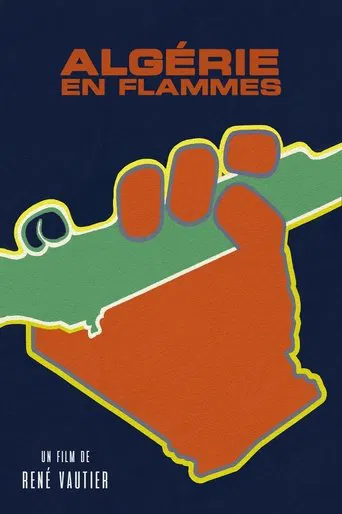
Resistance fighter under the occupation, committed to the FLN during the Algerian war, member of the Medvedkine group after May 1968 and defender of Breton autonomy, René Vautier was a committed filmmaker, author of an anti-colonialist work in which he denounces the repression, torture and racism. In 1983, René Vautier discovered, by the light of a flashlight, his films cut up and scattered at Fort du Conquet. Police also came to check the damage.
In 1971, after being rejected by Hollywood, Bruce Lee returned to his parents’ homeland of Hong Kong to complete four iconic films. Charting his struggles between two worlds, this portrait explores questions of identity and representation through the use of rare archival footage, interviews with loved ones and Bruce’s own writings.
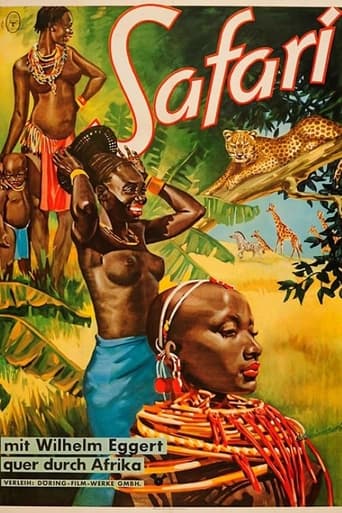
This film speaks of archaic peoples, their customs and mores, in an attempt to make the last snapshots of their traditional lifestyles before they are gone for good.
After participating in a séance, young Laura begins to behave strangely. Alarmed, her parents ask Father Olmedo, one of the few exorcists authorized by the Vatican to intervene in cases of demonic possession, for help.
With no means for defeating Godzilla Earth, mankind watches as King Ghidorah, clad in a golden light, descends on the planet. The heavens and earth shake once again as the war moves to a higher dimension.
Carter, who awakens two months into a deadly pandemic originating from the DMZ that has already devastated US and North Korea. He who has no recollections of his past finds a mysterious device in his head, and a lethal bomb in his mouth. A voice in his ears gives him orders to avoid getting killed and he's thrown into a mysterious operation while the CIA and North Korean coup chase him close.
With their most formidable foe vanquished, Inuyasha and his comrades begin returning to their everyday lives. But their peace is fleeting as another adversary emerges: Kaguya, the self-proclaimed princess from the Moon of Legend, hatches a plot to plunge the world into an eternal night of the full moon. Inuyasha, Kagome, Miroku, Sango and Shippou must reunite to confront the new menace.
Covert security company Vanguard is the last hope of survival for an accountant after he is targeted by the world's deadliest mercenary organization.
William Tell just wants to play cards. His spartan existence on the casino trail is shattered when he is approached by Cirk, a vulnerable and angry young man seeking help to execute his plan for revenge on a military colonel. Tell sees a chance at redemption through his relationship with Cirk. But keeping Cirk on the straight-and-narrow proves impossible, dragging Tell back into the darkness of his past.
Following his defeat by Master Ip, Cheung Tin Chi tries to make a life with his young son in Hong Kong, waiting tables at a bar that caters to expats. But it's not long before the mix of foreigners, money, and triad leaders draw him once again to the fight.
SNL alumnus and subversive master of late-night Seth Meyers comes out from behind the desk to share some lighthearted stories from his own life.
A zombie apocalypse threatens the sleepy town of Little Haven—at Christmas—forcing Anna and her friends to fight, slash, and sing their way to survival. In a desperate race to reach their loved ones, they soon learn that no one is safe in this new world, and with civilization falling apart around them, the only people they can truly rely on are each other.
When he is betrayed by a trusted friend, Mathayus must marshal all his strength and cunning to outwit a formidable opponent who will stop at nothing to unlock a supreme ancient power.
A young working girl with a blue-collar background is surprised when her new fiancé announces he is actually a prince of a small sovereign country in Europe. After the couple quickly takes off to spend the holidays at his family’s sprawling, royal castle, she must work hard to win over her disapproving and unaccepting future mother-in-law—the Queen—and find out if love truly can conquer all.
Pil, a little vagabond girl, lives on the streets of the medieval city of Roc-en-Brume, along with her three tame weasels. She survives of food stolen from the castle of the sinister Regent Tristain. One day, to escape his guards, Pil disguises herself as a princess. Thus she embarks upon a mad, delirious adventure, together with Crobar, a big clumsy guard who thinks she's a noble, and Rigolin, a young crackpot jester. Pil is going to have to save Roland, rightful heir to the throne under the curse of a spell. This adventure will turn the entire kingdom upside down, and teach Pil that nobility can be found in all of us.
Working in a ferry as a waiter, Ayzek, having a defect with his front teeth, dreams to get his front teeth fixed and to marry his girlfriend, Songül. The news gets out that the ferry company is turning over the management to a new one and the whole crew is to be interviewed. When the interviewer arrives on board, Ayzek’s world is turned upside down.
In Shirleyville, Vermont, during the sixties, sisters Merricat and Constance, along with their ailing uncle Julian, confined to a wheelchair, live isolated in a big mansion located on the hill overlooking the town, tormented by the memories of a family tragedy occurred six years ago. The arrival of cousin Charles will threaten the fragile equilibrium of their minds, haunted by madness, fear and superstition.
Maurice is a streetwise ginger cat who comes up with a money-making scam by befriending a group of self-taught talking rats. When Maurice and the rodents meet a bookworm called Malicia, their little con soon goes down the drain.
In the barrio of Oak Springs lives a strong and stubborn group of elderly friends who refuse to be gentrified. Their leader, Lupita, keeps them together as a community, a family. But little did they know, their beloved bingo hall is about to be sold to a much more powerful force than money itself.
Gary Hart, former Senator of Colorado, becomes the front-runner for the Democratic presidential nomination in 1987. Hart's intelligence, charisma and idealism makes him popular with young voters, leaving him with a seemingly clear path to the White House. All that comes crashing down when allegations of an extramarital affair surface in the media, forcing the candidate to address a scandal that threatens to derail his campaign and personal life.
A bookshop renowned for its rare works is mysteriously and filled with copies of a book entitled 1, which doesn't appear to have a publisher or author. The strange almanac describes what happens to humanity in a minute. A police investigation begins and the bookshop staff are placed in solitary confinement by the Bureau for Paranormal Research. As the investigation progresses, the situation becomes more complex and the book becomes increasingly well-known, raising numerous controversies. Plagued by doubts, the protagonist has to face facts: reality only exists in the imagination of individuals.
Two young women at a prestigious prep school are assailed by an evil, invisible power when they're stranded over winter break.
After saving the life of their heir apparent, tenacious loner Snake Eyes is welcomed into an ancient Japanese clan called the Arashikage where he is taught the ways of the ninja warrior. But, when secrets from his past are revealed, Snake Eyes' honor and allegiance will be tested – even if that means losing the trust of those closest to him.