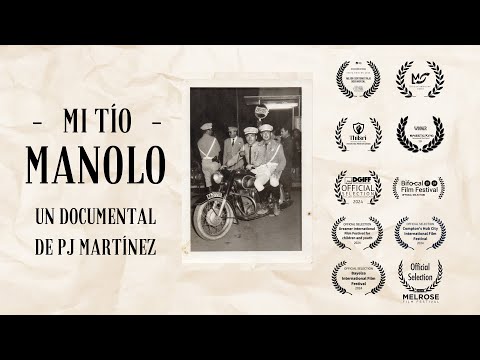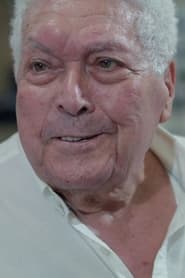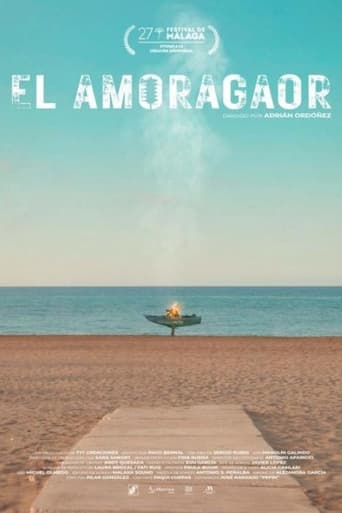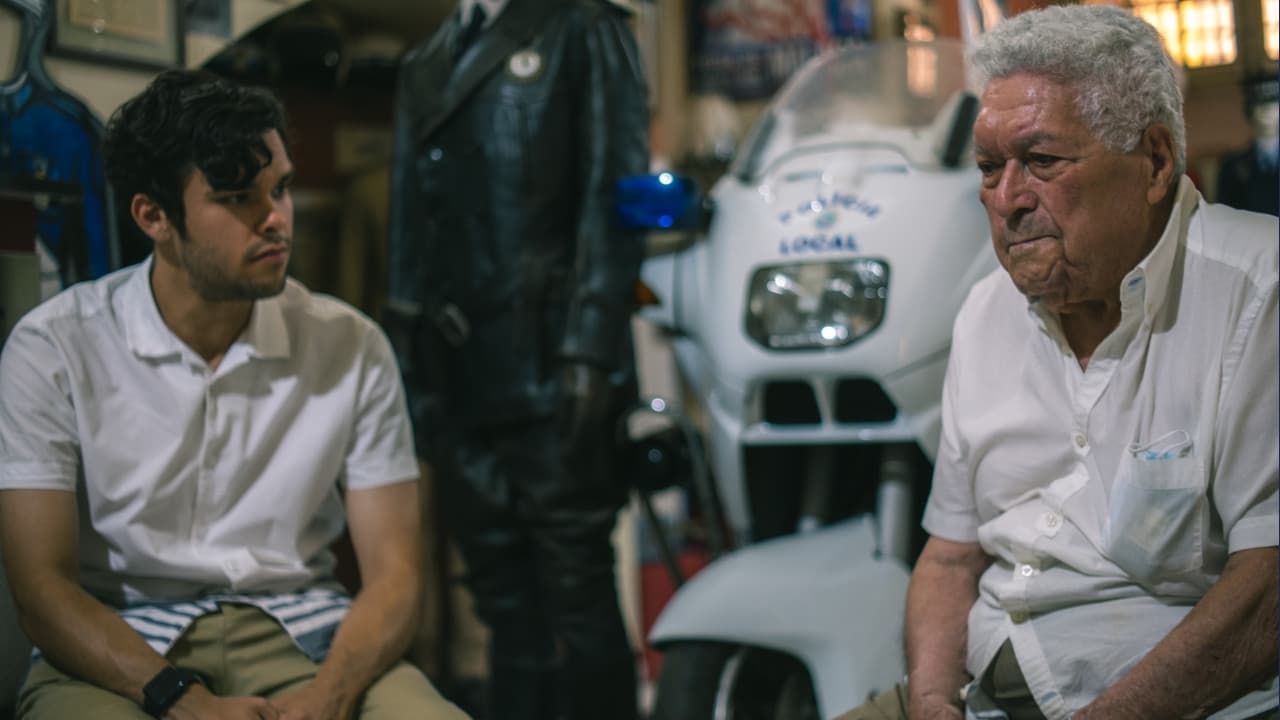
Focused on the experiences of Manuel "Manolo" Díaz Caballero, who was a local police officer in Malaga for more than 30 years, his memories of those years are the subject of this documentary.
Social & External
Self
Stone Street documents the life and experiences of a Trinidadian diaspora family and their enduring connection to the long standing family home in Port of Spain. Through the intersecting journeys of this extended and extensive family, the filmmaker explores themes of home, belonging and identity in a life defined by the fragmentary nature of a migratory Caribbean culture. This experimental documentary combines a lyrical first person voice with a family archive of home made audio visual artifacts, interviews and events. As the documentary explores the fragmentary nature of Caribbean identity, it simultaneously celebrates the fragments of domestic memorializing found in home movies, videos and photographs. Stone Street uses these various forms to evoke the experience of a complex and diverse Caribbean and Caribbean diaspora identity.
Award-winning French writer Christine Angot goes on a business trip to Strasbourg where her father lived before dying several years ago. It is the city where she met him for the first time at the age of 13, and where he sexually abused her over the following years. His wife and children still live there. Angot takes a camera and knocks on the doors of her family to push them to clarify their attitudes to her father’s crime that stretched over so many years. A cinematographic journey that challenges social norms and family perspectives in dealing with incest.
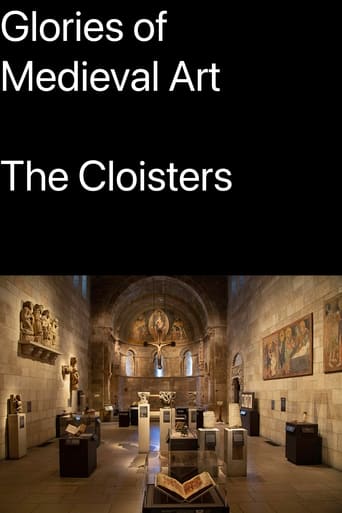
Philippe de Montebello, Director of The Metropolitan Museum of Art from 1977 to 2008, guides viewers through The Cloisters, pointing out Romanesque and Gothic architecture and artwork, beautiful tapestries, and the diverse species in the gardens. He outlines the history of the building and it's many influences and highlights significant works of art in the collection. It was produced in 1989 by The Metropolitan Museum of Art's Office of Film and Television.
Originally produced in 1997 on the threshold of the Third Millennium of the Christian Era, and in celebration of the Jubilee of the Year of Our Lord 2000, The Vatican Museums was the culmination of three years of research and filming, the collaboration of thirty-two scholars and historians from around the world, a crew of forty directors of photography, operators, and lighting technicians, state-of-the-art digital cinematography, lighting, animation, and computerized editing, and the work of a famous composer with original performances by master musicians. Now available on DVD for the first time, this historic three-disc collection features seven hours of magnificent documentary film that illuminates and chronicles the great journey of the human spirit. Here then is the world's most spectacular and sacred repository of art, history, and faith.
The director explores the birth origins of actress Merle Oberon, traveling to Tasmania and India in search of the truth, but her quest ultimately results in probably more questions than it answers.
Shifting Paths explores one family's resilience during the 1933 boycott of Jewish businesses in Frankfurt, Germany. This film traces the loss of a family-owned pharmaceutical company and how a once banned chamomile product, Kamillosan, has survived today with few knowing anything of its history.
Eliza Dushku takes on her homeland of Albania.
The documentary brings new philosophical statements by Dona Estamira and portrays her relationship with her friends who inhabit the Jardim Gramacho Sanitary Landfill, in Rio de Janeiro.
Two men, the hint of a sofa corner and a pile of letters. Using minimalist means, the film tells the story of two brothers caught between exile in a foreign country and resistance in the underground. It takes us back to the time when the revolution seized power in Iran and tells of life between the fronts. Daniel Asadi Faezi sketches the story of his father and his brothers - based on correspondence that has lain in the cellar for 30 years.
Stuck in a creative rut, filmmaker Gilda Pourjabar returns to Iran, her homeland, to talk with her brother Siamak, an illustrator based in Tehran. This encounter raises questions about their relationship to Western popular art, as they grew up in a culture that the current political regime describes as “westoxicated.” This documentary uses playful animations by Siamak, inspired by Franco-Belgian comics and rock concert posters, superimposed on archival footage of the most recent popular uprisings in Iran to become a logical collaboration for these artists who shared a record collection as children. Together, they examine how art slips through the cracks of repression to light the rebellious sparks in the hearts of young people.
No profession, no say, no freedom of expression. Life as a prince consort is not exactly pleasure taxing. No constitution ascribes any function to the husband of a queen. Nowhere does it say what he must or must not do. A life in the shadow of the crown. Can that go well?
Tony Palmer directs this 1970 documentary about Scottish bass player and former Cream member Jack Bruce. The film tracks Bruce's life from his childhood in the Gorbals to the height of his fame with Cream and beyond.
Kekaiulu Hula Studio follows the Proclaimed Hula Halau of the same name, showcasing their twist on what the real reason for hula is and what life as a dancer in the halau is really like. Something previously unseen in the public eye.
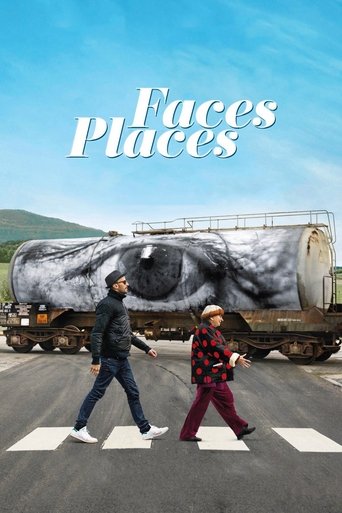
Director Agnès Varda and photographer/muralist JR journey through rural France and form an unlikely friendship.
A portrait of the life and career of Robert Downey Sr. (1936-2021), the visionary and fearless US filmmaker — father of actor Robert Downey Jr. — who in the sixties and seventies laid the foundations for countercultural comedy.
In his most personal documentary yet, Chris Hemsworth turns the camera on his own family after his dad’s recent Alzheimer’s diagnosis. They embark on a road trip into their past, exploring the science of social connection and how it can support memory function. They revisit meaningful places and faces, capturing it all as a home movie, and reviving treasured recollections.
A video-letter to Thomas Hoving, former director of the Metropolitan Museum of Art in New York and author of the unforgivable "Art for Dummies".
Harper wants to know why her relationships keep failing. In an attempt to understand, she enlists two of her exes to help her look at their past through an anthropological lens.
A groundbreaking documentary created by the community of Watts, California — including rival gang members, police officers, victims of violence, and kids just trying to survive.
When Allied forces liberated the Nazi concentration camps in 1944-45, their terrible discoveries were recorded by army and newsreel cameramen, revealing for the first time the full horror of what had happened. Making use of British, Soviet and American footage, the Ministry of Information’s Sidney Bernstein (later founder of Granada Television) aimed to create a documentary that would provide lasting, undeniable evidence of the Nazis’ unspeakable crimes. He commissioned a wealth of British talent, including editor Stewart McAllister, writer and future cabinet minister Richard Crossman – and, as treatment advisor, his friend Alfred Hitchcock. Yet, despite initial support from the British and US Governments, the film was shelved, and only now, 70 years on, has it been restored and completed by Imperial War Museums under its original title "German Concentration Camps Factual Survey".
Ten of Muhammad Ali's former rivals pay tribute to the three-time world heavyweight champion.
A love letter from a young mother to her daughter, the film tells the story of Waad al-Kateab’s life through five years of the uprising in Aleppo, Syria as she falls in love, gets married and gives birth to Sama, all while cataclysmic conflict rises around her. Her camera captures incredible stories of loss, laughter and survival as Waad wrestles with an impossible choice– whether or not to flee the city to protect her daughter’s life, when leaving means abandoning the struggle for freedom for which she has already sacrificed so much.
Documentary about legendary Paramount producer Robert Evans, based on his famous 1994 autobiography.
The story of Robert Pilatus and Fabrice Morvan, who became fast friends during their youth in Germany. With Rob coming from a broken home and Fabrice having left an abusive household, they shared a similar upbringing, as well as a future goal: to become famous superstars. In a few short years, their dreams came true. Rob and Fab, better known as Milli Vanilli, became the world's most popular pop duo in 1990 and won the GRAMMY for Best New Artist. However, their ascension to success came with a devastating price that ultimately led to their infamous undoing.
A subjective documentary that explores various theories about hidden meanings in Stanley Kubrick's classic film The Shining. Five very different points of view are illuminated through voice over, film clips, animation and dramatic reenactments.
An investigation of how Hollywood's fabled stories have deeply influenced how Americans feel about transgender people, and how transgender people have been taught to feel about themselves.
Drawn from a never before seen cache of personal footage spanning decades, this is an intimate portrait of the Sri Lankan artist and musician who continues to shatter conventions.
The most famous murder scene in movie history comprises 78 camera settings and 52 cuts: the shower scene in Alfred Hitchcock's Psycho. 78/52 tells the story of the man behind the curtain and his greatest obsession.
Deep beneath the surface in the Syrian province of Ghouta, a group of female doctors have established an underground field hospital. Under the supervision of paediatrician Dr. Amani and her staff of doctors and nurses, hope is restored for some of the thousands of children and civilian victims of the ruthless Syrian civil war.
Through interviews with both victims and instigators, Nanfu Wang, a first-time mother, breaks open decades of silence on a vast, unprecedented social experiment that shaped — and destroyed — countless lives in China.
Using archival footage, cabinet conversation recordings, and an interview of the 85-year-old Robert McNamara, The Fog of War depicts his life, from working as a WWII whiz-kid military officer, to being the Ford Motor Company's president, to managing the Vietnam War as defense secretary for presidents Kennedy and Johnson.
A documentary on the Z Channel, one of the first pay cable stations in the US, and its programming chief, Jerry Harvey. Debuting in 1974, the LA-based channel's eclectic slate of movies became a prime example of the untapped power of cable television.
Alex Gibney explores the phenomenon of Stuxnet, a self-replicating computer virus discovered in 2010 by international IT experts. Evidently commissioned by the US and Israeli governments, this malware was designed to specifically sabotage Iran’s nuclear programme. However, the complex computer worm ended up not only infecting its intended target but also spreading uncontrollably.
Torture chambers, acid vats, greased chutes and gassing rooms were just some of the devices of death designed by the Torture Doctor, H.H. Holmes in his castle of horrors. Follows Holmes' entire life as a criminal mastermind.
50 years after the legendary fest, Barak Goodman’s electric retelling of Woodstock, from the point of view of those who were on the ground, evokes the freedom, passion, community, and joy the three-day music festival created.
A documentary on the once promising American rock bands The Brian Jonestown Massacre and The Dandy Warhols. The friendship between respective founders, Anton Newcombe and Courtney Taylor, escalated into bitter rivalry as the Dandy Warhols garnered major international success while the Brian Jonestown Massacre imploded in a haze of drugs.
A look behind the curtain of Washington politics following three "renegade" Republican Congressmen as they bring libertarian and conservative zeal to champion the President’s call to “drain the swamp.”
The definitive portrait of one of sport's most inspirational, influential figures - whose legacy lives on far beyond the football field.
This movie chronicles the life and times of R. Crumb. Robert Crumb is the cartoonist/artist who drew Keep On Truckin', Fritz the Cat, and played a major pioneering role in the genesis of underground comix. Through interviews with his mother, two brothers, wife, ex-wife and ex-girlfriends, as well as selections from his vast quantity of graphic art, we are treated to a darkly comic ride through one man's subconscious mind.