How have the changing views on children been reflected in their representation in art? From Baby Jesus to the first photographic portraits, an exploration of six centuries of art history through the prism of childhood.
Social & External
Narrator (voice)
Brilliantly mixing animated sequences and archival footage, Marie-Josée Saint-Pierre paints a touching portrait of virtuoso pianist Oscar Peterson.
Follows the behind-the-scenes work of Studio Ghibli, focusing on the notable figures Hayao Miyazaki, Isao Takahata, and Toshio Suzuki.
In a career spanning sixty years, Britain's absolute darling has brought his mocking nonchalance and formidable gravelly voice to every genre, from hard rock to jazz and pop. Portrait of a pop aristocrat who has managed to stay in touch with the people.
Art in glorious motion. Bright, colourful and often intensely dynamic, the 1970 'Kinetics' show at London's Hayward Gallery was a major international showcase of the new active sculptural art. Works by Jean Tinguely, Nam June Paik, Peter Logan, Takis, Jesus Raphael Soto and many others dazzled a wide-eyed public. This priceless film record of the show captures a kaleidoscope of neon lights, rotating metal, squirting water and stroboscopic projections. Director Lutz Becker, of the Slade School of Art Film Unit - who would go on to direct Double-Headed Eagle (1973), a documentary account of Hitler's rise to power - uses a variety of textural, electronic sounds (courtesy of Peter Sahla) to evoke the unusual experience. The show was enormously popular, with visitors filling out the gallery day after day.
An assessment of the 20th century's best known artist and his vast achievements through the insights and speculations of over a dozen participants. Filmed on the 100th anniversary of Picasso's birth at MoMA, Musée Picasso, Walker Art Center, Museu Picasso Barcelona. Featuring Henry Moore, Anthony Caro, David Hockney, Roy Lichtenstein, Robert Rosenblum, Clement Greenberg, Roland Penrose and others.
A heartwarming exploration of a community art project by photographer Tawfik Elgazzar providing free portraits for locals and passers-by in Sydney, Australia's Inner West. The film explores the nature of individuality, cultural diversity and the positive joy for the photographer of seeing his subjects smile.
In 1970s New York, photographer Martha Cooper captured some of the first images of graffiti at a time when the city had declared war on it. Decades later, Cooper has become an influential godmother to a global movement of street artists.
The genesis of To Open Eyes: A Film on Josef Albers developed from Arnold Bittleman's appreciation for Albers while Bittleman was a student at Yale University in the 1960s. Wanting to preserve Albers’s teaching method—learning by doing—Bittleman set out with filmmaker and editor Carl Howard to make a visual record of Albers teaching students how to see and use color as a visual grammar. The film includes archival footage of Josef Albers at home in conversation with Bittleman, as well as footage from Black Mountain College and Yale University.
Documentary about three Berlin cleaning ladies, their lives and their shattered dreams. The directors succeed in gaining deep insights into German reality, which the three women candidly reveal. Bourgeoisie, orderliness and an addiction to harmony come to the fore as well as a touching kindness and everyday wisdom.
The essence of progress in civilization has always been handiwork. In traditional Chinese civilization, the emperor was supreme. Vested with the authority to enjoy the best of handiwork, all crafts used for residence, clothing, food, and travel were the most refined and splendid.
Pop Goes the Easel was Ken Russell’s first full-length documentary for the BBC’s arts series Monitor. It focused on 4 British Pop Artists - Peter Blake, Peter Philips, Pauline Boty and Derek Boshier.
Impassivity and silence are Mads Mikkelsen's trademarks, and roles without reply his specialty. His sculptural allure is such that his mere presence takes on a dramatic dimension. For him, everything starts with the body. It's his main working tool, which he shapes and engages for each film. For the majority of world audiences, the Danish actor remains associated with his "villain" characters in Hollywood blockbusters - Casino Royale, Doctor Strange, Hannibal, Fantastic Beasts... Yet he finds with uncommon ease a balance between major American film franchises and more modest, confidential independent films. If the actor manages to move from one universe to another without being stereotyped, it's because he has a very physical - thanks to his former career as a gymnast - and pragmatic approach to his art.
Contemplate the "anti-art" spirit of Dadaism, its nihilistic yet humorous indictment of civilization and bizarre use of unconventional media. In the sensibility of Surrealism, observe its compelling focus on the subconscious and two substyles - dream imagery, with its juxtaposition of objects and settings, and "automatic drawing," eliciting unplanned images from the unconscious.
Norval Morrisseau was the first Indigenous Canadian artist to be taken seriously in the art world. By the turn of this century his work commanded tens of thousands of dollars. So when Barenaked Ladies keyboardist Kevin Hearn learned his prized painting was a forgery, he sued. But as Jamie Kastner's doc reveals, there was a cottage industry in fake Morrisseaus, an industry that flourished unchecked for years, feeding on greed, exploitation, racism and contempt.
The 25-minute long documentary details the entirety of the artistic process from Ralph Ziman’s inspiration for the project and acquisition of the MiG-21, to the international collaboration to create the beadwork and assemble the art piece, leading up to the project’s unveiling at The Museum of Flight. Also covered in the film is background on the MiG-21, including details about the plane used (decommissioned tail number 8971) and how MiGs’ presence in the Angolan Civil War ultimately hastened the end of white rule in South Africa. See historical footage and personal interviews, including the Polish pilot who flew tail number 8971 in the 1980s, a South African Border War pilot and the team of artists and craftspeople in Southern Africa and the United States who took on the huge task of covering the aircraft in tens of millions of glass beads.
John Baumhackl recalls the early days of the Vietnam War when more and more troops were being sent into combat every month. In 1968, John's number came up and he was drafted into the conflict. Buying a camera at his company store before shipping off, he captured many battles while in a helicopter. John was near the front lines when President Nixon made the controversial decision to push into Cambodia. In John's view, this saved American lives.
Poème Électronique is an 8-minute piece of electronic music by composer Edgard Varèse, written for the Philips Pavilion at the 1958 Brussels World’s Fair. The Philips corporation commissioned Le Corbusier to design the pavilion, which was intended as a showcase of their engineering progress. The pavilion was shaped like a stomach, with a narrow entrance and exit on either side of a large central space. As the audience entered and exited the pavilion, the electronic composition Concret PH by Iannis Xenakis (who also acted as Le Corbusier's architectural assistant for the pavilion's design) was heard. Poème électronique was synchronized to a film of black and white photographs selected by Le Corbusier which touched on vague themes of human existence.
400 years ago, in Japan, a revolutionary art was born and would influence the greatest Western artists of the late nineteenth century, the Ukiyo-E "floating images of the world." A wonderful trip in a world of beauty and discovery. The concept and objectives of this documentary are, on the one hand, to show, teach and discover Japanese art (Japanese stamps and prints) and, on the other hand, to demonstrate the influence of Japanese stamps on Western modern art, showing in comparison some of the Most famous paintings (impressionism or paintings by Van Gogh).
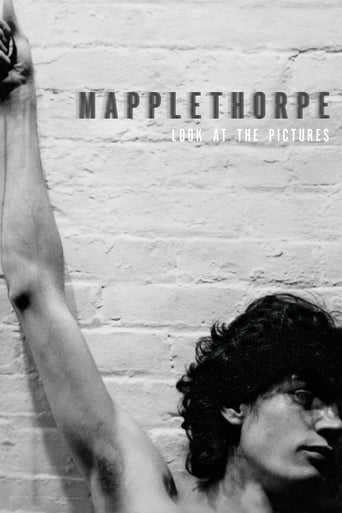
Nude men in rubber suits, close-ups of erections, objects shoved in the most intimate of places—these are photographs taken by Robert Mapplethorpe, known by many as the most controversial photographer of the twentieth century. Openly gay, Mapplethorpe took images of male sex, nudity, and fetish to extremes that resulted in his work still being labelled by some as pornography masquerading as art. But less talked about are the more serene, yet striking portraits of flowers, sculptures, and perfectly framed human forms that are equally pioneering and powerful.
This searing investigative work shadows a group of activists risking unimaginable peril to confront the ongoing anti-LGBTQ program raging in the repressive and closed Russian republic. Unfettered access and a remarkable approach to protecting anonymity exposes this under-reported atrocity–and an extraordinary group of people confronting evil.
A visual montage portrait of our contemporary world dominated by globalized technology and violence.
Nine filmmakers each profile a young girl from a different part of the world to weave a global tapestry of youth in the 21st century.
The life and career of one of comedy's most inimitable modern voices, Mr. Gilbert Gottfried.
Exuberant, eye-opening movie that serves up a dazzling hundred-year history of the role of gay men and lesbians have had on the silver screen. Film contains fabulous footage from 120 films showing the changing face of cinema sexuality, from cruel stereotypes to covert love to the activist triumphs of the 1990s.
An intimately raw and magical journey through the life, mind, and heart of iconic artist Frida Kahlo. Told through her own words for the very first time — drawn from her diary, revealing letters, essays, and print interviews — and brought vividly to life by lyrical animation inspired by her unforgettable artwork.
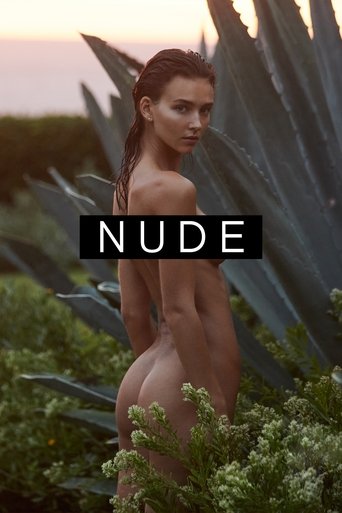
NUDE explores perceptions of nudity in art by chronicling the creative process of photographer David Bellemere as he's commissioned by NU Muses founder Steve Shaw to shoot a fine art calendar of nude photographs.
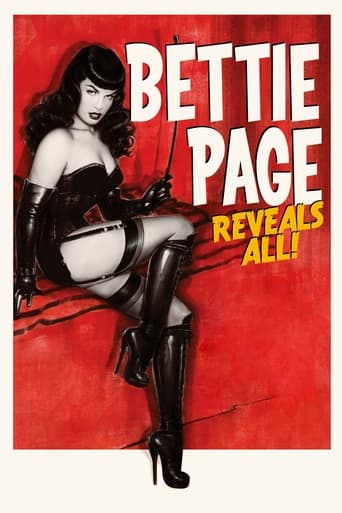
The world's greatest pin-up model and cult icon, Bettie Page, recounts the true story of how her free expression overcame government witch-hunts to help launch America's sexual revolution. When she saw the film The Notorious Bettie Page, produced by HBO in 2006, the main person concerned reacted unequivocally: “Lies! Lies!” In a long interview recorded shortly before her death, the woman who entered the collective unconscious as the ultimate pin-up gave her version of events to director Mark Mori. In a gravelly voice, Bettie Page tells her own story and lifts the veil on areas often hidden by images that have made so many men and women fantasize since the 1950s: her abused childhood, an eclipse that lasted forty years, her mental illness. Through testimonies and unpublished archives, this documentary brings back to life a body and a face endlessly declined before our eyes, just as Bettie wanted: “I would like people to remember me as I was in the photos.”
A paralysingly beautiful documentary with a global vision—an odyssey through landscape and time—that attempts to capture the essence of life.
As his life comes to its end, famous Hollywood director Orson Welles puts it all on the line at the chance for renewed success with the film The Other Side of the Wind.
Through deeply personal interviews with her siblings and an examination of the photographs, letters, and belongings left behind, Mariska assembles a new portrait of her mother Jayne Mansfield, an extraordinary and complex woman.
Those who knew iconic funnyman John Candy best share his story, in their own words, through never-before-seen archival footage, imagery, and interviews.
Various MGM stars from yesterday present their favorite musical moments from the studio's 50 year history.
The life and career of an actor, artist, and icon. His own journey through his own camera.
A documentary on the expletive's origin, why it offends some people so deeply, and what can be gained from its use.
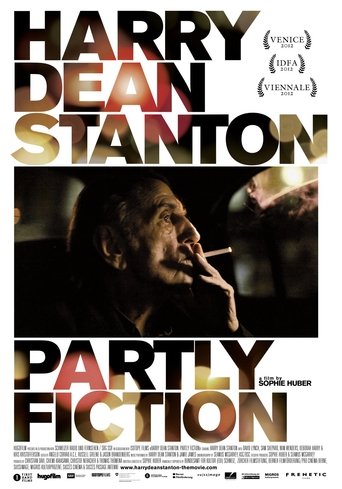
An impressionistic portrait of the iconic actor Harry Dean Stanton comprised of intimate moments, film clips from some of his 250 films and his renditions of American folk songs.
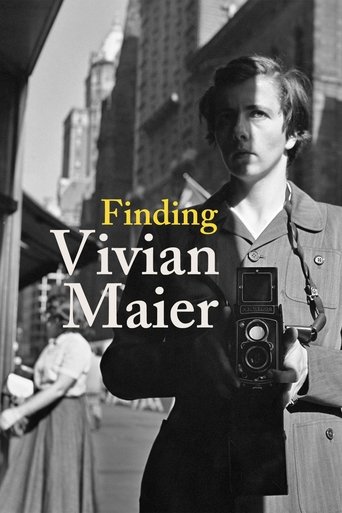
Vivian Maier's photos were seemingly destined for obscurity, lost among the clutter of the countless objects she'd collected throughout her life. Instead these images have shaken the world of street photography and irrevocably changed the life of the man who brought them to the public eye. This film brings to life the interesting turns and travails of the improbable saga of John Maloof's discovery of Vivian Maier, unravelling this mysterious tale through her documentary films, photographs, odd collections and personal accounts from the people that knew her. What started as a blog to show her work quickly became a viral sensation in the photography world. Photos destined for the trash heap now line gallery exhibitions, a forthcoming book and this documentary film.
The life story of ‘Zen Anarchist’ filmmaker John Milius, one of the most influential storytellers of his generation.
An account of the life and work of legendary Japanese actor Toshirō Mifune (1920-97), the most prominent actor of the Golden Age of Japanese cinema.