Social & External
The people behind it
Karl Michael Vogler
Paul Wunderland
Grit Boettcher
Marion
Herbert Mensching
Leiser Lulli
Kerstin De Ahna
Barbara
Alexander Allerson
Willy
Georg Lehn
Egon
Werner Abrolat
Kabollo
Erik Ode
Rechtsanwalt
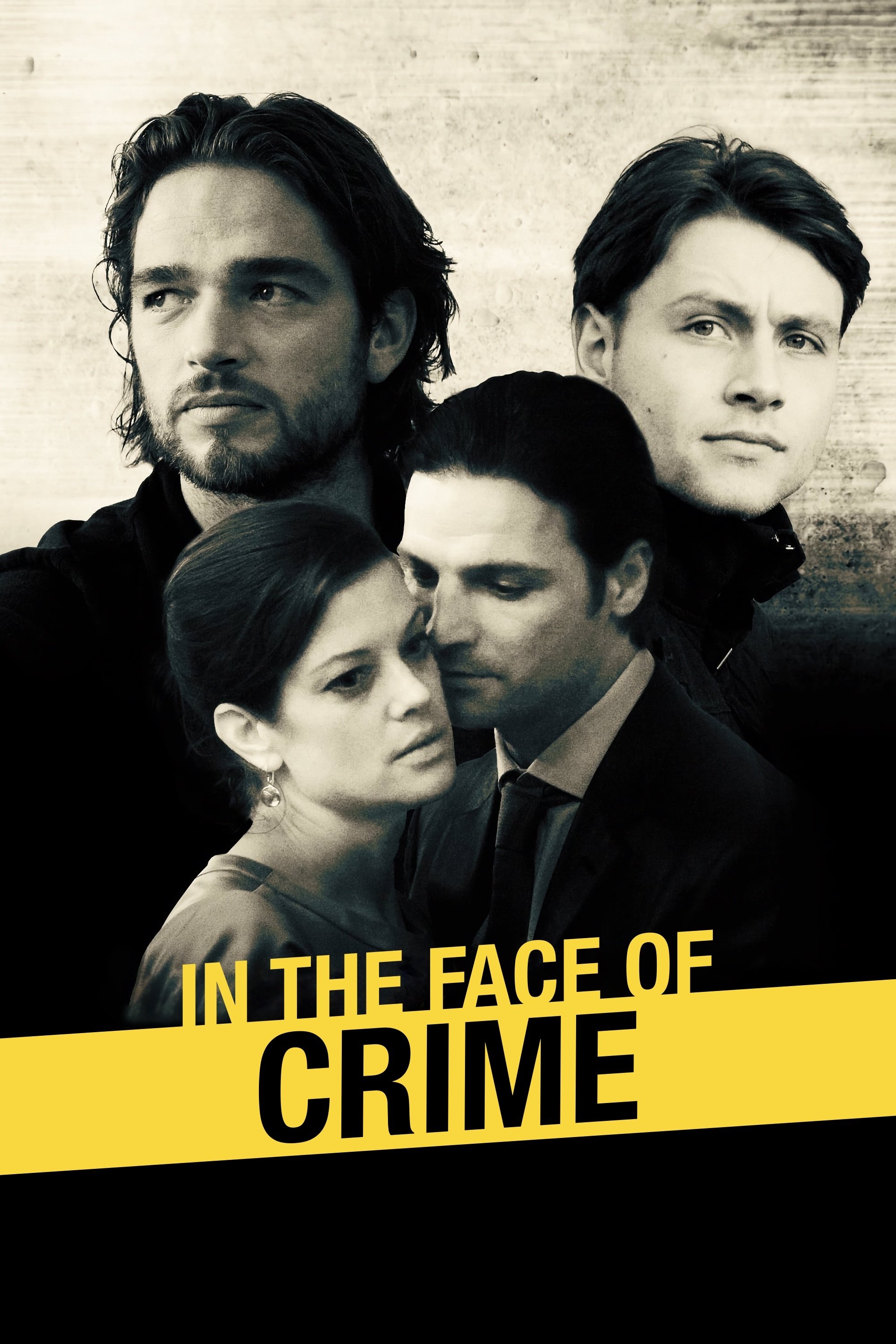
Im Angesicht des Verbrechens is a German television series about the Russian mafia in Berlin. It received high critical acclaim, but the viewer figures were disappointing. It was broadcast by ARTE and Das Erste.
In late 1920s Berlin, Franz Biberkopf is released from prison and vows to go straight. However, he soon finds himself embroiled in the city’s criminal underworld.
Berlin, 1899: The rebellious Dolly Pinkus narrowly escapes a serial killer—but the authorities refuse to take action. So she decides to investigate on her own, with the help of her best friend Mieze and the young detective Carl.
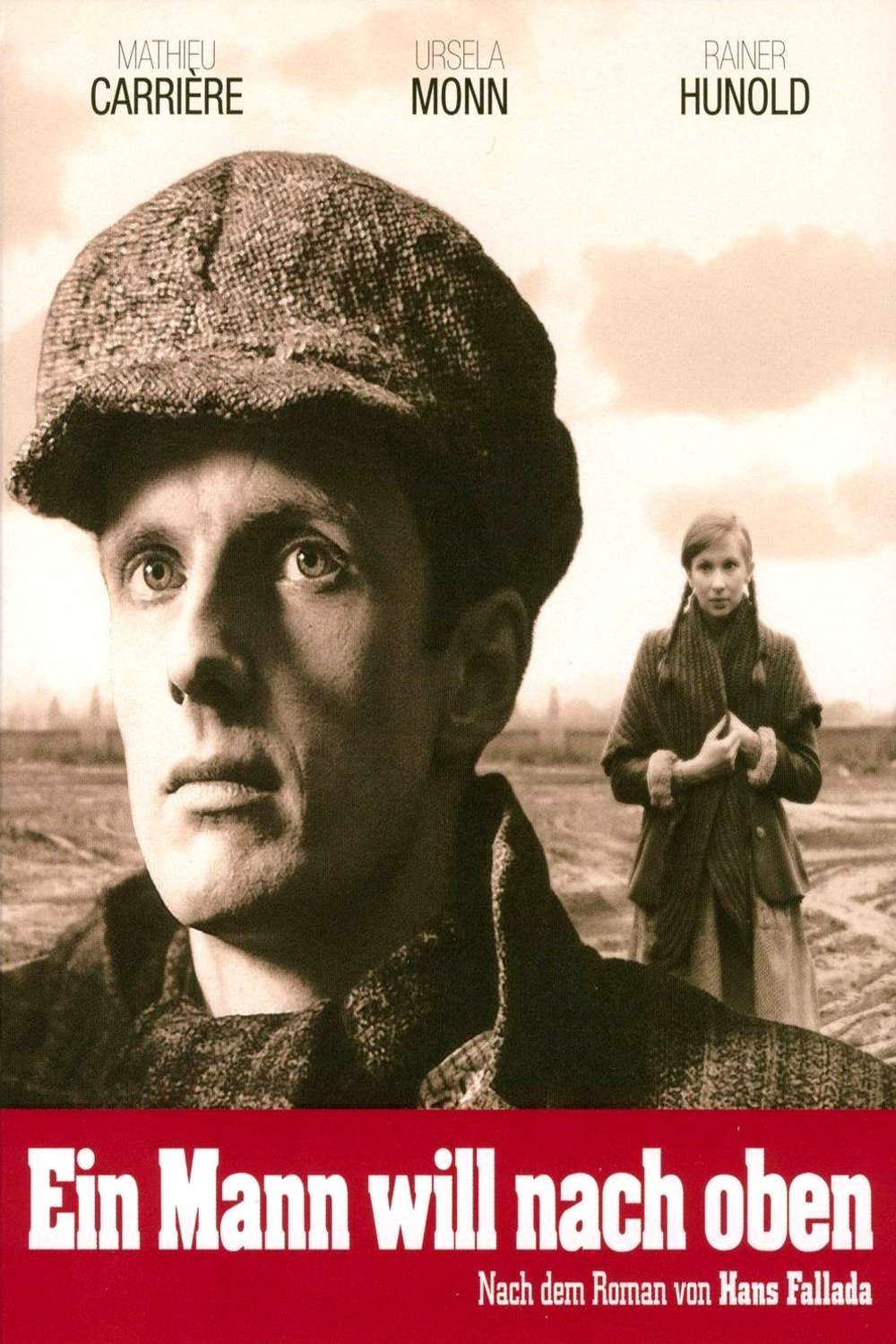
In 1909, Karl Siebrecht, who has just become an orphan, arrives in Berlin. The 16-year-old is eager to conquer the city for himself in just a few weeks. On the train ride there, he meets Rieke Busch, a girl from the working-class district of Wedding. She accompanies Karl from then on. But he soon realizes that he will have to start at the bottom. His path is characterized by small successes and setbacks. Only later does he make his breakthrough by founding a luggage transportation company. But once again, his success was short-lived as his business partner booted him out. Karl Siebrecht is faced with the ruins of his company. But he does not give up, finds new ways and seems to have achieved another breakthrough. But then the First World War breaks out...
West Germany, 1987. The politician Uwe Barschel (1944-87), member of the Christian Democratic Union party and Minister-President of the Schleswig-Holstein region, is found dead in very sinister circumstances. Reporter David Burger pledges to find the truth behind one of the most important political scandals in German history, investigating countless speculations and conspiracy theories as he fights his own personal demons.
In 1946 Berlin, an American cop searches for his missing brother while helping a novice German policewoman fight the violent crimes engulfing the city.
Berlin in the 1920s. A dazzling place, but times are not only golden, they are marked by poverty and crime. Vicky arrives in the city, led by promises of a better life, she’s looking for a job. But as soon as she gets there, her hopes and dreams are met with a cold awakening. With no place to stay and nothing to her name, she hires on to work as a saleswoman at a newly-established, glamorous department store. But the founders are also fighting for survival, just like Vicky. Times are tough, and it’s about to get tougher.
A century ago, the world experienced a revolution in mobility. Cities like Berlin grew rapidly, with the Graf Zeppelin soaring over the city in 1928, sparking excitement for airship travel. These majestic airships made ocean crossings faster and more luxurious, and even enabled polar expeditions. At the same time, automobiles and motorcycles became staples for many, although streets became congested. Women like Amelia Earhart and Elly Beinhorn broke barriers in aviation, inspiring new possibilities for both genders in the field of technology. While air travel grew in popularity, trains remained the main long-distance transport. The era also saw an explosion of new mobility options, with faster, cheaper ways to travel across the globe, making the world seem smaller and more connected. However, this golden age of mobility would be cut short by the outbreak of World War II.
Travel back to 1990s Berlin and discover the story of a family caught between bureaucracy, politics, and social exclusion, determined to build a new life in Germany.
A contemporary spy series that follows Daniel Miller, an undercover agent at the CIA station in Berlin, Germany.
Immer wieder Sonntag is a German television series.
Praxis Bülowbogen is a German television series.
A young hitchhiker introduces characters who are about to experience a frightening and sometimes supernatural incident of some kind in this moody anthology series.
Cordell Walker, a widower and father of two with his own moral code, returns home to Austin after being undercover for two years, only to discover there's harder work to be done at home.
When a singer is found murdered, with her scent glands excised from her body, detectives probe a group of friends who attended boarding school with her.
Peter Gunn is an American private eye television series. Filmed in a film noir atmosphere and featuring Henry Mancini music that could tell you the action with your eyes closed, Peter Gunn worked in style. Known as Pete to his friends and simply as Gunn to his enemies, he did his job in a calm cool way.
A continuation of the anthology series “Alfred Hitchcock Presents”, hosted by the master of suspense and featuring thrillers and mysteries.
Polizeiruf 110 is a long-running German language detective television series. The first episode was broadcast 27 June 1971 in the German Democratic Republic, and after the dissolution of Fernsehen der DDR the series was picked up by ARD. It was originally created as a counterpart to the West German series Tatort, and quickly became a public favorite.
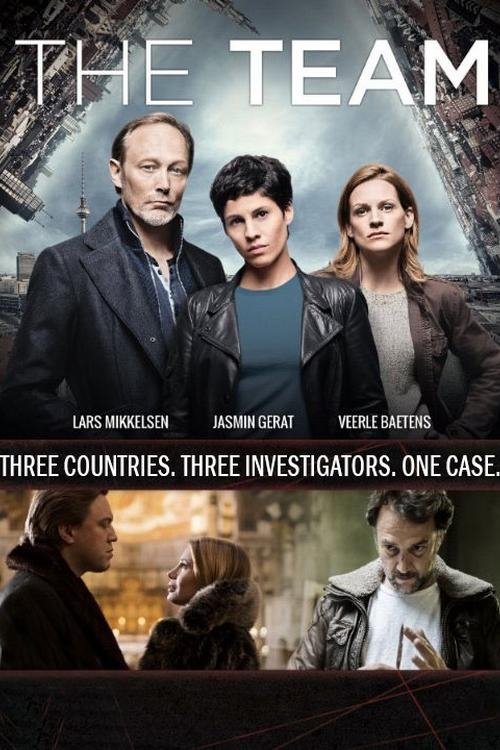
After a number of murders of prostitutes at a motorway stop near Berlin, in a rear courtyard in Antwerp, and in a brothel in Copenhagen, Europol decides to form a taskforce to tackle the case. Harald, a Dane, Jackie, a German, and Alice from Belgium embark on the hunt for the killer. As the case unfolds, the killings prove to be just the tip of the iceberg, the iceberg itself being a large, pan-European criminal organization involved in everything from drugs and financial crime to corruption, hired killings and not least people trafficking , illegal labor and prostitution.
Detective Cheng is commissioned by Interpol to destroy the Empire of Chaiba, a worldwide criminal organization based in Southeast Asia. He initiates an undercover operation to infiltrate the organization.
Based in Neukölln, Berlin Toni manages the daily business of dealing with the Arabic gangs and ends up wanting to leave his old life behind for his family, but as expected, its never that simple.
Facing an existential threat that could bring down the Crime Lab, a brilliant team of forensic investigators must welcome back old friends and deploy new techniques to preserve and serve justice in Sin City.
Follows rookie police officers working in Belfast, a city in which being a frontline response cop comes with unique pressures and dangers.
A realistic glimpse into the daily lives of the officers and detectives at an urban police station.
Bosch is now making a living as a private investigator two years after he quit the LAPD and finds himself working with one time enemy and top-notch attorney Honey “Money” Chandler. Meanwhile, Bosch's daughter Maddie is venturing into the world of the LAPD.
Bea Smith is locked up while awaiting trial for the attempted murder of her husband and must learn how life works in prison. A modern adaptation and sequel of the iconic Prisoner series.
Jane Tennant, the first female Special Agent in Charge of NCIS Pearl Harbor, and her unwavering team of specialists balance duty to family and country while investigating high-stakes crimes involving military personnel, national security and the mysteries of the sun-drenched island paradise itself.
Rumpole of the Bailey is a British television series created and written by the British writer and barrister John Mortimer. It stars Leo McKern as Horace Rumpole, an aging London barrister who defends any and all clients, and has been spun off into a series of short stories, novels, and radio programmes.
A police department, lead by an older, experienced detective solve crimes together.
Genius detective Nero Wolfe and his right-hand man, Archie Goodwin, solve seemingly impossible crimes.
A relentless LAPD cop becomes obsessed with taking down the master thief behind a string of daring heists — and only one can come out on top.
A television anthology series hosted by Alfred Hitchcock featuring dramas, thrillers, and mysteries.