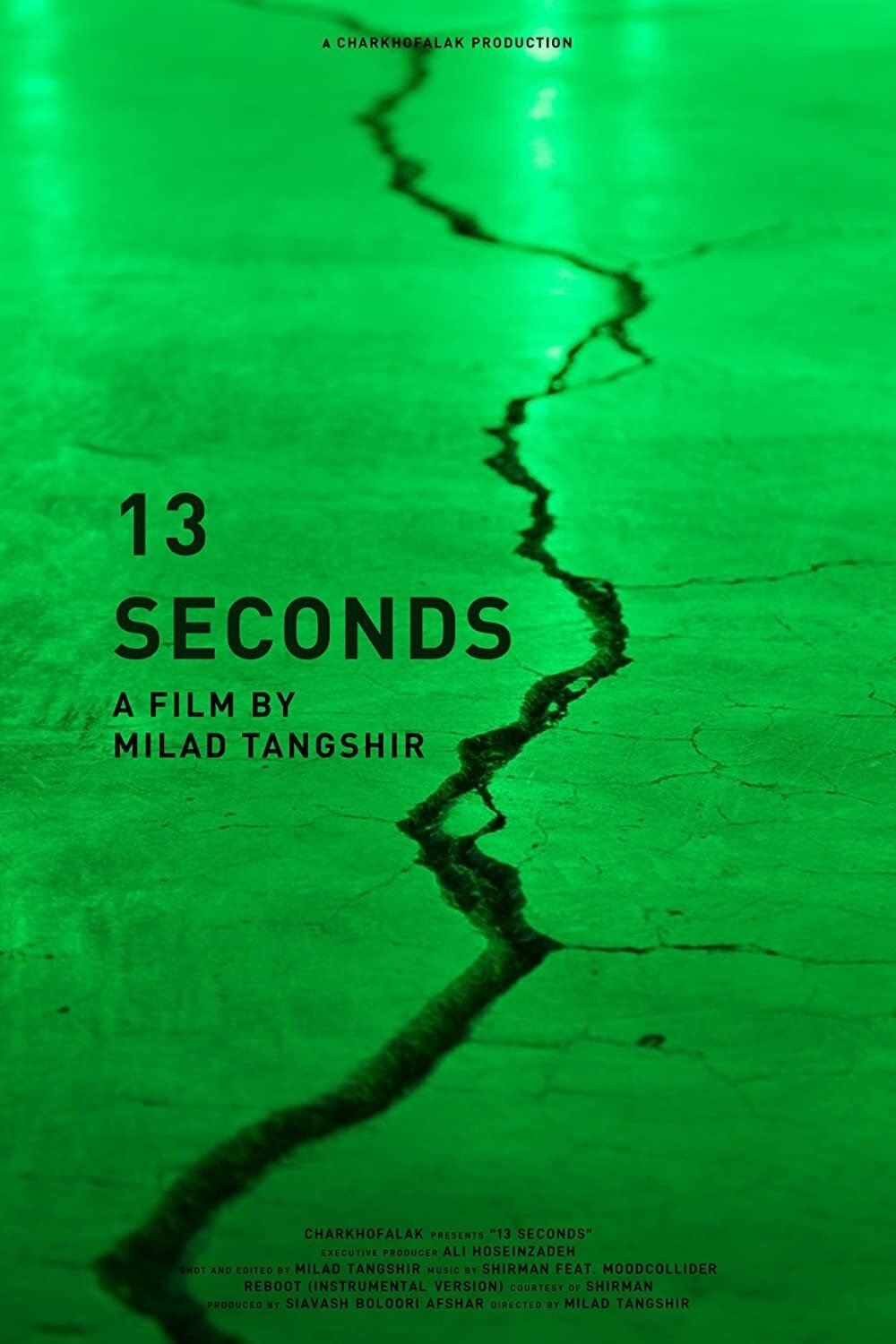
"13 Seconds. Life after the earthquake."
In November 2017, a devastating earthquake hit western Iran. It took only 13 seconds to lose everything. This is a fleeting observation of the days after the disaster.
Social & External
A group of people are standing along the platform of a railway station in La Ciotat, waiting for a train. One is seen coming, at some distance, and eventually stops at the platform. Doors of the railway-cars open and attendants help passengers off and on. Popular legend has it that, when this film was shown, the first-night audience fled the café in terror, fearing being run over by the "approaching" train. This legend has since been identified as promotional embellishment, though there is evidence to suggest that people were astounded at the capabilities of the Lumières' cinématographe.
Shannon Amen unearths the passionate and pained expressions of a young woman overwhelmed by guilt and anxiety as she struggles to reconcile her sexual identity with her religious faith. A loving elegy to a friend lost to suicide.
An experience of a camera swinging in different gestures facing the optical distortion of the Sun. The last appearance of the smudge.
Lost short film.
For four years (1977-1981) Esaias Baitel documented a violent Parisian neo-Nazi gang. Having gained their trust, he was able to get close to them. Living among the gang members, he witnessed horrific events, and while hiding his real identity, he photographed a one-of-a-kind collection of gripping stills. Over thirty years have passed. Esaias Baitel has laid his camera down. He returns to the dark nights he spent in the City of Lights, the city where he lived a double life, going back and forth from the gang to the young family he had just started.
"Wolfe" is an intimate confessional from Nick, who learned through puberty that the imaginary friend in his head was real, and violent.
Throughout Hong Kong’s history, Hongkongers have fought for freedom and democracy but have yet to succeed. In 2019, a controversial extradition bill was introduced that would allow Hongkongers to be tried in mainland China. This decision spurred massive protests, riots, and resistance against heavy-handed Chinese rule over the City-State. Award-winning director Kiwi Chow documents the events to tell the story of the movement, with both a macro view of its historical context and footage and interviews from protestors on the front lines.
NiiSoTeWak means “walking the path together.” Tapwewin and Pawaken are 10-year-old brothers trying to make sense of the world, their family and each other. They’re already grappling with some heady questions about identity. What does it mean to be a twin? What does it mean to be Cree? How do you define yourself when you’re forever linked to someone else? The twins discuss these questions with their two elder brothers — 22-year-old actor Asivak and 20-year-old basketball player Mahiigan — and their parents, Jules and Jake.
The story was born from the pen of debutante Callie Khouri: Thelma, married to a macho man, and Louise, an independent waitress, go on a girls' getaway that turns into a runaway when the latter, during a stopover in a bar, shoots a man who was trying to rape her friend. But at the dawn of the 1990s, screens were dominated by testosterone-fueled opuses, and Hollywood studios were reluctant to entrust the steering wheel to a female duo. Seduced by the script, forwarded by his associate Mimi Polk, Ridley Scott agreed to produce the film and decided, against all odds, to direct it himself. Under the British director's watch, the two accidental outlaws, fabulously portrayed by Susan Sarandon and Geena Davis, flee across the vastness of the Far West on an emancipatory epic that sees them defy male oppression and reveal themselves to themselves.
The National Iranian Oil Company (NIOC), formed upon nationalization of the British Anglo-Iranian Oil Company, employed film systematically, producing many films on oil and petrochemical subjects. It also made films depicting Iran's progress and modernization, highlighting the role of the Shah and NIOC in that direction. Under its auspices, Ebrahim Golestan directed A FIRE (1961), a highly visual treatment of a seventy-day oil well fire in the Khuzestan region of southwestern Iran. This film was edited by the Iranian poet Forough Farrokhzad and won two awards at the Venice Film Festival in 1961.
Guy Debord's analysis of a consumer society.
Twenty-five films from twenty-five European countries by twenty-five European directors.
Base jumper Jeb Corliss sustained grave injuries on a crash in South Africa. Through rehab, Jeb relearns the sport to tackle mountains in Europe.
Mysteries of the Unseen World transports audiences to places on this planet that they have never been before, to see things that are beyond their normal vision, yet literally right in front of their eyes. Mysteries of the Unseen World reveals phenomena that can't be seen with the naked eye, taking audiences into earthly worlds secreted away in different dimensions of time and scale. Viewers experience events that unfold too slowly for human perception
John Shepherd spent 30 years trying to contact extraterrestrials by broadcasting music millions of miles into space. After giving up the search, he makes a different connection here on earth.
After years of long distance, a pair of big and beautiful boyfriends celebrate their reunion at a Stevie Nicks concert, where they share a brush with magic.
Patte and Randa Starr are fun specialists. After growing up in an abusive household set above their father's candy store, they spent their lives fighting to find joy and freedom. Now in their 70s, these sisters do exactly as they please: they live together near the beach, they always have a movie on, and the candy drawer is fully stocked.
In 2012, Stephen Vaughan and Kay Ferreter are invited to address the congregation at St. Joseph's Redemptorists Church in Dundalk, Ireland for the Solemn Novena Festival. In a powerful speech, the pair describe their experiences being gay and lesbian in Ireland, feeling excluded by Catholic doctrine, and the importance of a more inclusive church.
Short Documentary. Matisyahu is a Hasidic Reggae/Beat Box/Rapper whose performances meld Jewish tradition with modern sounds, creating a new form of spiritual expression. This documentary follows Matisyahu as he performs in New York City and explains his conversion to Hasidism and his mission to ignite spirituality in others with his music. Directed by David Baugnon.