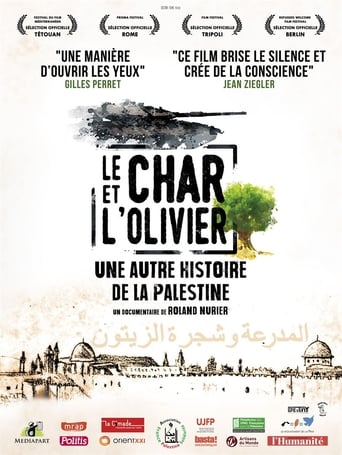
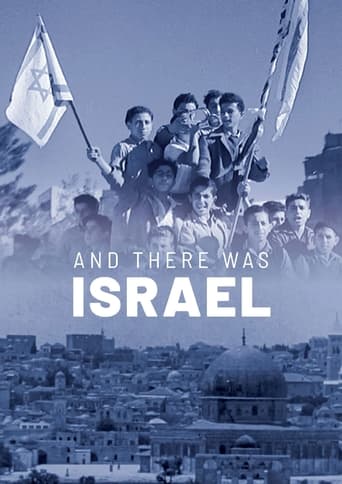
Using only rare archival and newsreel footage, this film tells the story of Palestine from the nineteenth century through current times.
Social & External
Documentary about war photographer James Nachtwey, considered by many the greatest war photographer ever.
A verité legal drama about Judge Kholoud Al-Faqih, the first woman appointed to a Shari'a court in the Middle East, whose career provides rare insights into both Islamic law and gendered justice.
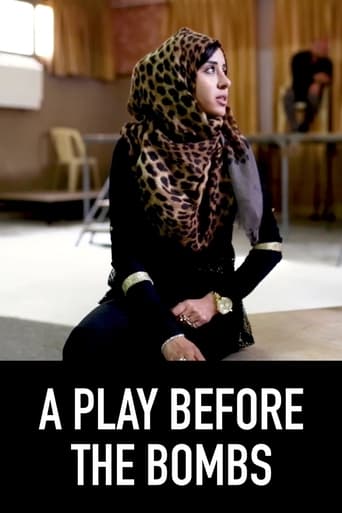
We are taken behind the scenes of a play in-the-making: The play is Samuel Beckett’s WAITING FOR GODOT—starring a group of young 48-Palestinians. One by one, we are introduced to a variety of characters: the play’s director, actors, and other ordinary people. As we delve further into each of their lives, the film reveals the startling parallels between the themes of the play and their own. Everyone is waiting for something: a permit to build a house, better work conditions, a starring role in a film. Much like Waiting for Godot, our heroes are awaiting Faraj Allah… something that may or may not come.
A thought-provoking documentary on the current and historical causes of the Israeli-Palestinian conflict and U.S. political involvement.
In 1917 when the British forces are bogged down in front of the Turkish and German lines in Palestine they rely on the Australian light horse regiment to break the deadlock.
A look inside the work of Breaking the Silence, an organization of former IDF combat soldiers who collect and publish testimonies of soldiers who served in the occupied territories. For six months, director Silvina Landsmann, camera in hand, accompanied the staff of the organization. The many hours of footage have been refined into a film that dives into the heart of Breaking the Silence’s work: guided tours of Hebron and the surrounding area, public lectures and house meetings, internal staff meetings and media strategy. All the while the organization is forced to justify its very existence, both internally and to the broader public, and to justify its place in the political debate. The Good Soldier raises questions about Israel’s dynamic mainstream and the challenges of confronting it.
The Israeli filmmaker Shai Corneli Polak records the building of the 'security wall' through Palestinian territory at the village of Bil'in. The villagers protest mostly peacefully, while the Israeli army doesn't react peacefully. By now the Israeli High Court has ruled that the building of the wall was illegal.
Something from there is a short film on the substance of our original lands. Weaving between the voices of the artist’s parents, one a refugee and the other not, the film is personal, yet evokes a shared Palestinian experience.
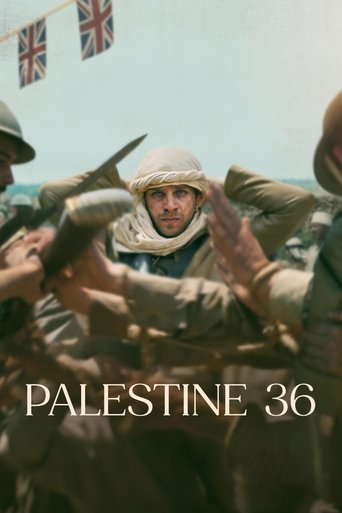
Palestine, 1948. After the withdrawal of the British occupiers, tensions rise between Arabs and Jews. Meanwhile, Farha, the smart daughter of the mayor of a small village, unaware of the coming tragedy, dreams of going to study in the big city.
Drunk and disillusioned Roman, Marcellus Gallio, wins Jesus' robe in a dice game after the crucifixion. Marcellus has never been a man of faith like his slave, Demetrius, but when Demetrius escapes with the robe, Marcellus experiences disturbing visions and feels guilty for his actions. Convinced that destroying the robe will cure him, Marcellus sets out to find Demetrius — and discovers his Christian faith along the way.
Here and Elsewhere takes its name from the contrasting footage it shows of the fedayeen and of a French family watching television at home. Originally shot by the Dziga Vertov Group as a film on Palestinian freedom fighters, Godard later reworked the material alongside Anne-Marie Miéville.
When two young American Jews raised to unconditionally love Israel witness the mistreatment of Palestinians, they battle the old guard to create a new movement opposing Israel’s occupation, and recentering Judaism itself.
In the Gaza refugee camp of Jerash, Palestinians face the critical issue of lacking identification documents. This situation undermines their rights and hinders access to essential services and opportunities.
Jawaher was a farmer with her father when she was young, and a beekeeper in old age. Beekeeping to her is a way to overcome life's difficulties. Despite the difficulties she's facing; the economic situation, climate change, and wars, she's still sticking to her source of livelihood to save a living.
Najwa, Nawal, and Siham, three Palestinian widows, live with their 11 children in a house on Shuhada Street in Hebron. Their house lies on the border; the façade is under Israeli occupation, the Palestinian Authority controls the back. At the entrance to the house is a military post; on the roof the Israeli army has placed a watch point over Palestinian Hebron. The three women, trapped in the middle and constantly surrounded by Israeli soldiers, carry on their difficult lives in a perverse situation: the occupation becomes a routine, the absurd becomes a given. This is the story of an occupation that extends to the staircase and the roof of the house, where it encounters poverty, loneliness, pain, but also the small joys of everyday life. This is an internal prison, the external one is the ongoing occupation.
14 years after his first visit, Louis Theroux meets some of the growing community of religious-nationalist Israelis who have settled in the occupied West Bank.
An Iranian filmmaker participates in a series of video calls with a young Palestinian photojournalist who describes her life confined in Gaza during the current regional conflict.
A portrait of two Palestinian women whose individual struggles both define and transcend the politics that have torn apart their homes and their lives. Farah Hatoum, a widow living with her children and grandchildren, and Sahar Khalifeh, a novelist from the West Bank.
The film follows journeys of observational tours solicited by the Palestinian Museum and conducted by two professors from Birzeit University to collect photos of and information on the Palestinian Flora. The title is adapted from a collection of 123 images (circa 1900 to 1920) of wild flowers in Palestine found in the Matson Collection in the Library of Congress. Despite the tendency to trace the wild plants, the text in general aims at questioning the territorial extension of what is meant by the term “Palestinian”, while standing on insignificant topographical features of the (postcolonial) landscape in West Bank. Furthermore, it addresses photography as a practice and a tool of distributing and restricting information at once.