Social & External
The people behind it
Pierre Tchernia
Narrateur
Rascar Capac, the sinister creature featured on Hergé's album The Seven Crystal Balls (1948), has left its mark on many generations of readers. To draw it, the Belgian cartoonist was probably inspired by a mummy exhibited in the first pre-Columbian exhibition organized by the Brussels Cinquantenaire Museum in 1923. Two intrepid archaeologists embark on a fascinating journey to reconstruct the story of the mysterious mummy.
Why do the comic-strip Adventures of Tintin, about an intrepid boy reporter, continue to fascinate us decades after their publication? "Tintin and I" highlights the potent social and political underpinnings that give Tintin's world such depth, and delve into the mind of Hergé, Tintin's work-obsessed Belgian creator, to reveal the creation and development of Tintin over time. Rare and surprisingly candid 1970s interviews reveal the profound insecurities and anxieties that drove Hergé to produce stories that have not only entertained millions of children but also helped to satisfy a personal longing for self-expression.
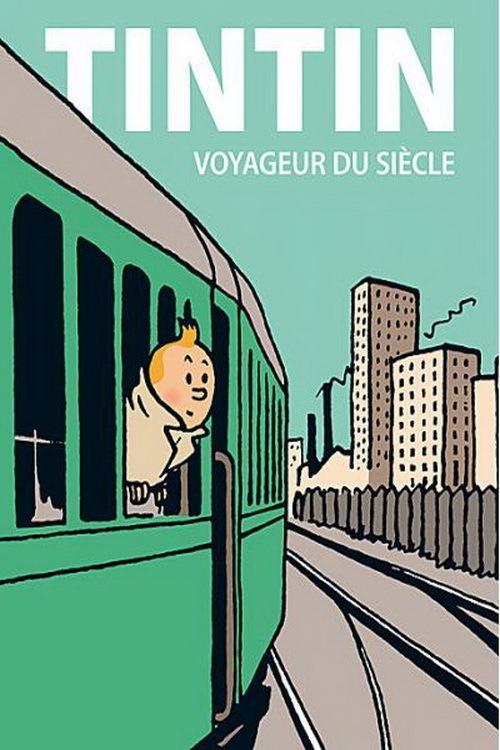
The adventures of Hergé, or how Georges Remi created The Adventures of Tintin. Interviews, archive footage and animation clips tell the story of Tintin, which is the history of the 20th century.
From the beginning, Hergé's work, Tintin's creator, was conditioned by the ideology of his publisher, the weekly child supplement of a Belgian Catholic newspaper. An exciting analysis of the political meaning of the adventures of Tintin.
Journalist Frank Gardner sets out to trace the first adventure of Tintin, the childhood hero that inspired him to travel and report from the world's hot spots. Frank follows Tintin to Moscow and discovers the influences that created the successful cartoon strip.
Georges Remi, known as Hergé, a complex and complicated artist, created Tintin, one of the most famous characters in the world. With exceptional access to the archives of Studios Hergé and Moulinsart, this documentary looks at Remi's life and the way he changed the art of comic.
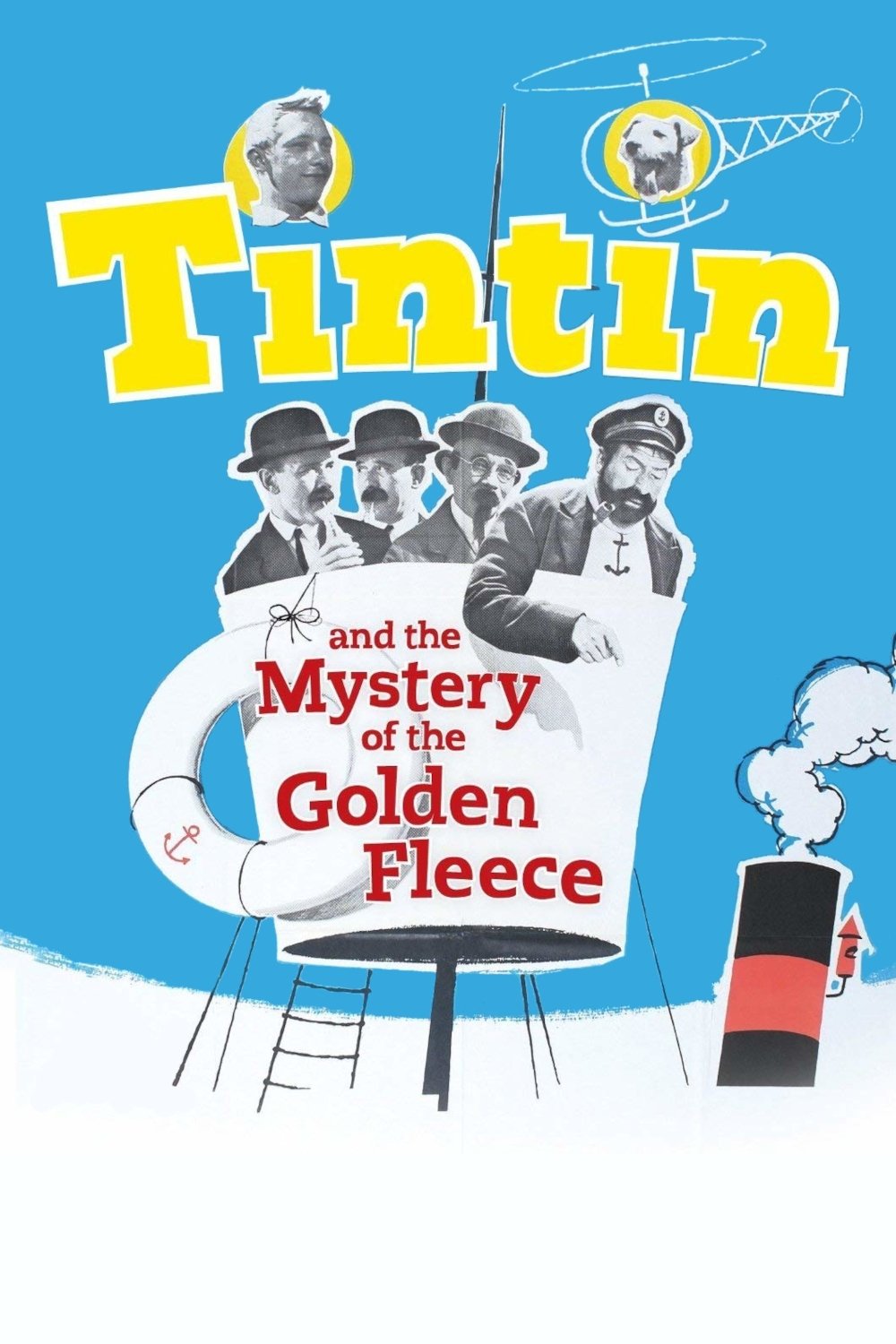
After the death of Captain Thémistocle Paparanic, Captain Haddock's old friend, he inherits a ship called the Golden Fleece. Once Tintin and the captain arrive in Istanbul, where the ship is anchored, they meet Mr. Karabine, a businessman who stubbornly insists on buying it even though it is in a dilapidated state.
Professor Calculus's friend develops a blue-skinned orange that can grow on any kind of land and survive harsh weather (in the manner of Lue Gim Gong) and therefore solve world hunger. The Professor and his friends, however, run afoul of gangsters who also covet the fruit. The adventure takes them from their home in Marlinspike Hall (Moulinsart), a fictional mansion that is presumably in Belgium, to Spain, where Calculus and another scientist are kidnapped.
Tintin finds himself involved in a mystery related to a drowned man, a can of crabmeat and a ship called Karaboudjan. After investigating the ship, Tintin discovers that the shipment of cans does not contain exactly crabmeat.
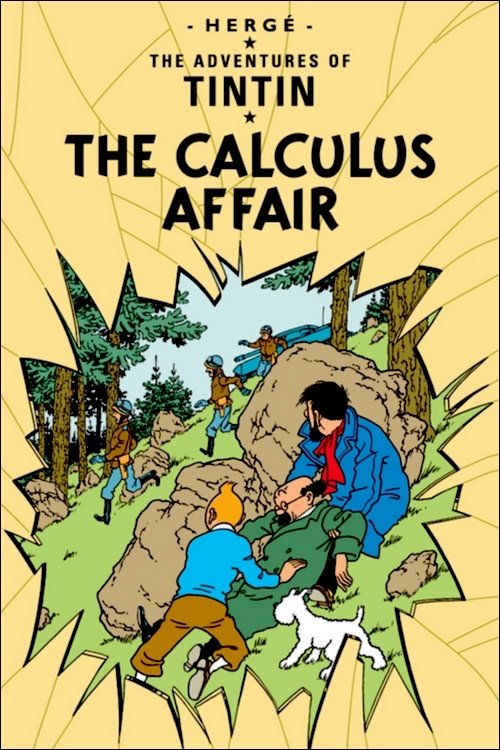
Strange things are happening in the evening at the mansion. Glass things break without any apparent reason. The Professor, somewhat apathetic to the whole series of events, leaves the following day to attend a conference on nuclear physics in Geneva. Foreign powers get wind of the Professor's work and send their agents to investigate.
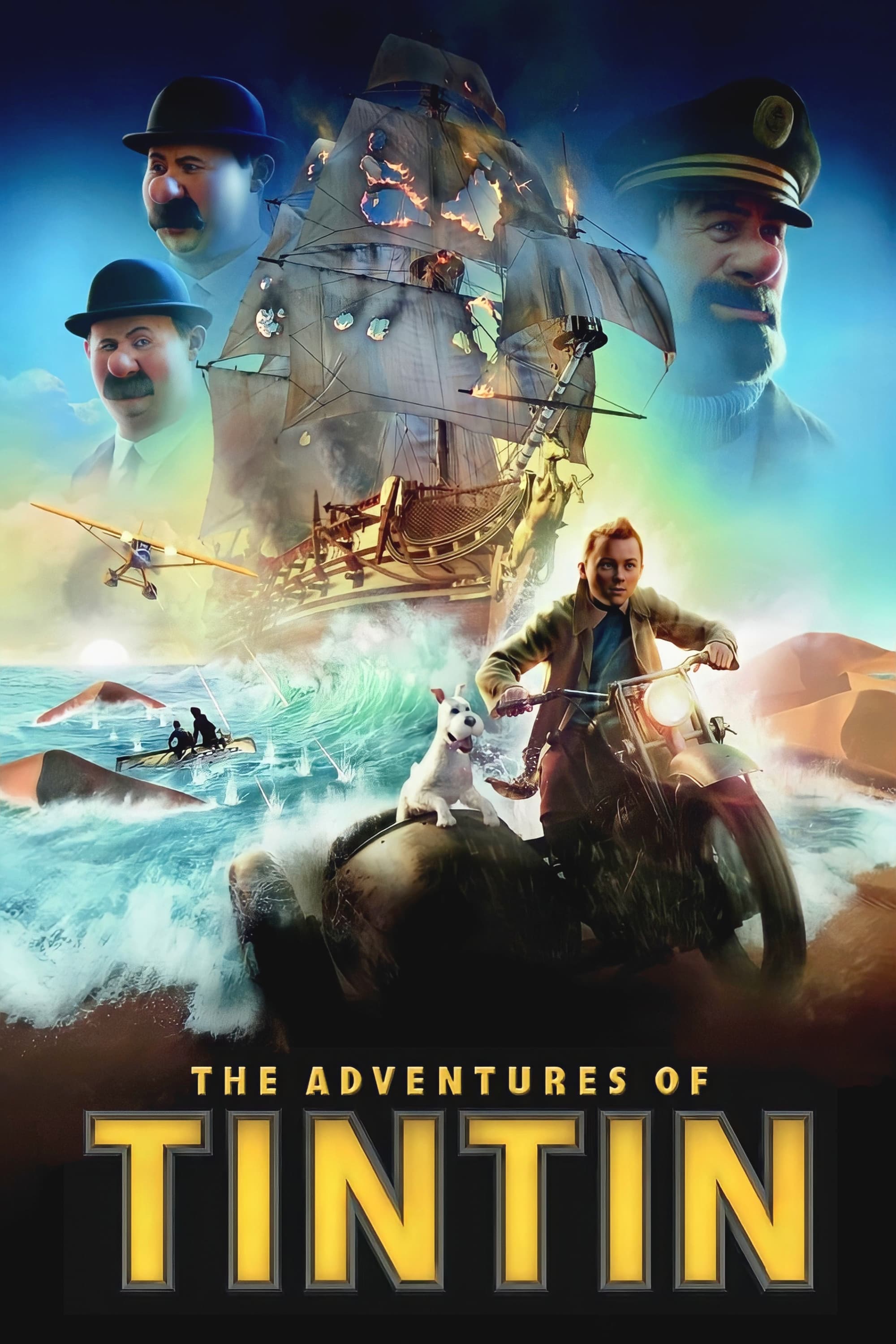
Intrepid young reporter, Tintin, and his loyal dog, Snowy, are thrust into a world of high adventure when they discover a ship carrying an explosive secret. As Tintin is drawn into a centuries-old mystery, Ivan Ivanovitch Sakharine suspects him of stealing a priceless treasure. Tintin and Snowy, with the help of salty, cantankerous Captain Haddock and bumbling detectives, Thompson and Thomson, travel half the world, one step ahead of their enemies, as Tintin endeavors to find the Unicorn, a sunken ship that may hold a vast fortune, but also an ancient curse.
This short animated advertising cartoon promotes the Société Générale des Minerais belges, a Belgian mining company. Tintin follows the company endeavours in Belgium, Congo, the USA, France and Japan.
Strange things are happening in the evening at the mansion: glass things break without any apparent reason. Professor Calculus, somewhat apathetic to the whole series of events, leaves the following day to attend a conference on nuclear physics in Geneva. Foreign powers get wind of his work and send their agents to investigate.
When seven archaeologists find an ancient Inca temple, they become victims of an ancient curse. Back in Europe, one by one they fall into a deep sleep and only once a day, all at the same time, they wake up for a few minutes and experience hallucinations where the sinister living mummy of Rascar Capac appears.
Tintin and Captain Haddock are sent to guard Professor Calculus, who has invented a machine that can duplicate anything, and is staying in a village near the border of Syldavia and Borduria. However, an infamous and ruthless international criminal tries to lure Calculus and Tintin away by kidnapping two children, who live nearby, in order to get his clutches on the machine.
While on vacation in Egypt, Tintin encounters an eccentric archaeologist who believes to have found the whereabouts of Pharaoh Kih-Oskh's tomb. There Tintin finds a cigar marked with a strange emblem.
Tintin is visited in India by a Chinese gentleman who brings him a message. Then, an unseen marksman throws a poisonous dart right into his neck. The only clue Tintin receives from the now mad messenger is that there are problems in Shanghai related to a man named Mitsuhirato.
When a South American fetish is stolen and then reappears the next morning, Tintin investigates.
Tintin is out on a peaceful walk. But the comfortable atmosphere will not last long. When an aircraft with an engine failure lands, Tintin does his part to help, but he is shot and ends up in hospital.
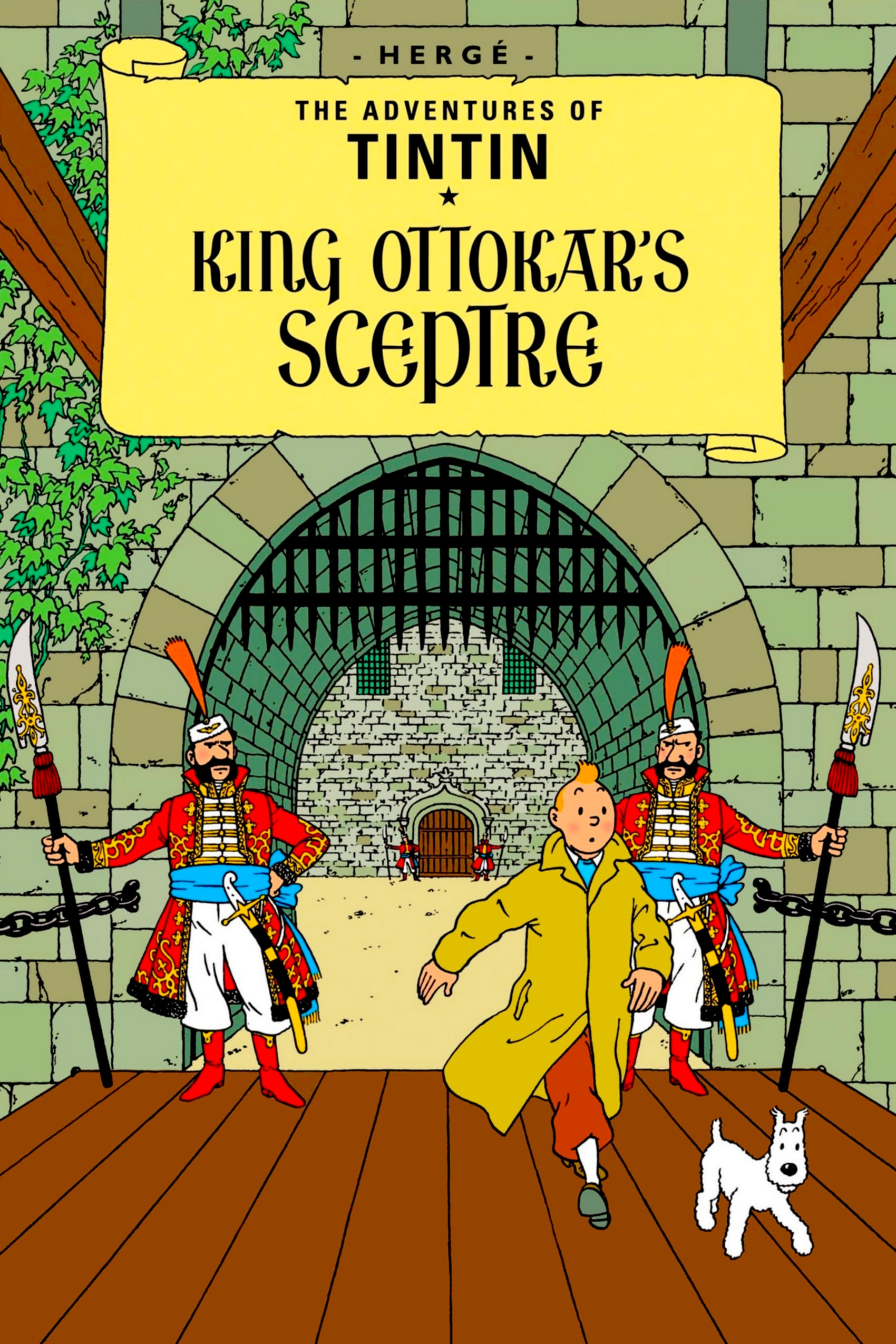
An absent-minded sigillographer gets Tintin involved in a dangerous political intrigue in the Balkan nation of Syldavia.
The film is based on interviews with 2,000 women from 50 countries, and covers the status of women all over the world. The topics covered include forced marriages, sexual assault, female genital mutilation, acid attacks, motherhood, sexuality, menstruation, education and the professional success of women.
A string of threatening emails escalates into a revenge plot involving a newly married US marshal and his ex-girlfriend.
Alexander McQueen's rags-to-riches story is a modern-day fairy tale, laced with the gothic. Mirroring the savage beauty, boldness and vivacity of his design, this documentary is an intimate revelation of McQueen's own world, both tortured and inspired, which celebrates a radical and mesmerizing genius of profound influence.
In a crime-plagued neighborhood near Miami, brutal, bare-knuckled backyard fights give young men a chance to earn money -- and self-respect.
After another 7 year wait, director Michael Apted revisits the same group of British-born children from Seven Up! and 7 Plus Seven. The subjects are interviewed as to the changes that have occurred in their lives during the last seven years.
Through deeply personal interviews with her siblings and an examination of the photographs, letters, and belongings left behind, Mariska assembles a new portrait of her mother Jayne Mansfield, an extraordinary and complex woman.
A documentary about the life and films of director John Ford.
An inside look at one of the most anticipated movie sequels ever with James Cameron and cast.
Director Michael Apted revisits the same group of British-born adults after a 7 year wait. The subjects are interviewed as to the changes that have occurred in their lives during the last seven years.
Just two years away from turning 30, participants in Michael Apted's documentary series are facing serious questions of identity and purpose, wondering whether they've found their place in the world.
Ranjit, a farmer in India, takes on the fight of his life when he demands justice for his 13-year-old daughter, the victim of a brutal gang rape. His decision to support his daughter is virtually unheard of, and his journey unprecedented.
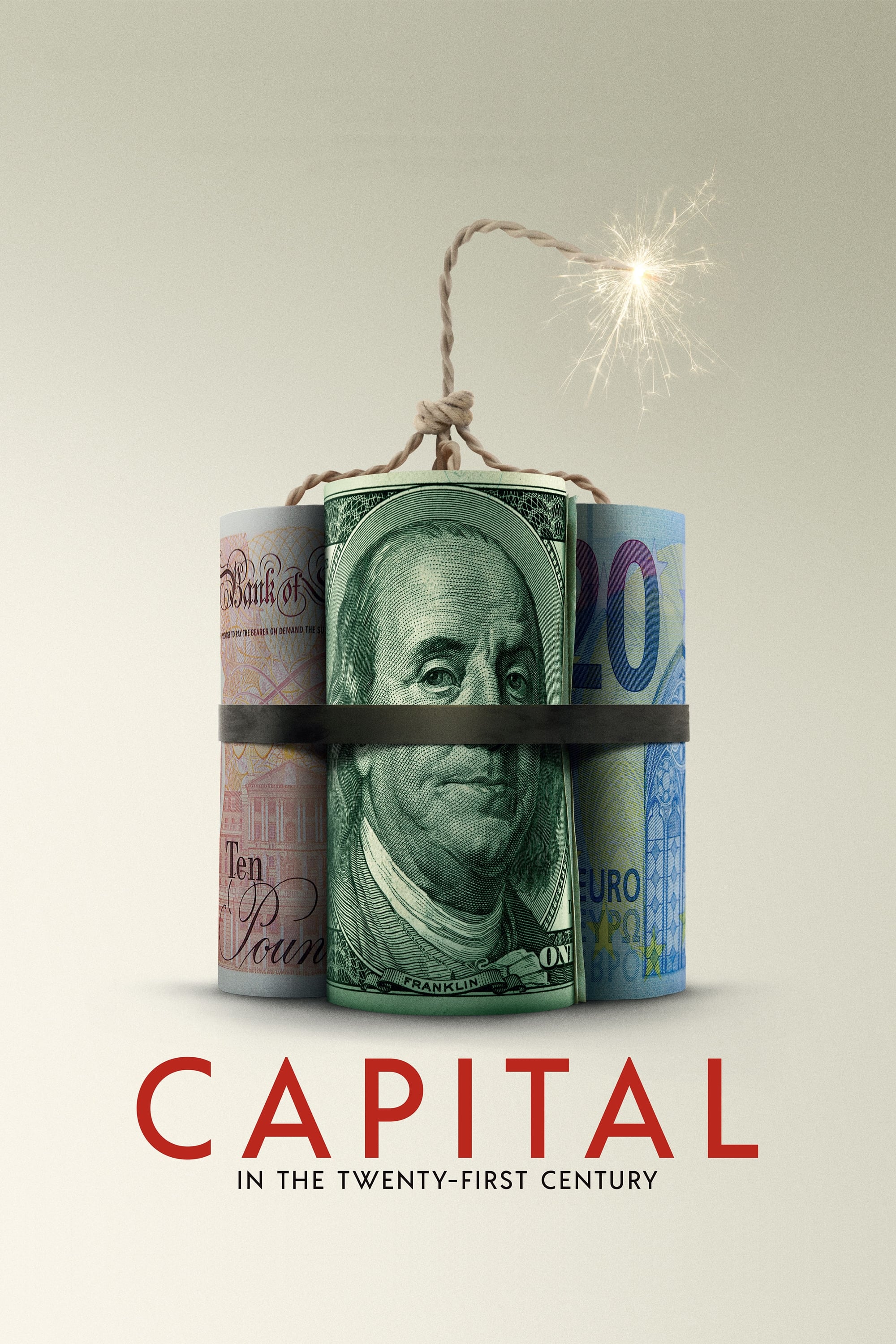
Film adaptation of French economist Thomas Piketty's ground-breaking global bestseller of the same name: an eye-opening journey through wealth and power.
A look at the origins, history and conspiracies behind the "Majestic 12", a clandestine group of military and corporate figureheads charged with reverse-engineering extraterrestrial technology.
Bruce Conner’s most celebrated film for a reason: it takes historical moments that were replayed over and over on television—chilling repetition of Kennedy assassination coverage—and repurposes them into a meditation on how the media tries to exert authority and apply a sense of order to the anarchic. And though it may sound perverse to say so, the film is also—not incidentally—a thrill to watch. -- The A.V. Club
Over 35 years after Bob Lazar's revelations, this documentary exposes secrets of a facility the government still denies. Featuring Lazar's testimony, recreations, and new evidence, it reopens a case that continues to spark global curiosity
A new documentary by filmmaker-photographer Raymond Depardon – where justice and psychiatry meet.
The film follows adventurer Jeff Johnson as he retraces the epic 1968 journey of his heroes Yvon Chouinard and Doug Tompkins to Patagonia.
A night of drunken chaos rocks a quiet Dutch town in this shocking documentary about a teen's birthday invite that accidentally went viral on Facebook.
A look at the "Hell House" performed annually in October by the youth members of Trinity Church (Assemblies of God) in Cedar Hill, Texas (a Dallas suburb) — seen by over 10,000 visitors each year.
A documentary about how a dominant cultural and demographic institution both sustains their traditional activities and adapts to the digital revolution.