Social & External
Aruay
Anderson
Titou will soon be forty. He lives high up in a sheep shed in the Corbières mountains. With Soledad, who lives in a nearby caravan, they make their own wine, compose their music, live their love in step with the seasons – much as you might cultivate resistance.
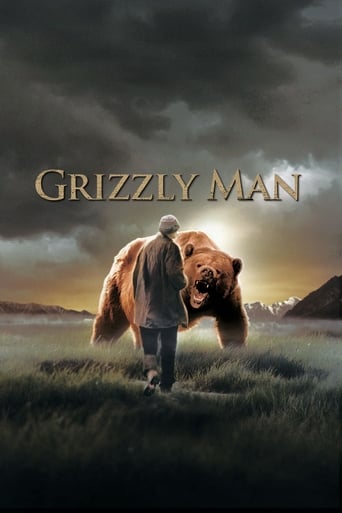
Follows the story of "Grizzly Man" Timothy Treadwell and what the thirteen summers in a National Park in Alaska were like in his attempt to protect the grizzly bears. The film is full of unique images and a look into the spirit of a man who sacrificed himself for nature.
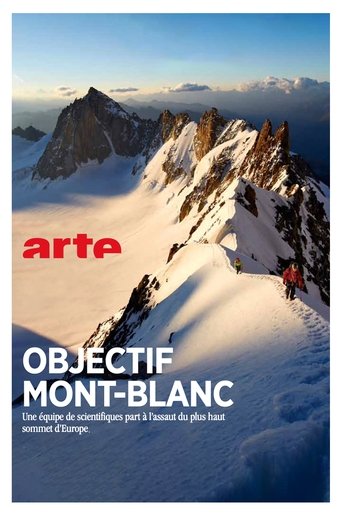
A climatologist, a physicist, and a volcanologist set out to conquer the highest peak in the Alps. Through exceptional images, the film recounts their odyssey and reveals the immense wealth of this natural laboratory. Straddling France, Italy, and Switzerland, the Mont Blanc massif was formed 240 million years ago. Four times the size of Paris, it covers 400 km2. Its summit, the highest in Western Europe, rises to 4,810 meters. Three scientists begin its ascent: Martine Rebetez, a Swiss climatologist; Étienne Klein, a philosopher and physicist at the French Atomic Energy Commission; and Jacques-Marie Bardintzeff, a geologist and volcanologist. Advancing in two roped teams, they are accompanied by Jean-Franck Charlet and François-Régis Thévenet, mountain guides, as well as physiologist Hugo Nespoulet.
In this film we join Alice as she meets committed naturists, newcomers to naturism, and discovers a kaleidoscope of naturist opportunities including Pevors Farm and the Merryhill Music Festival.
Filmmaker Suzannah Herbert takes a sharp look at the American South’s unreconciled history through a Mississippi town that mixes antebellum tourism with a community deeply divided over its past. With an unflinching lens, the film captures the debates, memories, and tensions that are building toward a reckoning.
Part of a series of films produced by Vme TV that features aerial videography shot from a helicopter of points of interest. This film in particular features points of interest in Puerto Rico.
A beautiful and disturbing film recounts America’s story from the environment’s point of view. From the arrival of Columbus to the simple wilderness living of the 16th and 17th centuries, through the agrarian lifestyle of the 18th century, the changes from the Industrial Revolution, to the 20th century when most of the planet’s resources have been depleted — this film examines the North American landscape and all the wildlife destruction, deforestation, soil depletion and pollution that have been wrought to make the American Dream come true.
Leading this story is 22-year-old Pippa Biddle, who after a series of voluntourism experiences over six years posted a critical blog. It went viral with over 15 million hits, and instantly launched her as the poster child against privileged young white women volunteering overseas. Volunteers Unleashed shows that going overseas with good intentions does not guarantee good will be done. Inspired by his daughter Jennica's life-changing experience as a volunteer in Tanzania in 2012, Vancouver filmmaker Brad Quenville (The Dolphin Dealer, Ice Pilots, Pyros, Highway Thru Hell) went back to Africa with his daughter and DOP Kyle Sandilands to shoot and develop the documentary.
Bournemouth offers a variety of sports, pastimes, steamer trips, and fine dining for holidaymakers, competing with cheaper foreign holidays and offering a variety of transportation options.
Are tourists destroying the planet-or saving it? How do travelers change the remote places they visit, and how are they changed? From the Bolivian jungle to the party beaches of Thailand, and from the deserts of Timbuktu, Mali to the breathtaking beauty of Bhutan, GRINGO TRAILS traces stories over 30 years to show the dramatic long-term impact of tourism on cultures, economies, and the environment.
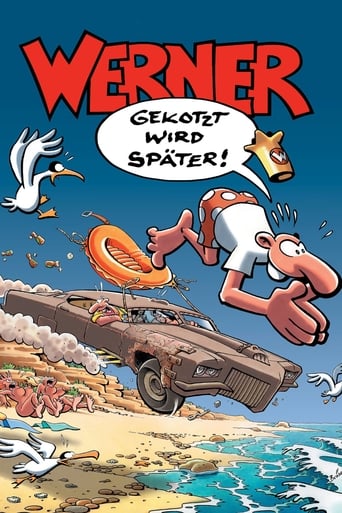
Werner, Andi and Eckat play dice to determine the next king of the trio. When Werner is crowned king, he decides for all of them to skip work and start for Korsika.
An epic documentary film that sends nine scientists to extraordinary parts of the world to uncover unexpected answers to some of humanity’s biggest questions. How did life begin? What is time? What is consciousness? How much do we really know? By introducing researchers from diverse backgrounds for the first time, then dropping them into new, immersive field work they previously hadn’t tackled, the film pushes the boundaries of how science storytelling is approached. What emerges is a deeply human trip to the foundations of discovery and a powerful reminder that the unanswered questions are the most crucial ones to pose. Directed by Emmy-nominated and Peabody Award-winning filmmaker Ian Cheney and advised by world-renowned filmmaker Werner Herzog, The Most Unknown is an ambitious look at a side of science never before shown on screen.
Milah van Zuilen, visual artist and forest ecologist in training, uses the square to deal with the habit of people to construct nature. Square Fieldwork is filmed in the Bohemian forest in the Czech Republic and the concrete structure of Barendrecht, The Netherlands.
This documentary provides a window into the extraordinary life of activist and Nobel Laureate Wangari Maathai, a Kenyan woman who has worked to regain ownership of her country and its fate after years of colonialism. While gentle and thoughtful, Maathai carries a powerful message: the First World holds much of the responsibility for the environmental, economic and social struggles of the developing world.
An ever evolving alien life-form arrives on a comet from the Dark Gaseous Nebula and proceeds to consume pollution. Spewing mists of sulfuric acid and corrosive sludge, neither humanity nor Godzilla may be able to defeat this toxic menace.
Mothra's dark counterpart, Battra, emerges to eliminate humanity on behalf of the Earth. Two tiny fairies called the Cosmos offer their help by calling Mothra to battle the creature. Unfortunately a meteorite has awoken a hibernating Godzilla as a three way battle for the Earth begins.
As queer trans and gender non-conforming children of the Vietnamese diaspora, we are fragmented at the crossroads of being displaced from not only a sense of belonging to our ancestral land, but also our own bodies which are conditioned by society to stray away from our most authentic existence. Yet these bodies of ours are the vessels we sail to embark on a lifetime voyage of return to our original selves. It is our bodies that navigate the treacherous tides of normative systems that impose themselves on our very being. And it is our bodies that act as community lighthouses for collective liberation. Ultimately, the landscape of our bodies is our blueprint to remembering, to healing, to blooming.