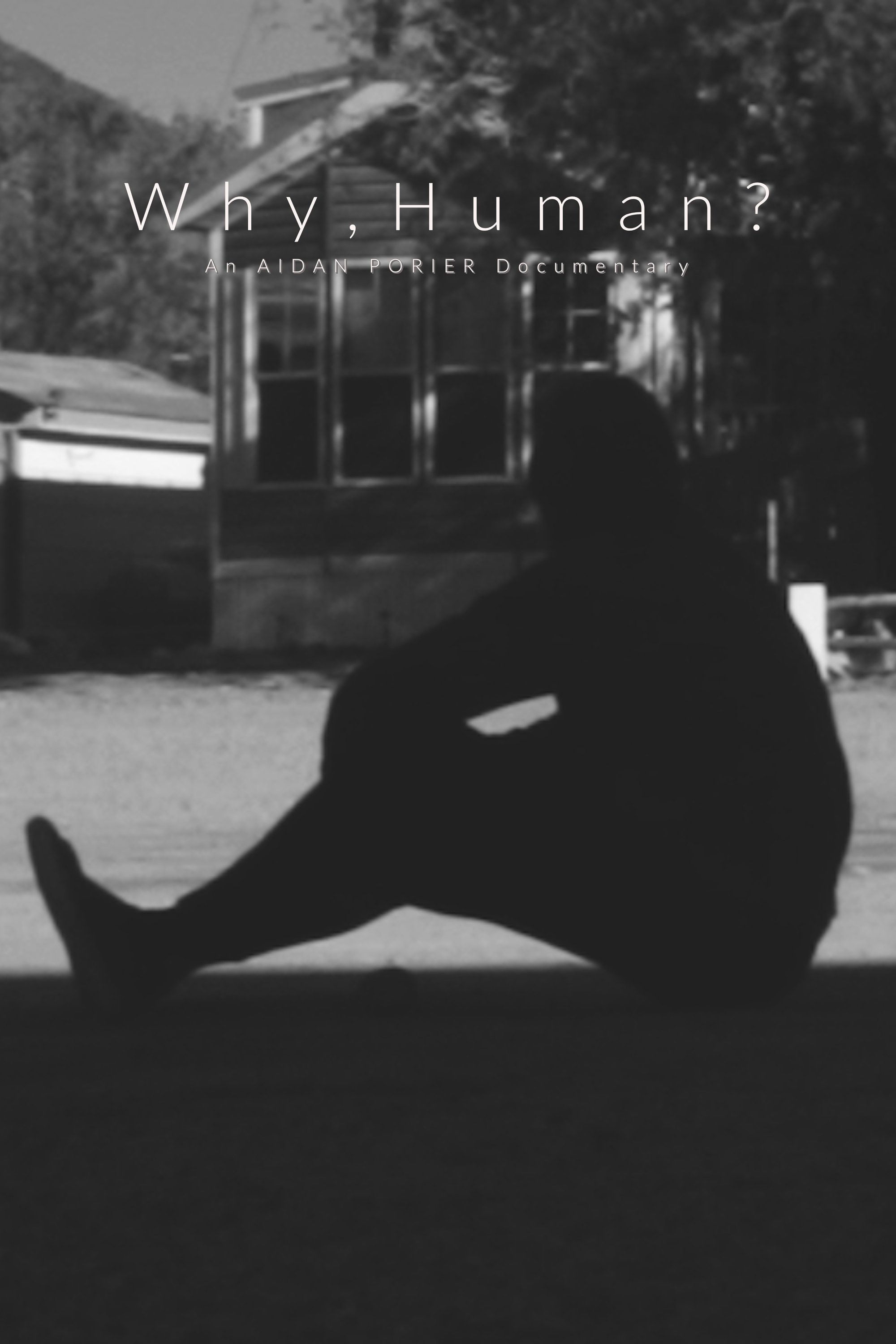
"What makes us different?"
In this short documentary, filmmaker Aidan Porier asks his friends what it means to be human. Here's what they said...
Social & External
Voice #1
Voice #2
Voice #3
Voice #4
Voice #5
Voice #6
Voice #7
An exploration —manipulated and staged— of life in Las Hurdes, in the province of Cáceres, in Extremadura, Spain, as it was in 1932. Insalubrity, misery and lack of opportunities provoke the emigration of young people and the solitude of those who remain in the desolation of one of the poorest and least developed Spanish regions at that time.
A view of the religious tensions between Muslims and Buddhist through the portrait of the Buddhist monk Ashin Wirathu, leader of anti-Muslim movement in Myanmar.
Fox Rich, indomitable matriarch and modern-day abolitionist, strives to keep her family together while fighting for the release of her incarcerated husband. An intimate, epic, and unconventional love story, filmed over two decades.
Christian Garcia, a fiercely dedicated Latino political organizer, leads a team of young people mobilizing their community for a soda tax. Tested during their fight for the right to vote, the young recruits dare to beat back the goliath soda industry and ignite a youth-powered movement for health equity and justice.
Agnes may not seem like someone with much to laugh about. For one thing, she has albinism - a lack of pigment in the skin, hair and eyes - and her appearance has provoked prejudice from family, friends and strangers since she was born. But despite all odds, Agnes refuses to lead a life of sorrow. This fascinating and inspiring documentary also shares the stories of seven other people's individual experiences of living their lives with albinism in Kenya, a predominantly black society. While each person's story is unique, they all have one thing in common: they know what it is like to stand out uncomfortably from the crowd.
In the 1920s, former coal miner Harry Hoxsey claimed to have an herbal cure for cancer. Although scoffed at and ultimately banned by the medical establishment, by the 1950s, Hoxsey's formula had been used to treat thousands of patients, who testified to its efficacy. Was Hoxsey's recipe the work of a snake-oil charlatan or a legitimate treatment? Ken Ausubel directs this keen look into the forces that shape the policies of organized medicine.
A journey through six different countries and characters into a world where chemistry is the ultimate response to human pursuits of well-being.
How the Monuments Came Down is a timely and searing look at the history of white supremacy and Black resistance in Richmond. The feature-length film-brought to life by history-makers, descendants, scholars, and activists-reveals how monuments to Confederate leaders stood for more than a century, and why they fell.
This documentary speaks to local activist groups in the music industry and culture scene to find out why people are driven to fight back and speak out on subjects they’re passionate about. With an aim of inspiring the next generation, each activist gives their advice on how you can put a cause you are passionate about in the local scene into action. Hope Lynes spoke to Phil Douglas from LGBTQIA+ organisation Curious Arts; grassroots promoter Hana Harrison from Art Mouse; Tracks' Sarah Wilson, who campaigns for better female representation in the music scene with her project Noisy Daughters; Chantal Herbert from feminist Black and queer-led organisation Sister Shack; and disability activist and musician Ruth Lyon. It’s hoped that this intimate and personal documentary will explore the starting points to beginning your own activism.
Produced in 1967, this black and white film is an inmate's view of Daytop, a drug treatment centre on Staten Island, New York, where addicts learn to get along without drugs. Uncompromising, often brutal group therapy sessions are designed to shake loose the excuses a victim makes for himself. The people and situations shown are authentic; only one actor was employed. The results obtained at Daytop are regarded by some psychiatrists as a breakthrough.
The former talk show host speaks out from behind the glass at an assisted living facility where a restrictive guardianship has made her a 'prisoner.'
This documentary attempts to understand why so many comedians experience mental health issues, a condition that stands in stark contrast to their profession. Anxiety, depression, suicidal thoughts: these are the heavy subjects they dare to tackle on stage. Cathy Gauthier, Coco Belliveau, Jean-François Mercier, Mario Jean, Maude Landry, Preach and Simon Gouache testify.
In Their Hands follows the psychotherapy of vulnerable people, sometimes destroyed by acts of torture.Their speech deals with an inhuman past: they want to stop the pain, rule out the folly and protect their family from violence in them, be understood and recognized - these are the issues that drive them.
The follow-up film to “Barstow, California” takes us to the mountains of Miyama, a remote forest and tourist area north of Kyoto. Uwe Walter, a shakuhachi player from Germany, lives there with his wife Mitsuyo for 30 years. Together with the villagers he prepares the annual Gion Festival. On the eve of the festival, the village representatives tell him that his self-built studio is to be demolished. This brings back memories for him of earlier times and his first steps as a Nō actor. In the manner of a fresco, the film interweaves rural depictions of everyday life with the story of its German protagonist. In the village community with its togetherness of generations, Uwe shares life with his neighbours, with farmers, hunters, woodsmen, poultry farmers and anglers, tills his kitchen garden, and like other tradition-conscious villagers, he also grows his rice. The film shows them in a harsh mountain landscape between the rainy season and the first snow.
Stéphane and Alizée, two rock-climbers looking for a breakthrough, spend their winter in Catalonia—the perfect place for climbing hard. Their projects lie in the sector called “El Pati” (the playground). Success, more than a physical achievement, seems to be a state of mind.
Through testimonies and images, the crude reality of human rights in Argentina in democracy is portrayed and the role of the hegemonic means of communication to make causes and protests invisible ...