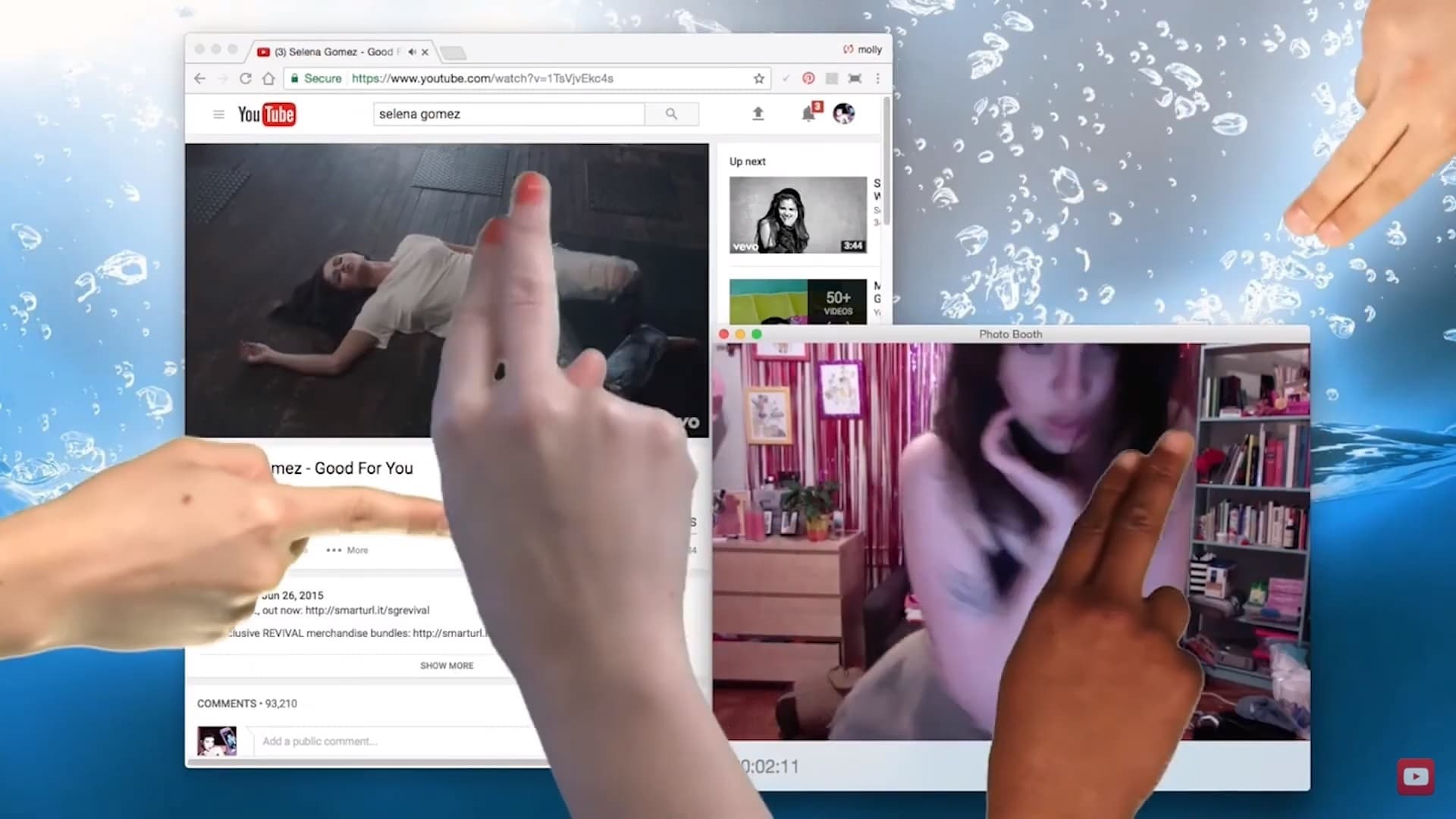
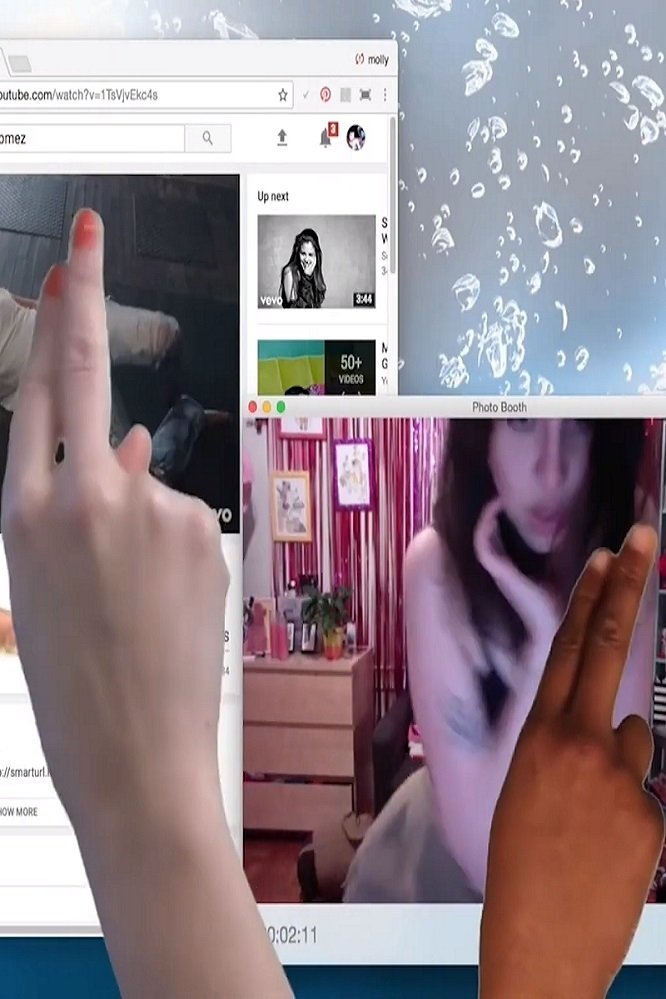
An installation containing video files of the artist's persona, alongside a karaoke piece of her as she watches her viewership fall and two mirrors side by side of messages she received, from two different users online.
Social & External
mollysoda
An exploration of how the U.S. military employs video game technology to train troops for war. Filmed at the United States Marine Corps Air Ground Combat Center, Watson is Down pairs footage of soldiers at computers engaging in combat-simulation training with scenes from the video games.
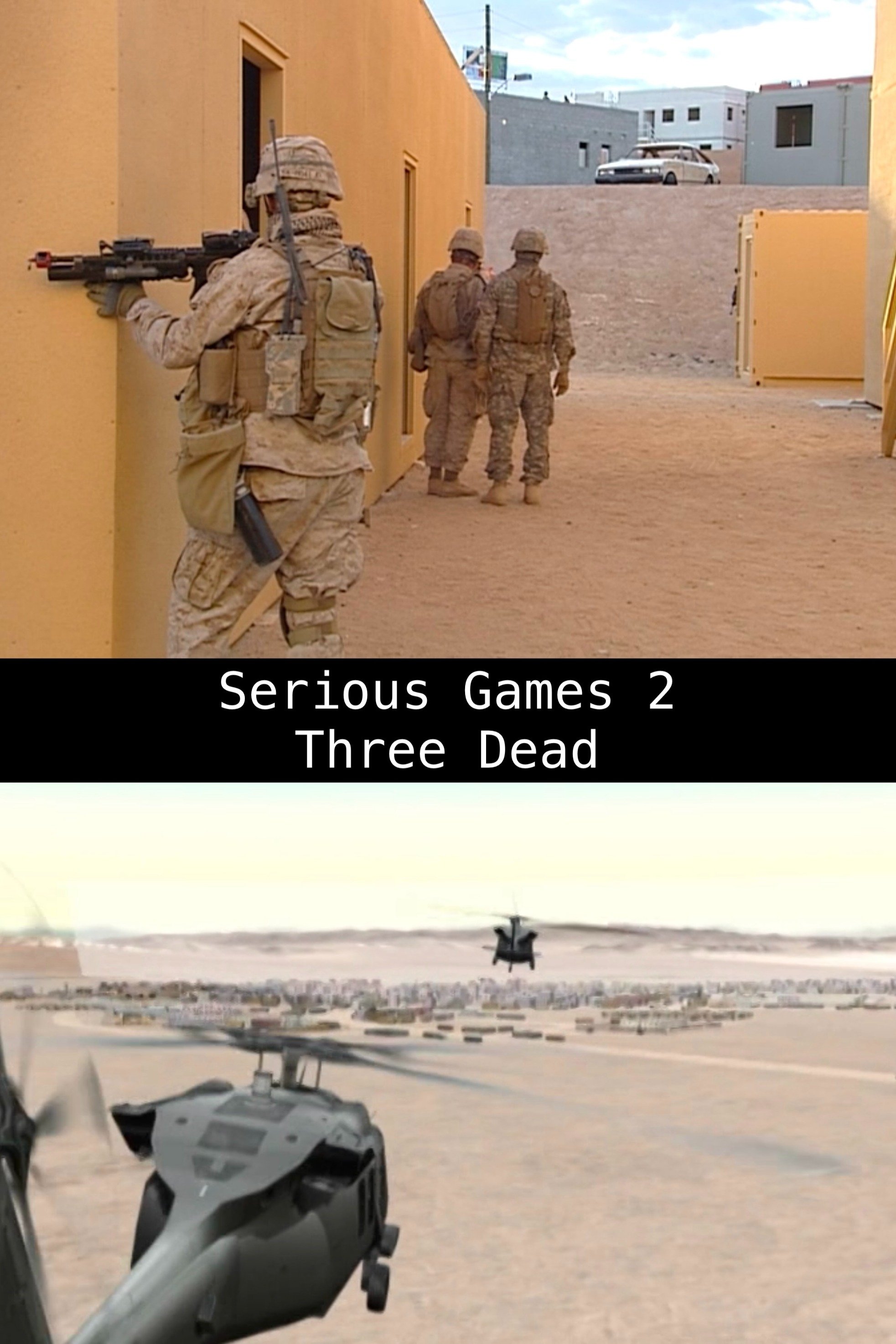
An exploration of how the U.S. military employs video game technology to train troops for war. Three Dead depicts a military exercise within a mock Iraqi town built on the outskirts of Twentynine Palms, California, blurring the line between computer simulation and reality.
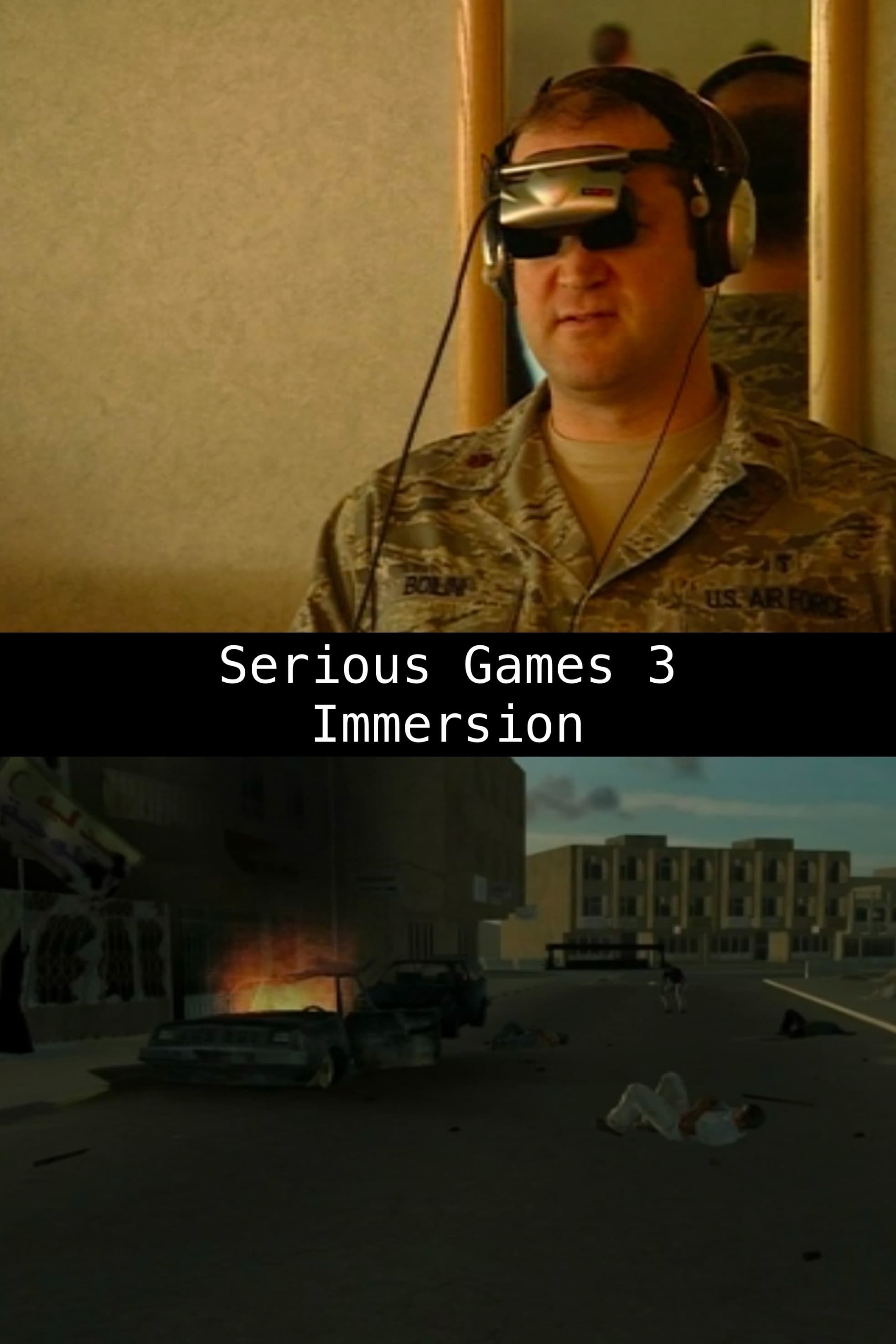
An exploration of how the U.S. military employs video game technology to train troops for war. In Immersion, Farocki presents footage of a role-playing exercise in which military psychologists demonstrate how to use the PTSD program on their colleagues, who describe traumatic wartime experiences. On a second channel, their descriptions play out as virtual renderings.
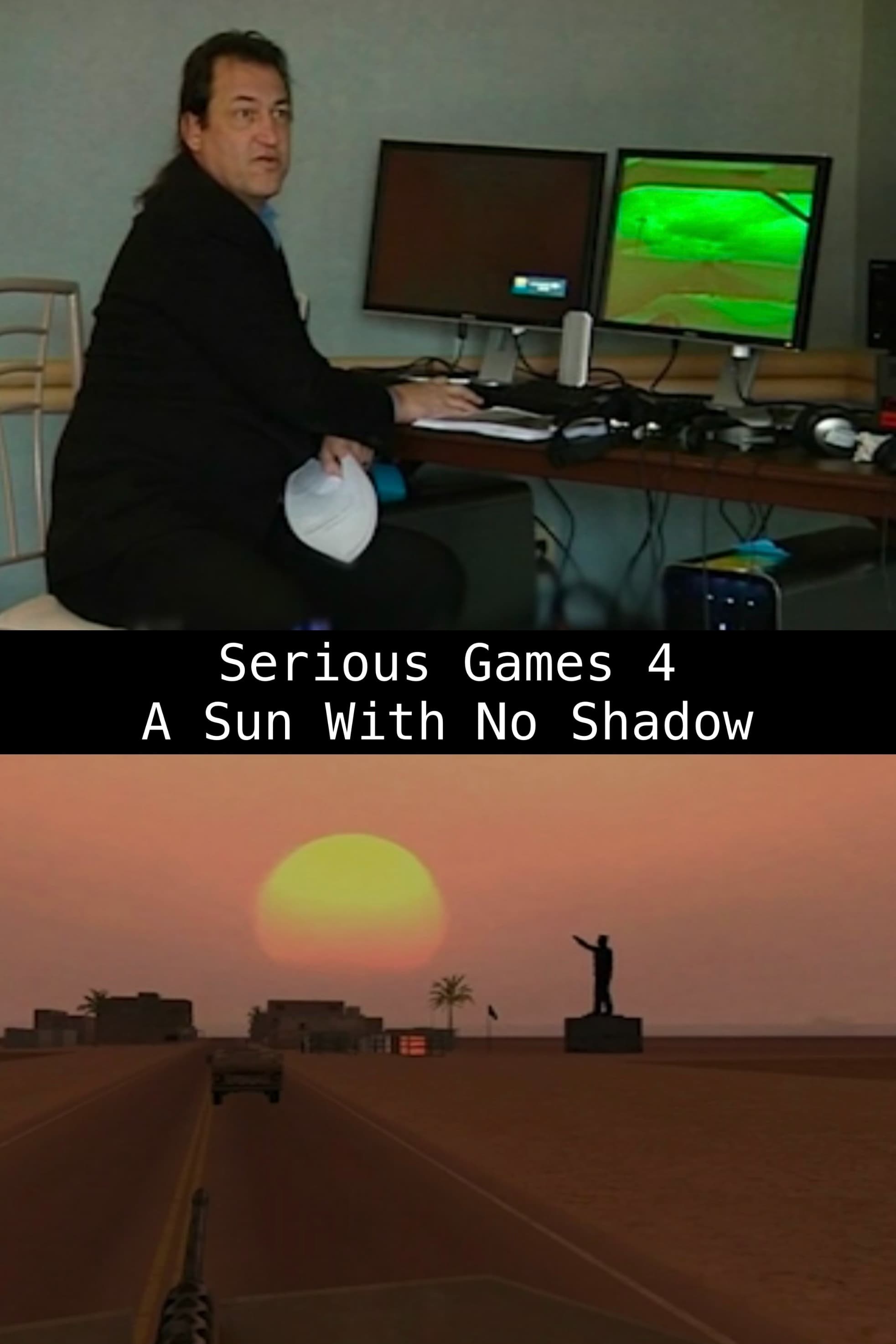
An exploration of how the U.S. military employs video game technology to train troops for war. In A Sun With No Shadow, Farocki calls attention to the subtle differences between the simulations for combat training and PTSD. With the former, the sun can be programmed to cast shadows in the virtual combat zones, while the latter, less expensive technology does not offer this feature.
Portrait of Andy Goldsworthy, an artist whose specialty is ephemeral sculptures made from elements of nature.
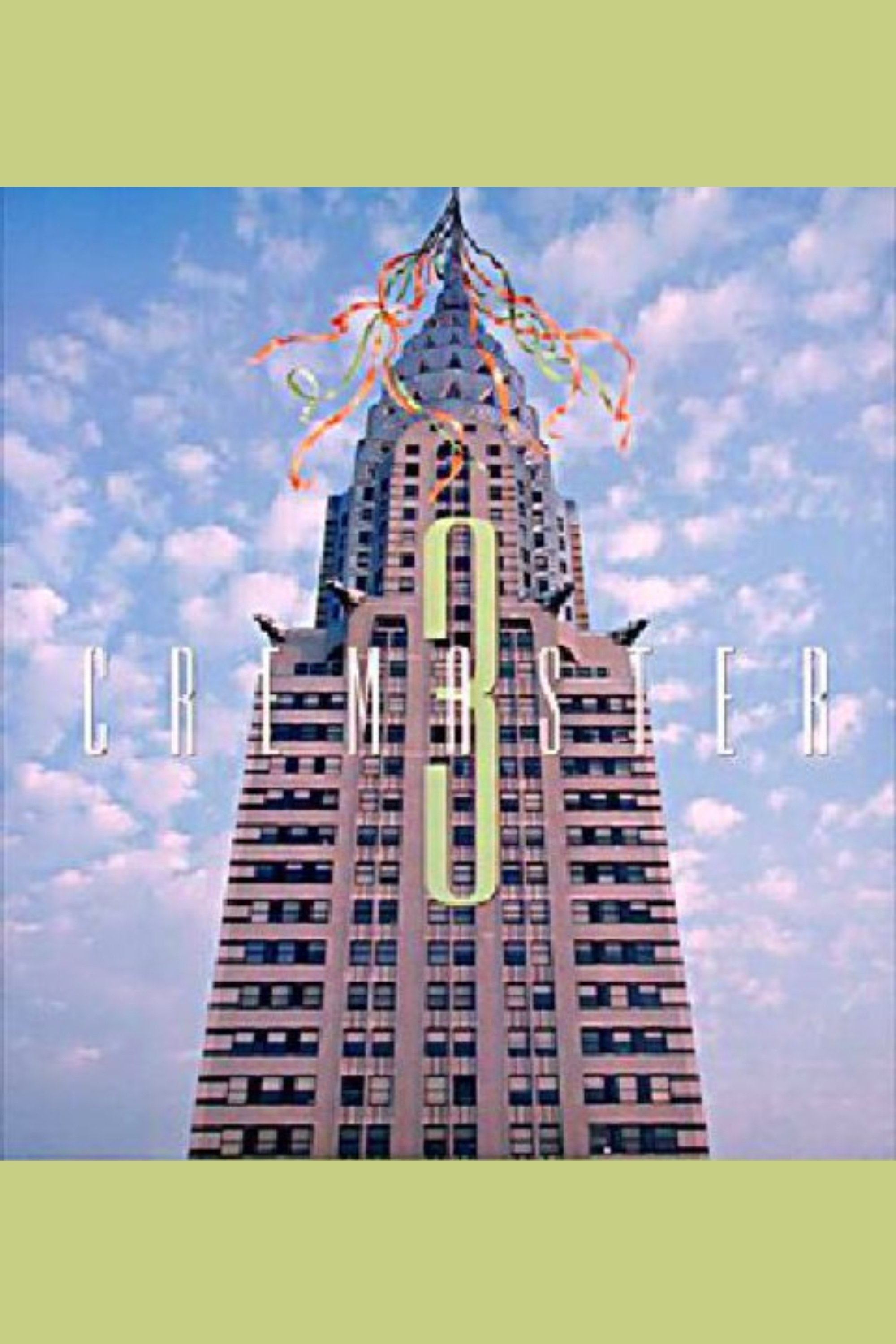
CREMASTER 3 (2002) is set in New York City and narrates the construction of the Chrysler Building, which is in itself a character - host to inner, antagonistic forces at play for access to the process of (spiritual) transcendence. These factions find form in the struggle between Hiram Abiff or the Architect ...
The title may evoke images of gleeful, destructive anarchism, but "smashing" here signals a relationship between people and official city statues that is friendly, jovial, even a little melancholic.
Artist and filmmaker Julian Rosefeldt creates elaborately staged films that investigate the power of language and the conventions of cinema as an allegory for societal and individual behaviors. With the multi-channel film installation Euphoria he continues this examination by exploring capitalism, colonialism, and the influential effects of unlimited economic growth in society.
REkOGNIZE is a three-channel video installation and a meditation on photography, memory, and movement. Artist and Academy Award-nominated cinematographer Bradford Young (Selma, Arrival) finds inspiration in Pittsburgh’s Hill District neighborhood, a site of the early 20th-century Great Migration. During this time, millions of African Americans moved from the rural southern United States to cities in the north and west. The Hill District saw a flourishing of culture during these years and was a site of artistic development for luminaries such as August Wilson, Charles “Teenie” Harris, Errol Garner, and many others. REkOGNIZE takes its visual cues from the Pittsburgh landscape, especially the city’s tunnels, which serve not only as literal entry points into the city, but also as metaphors for this movement of people and culture.
A multi-channel video installation about movement and bodies.
In the midst of the frenzy night a man finds himself lost in the crevasse of time. It was not the grotesque beings nor the monsters, but it was he who “was here, but wasn't here”. He was the phantom. Buried under memories full of inhibition and promises that never kept – words washed up on the shore – time keeps him at a distance from the “place”. And he hears poems coming on the waves from the other side rhyming and lapping against the shore. A 360° scope video Installation commissioned by Nagano Art Museum.
2 Small Channel Video Installation, featuring a monologue excerpted from an untitled novel by Alissa Bennett
Arrancar los ojos is a project that proposes a constellation of works around the gaze and its political dimension. A reflection on the concepts of institutional violence, repression and collective trauma, focusing on the pattern of eye attacks by state security forces.

During the 1980 exhibition of Burden's monumental kinetic sculpture The Big Wheel at Ronald Feldman Fine Arts, New York, Burden and Feldman were interviewed by art critic Willoughby Sharp. Burden articulates the process of creating The Big Wheel, a 6,000-pound, spinning cast-iron flywheel that is initially powered by a motorcycle, and discusses its relation to his earlier performance pieces and sculptural works. Addressing his motivations and the meaning of this potentially dangerous mechanical art object, Burden discusses such topics as the role of the artist in the industrial world, "personal insanity and mass insanity," and "man's propensity towards violence."
An unnamed passer-by is forced to trace a circular route inside an abandoned tram station, facing loss and time. The broken walls act as a channel, transmitting fragmentary, blurred and analogical memories.
The Other Side is a double-screen video installation commissioned as part of Breakwell’s residency at the De La Warr Pavilion in Bexhill-on-Sea, East Sussex during the summer and autumn of 2000. The film was shot on the Pavilion’s upper landing, the camera positioned looking out through the curved windows of the stairwell across the exterior balcony to a view of the sea and the horizon. It comprises two alternating sequences projected onto either side of a free standing wall. Footage of elderly couples ballroom dancing on the balcony outside has been slowed down to the rhythm of the accompanying soundtrack, an extract from Franz Schubert’s Nocturne in E-flat Major (Op.148) overlaid by the sounds of breaking waves and seagulls. In the alternating scene, played to the same sound, panoramic vistas of the view out of the building towards the sea and horizon beyond are empty of human presence.
Short film in competition at the 48Hours Film Project. Sci-Fi/Mystery genre. Directed by Simone Marsella, starring Ludovica Castrichella, Dario Grasso and Federico Imola.
This experimental "film" consists of an empty room with a bare lightbulb, and windows covered with a translucent material, for a duration of 24 hours. It is not necessary for visitors to stay for the entire duration - they can come and go as they please. Created by Anthony McCall, it is based on the architectural framing of time and light. It came at the end of a series of works in which McCall was stripping back cinema to its absolute minimum - light, time, and human experience/perception.
Bass takes over the upstairs Kanter-McCormick Gallery at the Art Center, expanding the territory of her gothic world in a new work The Latest Sun is Sinking Fast, an immersive, multi-channel installation incorporating 16mm film/video, sound, architecture, and featuring performances by Sarah Stambaugh, Bryan Saner, and Matthew Goulish. The solo exhibition features a spatial narrative installation that delves, through movement, texture, sound, and gesture, into the psychology of a recurring figure in Bass' previous films; while also introducing two new characters, blending the past into the present. Bass has designed the installation by altering the gallery, leading the viewer through a evocative memory of place, embedding us in a timeless society of lost souls in a haunted landscape. -Allison Peters Quinn, Exhibition Director, Hyde Park Art Center
Ilya Kabakov is considered one of the most important contemporary artists worldwide. Born and raised in the Ukraine in the period between Stalin and Gorbatschow he left the country in the 80s. In his Installations and his numerous paintings Kabakov creates a world of its own, which leaves the heaviness of socialist and post-socialist life far behind. The film links Ilya Kabakovs artistic spaces with insights into Russian everyday life, which itself sometimes appears like an installation by the artist.