The shooting of this peasant chronicle in the Gruyère region of Switzerland lasted a whole year, from July 1989 to July 1990.
Social & External
Zurich-born Hugo Koblet was the first international cycling star of the post-war period. He was a stylist on the bicycle and in life, and a huge heartthrob. Koblet had a meteoric rise and won the Giro d'Italia in 1950. Once he had reached the zenith of his career, Koblet was put under pressure by overly ambitious officials and ended up ruining his health with drugs. In 1954, he married a well-known model and they became a celebrity dream couple. After his athletic career ended, Koblet began to lose his footing. Threatened by bankruptcy, he crashed his Alfa into a tree.
An intimate portrayal of the everyday lives of Carthusian monks of the Grande Chartreuse, high in the French Alps (Chartreuse Mountains). The idea for the film was proposed to the monks in 1984, but the Carthusians said they wanted time to think about it. The Carthusians finally contacted Gröning 16 years later to say they were now willing to permit Gröning to shoot the movie, if he was still interested.
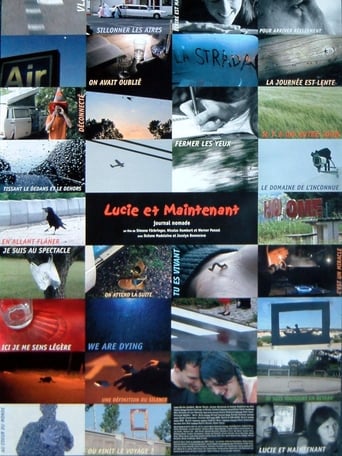
In May of 1982 Julio Cortázar, the Argentinean writer and his companion in life, Carol Dunlop set out in their VW bus on a journey along the highway from Paris to Marseille that, for each of them, was to be their final one. Twenty-five years later, Océane Madelaine and Jocelyn Bonnerave set out to undertake the journey again.
A documentary film about Tibetan traditional medicine.
The story of three Turkish men. They all grew up in Switzerland and all got deported after various criminal offenses.
The real place where the penguin congress takes place is also the most fictional place on this planet where you can stand on your own two legs. Here, even the animals can talk. This land of dreams and nightmares is called Antarctica. In this desert of ice surrounded by a stormy sea, a few dozen human beings also live. Using sophisticated instruments, they observe the worrying changes affecting our world: the hole in the ozone layer, climate change, and so on.
The first film about second-generation Swiss immigrants: A Turkish ice hockey player explains why, in Switzerland, he could only fall in love with an Italian. A young Italian woman explains why she prefers to rap in English. A hip-hop artist with Hispanic origins fights for his political rights and the director reminisces on how, despite his Arabic roots, he's been persecuted as a Jew. Babylon 2 reflects the rise of a new urban culture in Switzerland, which is instigated by the second generation of immigrants and the help of electronic media.
This documentary offers a complex portrait of Hollman Morris, the Colombian war journalist whose multiple award-winning news show Contravía is one of the few local current-affairs programs that refuses to pander to President Alvaro Uribe's staunchly authoritative government. While most television viewers in Columbia opt for variety shows and soap operas, citizens in search of suppressed truths tune in to Contravía to hear the latest news about forced disappearances, secret mass graves, and various other atrocities taking place all across the countryside. But when you live and work in the country that Reporters Without Borders claims is one of the most dangerous places in Latin America for a journalist to work, denouncing human rights abuses can be a dangerous game. Yet despite the danger to both himself and his family, Morris remains convinced that the situation in Columbia will never been improved if outspoken media figures like himself simply disappear into exile.
Croatia, 7th of January 1992: In the middle of the war, a young journalist's body is discovered dressed in the uniform of an international mercenary group. Twenty years later, his cousin Anja Kofmel investigates his story.
This film deals with the issue of mandatory military service in Switzerland. For four months, from February to May 1990, filmmaker Jacqueline Veuve and her team filmed a platoon engaged in basic training at Colombier, Switzerland.
Arami Ullón must return to Paraguay to make an important decision: what will happen to her sick mother, Mirna? The heartfelt gaze of the camera reveals a relationship filled with love, but also unspoken and unresolved issues. A sensitive film which examines the inner turmoil of the daughter during the final stages of her mother’s degenerative illness.
Odyssey of the fortune-teller Daniele von Arb who, aged sixteen, joined the revolutionary underground and made the headlines as a top Swiss terrorist.
A documentary. David Sieveking takes the advice of his idol, David Lynch and tries out Maharishi Mahesh Yogi's transcendental meditation technique.
The incredible story of how the mummified corpse of a 40-year-old man was discovered by a hunter in one of the most remote parts of the country. The dead man's detailed notes reveal that he actually committed suicide through self-imposed starvation only the summer before. Liechti's film is a stunning rapprochement of a fictional text, which itself is based upon a true event: a cinematic manifesto for life, challenged by the main character's radical renunciation of life itself.
Architects from Europe, America and China are invited to a Chinese provincial town. Within several months, they are to construct a park in Jinhua, intended to form the centre of a new district of that town. Where green fields now flourish and farmers plough the land, investors will soon flock, followed by new inhabitants and political reforms. But the project ends up being drawn out over years. The euphoria of the early stages runs up against a reality in which torn-open earth and the ambitious hopes of politicians, workers and locals are the only manifest features. The film documents the changes leading to the Jinhua Architecture Park - from the laying of the foundation stone to its final opening. In giving all participants in this process an opportunity to comment.
Documentary about Swiss grocery store pioneer Gottlieb Duttweiler
It is winter at an emergency shelter for the homeless in Lausanne. Every night at the door of this little-known basement facility the same entry ritual takes place, resulting in confrontations which can sometimes turn violent. Those on duty at the shelter have the difficult task of “triaging the poor”: the women and children first, then the men. Although the total capacity at the shelter is 100, only 50 “chosen ones” will be admitted inside and granted a warm meal and a bed. The others know it will be a long night.