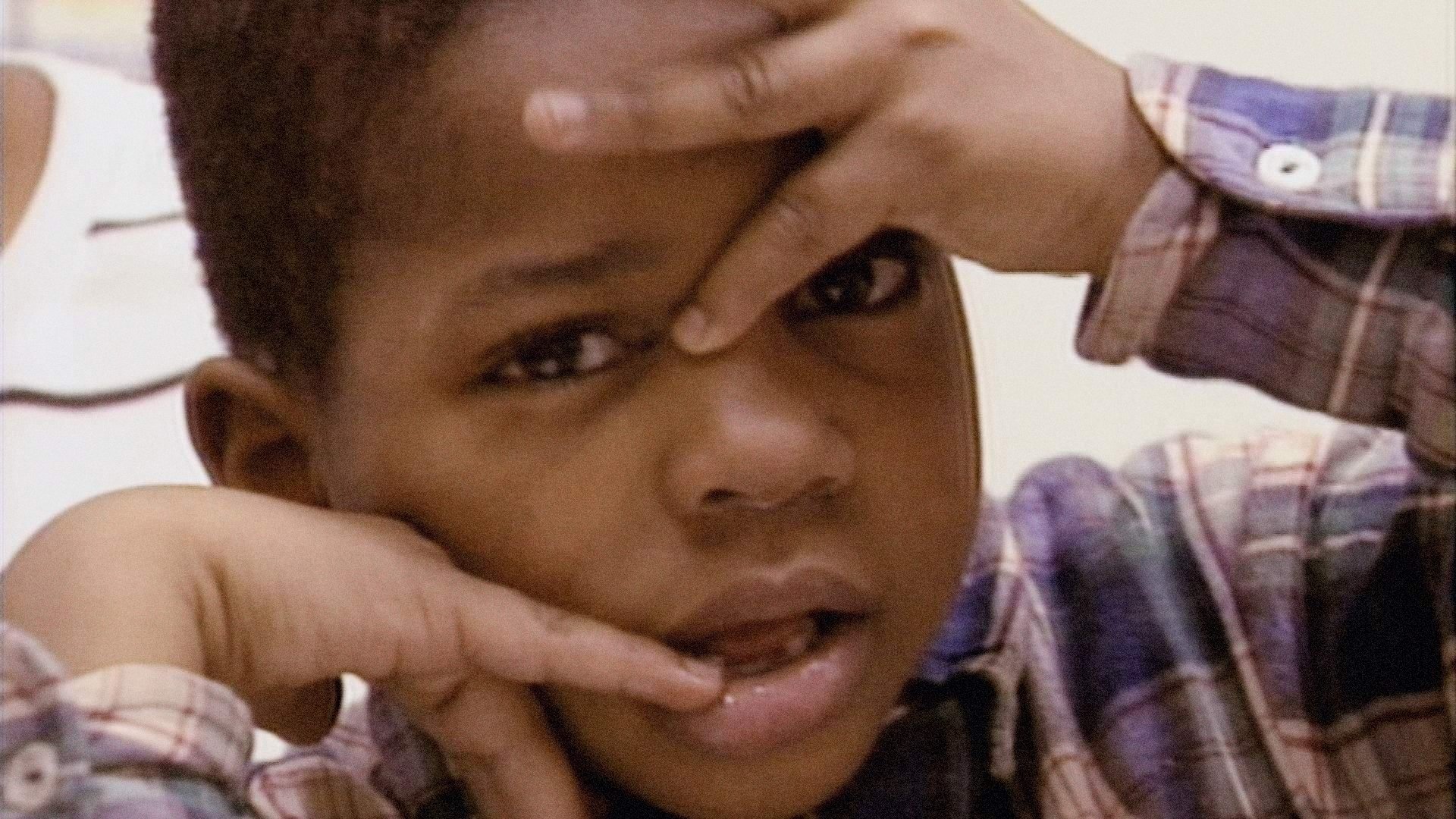
An exploration into why some children are severely damaged by early adversity while others are able to thrive. By revisiting childhood trauma victims profiled decades ago, we learn how their experiences shaped their lives as adults.
Social & External
Narrator (voice)
Because of the big housing problem in the US many people move into cheap, run down hotels, the so-called Flophouse hotels. Twelve-year-old Mikal was born and raised in a hotel room he shares with his parents, who struggle with substance abuse. Driven by love and a desire for a better life, his greatest wish is for his mother to stop drinking. Mikal is bright and articulate, but his parents’ struggles prevent them from giving him the stability he needs. Through Mikal’s perspective, the film paints an intimate portrait of resilience, hope, and the harsh realities of life on society’s margins.
D Carleton Gajdusek won the Nobel Prize for the discovery of Prions - the particles that would emerge as the cause of Mad Cow disease - while working with a cannibal tribe on New Guinea. He was a star of the scientific world. Over his years working amongst the tribes of the South Seas, he adopted 57 kids, bringing them to a new life in Washington DC. His adoptions were hailed as wonderful fatherly beneficence. But, at the height of his career, rumours began to spread he was a paedophile. Gajdusek would argue that if sex with children was okay in their own cultures, he wasn't wrong to join in. How could a great mind like Gajdusek's lose insight so totally, and why would the scientific community to which he was a hero be so quick to leap to his defence and dismiss the allegations? (Storyville)
Out-of-control teens across America were sent to a therapy camp in the harsh Utah desert. The conditions were brutal, but the staff were even worse.
The children of "Happy Valley" were victimized for years, by a key member of the legendary Penn State college football program. But were Jerry Sandusky’s crimes an open secret? With rare access, director Amir Bar-Lev delves beneath the headlines to tell a modern American parable of guilt, redemption, and identity.
Filmmaker Froukje van Wengerden’s 86-year-old grandmother shares a powerful memory from 1944, when she was just 14. As her story unfolds, we see a group of contemporary 14-year-old girls. Their procession of portraits permits the spectator to see simultaneously forward and back, into the future and towards the past. A miraculous testimonial that uses eye contact to focus the viewer inward and evoke unexpected emotions.
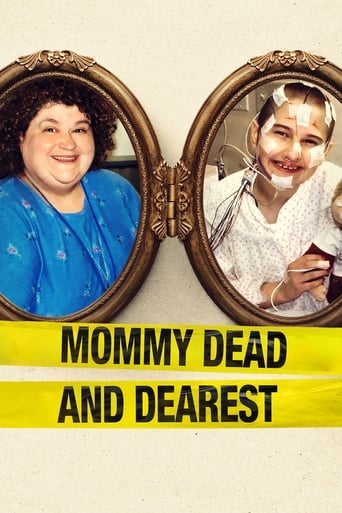
Child abuse, mental illness, and forbidden love converge in this mystery involving a mother and daughter who were thought to be living a fairy tale life that turned out to be a living nightmare.
Five women – Palestinian, American, Muslim, Christian, and Jewish – tell stories of humiliation and harassment by Israeli border guards and airport security officials.
OBAIDA, a short film by Matthew Cassel, explores a Palestinian child’s experience of Israeli military arrest. Each year, some 700 Palestinian children undergo military detention in a system where ill-treatment is widespread and institutionalized. For these young detainees, few rights are guaranteed, even on paper. After release, the experience of detention continues to shape and mark former child prisoners’ path forward.
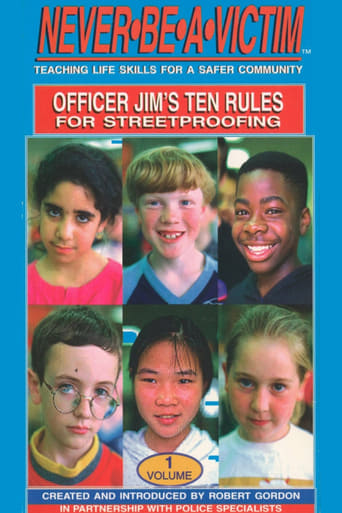
POLICE OFFICER JIM BYRNE, Canada's most honoured Safety Education Specialist brings you his famous TEN RULES, with which he has personally tested more than 25,000 students. Learn key strategies now taught in many schools and used by police working with the full NEVER BE A VICTIM Institutional Study Program. Develop your own personal streetproofing skills so you can train and test your family. Robert Gordon, who created this remarkable program in partnership with Metropolitan Police introduces this family video library against a backdrop of today's troubled society. TEACHING LIFE SKILLS FOR A SAFER COMMUNITY OFFICER JIM'S TEN RULES FOR STREETPROOFING • STRANGER MYTHS • ABDUCTION • BEING FOLLOWED • DANGEROUS PLACES • AVOIDING CARS AND VANS • GOOD TOUCHING-BAD TOUCHING
When former child star Aaron Schwartz (Mighty Ducks, Heavyweights) returned to the acting world as an adult, he found himself always being asked this recurring question: 'how is he still normal having been a child star?' After seeing one too many sensationalized 'where are they now' publications he began to notice that being a child actor carried with it a stigma that seemed impossible to break. Aaron explores why the Stigma of being raised in Hollywood exists, and why child stars are so often misunderstood.
Two children accused parents and teachers of leading a paedophilic satanic cult, supposedly headquartered in secret rooms on the school premises. The story was not true. But once the fire was lit, it was hard to put out. Emily Turner’s film considers the real-world impact of an outrageous online conspiracy theory, exploring the importance of truth and the cost of lies.
There are children. There are those who abuse them. And there are those who know, but never tell.
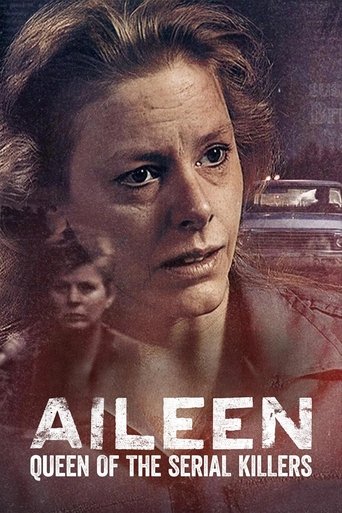
British documentarian Nick Broomfield creates a follow-up piece to his 1992 documentary of the serial killer Aileen Wuornos, a highway prostitute who was convicted of killing six men in Florida between 1989 and 1990. Interviewing an increasingly mentally unstable Wuornos, Broomfield captures the distorted mind of a murderer whom the state of Florida deems of sound mind -- and therefore fit to execute. Throughout the film, Broomfield includes footage of his testimony at Wuornos' trial.
Six men who were sexually abused by Catholic clergy as boys find empowerment by creating short films inspired by their trauma.
Meet the real Paris Hilton for the very first time as she embarks on a journey of healing and reflection, reclaiming her true identity along the way.
On Fanø, Denmark, three young families have their lives brutally turned upside down when the municipality suspects them of having abused their children. The suspicion is unfounded, but the damage is done, and the families are now dragged through a process involving child interviews, police interrogations, and more. Is the law on protecting children from abuse too far-reaching, or is it simply the price some must pay to prevent serious cases of mistreatment and neglect?
An investigation into accusations of teenagers being sexually abused within the film industry.
A documentary film about one woman's incredible life journey to meet and build a relationship with Ayahuasca. Her name is Tatiana Aya Tupinambá and she chose the path of an Ayahuasca curandera. Travel into the jungle with us near Pucallpa, Peru to meet Tatiana's Ashaninka teacher, Juan Flores. Experience the magical location of Mayantuyacu, where Tatiana's journey of self-discovery and healing blossomed. Mayantuyacu is a world famous healing center and is known for it's incredible unique geothermal river which is the largest boiling river on the planet. Learn about plant 'dietas', see the process of making Ayahuasca, and witness the fascinating practice that is 'Curanderismo', the way of healing in the Amazon rainforest. Understand how the Ayahuasca songs, Icaros, are learned from the plants and connect to force that these vibrational medicines carry.
Three young men bond together to escape volatile families in their Rust Belt hometown. As they face adult responsibilities, unexpected revelations threaten their decade-long friendship.
The four adult heroes and heroines of the film, who were selected in a casting call posted on TV, speak candidly on camera from the very beginning of their memories. Through individual stories, they describe their childhoods, family backgrounds, life at school, and how they spent their free time. The stories complement each other and are intertwined; we see emotions and hear things that reveal the horrific DNA of domestic violence. The documentary addresses the issue of abuse with an emphasis on the entire social environment of the victims and the societal underpinnings. Typical of domestic violence is that victims often hide it within themselves; they do not talk about it, and sometimes they do not even admit it. But in the documentary, they were determined to speak out.