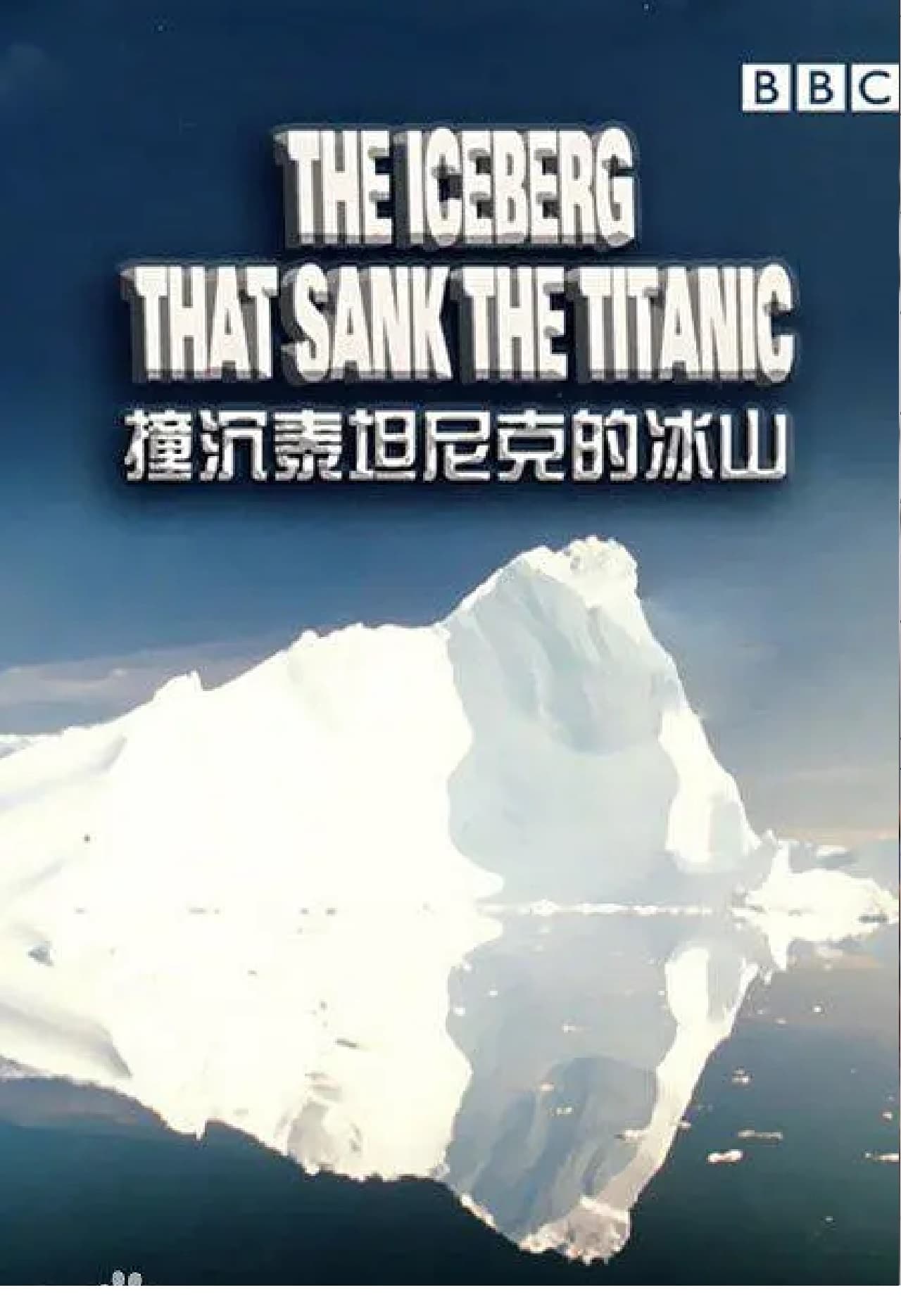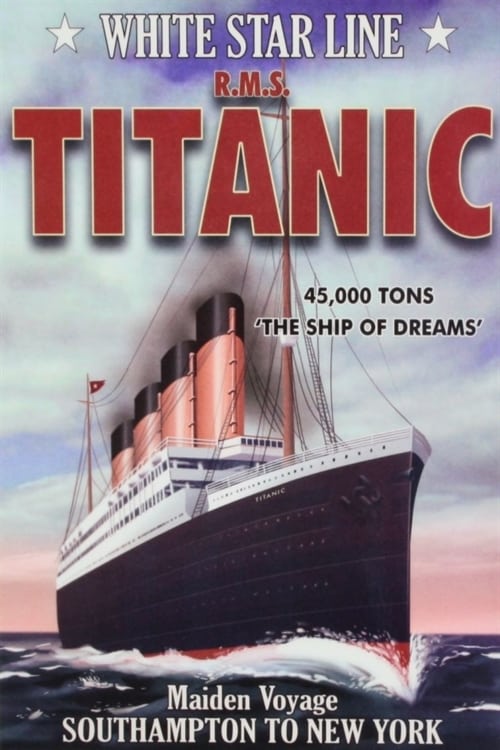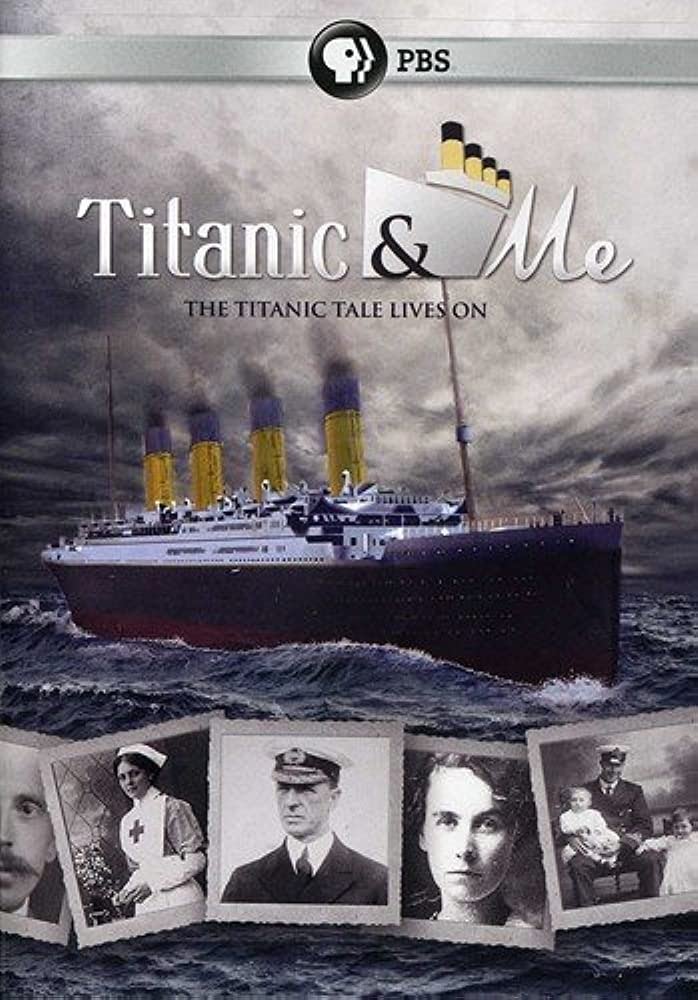
This documentary talks with the descendants of families affected by the sinking of the Titanic in 1912. It includes stories from the builders, the passengers, the rescuers and even some who ignored the call for help.
Social & External
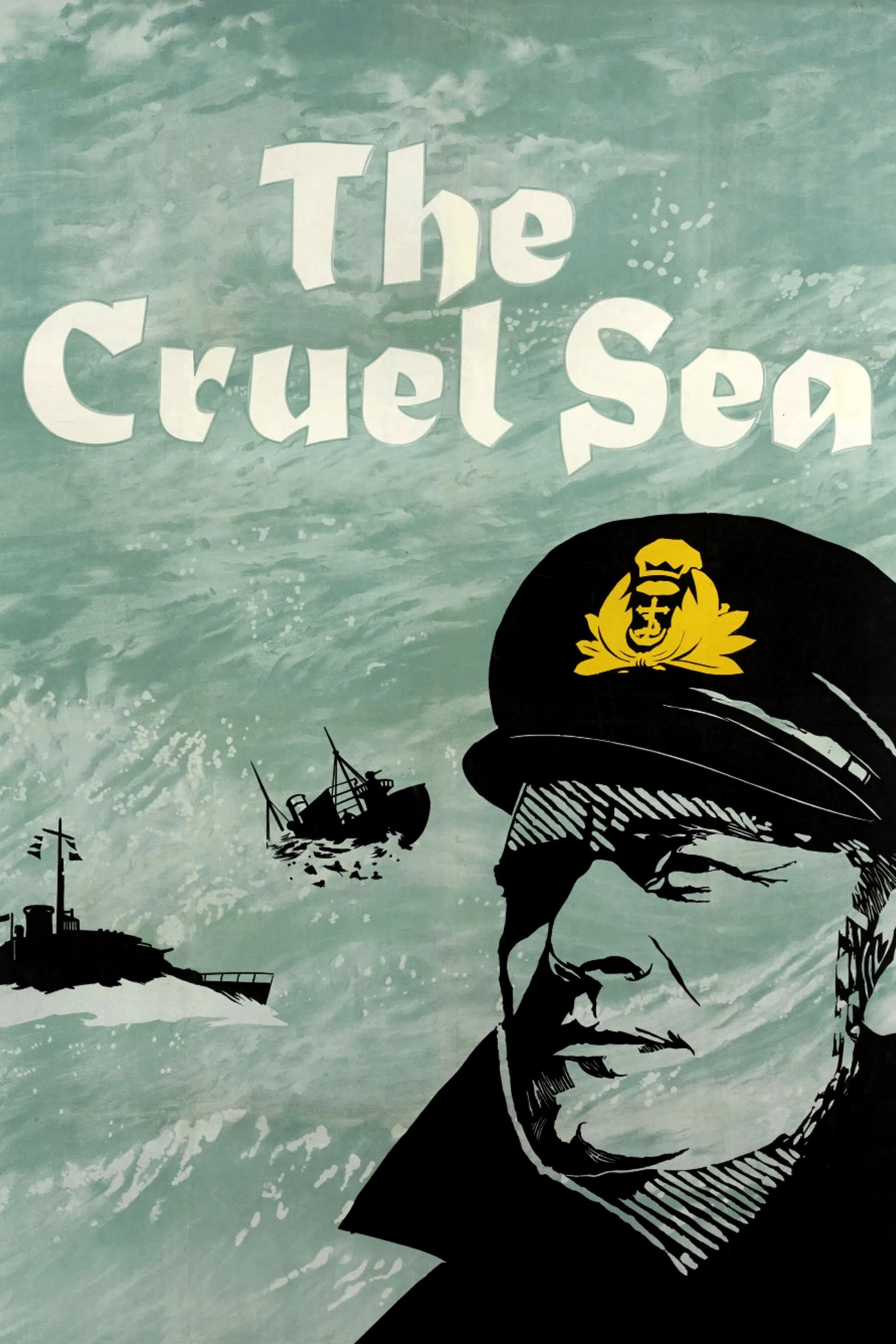
At the start of World War II, Cmdr. Ericson is assigned to convoy escort HMS Compass Rose with inexperienced officers and men just out of training. The winter seas make life miserable enough, but the men must also harden themselves to rescuing survivors of U-Boat attacks, while seldom able to strike back. Traumatic events afloat and ashore create a warm bond between the skipper and his first officer.
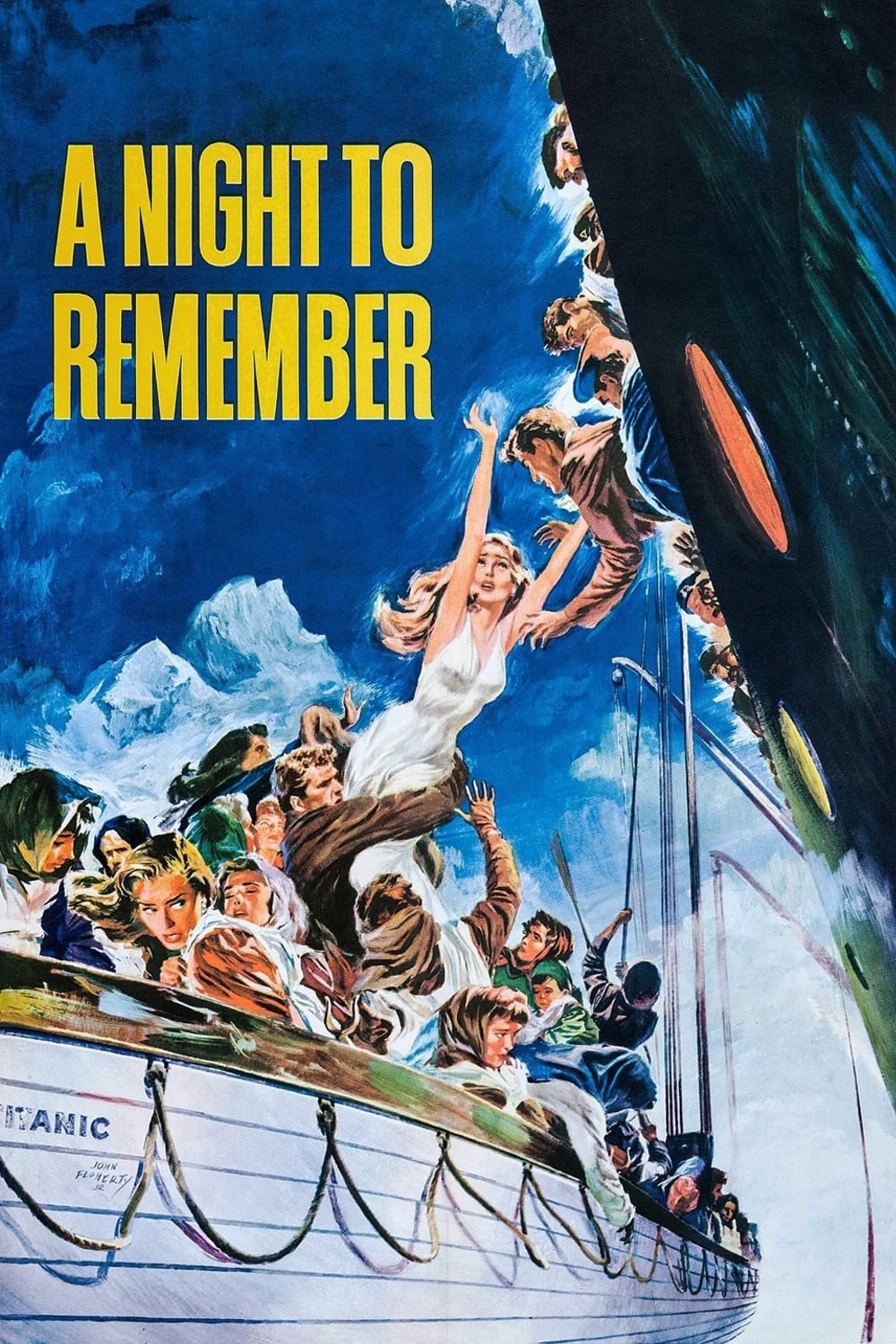
The sinking of the Titanic is presented in a highly realistic fashion in this tense British drama. The disaster is portrayed largely from the perspective of the ocean liner's second officer, Charles Lightoller. Despite numerous warnings about ice, the ship sails on, with Capt. Edward John Smith keeping it going at a steady clip. When the doomed vessel finally hits an iceberg, the crew and passengers discover that they lack enough lifeboats, and tragedy follows.


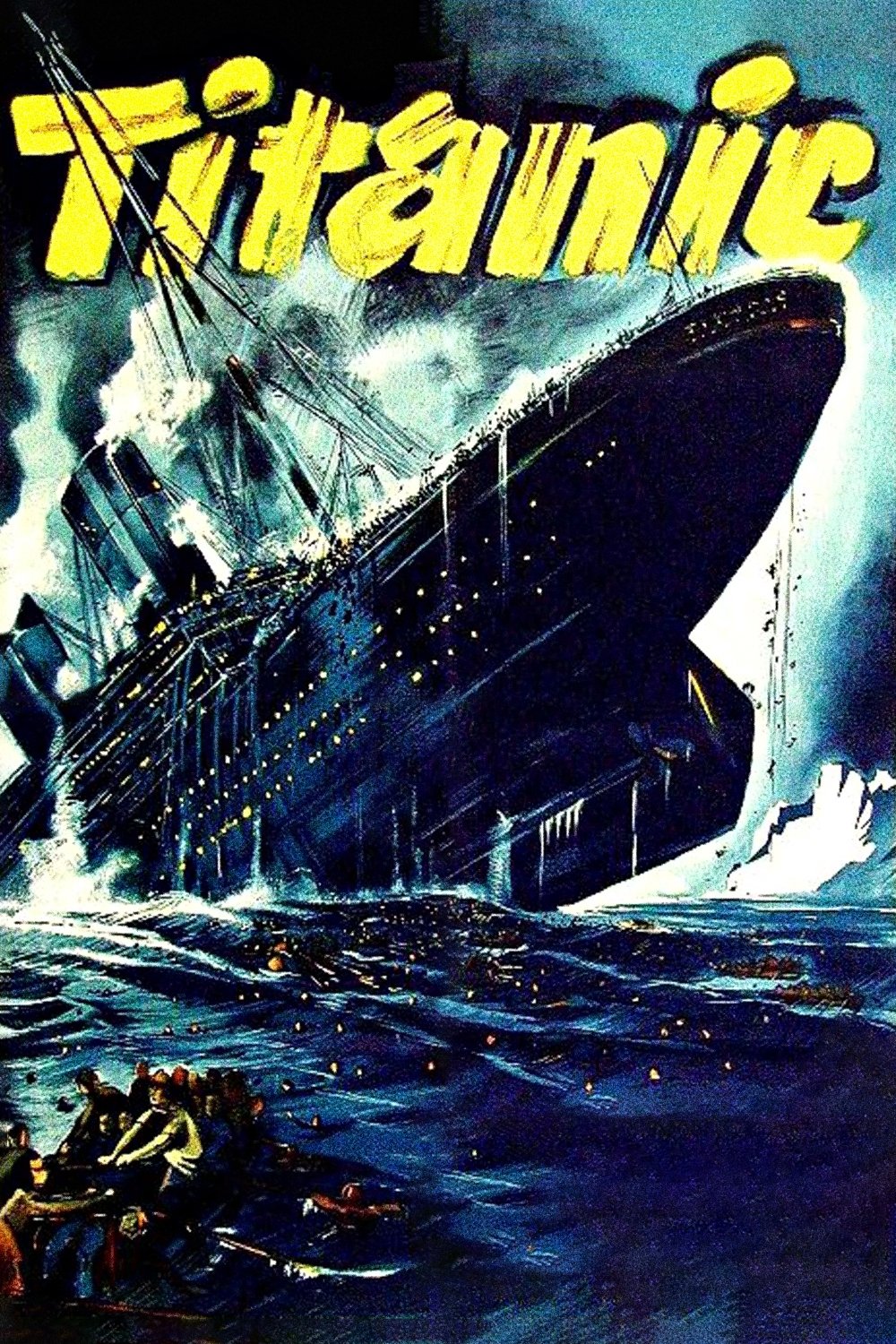
In 1912, the Titanic embarks on its inevitable collision course with history. In the wake of the over-spending required to build the largest luxury ship in the world, White Star Line executive Sir Bruce Ismay schemes to reverse the direction of his company's plummeting stock value. Onboard the Titanic, brave German 1st Officer Petersen struggles to convince his self-important British superiors not to overexert the ship's engines.
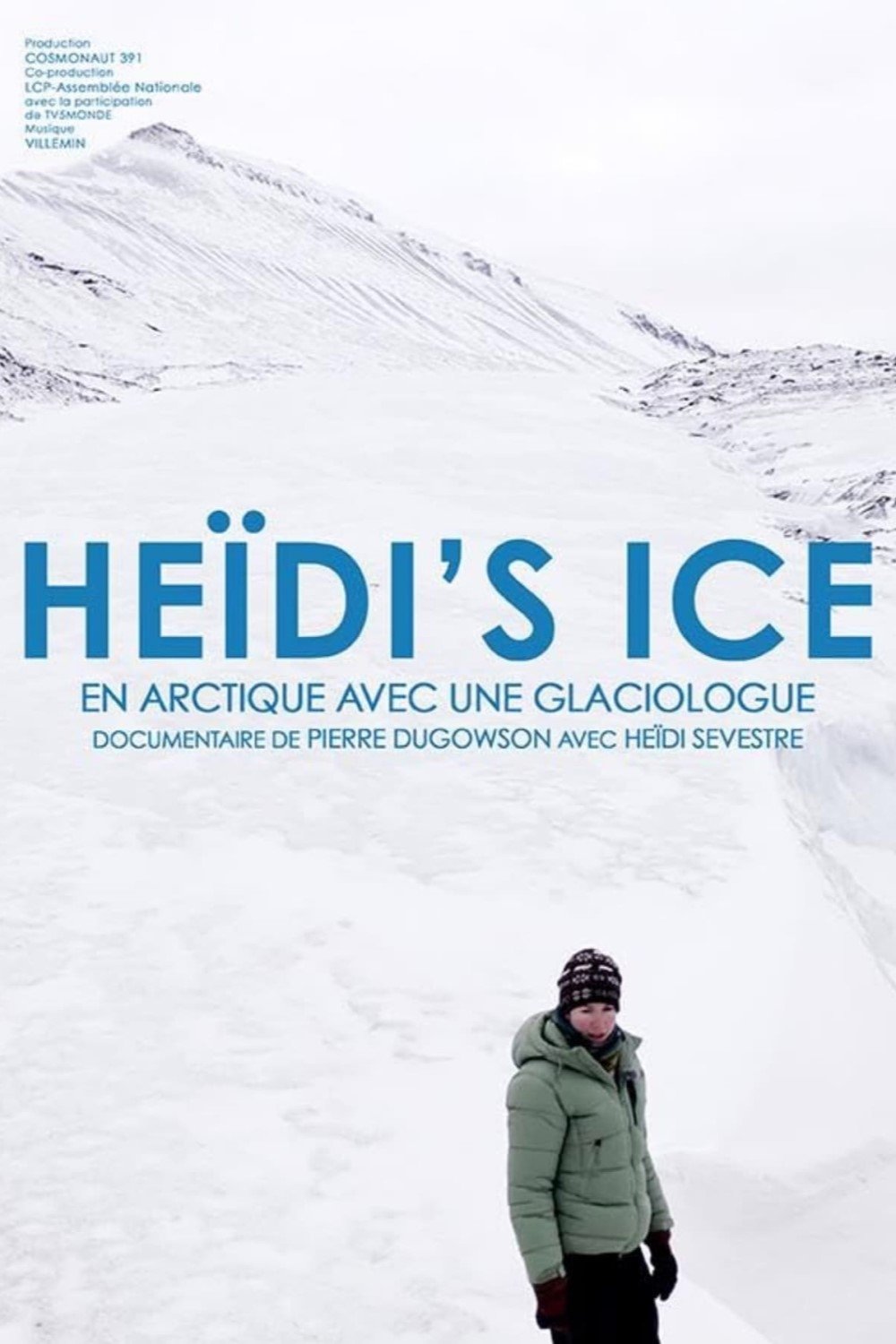
For 30 years, Lynn Davis has photographed the magnificent icebergs of Greenland. Davis returned recently with climate change expert Tony Leiserowitz, where they take in the meltdown, and explore the implications for the planet.
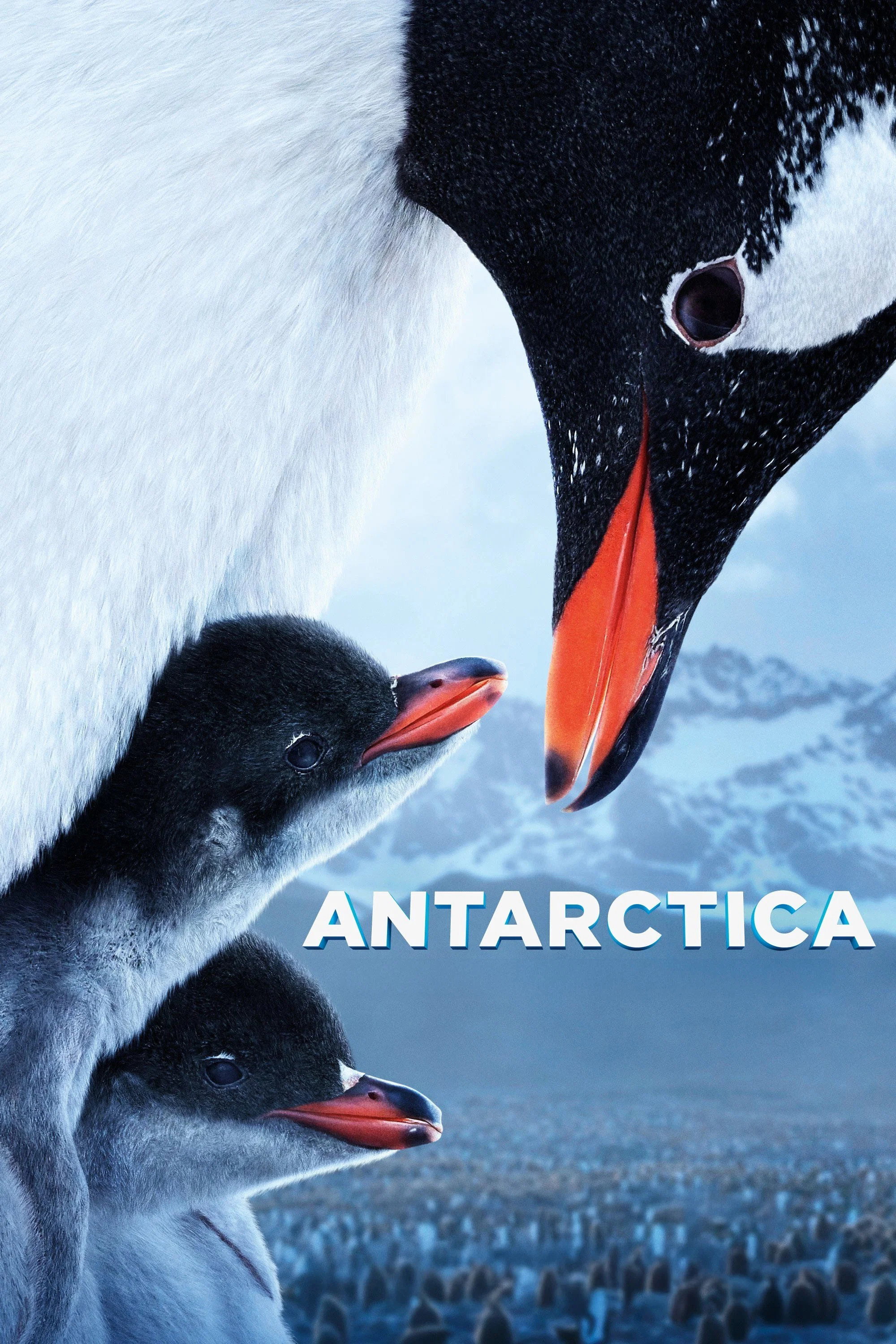
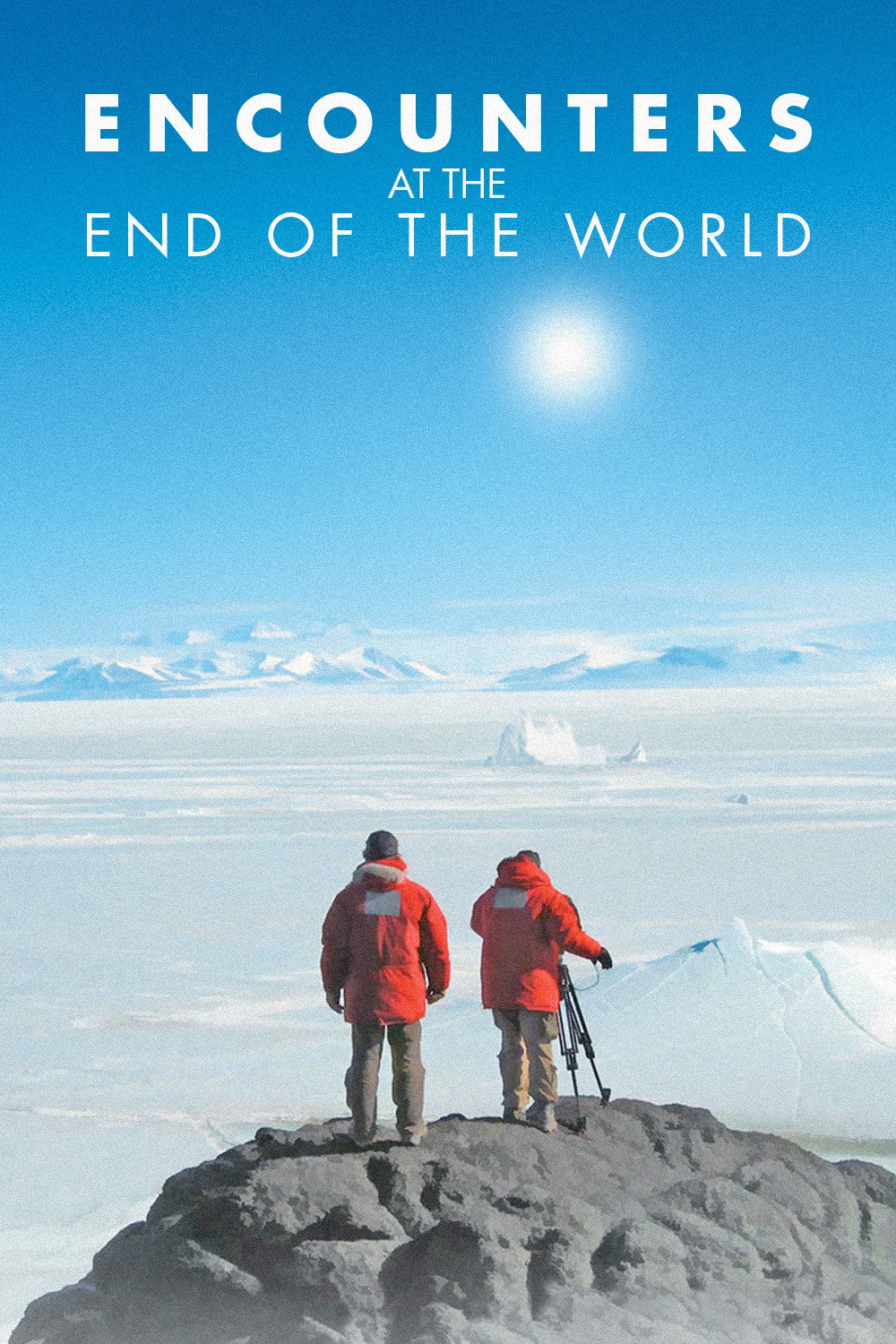
Herzog and cinematographer Peter Zeitlinger go to Antarctica to meet people who live and work there, and to capture footage of the continent's unique locations. Herzog's voiceover narration explains that his film will not be a typical Antarctica film about "fluffy penguins", but will explore the dreams of the people and the landscape.
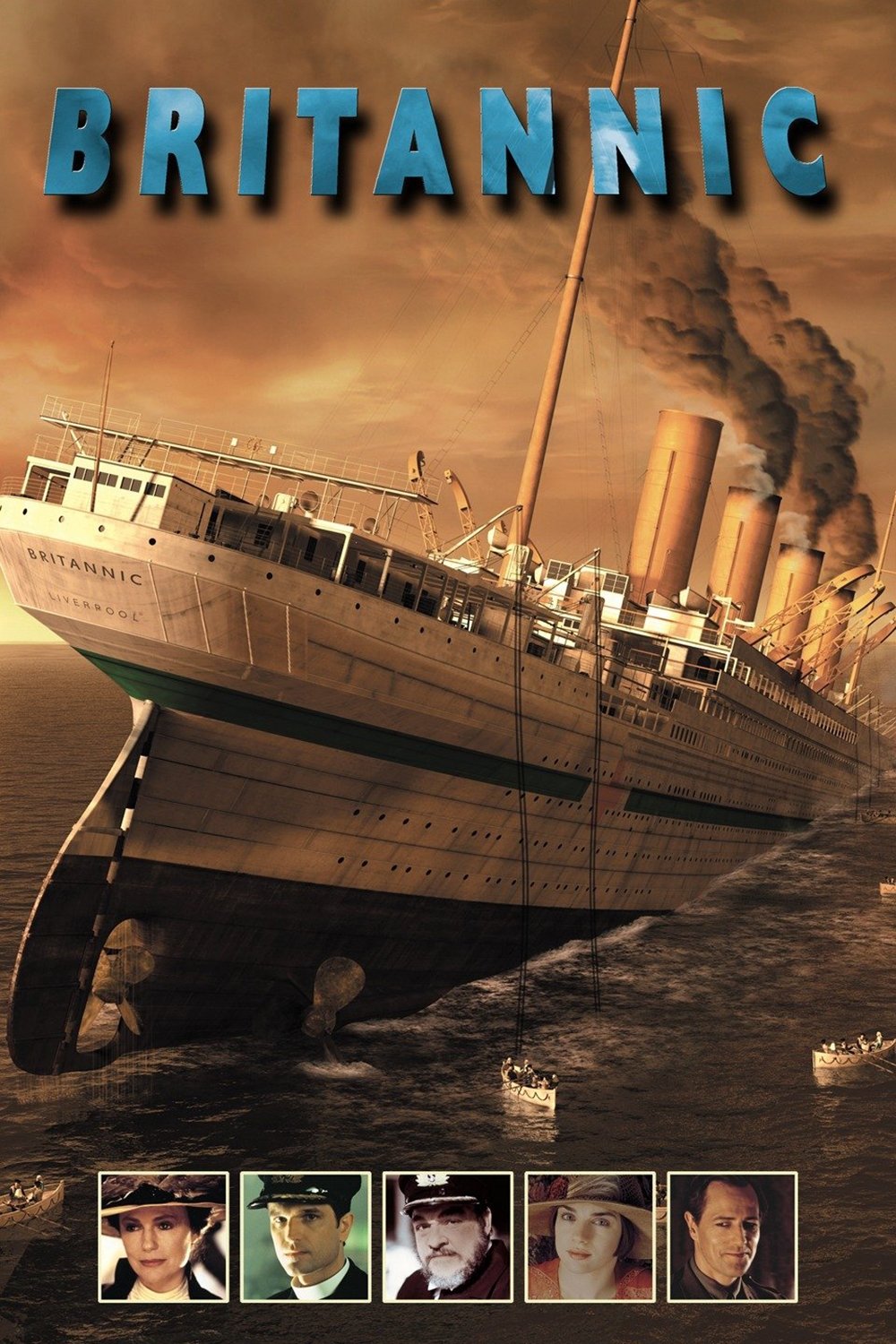
Documentary about the sinking of the Britannic during the First World War, examining how she ultimately came to suffer the same fate as her sister ship, the Titanic. The Titanic sank in April 1912, and her sister ship, the Britannic, ultimately suffered the fate, sinking in 1916 due to an explosion caused by an underwater mine. In the wake of the Titanic disaster, Britannic was re-engineered to be even stronger. And yet she sank in just 55 minutes - three times faster than Titanic. It's one of Britain's greatest untold disaster stories. Now on the 100th anniversary, presenters Kate Humble and Andy Torbet piece together exactly what happened in those 55 minutes. While Andy makes a dangerous dive to the wreck, Kate speaks to descendants of the survivors. The characters she uncovers include Violet 'Miss Unsinkable' Jessops, who survived both Titanic and Britannic, Captain 'Iceberg Charlie' Bartlett and lookout Archie Jewell, who miraculously survived while those around him died.
Computer-generated imagery and other visualization techniques reveal how it would look if all the water was removed from RMS Titanic's final resting place.
Antarctica is the most extreme continent on our planet—higher, colder, and even drier than any other on Earth, and although it is thousands of miles away, what happens here affects every single one of us.
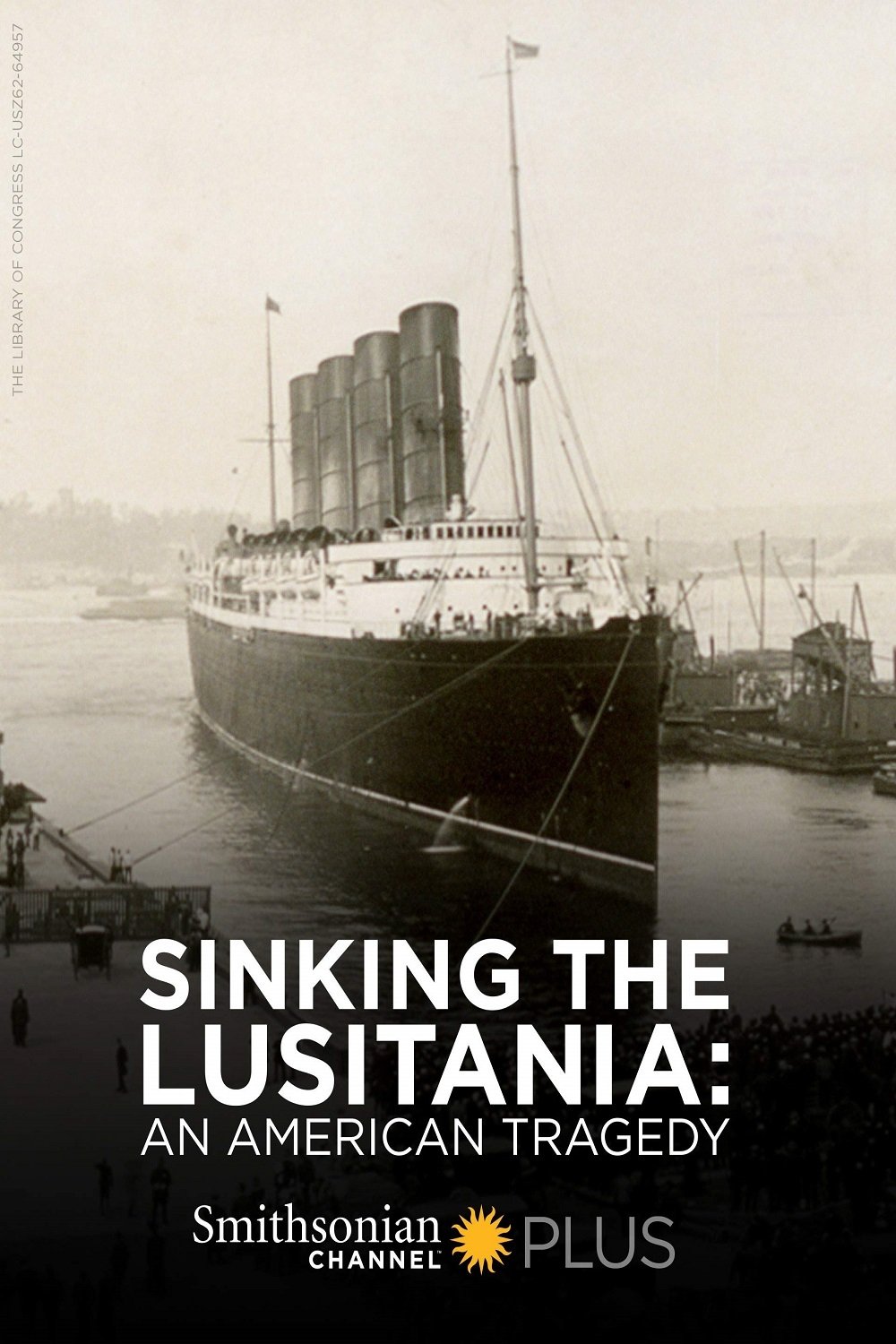
The story of the sinking of the Lusitania in 1915 after she was torpedoed off the Irish coast. The story is told from the perspective of Prof. Holbourn (a passenger), the German U-boat and its captain and crew, and other passengers, crew and Admiralty staff
The "unsinkable" Titanic was a dream come true: four city blocks long and a passenger list worth 250 million dollars. But on her maiden voyage in April 1912, that dream became a nightmare when the giant ship struck an iceberg and sunk in the cold North Atlantic. More than 1,500 lives were lost in one of the greatest disasters of the 20th century. Now, using newsreels, stills, diaries, and exclusive interviews with survivors, Titanic: The Complete Story recounts the sensational history of the premier liner. In Part I: Death of a Dream, the largest ship ever built is christened in Ireland before a cheering crowd of 100,000. Witness the disaster this trek becomes as numerous iceberg warnings go unheeded and the ship sinks in the icy North Atlantic. In Part II: The Legend Lives On, over-packed lifeboats edge away from the crippled liner as a futile SOS signals flare into the night--leaving 1,500 passengers to a watery grave.
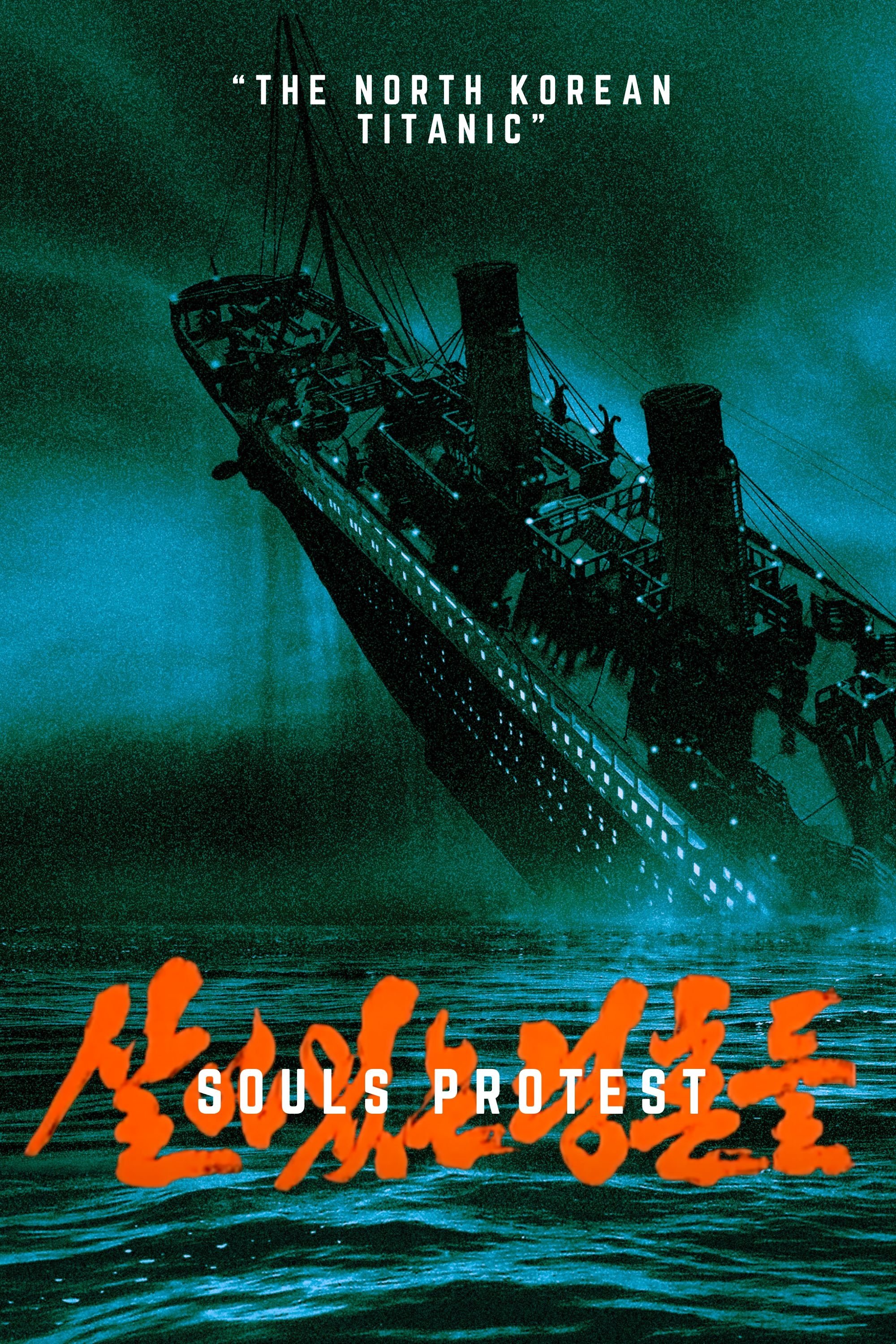
Billed as a North Korean "Titanic". On August 15, 1945, Japanese Imperialists were defeated and there echoed in Japan, too, shouts of victory of thousands of Korean people who had been drafted to Japan. They formed a repatriation autonomy to return to their dear homeland. The Japs plot to blow up their ship on the way which is overloaded with thousands of Koreans who requested repatriation; whose number in fact is twice as many as the ship's fixed capacity. Cha Myong Jin and other Koreans who are ignorant of this fact set out with great joy and hope, talking and laughing. Cha Myong Jin meets his fiance on the ship and whispers their future life. But they dream breaks out. The Japs turn the ship to the Maizuru Port under the pretext of refilling the drinking water and drive the Koreans below deck while preparing to blow up the ship.
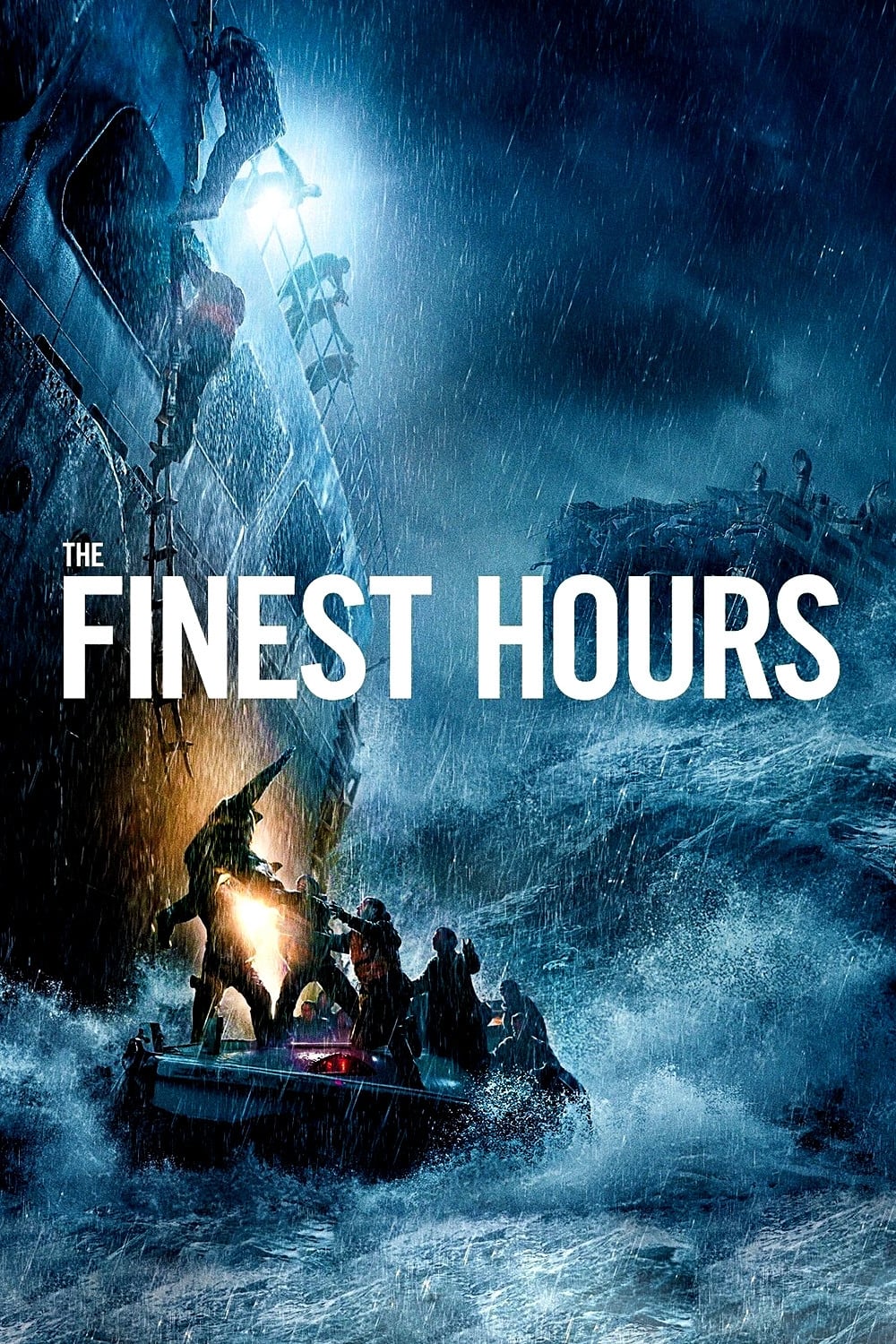
The Coast Guard makes a daring rescue attempt off the coast of Cape Cod after a pair of oil tankers are destroyed during a blizzard in 1952.
It was the sister ship of the infamous Titanic... and its final destiny was the same. Experience the true untold story of Britannic, a tumultuous, epic voyage of human passion, courage and betrayal aboard an ill-fated ocean liner bound for a shattering demise. With the world at war, an undercover British agent (Amanda Ryan), embarks the Britannic in search of a German spy believed to be on board to sabotage the ship. Posing as a governess, the undercover agent finds herself falling in love with the ship's chaplain (Edward Atterton). In a stunning discovery, the lovers suddenly find themselves enemies of war. And when a massive explosion deals a deathblow to the ship, their battle becomes one for their own survival. With a dynamic, international cast and a story line that hosts a chilling tale of espionage, politics and romance, Britannic brings one of history's most devastating events to riveting, new life.
Documentary originally produced for BBC's television series "Natural World".
Marko Röhr's film crew takes the viewer to Europe's last unexplored area: Iceland's unique underwater world. We explore the geysers of boiling waters and the crystal clear lakes off the coast of Iceland. We dive under the icebergs, into the tears between the continental plates and into the deep caves.
A documentary that scientifically analyses and tracks down the route of the Sewol Ferry that sank on the 16th of April in 2014 using its AIS to discover the cause of the unconfirmed sinking.
Seb embarks on a unique journey by joining Mike Horn for a few days on a stage of Mike's new expedition. Unaware of what to expect, Seb returns with lots of beautiful memories and lessons. Although not presented as a traditional documentary, Seb encapsulates his experience in a captivating vignette, eager to share this remarkable chapter of his life with others.
Arktis is a poetic approach to the bizarre landscape of ice, rock, and water; a journey to the arctic ocean and surroundings, with images and sounds. Seventy one-second scenes of the arctic serve as the original material, which is then transformed in its texture, time lapse, color and light qualities to create a material reminiscent of landscape painting. The sound collage uses fragments from sounds of nature and samples from a piece of music for violin and song, which are also transformed in a manner similar to that of the visual pictures. (Jürgen Reble)
The Titanic disaster as seen through the eyes of one couple in each of the three classes on board.
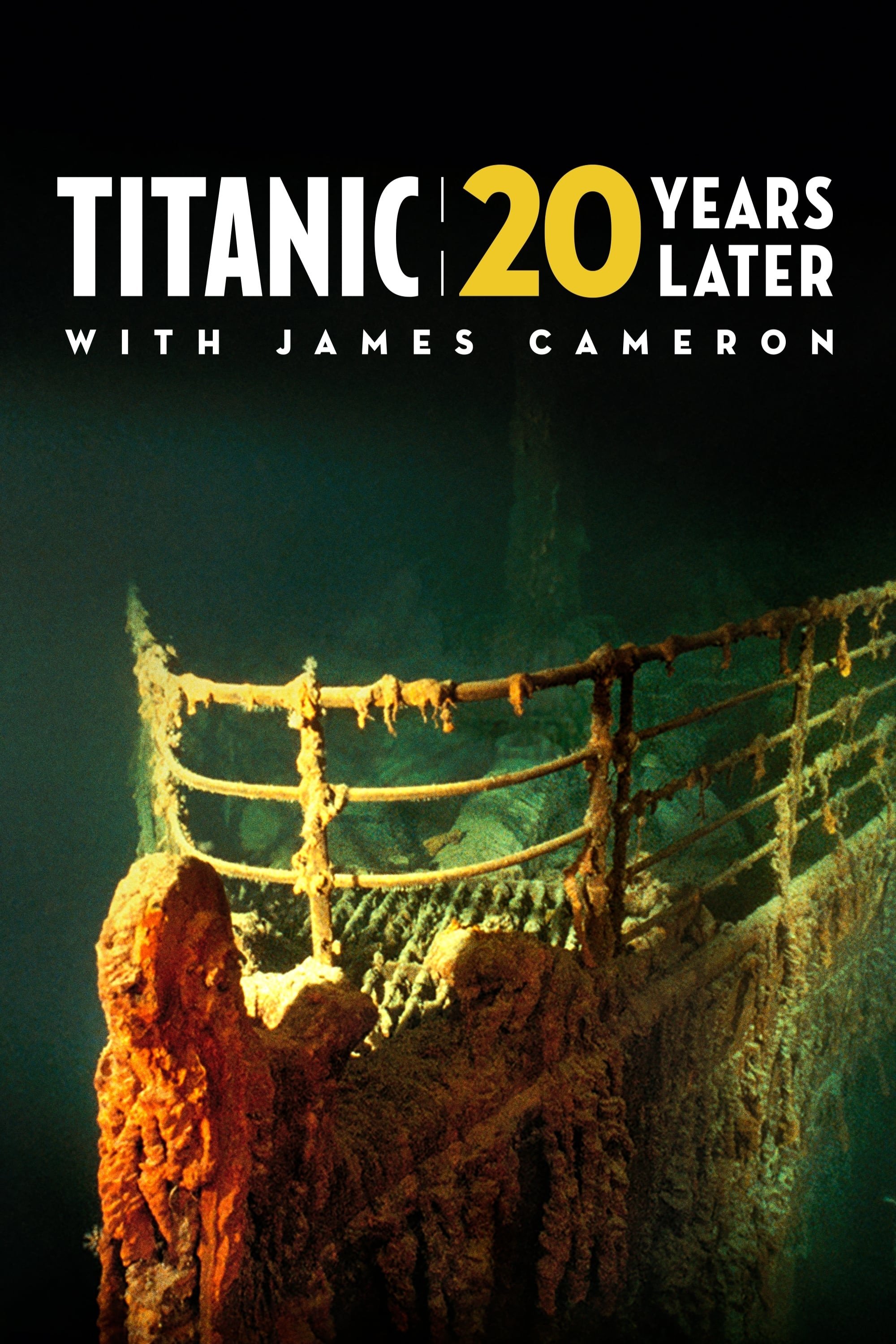
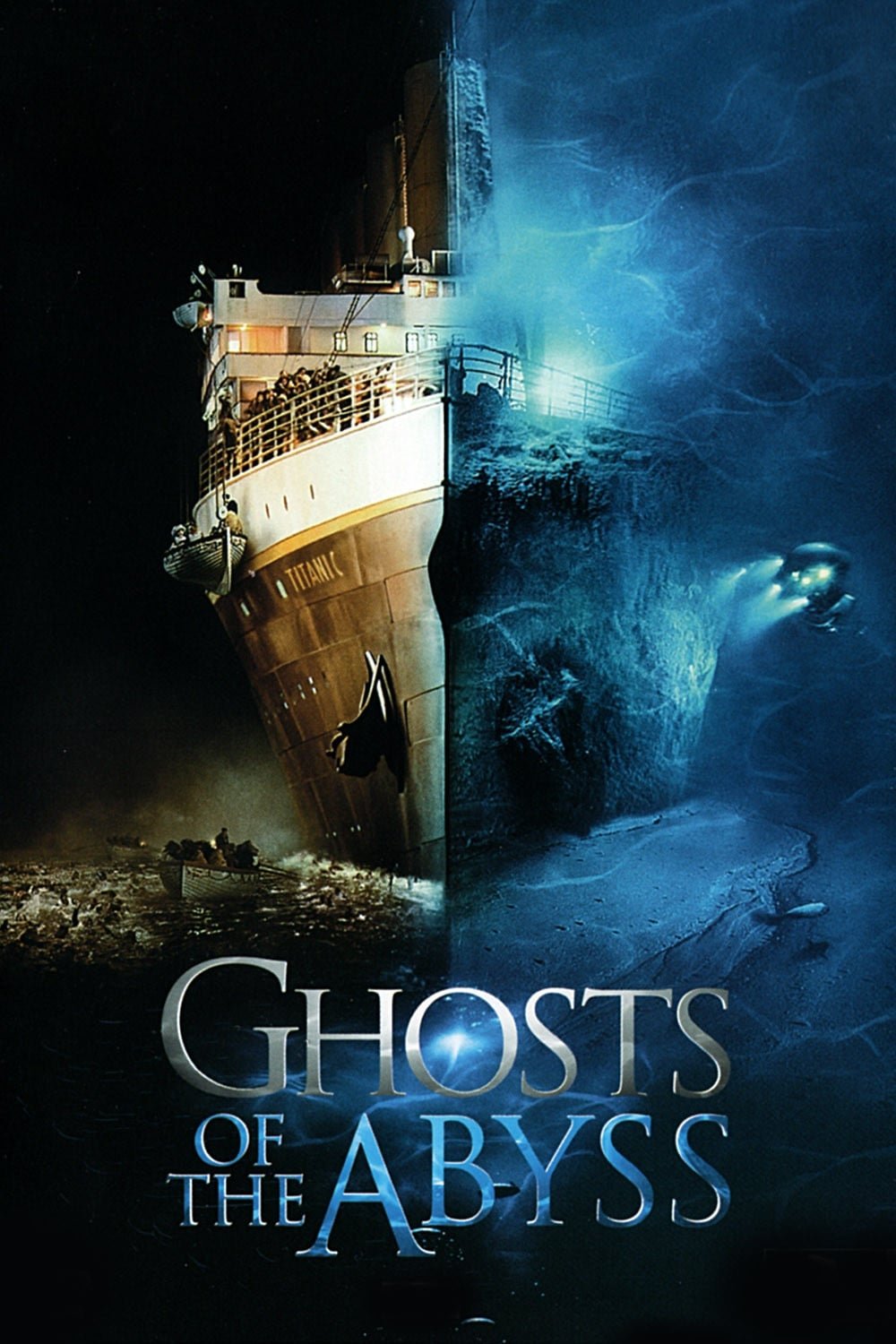
With a team of the world's foremost historic and marine experts as well as friend Bill Paxton, James Cameron embarks on an unscripted adventure back to the wreck of the Titanic where nearly 1,500 souls lost their lives almost a century ago.
For the 20th anniversary of "Titanic," James Cameron reopens the file on the disaster.
Oliver Stone charts the history of the United States from the Second World War to the present.
The history of cinematic sound, told by legendary sound designers and visionary filmmakers.
From the heights of her modeling fame to her tragic death, this documentary reveals Anna Nicole Smith through the eyes of the people closest to her.
Cameramen and women discuss the craft and art of cinematography and of the "DP" (the director of photography), illustrating their points with clips from 100 films, from Birth of a Nation to Do the Right Thing. Themes: the DP tells people where to look; changes in movies (the arrival of sound, color, and wide screens) required creative responses from DPs; and, these artisans constantly invent new equipment and try new things, with wonderful results. The narration takes us through the identifiable studio styles of the 30s, the emergence of noir, the New York look, and the impact of Europeans. Citizen Kane, The Conformist, and Gordon Willis get special attention.
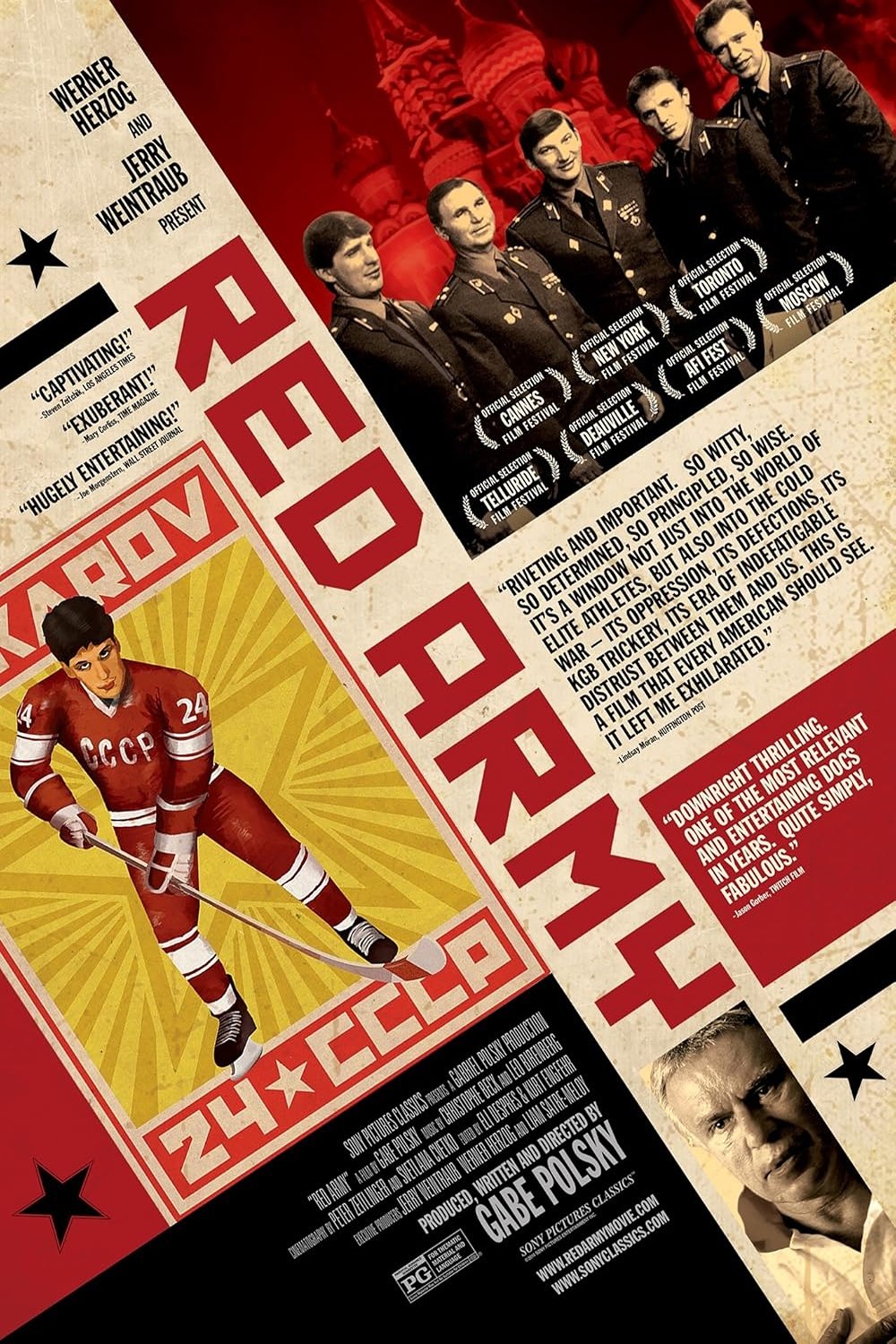
A documentary highlighting the Soviet Union's legendary and enigmatic hockey training culture and world-dominating team through the eyes of the team's Captain Slava Fetisov, following his shift from hockey star and celebrated national hero to political enemy.
A documentary on the expletive's origin, why it offends some people so deeply, and what can be gained from its use.
An unprecedented and intimate look at the life, work and enduring legacy of British actress Audrey Hepburn (1929-1993).
A documentary shot by filmmakers all over the world that serves as a time capsule to show future generations what it was like to be alive on the 24th of July, 2010.
Documentary about the art of film editing. Clips are shown from many groundbreaking films with innovative editing styles.
Fr. Hugh O'Flaherty is a Vatican official in 1943-45 who has been hiding downed pilots, escaped prisoners of war, and Italian resistance families. His activities become so large that the Nazis decide to assassinate him the next time he leaves the Vatican.
Those who knew iconic funnyman John Candy best share his story, in their own words, through never-before-seen archival footage, imagery, and interviews.
A documentary focused on plastic pollution in the world's oceans.
When Allied forces liberated the Nazi concentration camps in 1944-45, their terrible discoveries were recorded by army and newsreel cameramen, revealing for the first time the full horror of what had happened. Making use of British, Soviet and American footage, the Ministry of Information’s Sidney Bernstein (later founder of Granada Television) aimed to create a documentary that would provide lasting, undeniable evidence of the Nazis’ unspeakable crimes. He commissioned a wealth of British talent, including editor Stewart McAllister, writer and future cabinet minister Richard Crossman – and, as treatment advisor, his friend Alfred Hitchcock. Yet, despite initial support from the British and US Governments, the film was shelved, and only now, 70 years on, has it been restored and completed by Imperial War Museums under its original title "German Concentration Camps Factual Survey".
Diaries, audiotapes, videotapes and testimonials from friends and colleagues offer insight into the life and career of Gilda Radner -- the beloved comic and actress who became an icon on Saturday Night Live.
The story of Margaret Humphreys, a social worker from Nottingham, who uncovers one of the most significant social scandals in recent times – the forced migration of children from the United Kingdom to Australia and other Commonwealth countries. Almost singlehandedly, Margaret reunited thousands of families, brought authorities to account and worldwide attention to an extraordinary miscarriage of justice.