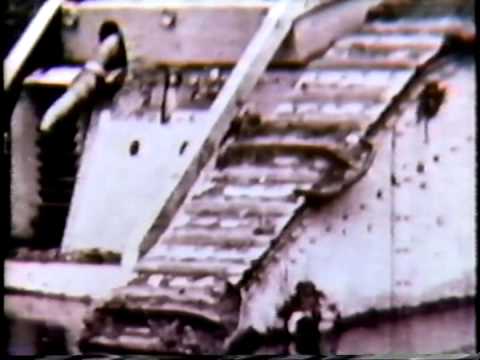
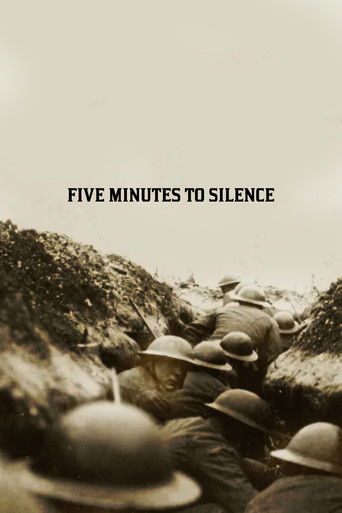
1988 CBC docudrama on Canada's role in WW1. Terence McKenna tours the Battlefields of Ypres, the Somme, Vimy Ridge and Paschendaele. Actors portray several Canadian soldiers in WW1 in re-enactments based on their memoirs, diaries and letters.
Social & External
The people behind it
Terence McKenna
World War I, October 1918. The more than 500 men of the 77th Infantry Division of the United States Army, who have been recruited in New York City and trained in Yaphank, are sent to France, to help break down the German defenses located in the Argonne forest…
Young Frenchwoman Mathilde searches for the truth about her missing fiancé, lost during World War I, and learns many unexpected things along the way. The love of her life is gone. But she refuses to believe he's gone forever — and she needs to know for sure.
Fields of France, during the First World War. A group of young soldiers, united by the indiscriminate brutality of battle, fights to maintain their humanity in an endless cycle of combat and death.
The final (?) days of the Cumberland Terrace mall in Toronto's central Yorkville neighbourhood, originally built in 1974 and announced in 2025 as being scheduled for closure/demolition.
Following the Battles of Mons and Le Cateau the already near exhausted British Expeditionary Force, who had been marching and fighting for six days without a break , embarked on a nine day epic march across France. They headed back to the safety of the far side River Marne south of Paris rather than to the traditional haven of British Armies – the Channel Ports.The BHTV team of historians and battlefield guides take us to the scene of some sharp rear guard actions fought during the Retreat from Mons including the great cavalry actions at Cerizy and Nery, where the mounted British soldier established domination of his German counterpart. As they travel the highways and byways of France they analyze the decisions made by the commanders in that fog of war that together spelt the end of the Schlieffen Plan and set conditions for the 'miracle of the Marne'.
While the Allies were nearing panic as the Germans approached Paris, Marshal Foch quickly realised the German intent and that the Schlieffen plan was unravelling. In a master piece of military diplomacy he persuaded Filed Marshal French to join the Attack on the exposed flank of the Germans as it wheeled to the east of Paris. The battle was indeed a miracle, with the British playing a key part alongside the French in halting the German advance and driving them back behind the next river – The Aisne, where the Allied attack crossed the river and up onto the open ridges of the Chemin des Dames. The Germans held firm and Field Marshal French ordered the BEF to dig-in as a temporary measure but the line moved but little here in the next four years.With neither army able to make headway against modern small arms, the machine gun and quick firing artillery in a conventional frontal battle, the armies raced to redeploy into the uncontested ground north to the sea.
During the war from '14-'18, two women travel by foot in the North of France and Belgium to aid an organization to provide information to the English
After a young inventor discovers a powerful new explosive, agents from a German chemical firm induce him to study at a German university. While there, he is repelled by certain aspects of the people, and he leaves for Belgium. When the war begins, the inventor saves a Belgian burgomaster's daughter from Prussian invaders. The inventor and the girl endure horrible suffering because of the war, but they find happiness at its end, while the formerly fighting nations direct their effort towards world peace at the Paris conferences. The assassination of Kurt Eisner of Bavaria occurs at the end.
Tom Whitney, well connected but a social derelict because of his weakness for drink, is released from the draft because of an old football Injury, but a policeman persuades him that he can still do his bit in the shipyards. He takes a job in the yard owned by the man to whose daughter he was engaged in happier times. Three German propagandists seek to foment a strike to delay the work, and largely through Tom's efforts the plan goes amiss and the strike is called off. Rehabilitated by work, the launching of The Liberty is a forecast of his own rebirth.
France, World War I. Justin (Alban Ivanov), an illiterate peasant farmer is enrolled in French army. Knowing nothing of the World or the War, Justin finds himself on the front without understanding why he must kill men he’s never met. Naïve and open minded, Justin will cross the path of a German pilot and a Senegalese soldier, escape a prisoner camp and start a mutiny to prevent his fellow comrades to risk their lives. Through his journey Justin will question the absurdity of war, make lifetime friends and inspire many…
Two Australian sprinters face the brutal realities of war when they are sent to fight in the Gallipoli campaign in the Ottoman Empire during World War I.
France, 1914, during World War I. On Christmas Eve, an extraordinary event takes place in the bloody no man's land that the French and the Scots dispute with the Germans…
A young filmmaker is commissioned to write a documentary about the First World War. He tries to find a way to tell the story of the war. What is to be done with all these films waiting in the archives to be shown again? He tries his hand at different styles of writing and editing, keeping in mind the question: can you make a montage film without transforming the images?
102 Years in the Heart of Europe: A Portrait of Ernst Jünger (Swedish: 102 år i hjärtat av Europa) is a Swedish documentary film from 1998 directed by Jesper Wachtmeister. It consists of an interview by the journalist Björn Cederberg with the German writer, philosopher and war veteran Ernst Jünger (1895-1998). Jünger talks about his life, his authorship, his interests and ideas. The actor Mikael Persbrandt reads passages from some of Jünger's works, such as Storm of Steel, The Worker, On the Marble Cliffs and The Glass Bees.
During the final days of the First World War, Officer Menis does his duty in defending the battle flag of the defeated Austro-Hungarian empire, while his fellow troops, a motley gang recruited from several different countries not loyal to the royal family, simply try to survive by any means possible.
Paris, France, during the First World War. While thousands of soldiers die every day on the battlefields, Henri Landru, a seemingly respectable furniture dealer, married and father of four children, relentlessly feeds his own sinister factory of death.
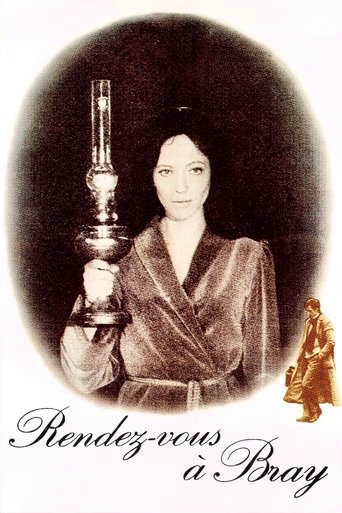
In 1917, the First World War is raging. Julien is from Luxemburg, so instead of having to go to war he studies piano in Paris. One day his friend Jacques, also a musician and now a fighter pilot on the front, invites him to spend a few days in his family's empty house in Bray. The housekeeper, a beautiful stoic woman lets Julien in, but his friend is late and he is obliged to wait. In the meantime, he starts reminiscing of the pre-war days spent with his friend and Jacques' girlfriend Odile.
First World War animated propaganda short, extolling Britain's naval history and mocking the German navy.
1916. René Carpentier is a young French farmer who must leave his home behind in order to fight the Germans and serve his country. On the other side of the great ocean, Canadian Nick Irving leaves behind the woman he loves to photograph the horrors of the War in Europe and to become a hero. Both characters will embark on a journey to the mud of the trenches of Verdun to fight the bloody battles of the Great War with a single purpose ... return home.
A documentary about World War I with never-before-seen footage to commemorate the centennial of Armistice Day, and the end of the war.
Amid the failing counteroffensive, a journalist follows a Ukrainian platoon on their mission to traverse one mile of heavily fortified forest and liberate a strategic village from Russian occupation. But the farther they advance through their destroyed homeland, the more they realize that this war may never end.
When Sgt. First Class Brian Eisch is critically wounded in Afghanistan, it sets him and his sons on a journey of love, loss, redemption and legacy.
A love letter from a young mother to her daughter, the film tells the story of Waad al-Kateab’s life through five years of the uprising in Aleppo, Syria as she falls in love, gets married and gives birth to Sama, all while cataclysmic conflict rises around her. Her camera captures incredible stories of loss, laughter and survival as Waad wrestles with an impossible choice– whether or not to flee the city to protect her daughter’s life, when leaving means abandoning the struggle for freedom for which she has already sacrificed so much.
Prelude to War was the first film of Frank Capra's Why We Fight propaganda film series, commissioned by the Pentagon and George C. Marshall. It was made to convince American troops of the necessity of combating the Axis Powers during World War II. This film examines the differences between democratic and fascist states.
“The Soviet Story” is a story of an Allied power, which helped the Nazis to fight Jews and which slaughtered its own people on an industrial scale. Assisted by the West, this power triumphed on May 9th, 1945. Its crimes were made taboo, and the complete story of Europe’s most murderous regime has never been told. Until now...
As the Russian invasion begins, a team of Ukrainian journalists trapped in the besieged city of Mariupol struggle to continue their work documenting the war's atrocities.
One single Anne Frank moves us more than the countless others who suffered just as she did but whose faces have remained in the shadows-Primo Levi. The Oscar®-winning Helen Mirren will introduce audiences to Anne Frank's story through the words in her diary. The set will be her room in the secret refuge in Amsterdam, reconstructed in every detail by set designers from the Piccolo Theatre in Milan. Anne Frank this year would have been 90 years old. Anne's story is intertwined with that of five Holocaust survivors, teenage girls just like her, with the same ideals, the same desire to live: Arianna Szörenyi, Sarah Lichtsztejn-Montard, Helga Weiss and sisters Andra and Tatiana Bucci. Their testimonies alternate with those of their children and grandchildren.
With unprecedented access, this documentary follows the extraordinary journey of “Raqqa is Being Slaughtered Silently”—a group of anonymous citizen journalists who banded together after their homeland was overtaken by ISIS—as they risk their lives to stand up against one of the greatest evils in the world today.
Set both in Latin America and the United States, the film explores the historic and current relationship of Washington with countries such as Venezuela, Bolivia and Chile. Pilger says that the film "...tells a universal story... analysing and revealing, through vivid testimony, the story of great power behind its venerable myths. It allows us to understand the true nature of the so-called "war on terror". According to Pilger, the film’s message is that the greed and power of empire is not invincible and that people power is always the "seed beneath the snow".
Over a period of two years, Mark Cowen and his crew travelled to thirty U.S. states and ten European cities, to interview the veterans of Easy Company. The stories told by the veterans themselves, create a history of the Second World War from the point of view of this heroic company of men, made famous in the mini-series Band of Brothers.
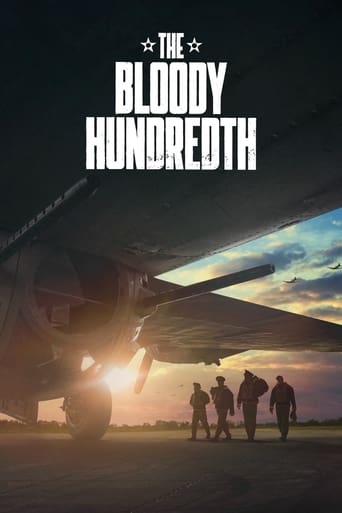
Meet the real-life airmen who inspired Masters of the Air as they share the harrowing and transformative events of the 100th Bomb Group.
"Trinity and Beyond" is an unsettling yet visually fascinating documentary presenting the history of nuclear weapons development and testing between 1945-1963. Narrated by William Shatner and featuring an original score performed by the Moscow Symphony Orchestra, this award-winning documentary reveals previously unreleased and classified government footage from several countries.
What happened after Einstein fled Nazi Germany? Using archival footage and his own words, this docudrama dives into the mind of a tortured genius.
The final entry in a trilogy of films produced for the U.S. government by John Huston. Some returning combat veterans suffer scars that are more psychological than physical. This film follows patients and staff during their treatment. It deals with what would now be called PTSD, but at the time was categorised as psychoneurosis or shell-shock. Government officials deemed this 1946 film counterproductive to postwar efforts; it was not shown publicly until 1981.
Against the darkening backdrop of New Delhi's apocalyptic air and escalating violence, two brothers devote their lives to protecting one casualty of the turbulent times: the bird known as the black kite.
This documentary movie is about the battle of San Pietro, a small village in Italy. Over 1,100 US soldiers were killed while trying to take this location, that blocked the way for the Allied forces from the Germans. Preserved by the Academy Film Archive in 2005.
Korengal picks up where Restrepo left off; the same men, the same valley, the same commanders, but a very different look at the experience of war.
Director James Toback takes an unflinching, uncompromising look at the life of Mike Tyson--almost solely from the perspective of the man himself. TYSON alternates between the controversial boxer addressing the camera and shots of the champion's fights to create an arresting picture of the man.
The documentary recounts the world's first nuclear attack and examines the alarming repercussions. Covering a three-week period from the Trinity test to the atomic bombing of Hiroshima, the program chronicles America's political gamble and the planning for the momentous event. Archival film, dramatizations, and special effects feature what occurred aboard the Enola Gay (the aircraft that dropped the bomb) and inside the exploding bomb.