The story of how newspapers were distributed during the Blitz, stressing the importance of an accurate and objective press on the home front.
Social & External
The people behind it
Short cartoon made for US military soldiers during World War Two.
At the end of the Great War, a soldier burdened with informing a mother of her son's death, faces an impossible decision... Tell her a noble lie, or the horrible truth?
The outbreak of World War I places Scots officer Geoffrey Richter-Douglas in an uncomfortable position. Although his allegiance is to Britain, his mother was from an aristocratic Bavarian family, and he spent his summers in Germany as a child. When Geoffrey is approached by a German spy who offers him a chance to defect, he reports the incident to his superiors, but instead of arresting the spy they suggest that he accept her offer--and become an Allied agent. In Germany, among old friends, Geoffrey discovers that loyalty is more complicated than he expected, especially when he finds himself aboard the maiden voyage of a powerful new prototype Zeppelin, headed for Scotland on a secret mission that could decide the outcome of the war.
Forever England gives John Mills his first leading role as Brown. Born after a brief affair between his mother and a naval officer, he joins the Royal Navy during the First World War. There his bravery and marksmanship keeps a German ship in port so a British ship can sink it. He becomes a hero, but at what cost?
A World War I British Army patrol is crossing the Mesopotamian desert when their commanding officer, the only one who knows their destination, is killed by the bullet of unseen bandits. The patrol's sergeant keeps them heading north on the assumption that they will hit their brigade. They stop for the night at an oasis and awaken the next morning to find their horses stolen, their sentry dead, the oasis surrounded and survival difficult.
This early, influential propaganda film blends documentary and studio footage to show the valiant efforts of the Royal Air Force to defend the British people against the Nazis.
Based on the true story of the Bandō prisoner-of-war camp in World War I. It depicts the friendship of the German POWs with the director of the camp and local residents at the stage of Naruto, Tokushima Prefecture, in Japan.
A century ago, from February to December 1916, the French and Germans provided a superhuman effort to control a few hills in eastern France, located in front of Verdun . A frontal confrontation, conducted without the help of their allies, army against army, nation against nation. Today, this battle seems absurd to us. Because it has caused almost as many casualties in each camp and its strategic utility has never really been demonstrated. But in 1916, soldiers on both sides did not consider it absurd: they agreed to fight. Why ? By reliving the rare Herculean confrontation of our ancestors, using reconstructions made in the 1920s, using a large number of animated computer-generated images that recreate the topography of the battlefield, this documentary returns, with the help of the historical adviser Paul Jankowski , on the last great victory won alone by France against Germany.
In the year 1915, while the world starts falling apart, a husband comes home to his wife with bad news
Wilfred Owen and Siegfried Sassoon, two of England's most important World War I poets are sent, along with other traumatized combatants, to a rest home in order to treat their emotional troubles, caused by the psychological fatigue that suffer the soldiers fighting in the no man's land.
An American doughboy, stationed in France during the Great War, goes on a daring mission behind enemy lines and becomes a hero.
The Channel Tunnel linking Britain with France is one of the seven wonders of the modern world but what did it take to build the longest undersea tunnel ever constructed? We hear from the men and women, who built this engineering marvel. Massive tunnel boring machines gnawed their way through rock and chalk, digging not one tunnel but three; two rail tunnels and a service tunnel. This was a project that would be privately financed; not a penny of public money would be spent on the tunnel. Business would have to put up all the money and take all the risks. This was also a project that was blighted by flood, fire, tragic loss of life and financial bust ups. Today, it stands as an engineering triumph and a testament to what can be achieved when two nations, Britain and France put aside their historic differences and work together.
A sweeping, cinematic pseudo-documentary history of human flight, starting with the failed attempt of Icarus, and ending with the aviation triumphs of the fascist regime.
A short documentary about the construction of the parisian subway in the 50s.
When the United States entered World War I, its Army Air Service lacked a combat-ready aircraft – a liability that prompted a search to find an aircraft suitable for production at home and combat operations abroad. This documentary from Bowling Green filmmakers tells the story behind the single-engine DH-4 plane dubbed The Liberty Plane.
Documentary short film produced by the U.S. Army, intended to enlighten the American public on the final thrust of the Allied war effort in Europe and on the plans for the return home of American forces. Preserved by the Academy Film Archive in 2008.
The movie depicts the events from July until September of 1914 which led to the defeat of the German troops at the Marne. While Sebastian Haffner explains and comments on operations and decisions on the basis of situation maps, key scenes are depicted by actors. A main focus is thereby placed by Haffner onto the controversial mission of lieutenant-colonel Richard Hentsch who is said to have, during a war patrol to the various army high commands, contributed to the abortion of the operations significantly.
Italy, 1916. Oreste Jacovacci and Giovanni Busacca are called, as all the Italian youths, to serve the army in the WWI. They both try in every way to avoid serving the army.
A propaganda documentary on the post war reconstruction of Miensk, capital of Belarus.
A cavalcade of English life from New Year's Eve 1899 until 1933 is seen through the eyes of well-to-do Londoners Jane and Robert Marryot. Amongst events touching their family are the Boer War, the death of Queen Victoria, the sinking of the Titanic, and the Great War.
A documentary about World War I with never-before-seen footage to commemorate the centennial of Armistice Day, and the end of the war.
This documentary movie is about the battle of San Pietro, a small village in Italy. Over 1,100 US soldiers were killed while trying to take this location, that blocked the way for the Allied forces from the Germans. Preserved by the Academy Film Archive in 2005.
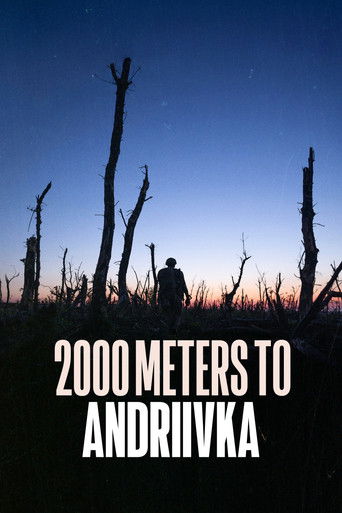
Amid the failing counteroffensive, a journalist follows a Ukrainian platoon on their mission to traverse one mile of heavily fortified forest and liberate a strategic village from Russian occupation. But the farther they advance through their destroyed homeland, the more they realize that this war may never end.
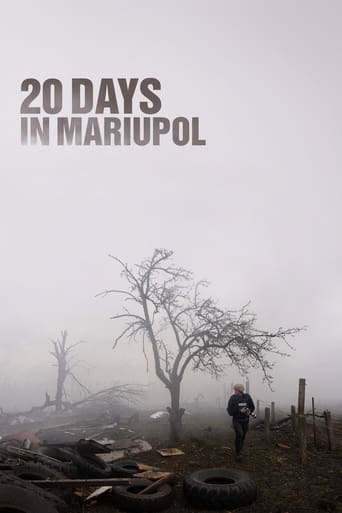
As the Russian invasion begins, a team of Ukrainian journalists trapped in the besieged city of Mariupol struggle to continue their work documenting the war's atrocities.
Prelude to War was the first film of Frank Capra's Why We Fight propaganda film series, commissioned by the Pentagon and George C. Marshall. It was made to convince American troops of the necessity of combating the Axis Powers during World War II. This film examines the differences between democratic and fascist states.
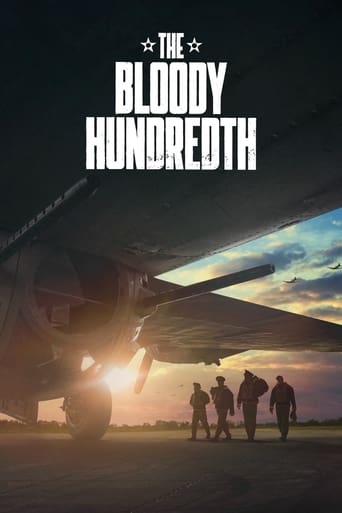
Meet the real-life airmen who inspired Masters of the Air as they share the harrowing and transformative events of the 100th Bomb Group.
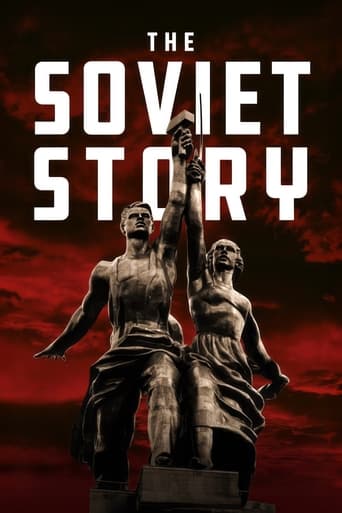
“The Soviet Story” is a story of an Allied power, which helped the Nazis to fight Jews and which slaughtered its own people on an industrial scale. Assisted by the West, this power triumphed on May 9th, 1945. Its crimes were made taboo, and the complete story of Europe’s most murderous regime has never been told. Until now...
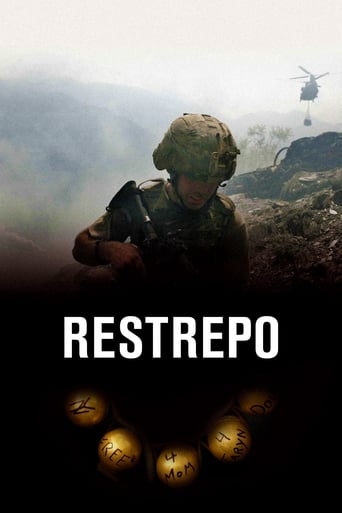
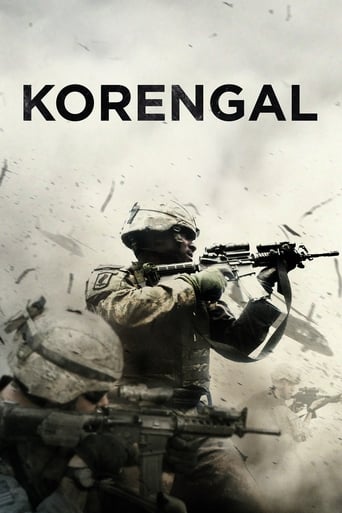
Directors Hetherington and Junger spend a year with the 2nd Battalion of the United States Army located in one of Afghanistan's most dangerous valleys. The documentary provides insight and empathy on how to win the battle through hard work, deadly gunfights and mutual friendships while the unit must push back the Taliban.
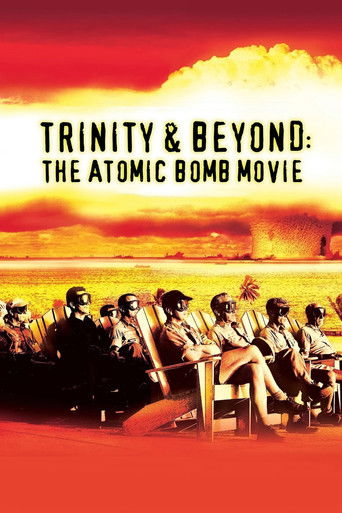
"Trinity and Beyond" is an unsettling yet visually fascinating documentary presenting the history of nuclear weapons development and testing between 1945-1963. Narrated by William Shatner and featuring an original score performed by the Moscow Symphony Orchestra, this award-winning documentary reveals previously unreleased and classified government footage from several countries.
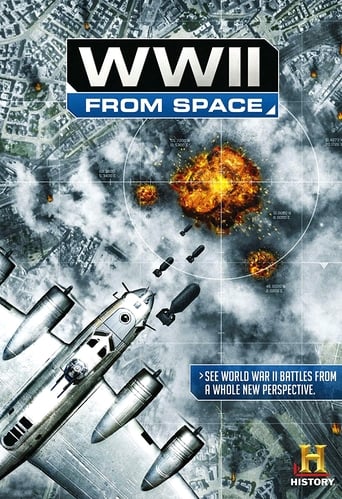
WWII from Space delivers World War II in a way you've never experienced it before. This HISTORY special uses an all-seeing CGI eye that offers a satellite view of the conflict, allowing you to experience it in a way that puts key events and tipping points in a global perspective. By re-creating groundbreaking moments that could never have been captured on camera, and by illustrating the importance of simultaneity and the hidden effects of crucial incidents, HISTORY presents the war's monumental moments in a never-before-seen context. And with new information brought to the forefront, you'll better understand how a nation ranked 19th in the world's militaries in 1939 emerged six years later as the planet's only atomic superpower.
A love letter from a young mother to her daughter, the film tells the story of Waad al-Kateab’s life through five years of the uprising in Aleppo, Syria as she falls in love, gets married and gives birth to Sama, all while cataclysmic conflict rises around her. Her camera captures incredible stories of loss, laughter and survival as Waad wrestles with an impossible choice– whether or not to flee the city to protect her daughter’s life, when leaving means abandoning the struggle for freedom for which she has already sacrificed so much.
An inside look at one of the most anticipated movie sequels ever with James Cameron and cast.
The extraordinary story of how Hollywood changed World War II – and how World War II changed Hollywood, through the interwoven experiences of five legendary filmmakers who went to war to serve their country and bring the truth to the American people: John Ford, William Wyler, John Huston, Frank Capra, and George Stevens. Based on Mark Harris’ best-selling book, “Five Came Back: A Story of Hollywood and the Second World War.”
When Sgt. First Class Brian Eisch is critically wounded in Afghanistan, it sets him and his sons on a journey of love, loss, redemption and legacy.
A string of threatening emails escalates into a revenge plot involving a newly married US marshal and his ex-girlfriend.
Journey into the extraordinary world of "The Witcher" — from casting the roles to Jaskier's catchy song — in this behind-the-scenes look at the series.
Over a period of two years, Mark Cowen and his crew travelled to thirty U.S. states and ten European cities, to interview the veterans of Easy Company. The stories told by the veterans themselves, create a history of the Second World War from the point of view of this heroic company of men, made famous in the mini-series Band of Brothers.
Many times during his presidency, Lyndon B. Johnson said that ultimate victory in the Vietnam War depended upon the U.S. military winning the "hearts and minds" of the Vietnamese people. Filmmaker Peter Davis uses Johnson's phrase in an ironic context in this anti-war documentary, filmed and released while the Vietnam War was still under way, juxtaposing interviews with military figures like U.S. Army Chief of Staff William C. Westmoreland with shocking scenes of violence and brutality.
Police pull over a woman who claims she just gave birth. But the baby — and the blood — aren't hers. Twisted lies unravel in this true-crime documentary.
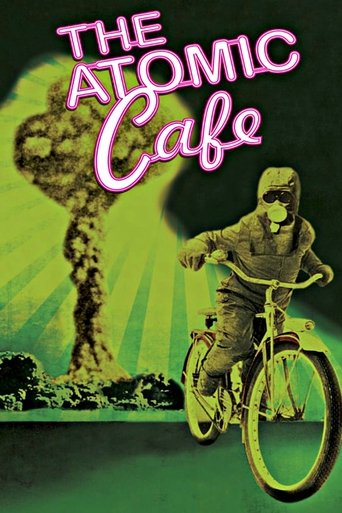
A disturbing collection of 1940s and 1950s United States government-issued propaganda films designed to reassure Americans that the atomic bomb was not a threat to their safety.