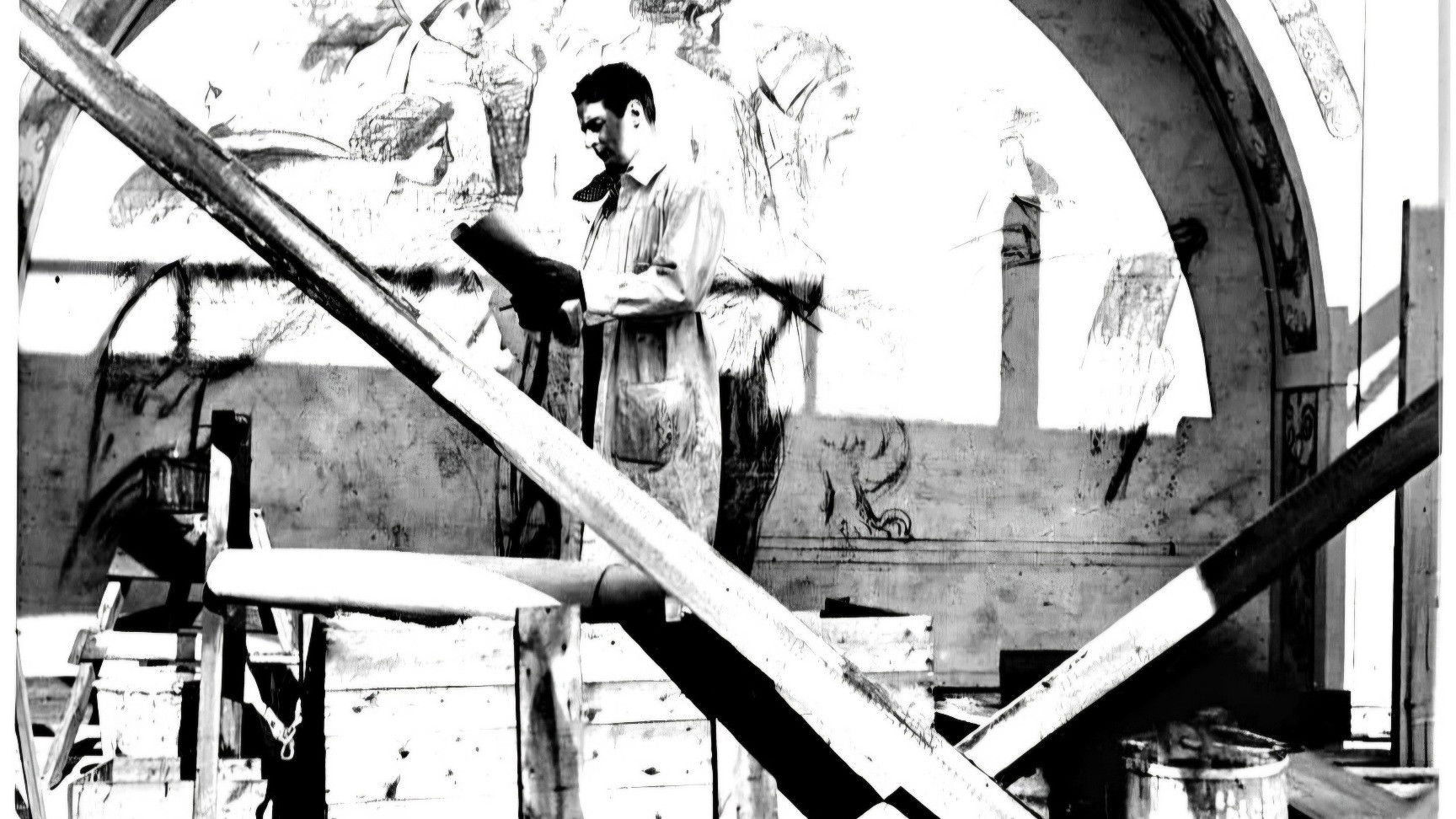
The famous painter Bernhard Steen has made a portrait of the actress Thora Flemming.
Social & External
The people behind it
Lili Beck
Egil Eide
Gunnar Tolnæs
Mary Walton finds herself in a dire situation when her first husband falls seriously ill. In a misguided and desperate attempt to secure the resources or help needed to save her ailing husband, she becomes a bigamist by marrying another man. Things do not turn out well.
Jim Neal, the proprietor of the "Halfway Saloon," located between Tucson and Gold Creek. A local minister discovers Jim selling alcohol to the Indians and asks him to stop. Jim refuses, telling the minister to mind his own business. The minister then appeals to Jim's wife, Mrs. Neal, pointing out that the saloon is an unfit environment for their young daughter. Realizing the truth in the minister's words, Mrs. Neal decides to take their daughter and leave the area to visit her sister in a distant settlement. Tragically, while enroute, Mrs. Neal and her daughter are attacked by a group of the same Indians who had been incited by the "firewater" sold to them by Jim Neal, demonstrating the consequences of his actions.
Dr. Robert Winston loses faith in himself and his religion when his own mother dies under his scalpel. Abandoning his profession, he moves to the Canadian Northwest, where he avoids companionship and drinks constantly. Despite Robert's atheism, he attracts the interest of Jeanette Mercier, the minister's daughter, and under her gentle influence, he is slowly regenerated. In the meantime, an Indian named Lone Deer bids a temporary farewell to his sweetheart Winona, whose father wishes to die among his own people, but when he finds her canoe overturned in the water, he assumes that she has drowned. Later Lone Deer saves Jeanette from Lou Baribeau, the brutal and lecherous company agent, but is seriously wounded in the struggle. Rev. Mercier convinces Robert to operate, and because the procedure proves successful, the doctor regains his faith and marries Jeanette. Winona finally returns to aid in Lone Deer's recovery.
When the infant Betty Emerson’s father is killed in an accident it drives her mother mad leading to her commitment to an asylum. Betty is sent to an orphanage where after a year’s time wealthy widow, Mrs. Blake, chooses to adopt her. A decade later when a fully recovered Mrs. Emerson is discharged, she begins a search for Betty, leading her to Mrs. Blake’s door. While the two women argue over her Betty enters. Both women plead with her, one to return and the other to stay. Betty offers the solution by staying with both.
Helen Embert, the lodge keeper’s daughter on the estate of wealthy widow Mrs. Melvina Jenkins is in love Bert Harrison. When by happenstance Bert saves Mrs. Jenkins and her daughter Mary from an accident he is instantly smitten with Mary. Feeling rejected, Helen pines away, expiring soon after. Helen’s mother, consumed with revenge, sets her sights on extracting it upon Mary but is prevented from harming her in the nick of time.
Upon his death Jerry Livingstone, a wealthy convict, leaves his son Henry the sole heir of a considerable fortune with the provision of a larger additional sum if he marries Jerry's ward, Winifred Gale. Upon hearing this, Winifred writes to the young Livingstone that she will not participate in a marriage of convenience.
In Belgium, at the outbreak of the war, Russian agent Olga Raminoff shoots at a German general when the enemy enters town. Ray Bourke, an American traveler, gives her the protection of his name, but nevertheless both are sentenced to death. They are rescued by an allied rescue plane and later, bound for home, Ray meets an old college friend, Curt Schreiber, who is in the service of the German government. Schreiber has important papers to be delivered to Washington and, knowing that he will be searched on board ship, gives them to Ray. Olga beseeches Ray to give the papers up for her sake, but his word to Schreiber is sacred. Nearing America, Ray tells her that he will make an effort to return the papers if she will marry him.
A trapper is sent to the city to collect money for his fur company. On his journey back, he is accidentally shot by a young woman, the daughter of another trapper, who mistakes him for a deer. She takes him back to her father's cabin to recover. Initially, the girl's father is truly angry about the situation. The young man saves the life of the older trapper (the father). Through gratitude, the father forms a business partnership with the young man, and the young people fall in love. The film concludes with the young man successfully "winning" Denise and presumably a happy ending.
Alvin escaping prison, becoming a music instructor under a false name, and falls in love with his student, Alice. His life unravels when his former girlfriend, Louise, threatens to expose him, leading to a complex plot of secrets, a suicide, and a confession that reveals a murder.
Young thief Nell Durand is caught picking the pocket of a wealthy young man named Tom Berry. Instead of turning her in, he offers to help her reform, leading to a love story complicated by a greedy lawyer who tries to prevent their marriage.
In this apparently lost film, a beautiful dancer's sexual allure is used by an evil cripple to entice men to their deaths. Falling in love with one of the potential victims, she is told by the cripple that he will set her free if her lover, actually a murderer himself, survives and escapes a bizarre labyrinthe which runs beneath the cripple's house.
Rene, condemned to execution for murder in the first degree tells his mother the story of the crime. His sister had been lured from home and abandoned by the villain. Desolate at first after some time she married a man who became governor but when the villain shows up again and threatens her happiness Rene kills him.
Grace and her brother Edwin are living in a modest city apartment when they receive an invitation from their wealthy uncle to live on his Southern California ranch. While Grace is eager for the new life, Edwin refuses to leave the city, prompting Grace to travel to the ranch alone. On the ranch, Grace falls in love with the foreman, Jack Winston. Their romance causes conflict with Jack’s former lover, Inez—a Spanish dancer who attempts to stab Jack in a fit of jealousy after he breaks off their relationship to be with Grace. Years later, Grace and Jack are married, but Edwin has fallen into poverty back east. He eventually decides to join his sister in the west. Upon arriving, Edwin visits a local saloon and becomes innocently embroiled in a quarrel with a drunken cowboy, leading to a fight.
Mabel Vandergrift moves from the country to the city and enrolls in an upscale college. She starts to hang around with a "fast" crowd, and one night at a party a young man picks her for his "conquest". She fends him off, but when he is later found dead she is charged with his murder. Her boyfriend from back home hears about her troubles and comes to the city to clear her name and find the real killer.
To raise funds for the American effort in The Great War heiress Betty Hallowell decides to lease her beautiful country house to Mrs. Wentworth, a wealthy widow whose son Tom is recuperating from injuries received overseas. When Mrs. Wentworth suddenly demands the services of a maid for the summer, Betty, unable to secure a servant on such short notice, dons a dark wig and poses as "French maid Bettina." Tom and “Bettina” fall in love much to his mother’s dismay but when the deception is finally revealed all ends well.
Lucille Vale is in love with struggling architect Paul Arden, but her mother believes that Allen Granat is a more suitable match. Lucille's mother prevails, and Lucille leaves Paul a note in their secret hiding place saying that she is going to marry Allen. Paul is injured when thrown from a horse and does not receive the note. He is nursed back to health in the home of entomologist Thomas Wiggan, whose son Johnnie is in love with Marion Vale, Lucille's younger sister. Two years later, Lucille and Allen return to the estate, very much in love, and engage Paul's services. The note is found, still waiting in the secret hiding place. After many complications, and with the help of her friend Suzanne Russell, Lucille recovers the possibly incriminating note.
During the American Revolution, Alexander Hamilton and Aaron Burr are both courting beautiful Margaret Moncrieffe. Fast-forward several years and they again find themselves on opposite sides, this time about compensation for the properties of Tories--colonists who sided with the British--during the war. Hamilton falls for Maria Reynolds, who it turns out is secretly the wife of prominent pawnbroker Jacob Clingman, a friend of Burr's. The pair conspire to destroy Hamilton, who is now Secretary of the Treasury and married to the daughter of a prominent army general, by making public several love letters Hamilton had written to Mrs. Reynolds.
William Lewis accidentally shoots a policeman while breaking into a house as a prank with his friends. His friend Sid falsely accuses him of the shooting, and Will escapes, eventually meeting and marrying Alice. Later, Sid blackmails Will into helping him rob a bank, leading to a chain of events that ultimately results in Will's imprisonment and eventual tragic death.
Hugo Reid loves and is engaged to the fair Irene. Warned by his father that insanity runs in their family he chooses to break with her without sharing the reason why. Driven by his loneliness and despair, Hugo goes back to his former flame, Hazel Hamilton, a lady of loose character. Irene sees them together and hurt flees with Hugo in pursuit. At first anxious to win her back, Hugo eventually tells all to Irene’s mother, leaving the house for good. Shortly thereafter he falls into madness.
Dirk Morgan, a trusted member of a powerful international criminal gang, receives word that the steamer Empress has left Melbourne with a secret shipment of gold; the letter also contains plans for the ship's hold and cabins. Dirk books passage for himself and Anne and they board the steamer in Sydney.
The true story of 20-year-old Colleen Stan, a hitchhiking woman abducted by a young couple and held captive for seven years, during which time she's tortured and forced to live as a slave to her captors.
94-year-old Eleanor Morgenstein tries to rebuild her life after the death of her best friend. As a result, she moves back to New York City after living in Florida for decades.
Young teen girl Xiu Xiu is sent away to a remote corner of the Sichuan steppes for manual labor in 1975 (sending young people to there was a part of Cultural Revolution in China). A year later, she agrees to go to even more remote spot with a Tibetan saddle tramp Lao Jin to learn horse herding.
The legendary Roberto Duran and his equally legendary trainer Ray Arcel change each other's lives.
Maria Altmann, an octogenarian Jewish refugee, takes on the government to recover artwork she believes rightfully belongs to her family.
When seventeen-year-old Hannah stumbles upon a website about Thinspiration--an online community devoted to anorexia as a life choice--she becomes an obsessive follower of the site founder, ButterflyAna. By the time Hannah's family realizes what is happening and get Hannah the help she needs, the disease has fully taken hold and Hannah is refusing to eat. Will this family be able to exorcise the demon of anorexia from their lives?
In New York City, a young girl is caught in the middle of her parents' bitter custody battle.
During World War II in North Africa, a group of British commandos disguised as Italian soldiers must travel behind enemy lines and destroy a vital Nazi oil depot.
A daughter seeks to restore the reputation of her disgraced father, a wronged college professor. With help of a professional student, she must overcome an ambitious sorority bitch and corrupt college dean.
A jazz musician seeks refuge from a lynch mob on a remote island, where he meets a hostile game warden and the young object of his attentions.
A woman is released from prison after serving a sentence for a violent crime and re-enters a society that refuses to forgive her past.
A young girl tries to help her grandfather, who is suffering from Alzheimer’s, navigate his increasing forgetfulness, and ends up going on a remarkable adventure with him.
A poor, struggling South Carolinian mother and daughter face painful choices with their resolve and pride. Bone, the eldest daughter, and Anney her tired mother, grow both closer and farther apart: Anney sees Glen as her last chance.
The eldest son of a ruthlessly tough MMA champion must fight his way out of the abusive cycle his father has continued.
Jamie Fitzpatrick and Nona Alberts are two women from opposites sides of the social and economic track, but they have one thing in common: a mission to fix their community's broken school and ensure a bright future for their children. The two women refuse to let any obstacles stand in their way as they battle a bureaucracy that's hopelessly mired in traditional thinking, and they seek to re-energize a faculty that has lost its passion for teaching.
In order to be reinstated to the bar and recover custody of her daughter, a hotshot lawyer, now in recovery and on probation, must take on the appeal of a woman wrongfully convicted of murder.
While serving life in prison, a young man looks back at the people, the circumstances and the system that set him on the path toward his crime.
During the 1976 Soweto uprising, a white school teacher's life and values are threatened when he asks questions about the death of a young black boy who died in police custody.
Four siblings' lives change drastically when their ailing mother takes a turn for the worse over the holiday season.
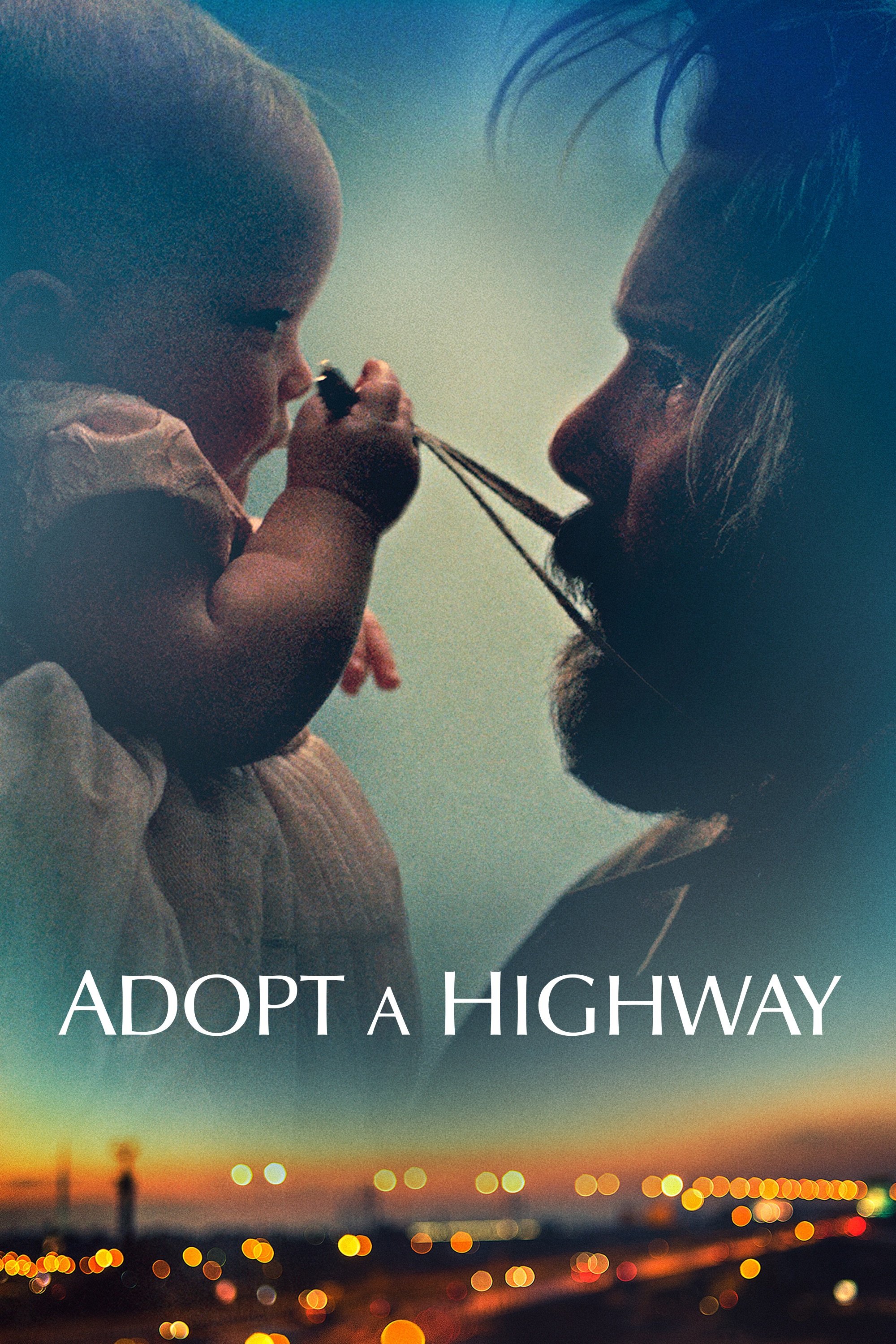
Russ Millings has just been released from prison after serving 21 years for a 3rd strike conviction for possessing an ounce of marijuana. As he tries to adapt to a world he doesn’t recognize – including trying to learn how to use the internet – he finds an abandoned baby in a dumpster behind the fast food restaurant where he works as a dishwasher. Unsure of what to do, and caught between impulses of kindness and panic, Russ soon realizes this could be his chance at redemption.