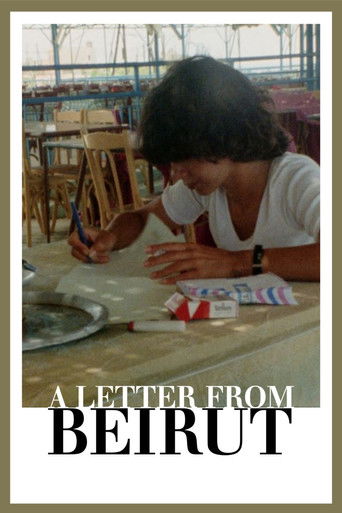
Bahij Hojeij’s documentary studies the infamous Green Line between east and west Beirut during the civil war.
Social & External
WINE and WAR is a documentary about one of the the oldest winemaking regions on earth and the resilience of the Lebanese entrepreneurial spirit seen through the lens of war and instability.
“Al Makhtufun” won the 1998 Best Short Documentary Film Award at the Mediterranean Film Festival for highlighting the issue of abducted Lebanese. The film raises two major issues: The abductee’s physical absence and his spiritual presence among his family members, and the parents silently wishing his return. The documentary looks at documents kept by Wadad, a mother who decides to step outside her comfort zone and share her papers and forms when other parents would not.
The apocalyptic blast in the Port of Beirut, Lebanon, on August 4, 2020, exacerbates anger at those in power: protests cross religious boundaries as the Lebanese people curse corruption, nepotism, gross economic mismanagement and squandering of resources. How did the Land of Cedars, a country with so much to offer, allow itself to get into such a dire situation? And will it be able to bounce back?
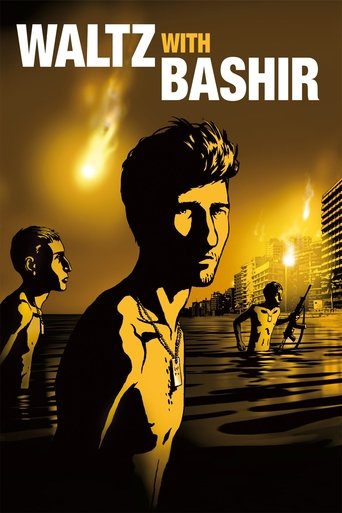
An Israeli film director interviews fellow veterans of the 1982 invasion of Lebanon to reconstruct his own memories of his term of service in that conflict.
Architecture in Beirut was the second greatest victim of the civil war, with pages of ancient and modern history erased by the end of the conflict. This documentary interviews citizens calling for a reconstruction plan that would preserve Beirut’s spirit of culture and openness.
Beirut, Lebanon's capital has a long history of political and social unrest that still makes headlines today. Globe Trekker's Beirut City Guide captures the city in more optimistic days, two weeks before the latest outbreak of hostilities in Lebanon between Israeli and Hezbollah forces in July 2006. Globe Trekker Megan McCormick explores the neighborhoods of Basta, Solidere, Gemayze and the Hezbollah District and finds a city in the midst of regeneration. She gets a glimpse at Beirut's future when meeting up with a group of young Arabic hip hop artists, who are eager to live in peace and put the country's political troubles in the past.
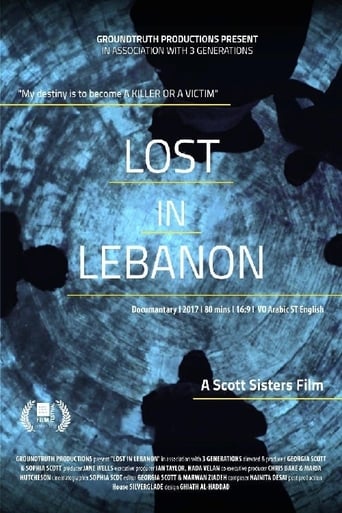
As the Syrian war continues to leave entire generations without education, health care, or a state, Lost in Lebanon closely follows four Syrians during their relocation process. The resilience of this Syrian community, which currently makes up one fifth of the population in Lebanon, is astoundingly clear as its members work hard to collaborate, share resources, and advocate for themselves in a new land. With the Syrian conflict continuing to push across borders, lives are becoming increasingly desperate due to the devastating consequences of new visa laws that the Lebanese government has implemented, leaving families at risk of arrest, detention, and deportation. Despite these obstacles, the film encourages us to look beyond the staggering statistics of displaced refugees and focus on the individuals themselves.
Documentary tracing Hezbollah’s emergence in southern Lebanon after years of Israeli occupation, focusing on its social base, resistance activities, and the return of displaced villagers.
In July 1982, the Israeli army besieged Beirut. Four days earlier, Jocelyne Saab sees her house burn and 150 years of family existence go up in smoke. She then takes refuge in questioning: when did this all begin? How did the Beirut people live the siege? Each place will then become a story and each name a memory.
"When this last war broke out, I was faraway in Paris. I had but one idea: to return to Beirut as quickly as possible and to begin shooting a film, for historical moments were taking place. This film became indispensible: to film so that history would cease repeating itself and to build up a picture library for future generations. I never understood why so few films were made during the Lebanese Civil War. Apart from the odd film, nothing remains from that time. The war surely merited more attention." (Waël Noureddine)
Jocelyne Saab toured the city of Beirut devastated by Israeli bombings. She assesses the number of victims and the extent of the destruction.
Eccomi ... Eccoti unfolds as a virtual road trip navigating between Italy and Lebanon. Conditioned to live in a long-distance relationship with his partner because of strict European visa regulations, the director patches together the shared moments in an attempt to create a possible day-to-day reality for their couple. With a lyrical, ambient soundscape set atop a dreamy, atmospheric visual style that oscillates between still photography and moving images, the film explores what it means to be gay in contemporary Beirut and existential discomfort that blocks one from reaching a sense of complete-ness. Does such in-completeness have to do, in particular, with being gay? Or is it related to a grander malaise endemic to the human condition?
1976 marks the beginning of Beirut’s calvary. With a child’s eyes the filmmaker follows for six months the daily destruction of the city’s walls. Every morning, between 6 and 10am she roams around Beirut while the militia from both sides rest from their night of fighting.
In an unprecedented and candid series of interviews, six former heads of the Shin Bet — Israel's intelligence and security agency — speak about their role in Israel's decades-long counterterrorism campaign, discussing their controversial methods and whether the ends ultimately justify the means.
A group of young UN soldiers in Lebanon enters service with pro-Israeli views and a naive outlook on war. They go through a radical change of heart as they witness and film the Qana massacre. They secure video evidence indicating that Israel deliberately bombed a UN camp killing 106 refugees.
Drawing inspiration from his personal encounter with the Italian refugee child Giovanna during World War II, Markus Imhoof tells how refugees and migrants are treated today: on the Mediterranean Sea, in Lebanon, in Italy, in Germany and in Switzerland.
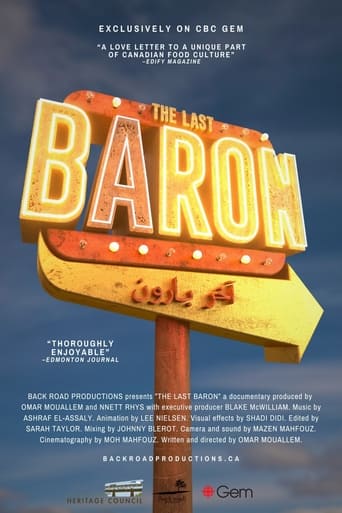
The meaty saga of Burger Baron, a rogue fast-food chain with mysterious origins and a cult following, run by a loose network of fiercely independent Arab Canadian immigrants.
While living in a deserted valley in eastern Lebanon, seven-year-old Rahaf describes the wonders of her past, present and future – without knowing the limits of her own imagination.
War Generation - Beirut explores the lives, dreams and fears of three generations of young people living in the heart of the civil war in Lebanon. This seminal work from Jean Chamoun and Mai Masri remains one of the most powerful anti-war documents of the period.
Severely battered from the Beirut Port Explosion on August 4th, Minerva passed away eight days later. Her son Joseph, while still grieving for his loss, sunk into a long and absurd bureaucratic path through the inept system that disowned his mother as a victim of the blast. Minerva is gone. The explosion has snatched her soul, and the city walls have not yet recognized her as a martyr. There is no poster of her smiling face among those of the victims. Their faces are memories that will haunt us for the rest of our lives. Perhaps her son, devastated by her passing, seeks to etch her image into the city's memory. Perhaps he is seeking some confession to the crime. This is a place that casts out its children, whether dead or alive.
A documentary on the expletive's origin, why it offends some people so deeply, and what can be gained from its use.
Diaries, audiotapes, videotapes and testimonials from friends and colleagues offer insight into the life and career of Gilda Radner -- the beloved comic and actress who became an icon on Saturday Night Live.
Brilliant, long in-the-works story of the life and art of the world's greatest comedian and the cinema's first genius, Charlie Chaplin. Produced, written and directed by renowned film critic Richard Schickel.
Through deeply personal interviews with her siblings and an examination of the photographs, letters, and belongings left behind, Mariska assembles a new portrait of her mother Jayne Mansfield, an extraordinary and complex woman.
Amid the failing counteroffensive, a journalist follows a Ukrainian platoon on their mission to traverse one mile of heavily fortified forest and liberate a strategic village from Russian occupation. But the farther they advance through their destroyed homeland, the more they realize that this war may never end.
Five broken cameras – and each one has a powerful tale to tell. Embedded in the bullet-ridden remains of digital technology is the story of Emad Burnat, a farmer from the Palestinian village of Bil’in, which famously chose nonviolent resistance when the Israeli army encroached upon its land to make room for Jewish colonists. Emad buys his first camera in 2005 to document the birth of his fourth son, Gibreel. Over the course of the film, he becomes the peaceful archivist of an escalating struggle as olive trees are bulldozed, lives are lost, and a wall is built to segregate burgeoning Israeli settlements.
A visual montage portrait of our contemporary world dominated by globalized technology and violence.
Daniel Craig candidly reflects on his 15 year adventure as James Bond. Including never-before-seen archival footage from Casino Royale to the upcoming 25th film No Time To Die, Craig shares his personal memories in conversation with 007 producers, Michael G Wilson and Barbara Broccoli.
A documentary detailing the epic Rogues' Gallery of DC Comics from The Joker and Lex Luthor, Sinestro, Darkseid and more, this documentary will explore the Super Villains of DC Comics.
The Making-of James Cameron's Avatar. It shows interesting parts of the work on the set.
Deep beneath the surface in the Syrian province of Ghouta, a group of female doctors have established an underground field hospital. Under the supervision of paediatrician Dr. Amani and her staff of doctors and nurses, hope is restored for some of the thousands of children and civilian victims of the ruthless Syrian civil war.
Nine filmmakers each profile a young girl from a different part of the world to weave a global tapestry of youth in the 21st century.
Using the book 'Fragments', which collects Marilyn Monroe's poems, notes and letters, and with participation from the Arthur Miller and Truman Capote estates who have contributed more material, each of the actresses will embody the legend at various stages in her life.
The Crash Reel tells the story of a sport and the risks that athletes face in reaching the pinnacle of their profession. This is Kevin Pearce’s story, a celebrated snowboarder who sustained a brain injury in a trick gone wrong and who now aims, against all the odds, to get back on the snow.
Stars of "The Walking Dead," Andrew Lincoln and Danai Gurira, walk down memory lane and visit iconic locations where pivotal moments between their characters, Rick and Michonne, were filmed.
An unprecedented and intimate look at the life, work and enduring legacy of British actress Audrey Hepburn (1929-1993).
A documentary focused on plastic pollution in the world's oceans.
The life and career of an actor, artist, and icon. His own journey through his own camera.
An Iraqi journalist joins an army of uneasy allies and unforgettable characters in the epic battle to liberate the city of Mosul from the Islamic State.
Ten Minutes Older is a 2002 film project consisting of two compilation feature films entitled The Trumpet and The Cello. The project was conceived by the producer Nicolas McClintock as a reflection on the theme of time at the turn of the Millennium. Fifteen celebrated film-makers were invited to create their own vision of what time means in ten minutes of film.