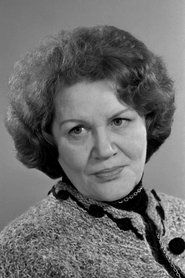
The film marks the occasion of the 800-year anniversary of Chornobyl: an epitaph to the nuclear power station tragedy. Lina Kostenko, the Ukrainian poetess, joins former residents on their annual trip to the dead town.
Social & External
self
The film uniquely recounts the lives of workers at Ukraine's Chornobyl nuclear power plant, National Guard soldiers and residents of surrounding towns and villages. These have been at the epicenter of the Russian occupation since February 24, 2022. It's a film that shows how a thin line separates humanity from another nuclear catastrophe and how the fight for survival was on a "ticking bomb." Under the constant threat of shelling and rockets.
What would happen if the world were suddenly without people - if humans vanished off the face of the earth? How would nature react - and how swiftly? On the edge of Europe, the deserted village of Chernobyl reveals the surprising answer after an unplanned experiment. Chernobyl was abandoned by people after the worst nuclear disaster in history (April 26, 1986). A level 7 meltdown resulted in a severe release of radioactivity following a massive explosion that destroyed the reactor. More than 20 years later, Chernobyl has been taken over by a remarkable collection of wildlife and descendents of pets that were left in the city when its residents fled the nuclear fallout. Unexpectedly in the aftermath of this disaster, Chernobyl has become a sanctuary for plants, birds, and animals, including some species thought to be on the brink of extinction.
Portrays the challenges of creating a film about nuclear disaster amid public apathy. It captures behind-the-scenes moments as the crew discusses the gravity of nuclear threats, the importance of preparation, and the emotional impact of a nuclear attack. The narrative emphasizes the need for individuals to take responsibility for their safety and community in the event of an attack, blending factual information with a call to action.
16-year-old Bella and Vipulan are part of a generation convinced its very future is in danger. Between climate change and the 6th mass extinction of wildlife, their world could well be inhabitable 50 years from now. They have sounded the alarm over and over, but nothing has really changed. So they’ve decided to tackle the root of the problem: our relationship with the living world. Over the course of an extraordinary journey, they come to realize just how deeply humans are tied to all other living species. And that by saving them… we’re also saving ourselves. Humans thought they could distance themselves from nature, but humans are part and parcel of nature. For man is, after all, an Animal.
In a quiet forest, a sign warns of radiation hazard. “Is this the past or the future?” muses the masked figure who appears like a kind of ghost in nuclear disaster areas. At a time when nuclear power may be re-emerging as an alternative to fossil fuels, this calmly observed and compelling tour takes us to places that may serve as a warning.
An in-depth look at how Italy's largest cruise ship ran aground off the Italian coast.
Olmany, Terebejov, Gorodnaïa: Three villages in the Stolyn district, Belarus, 200 kilometers from Chernobyl. In this area, the radiation rate was considered too low to justify the systematic evacuation of the population. Sixteen years after the disaster, life continues in a seemingly unchanged landscape. These farming communities face an invisible threat on a daily basis.
In this special documentary that inspired a two-season television series, scientists and other experts speculate about what the Earth, animal life, and plant life might be like if, suddenly, humanity no longer existed, as well as the effect humanity's disappearance might have on the artificial aspects of civilization.
This Academy Award-winning documentary takes a look at children born after the 1986 Chernobyl nuclear plant disaster who have been born with a deteriorated heart condition.
A disturbing collection of 1940s and 1950s United States government-issued propaganda films designed to reassure Americans that the atomic bomb was not a threat to their safety.
Thirty years after the Chernobyl disaster, which occurred on the night of April 26, 1986, its causes and consequences are examined. In addition, a report on efforts to strengthen the structures covering the core of the nuclear plant in order to better protect the population and the environment is offered.
On March 11, 2011, Okawa Elementary School in Ishinomaki City was engulfed by a tsunami, and 74 children, or 70% of the school's children, were killed. 51 minutes elapsed between the earthquake and when the tsunami reached the school. The school was informed of the tsunami and a school bus was on standby, but students did not evacuate. Okawa Elementary was the only school that suffered a large number of casualties in this earthquake. This documentary follows the lawsuit that followed the disaster, where the parents sought the truth behind the tragedy.
Combining poetry, science and emotion, this film traces the history of life, from its cosmic origins to its evolution on our planet, through the wonders of biodiversity and the contemporary challenges it faces. Through spectacular images, Yann Arthus-Bertrand questions the paradoxes of our times and urges a collective transformation to reconcile humanity with nature.
Thirty-six years after the Chernobyl nuclear reactor exploded in Soviet Ukraine, newly uncovered archival footage and recorded interviews with those who were present paint an emotional and gripping portrait of the extent and gravity of the disaster and the lengths to which the Soviet government went to cover up the incident, including the soldiers sent in to “liquidate” the damage. Chernobyl: The Lost Tapes is the full, unvarnished true story of what happened in one of the least understood tragedies of the twentieth century.
As his country is gripped by revolution and war, a Ukrainian victim of the Chornobyl nuclear disaster discovers a dark secret and must decide whether to risk his life and play his part in the revolution by revealing it.
Lie on top of the mud thrown under the ground.
On August 29, 2005, Rockey Vaccarella rode out Hurricane Katrina on his roof by holding on to a rope for 4 hours. Rockey and his family lost everything but he refused to give up. Nearly one year after surviving the worst natural disaster in the history of America, Rockey set out on a mission to deliver a message to the President of the United States. Even when most people thought he was crazy, Rockey hooked up his FEMA trailer and journeyed from Louisiana to the White House. By the time he arrived in the nation's capitol, Rockey had captured the attention of America and much of the world. FORGOTTEN ON THE BAYOU is the true story of an unforgettable man who believes that anything is possible.
The exciting story of the splitting of the atom, a scientific breakthrough of incalculable importance that ushered in the nuclear age, has a dark side: the many events in which people were exposed to radiation, both intentionally and by accident.
December 21, 2015. The image of a fox was captured by a camera inside the unit 2 building at Fukushima No.1 nuclear power plant... A film-essay about contemporary Japan in the aftermath of March 2011 earthquake.