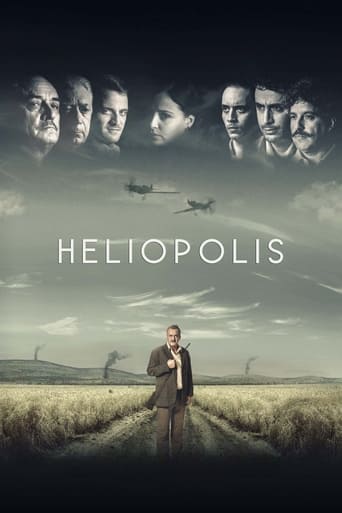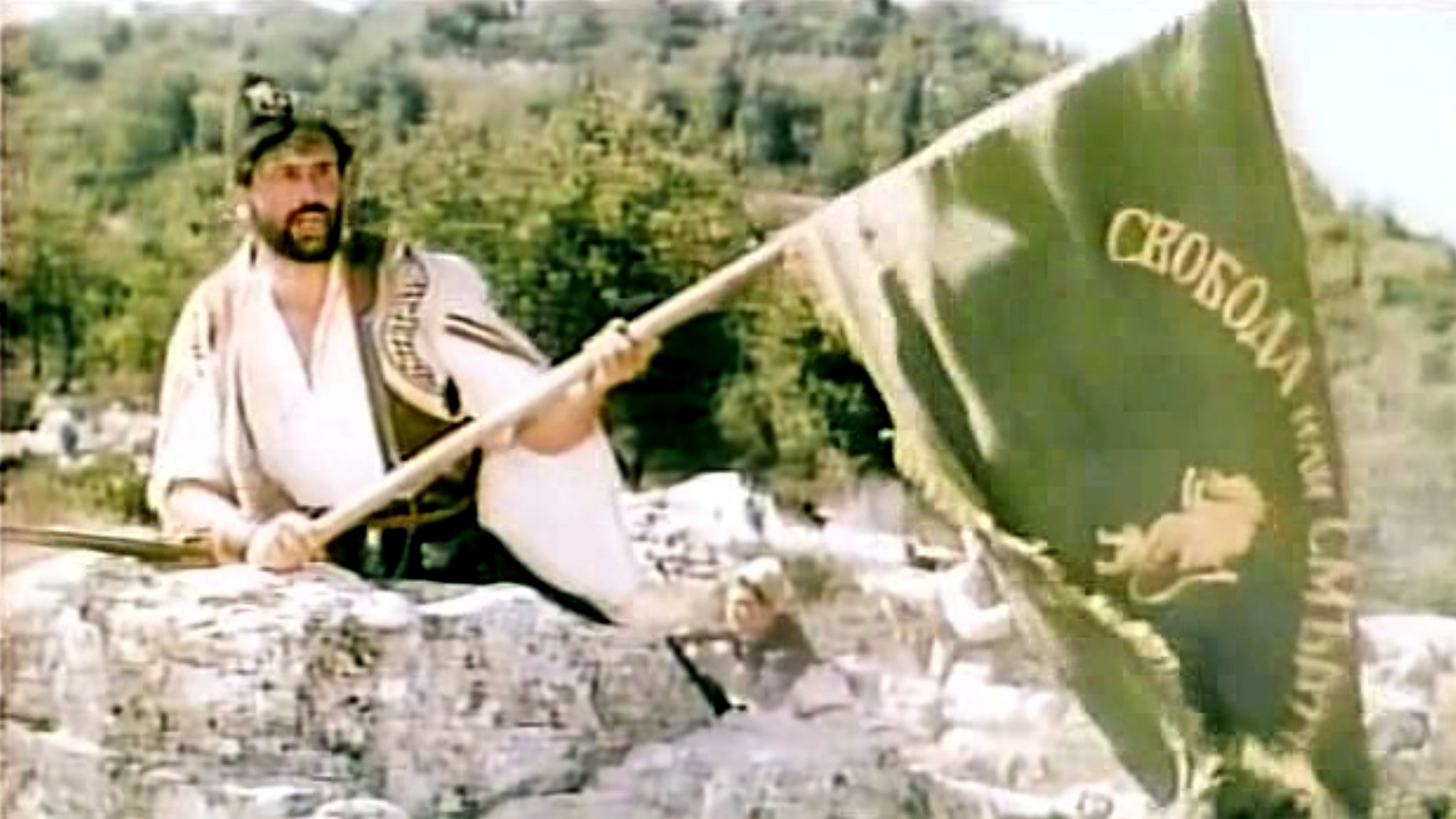
In а short but heroic campaign, Bulgarian poet and revolutionary Hristo Botev leads a band of rebels from the Danube to the Balkan Range.
Social & External
Hristo Botev
Unknown Role
David Todorov
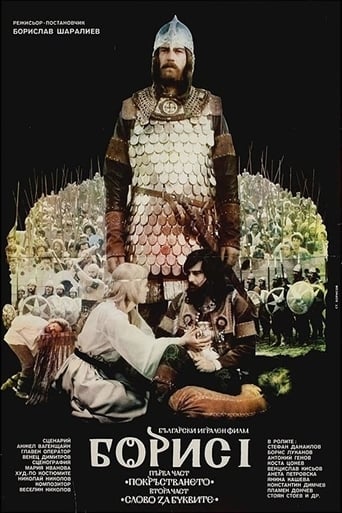
Part one of this two-part epic follows the life and deeds of Boris I – a strong historic personality, which completes his mission to the full and at the end of his life receives holy orders.
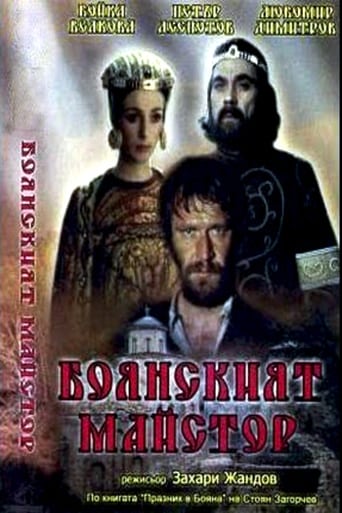
Knyaz Boris I reached the most important spiritual insight - the country needed a single language and script. It accepts students of Cyril and Methodius, creating Ohrid and Preslav Literary School. What other nations took centuries, for bulgarians takes place only about 20 years after their baptizing - introduced a Slavonic Alphabet.
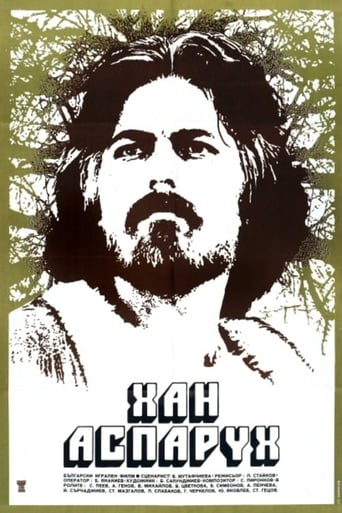
This is an epic screen presentation showing the creation, the consolidation and the power of First Bulgarian Kingdom and the first Bulgarian ruler Khan Asparuh. This is the first part of the film trilogy about the events before the creation of the Bulgarian state in the middle of the VII century. Volga Bulgaria is straining under the attacks of the Khazars. Following the testament of his father, the sons of Khan Kubrat looking for a new home for their tribes. The youngest of them - Asparukh, wander 20 years in search of "land forever" for his people and reaches the mouth of the Danube. The film is narrated by captured Byzantine chronicler Belisarius, which should Asparukh in his journeys. Byzantine witnessed the heroic efforts of the Bulgarians to win the land south of the Danube and to create their new country.
This is an epic screen presentation showing the creation, the consolidation and the power of First Bulgarian Kingdom and the first Bulgarian ruler Khan Asparuh. The second part of the great historical epic - "The Migration" - tells about the long journey to the land of the Bulgarians of today's Bulgaria. Here the young Khan Asparukh laid the foundations of the new state. The authors adhere to the established historical versions for this event. The film builds on the impressive mass scenes and the convincing served psychological characteristics of the main characters. The image of Asparoukh is a natural center of the story, in which many minor persons recreate the environment of the Khan. Romantic exalted, Asparukh is shown as capable leader of the people, consistently implement his own ideas.
The last part of the epic "Khan Asparukh" - "Land Forever" is an impressive finish to scale narrative, created for the nationwide celebration of 13 century anniversary of the Bulgarian state. The authors collected in final chord all storylines, culminating in the political strengthening of the young Bulgarian state. In the center of the film epic again is the image of Khan Asparukh - a lofty romantic hero who embodies the virtues and energy of his people.
At the end of the 18th century in Bulgaria under Ottoman slavery, a young woman leaves home and family to become leader of a guerrilla gang.
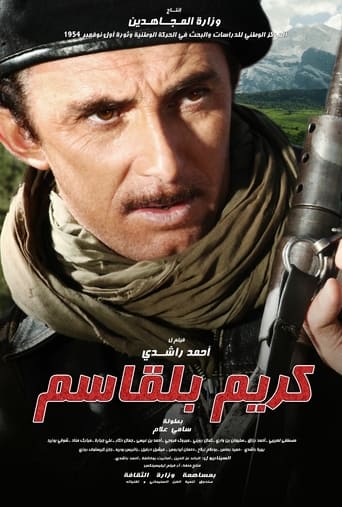
This film retraces the combat journey of Krim Belkacem, one of the leading figures of the Algerian War. When he left the Dellys barracks in October 1945, the day after the Second World War, Krim Belkacem was 23 years old. He is a man revolted by the May massacres in Sétif, Guelma, Kherrata and several other localities in the ravaged country. But it is also and above all a young Algerian who questions the future of Algeria. On March 21, 1947, Krim at the age of 25, he dug up his "Sten" submachine gun, he took action against the boss of his douar who was none other than his cousin. He goes into hiding with six companions. He meshes this entire part of Algeria with a dense and dense network with the sole objective of taking action which will lead to the outbreak of the armed struggle on November 1, 1954.
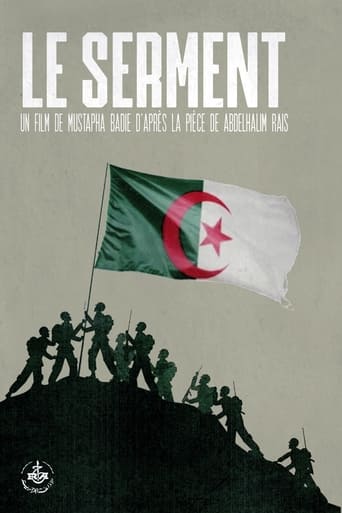
The Oath, a TV film produced by Algerian television in 1963 following the end of the war of independence, tells the story of young Algerians who joined the resistance after the bloody repressions of May 1945 in Constantinois by the French colonial army .
Djamila, a young Algerian woman living with her brother Hadi and her uncle Mustafa in the Casbah district of Algiers under the French occupation of Algeria, sees the full extent of injustice, tyranny and cruelty on his compatriots by French soldiers. Jamila's nationalist spirit will be strengthened when French forces invade her university to arrest her classmate Amina who commits suicide by ingesting poison. Shortly after the prominent Algerian guerrilla leader Youssef takes refuge with her, she realizes that her uncle Mustafa is part of this network of anti-colonial rebel fighters. Her uncle linked her to the National Liberation Front (FLN). A series of events illustrate Jamila's participation in resistance operations against the occupier before she was finally captured and tortured. Finally, despite the efforts of her French lawyer, Jamila is sentenced to death...
A new teacher - Marina - arrives in a small Pomak village in the late 1960s. She is a woman trying to live and think independently. Marina finds herself in a world unknown to her, at once pure and immaculate, but with the signs of the deformation of natural life that is typical of the whole country. After meeting the Doctor, Bai Mnogoznai, Mariana, the mayor, the internationalist Yosko, she discovers that each resists authority in their own way. And when the government starts changing the non-Bulgarian names of the Pomak villagers, the heroine realizes she is in a prison - with high mountains, forests, rivers - a prison of tragic beauty.
Frantz Fanon, a French psychiatrist from Martinique, has just been appointed head of department at the psychiatric hospital in Blida, Algeria. His methods contrast with those of the other doctors in a context of colonization. A biopic in the heart of the Algerian war where a fight is waged in the name of Humanity.
Near the end of World War II, Gen. Dietrich von Choltitz receives orders to burn down Paris if it becomes clear the Allies are going to invade, or if he cannot maintain control of the city. After much contemplation Choltitz decides to ignore his orders, enraging the Germans and giving hope to various resistance factions that the city will be liberated. Choltitz, along with Swedish diplomat Raoul Nordling, helps a resistance leader organize his forces.
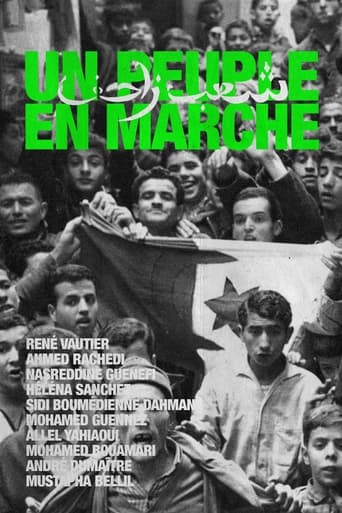
In 1962, René Vautier, together with some Algerian friends, organised the audio-visual formation centre Ben Aknoun to encourage a "dialogue in images" between the two factions. Together with his students he made a film that shows the history of the Algerian War and of the ALN (National Liberation Army), and life during the reconstruction.
In 1876 Bulgaria, a desperate revolutionary must convince a room of suspecting Ottoman soldiers that he is innocent. Based on the history of the April Uprising -- a struggle for independence between Bulgaria and the immense Ottoman Empire.
Domingos is a member of an African liberation movement, arrested by the Portuguese secret police, after bloody events in Angola. His wife goes from a prison station to another, trying in vain to find out where he is.
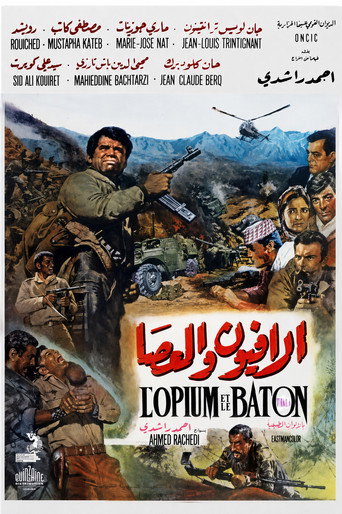
In 1950, in Algeria, in a village in Kabylia, Algerian resistance fighters resisted the French occupation army. Bachir returns to the village to escape the clashes ravaging Algiers. In Thala, he has two brothers, Ali and Belaïd. The first is engaged with the ALN (The National Liberation Army) and fights against the colonizer. His second brother, Belaïd, the eldest, is convinced of a French Algeria. His family torn apart, Bachir decides to join the war and takes sides against the repression of the French army. The French army is trying in vain to turn the population against the insurgents by using disinformation. The more time passes, the more the inhabitants of the village and surrounding areas, oppressed, rally to the cause of the FLN, their houses and their fields will be burned... Adaptation to the cinema of the eponymous novel Opium and the Stick, published in 1965, by Mouloud Mammeri, the film was dubbed into Tamazight (Berber), a first for Algerian cinema.
May It Fill Your Soul is a film about Bulgarian traditional music, about the pain of emigration and the promise of immigration, and about a family with a century-long musical history. Bulgaria's astonishingly rich village music traditions include strong women's singing, musical instruments with roots its millennia-old pastoral lifestyle and its 500-year history in the Ottoman Empire, and its lively dancing in additive meters of 5, 7, 9, and 11 beats to the measure. These practices are presented through the lens of a musical family trained during Bulgaria's communist regime (1944-1989) to represent the best that Bulgaria had to offer the world, but who made the wrenching decision in the post-communist period to immigrate to the United States for the sake of their daughters' futures. From that vantage point they have been able to teach their art to, and "fill the souls" of, singers, dancers, musicians, and audiences all over the world.
A meticulous chronicle of the evolution of the Algerian national movement from 1939 until the outbreak of the revolution on November 1, 1954, the film unequivocally demonstrates that the "Algerian War" is not an accident of history, but a slow process of suffering and warlike revolts, uninterrupted, from the start of colonization in 1830, until this "Red All Saints' Day" of November 1, 1954. At its center, Ahmed gradually awakens to political awareness against colonization, under the gaze of his son, a symbol of the new Algeria, and that of Miloud, half-mad haranguer, half-prophet, incarnation of Popular memory of the revolt, the liberation of Algeria and its people.
The end of World War II brings Europe a new political system, reshapes national and personal identities. Three women from Milan, Paris and Berlin report on the days of liberation in their diaries. Their personal stories expand the historical picture and make LIBERATION DIARIES a chronicle of female self-empowerment, resistance and resilience.
A WWII veteran escapes his care home in Northern Ireland and embarks on an arduous but inspirational journey to France to attend the 75th anniversary of the D-Day landings, finding the courage to face the ghosts of his past.
Young women toiling in a factory are exposed to hazardous material which takes a disastrous toll on their health.
Interrogated by a customs officer, a young man recounts how his life was changed during the making of a film about the Armenian genocide.
The story of Margaret Humphreys, a social worker from Nottingham, who uncovers one of the most significant social scandals in recent times – the forced migration of children from the United Kingdom to Australia and other Commonwealth countries. Almost singlehandedly, Margaret reunited thousands of families, brought authorities to account and worldwide attention to an extraordinary miscarriage of justice.
At the tense 1938 Munich Conference, former friends who now work for opposing governments become reluctant spies racing to expose a Nazi secret.
A small band of multicultural convicts stages a daring escape from a WWII-era Siberian gulag, and embarks on a treacherous journey across five countries in a desperate race for freedom and survival.
At the turn of the 19th century, Pugilism was the sport of kings and a gifted young boxer fought his way to becoming champion of England.
An escaped slave travels north and has chance encounters with Frederick Douglass and John Brown. Based on the life story of Shields Green.
In this sprawling, fictionalized history of the Black Panthers, 1960s Oakland becomes a war zone as the Panthers battle for the right to exist.
A drama set in the American South, where a precocious, troubled girl finds a safe haven in the music and movement of Elvis Presley.
After leaving his family's sheep farm in the Australian outback, a young man joins his countrymen on the western front of World War I with hopes of helping expedite an end to the bloody conflict. But as war rages on, he is forced to grapple with the brutal realities of trench warfare, including a near-constant battle to keep himself alive—without leaving another man behind. Inspired by the real-life diary entries of local ANZACs, the feature film details the untold story of some of Australia’s greatest military victories.
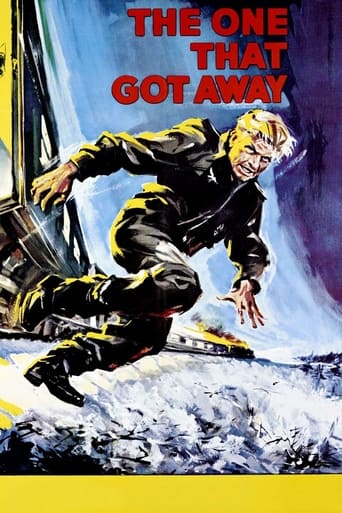
Based on the true story of Oberleutnant Franz von Werra, the only German prisoner of war captured in Britain to escape back to Germany during the Second World War.
A story set in 19th century China and centered on the lifelong friendship between two girls who develop their own secret code as a way to contend with the rigid cultural norms imposed on women.
Crown Prince Rudolf of Austria clashes with his father, Emperor Franz Joseph I of Austria, over implementing progressive policies for their country. Rudolf soon feels he is a man born at the wrong time in a country that doesn't realize the need for social reform. The Prince of Wales, later to become Britain's King Edward VII, provides comic relief. Rudolf finds refuge from a loveless marriage with Princess Stéphanie by taking a mistress, Baroness Maria Vetsera. Their untimely demise at Mayerling, the imperial family's hunting lodge, is cloaked in mystery.
A young woman's penchant for sensational Gothic novels leads to misunderstandings in the matters of the heart.
Based on true events about the foot soldiers of the early feminist movement, women who were forced underground to pursue a dangerous game of cat and mouse with an increasingly brutal State.
The true story of fraudulent Washington, D.C. journalist Stephen Glass, who rose to meteoric heights as a young writer in his 20s, becoming a staff writer at The New Republic for three years. Looking for a short cut to fame, Glass concocted sources, quotes and even entire stories, but his deception did not go unnoticed forever, and eventually, his world came crumbling down.
Fr. Hugh O'Flaherty is a Vatican official in 1943-45 who has been hiding downed pilots, escaped prisoners of war, and Italian resistance families. His activities become so large that the Nazis decide to assassinate him the next time he leaves the Vatican.
In Korea, on 6 September 1950, Lieutenant Benson's platoon finds itself isolated in enemy-held territory after a retreat. Soon they are joined by Sergeant Montana, whose overriding concern is caring for his catatonic colonel. Benson and Montana can't stand each other, but together they must get the survivors to Hill 465, where they hope the division is waiting. It's a long, harrowing march, fraught with all the dangers the elusive enemy can summon.
When the Welsh poet Dylan Thomas and his flirtatious wife Caitlin sweep into war-torn London, the last thing they expect is to bump into Dylan's childhood sweetheart Vera. Despite her joy at seeing Dylan after so many years, Vera is swept off her feet by a dashing officer, William Killick, and finds herself torn between the open adoration of her new found beau and the wily charms of the exotic Welshman.