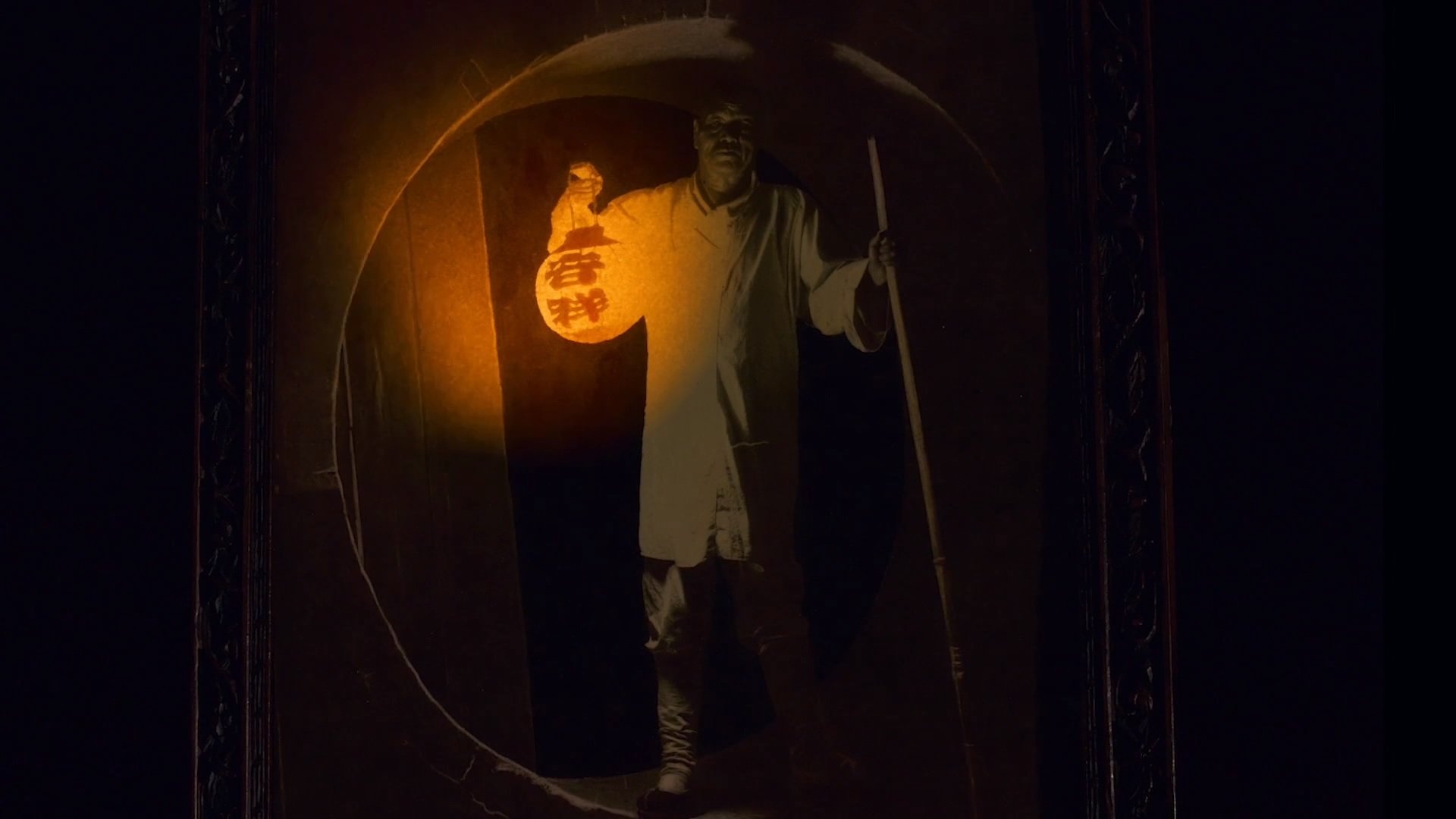
To discover the truth behind the mysterious objects her uncle brought back from the Far East during her childhood, filmmaker Francesca Lixi embarks on a journey to those places through archival footage.
Social & External
Francesca
L'uomo con la lanterna
Lea
On March 13, 2022, filmmaker Brent Renaud was killed by Russian soldiers, the first American journalist to die while reporting on the war in Ukraine. His younger brother and collaborator, Craig Renaud, recovered Brent’s body and his final recordings from Ukraine and brought them back to their childhood home in Arkansas. As Brent’s journey to his final resting place unfolds, the film chronicles the years he and his brother spent covering some of the world’s most dangerous conflicts.
The true story of how businessman Oskar Schindler saved over a thousand Jewish lives from the Nazis while they worked as slaves in his factory during World War II.
Disciplined Italian composer Antonio Salieri becomes consumed by jealousy and resentment towards the hedonistic and remarkably talented young Salzburger composer Wolfgang Amadeus Mozart.
Young Olga Ahrendt almost succeeded in attempting suicide. She had thrown herself in front of a tram out of desperation about her miserable life, a desperation she shared with many in the post-war period. Fortunately, Privy Councillor Sauerbruch is at the scene of the incident, ordering her to be admitted to his clinic after a brief examination. Sauerbruch works both as a university lecturer and as a surgeon, a famous doctor who not only helps his patients physically but also gives them spiritual comfort. After he has taken Olga Ahrendt to his hospital, he discovers during an examination that her suicide attempt is due to a serious physical illness. He intensively takes care of her without forgetting about his other patients, to whom he can give a new will to live, even if only through a small story. And he will also treat Olga Ahrendt successfully...
Hamburg, Germany, 1939. Getting a passage aboard the passenger liner St. Louis seems to be the last hope of salvation for more than nine hundred German Jews who, desperate to escape the atrocious persecution to which they are subjected by the Nazi regime, intend to emigrate to Cuba.
My grandfather Tuiu decides for the second time to leave his house and start a life elsewhere, he lives with the street hardships, and the fact of leaving is linked to the depredation of that place.
The Dangers of the Fly is an educational film made by Ernesto Gunche and Eduardo Martínez de la Pera, also responsible for Gaucho Nobility (1915), the biggest blockbuster of Argentinean silent cinema. De la Pera was a talented photographer, always willing to try new gadgets and techniques. This film experiments with microphotography in the style of Jean Comandon's films for Pathé and it is part of a series which included a film about mosquitoes and paludism and another one about cancer, which are considered lost. Flies were a popular subject of silent films and there are more than a dozen titles featuring them in the teens and early twenties.
Documentarian Jose Sanchez-Montes turns his attention towards the late Cuban musician Ignacio Villa, known throughout the world as Bola de Nieve (Snowball), with this 2003 biographical documentary entitled simply Bola de Nieve. A master pianist, Bola de Nieve was a mainstay through the middle portion of the 20th century, with his music almost omnipresent in South America cinema throughout those formative decades. With Bola de Nieve's famous statement "I'm a sad person, but my songs sound happy" in mind, Sanchez-Montes also looks at the influence of the musician's African heritage and homosexuality upon Bola de Nieve's unique musical style.
"Green Day: The Early Years" chronicles the rise of the world's most influential punk band, from their origins playing shows at Berkley's notorious Gilman Street venue in the late 80s, through the release of the platinum-selling Dookie in 1994.
Shortly after the end of the Second World War, Josef Mengele, the Nazi doctor who had practiced in the Auschwitz extermination camp, managed to escape from Germany. With the help of SS soldiers and the support of wealthy South American families, he went into hiding in Argentina. From Buenos Aires to Paraguay, with stops in the Brazilian jungle, the so-called Angel of Death organized his methodical disappearance and escaped any form of trial.
Documentary examining the work of sculptor Richard Lippold, particular his sculpture of the sun at the Metropolitan Museum of Art.
A documentary about the centuries-old story of one of the biggest clubs in Brazilian football. From its foundation, the early years, the continental and world titles and the achievementes of its greatest stars.
The film takes place in the Swedish capitol Stockholm during the year 1809. War has ravaged Europe continuously for the last seventeen years. The common citizens of Stockholm live in misery as poverty, violence and death dominate the shadowy alleys. A coup feels inevitable and the coming dissolvement of the nation is what's on everyone's lips. In a beautiful salon six nobles are hiding away from it all by partying and socializing. One night the hostess Charlotte reveals to her five guests that she will be forced to sign over her property to one of them, for fear of otherwise losing it to the rebelling antigustavians. A game begins in the candlelit salon. A game of covert intentions, manipulation and mind games as five nobles attempt to find out who of them is best suited to take over the beautfiul estate. Time passes as they're all constantly driven towards their own personal abysses. All meanwhile the sounds of gunshots and yelling echo from beyond the gilded window sills.
Johan van der Keuken went against the grain in 1980: from Amsterdam (on April 30 with the coronation riots and squatting actions) via Paris, southern France and Italy to Egypt. He made his personal travelogue in three parts for VPRO television. Later, he fused the three parts into one long movie.
A Victorian surgeon rescues a heavily disfigured man being mistreated by his "owner" as a side-show freak. Behind his monstrous façade, there is revealed a person of great intelligence and sensitivity. Based on the true story of Joseph Merrick (called John Merrick in the film), a severely deformed man in 19th century London.
The story is set at the beginning of the 20th century in Sicily. Salvatore, a very poor farmer, and a widower, decides to emigrate to the US with all his family, including his old mother. Before they embark, they meet Lucy. She is supposed to be a British lady and wants to come back to the States. Lucy, or Luce as Salvatore calls her, for unknown reasons wants to marry someone before to arrive to Ellis Island in New York. Salvatore accepts the proposal. Once they arrive in Ellis Island they spend the quarantine period trying to pass the examinations to be admitted to the States. Tests are not so simple for poor farmers coming from Sicily. Their destiny is in the hands of the custom officers.
A documentary covering the harrowing tragedy of the SS Morro Castle.
When Patrizia Reggiani, an outsider from humble beginnings, marries into the Gucci family, her unbridled ambition begins to unravel the family legacy and triggers a reckless spiral of betrayal, decadence, revenge, and ultimately… murder.
William Friedkin attends an exorcism with Father Gabriele Amorth, as he treats an Italian woman named Cristina for the ninth time. Prior to filming, Cristina had purportedly been experiencing behavioural changes and “fits” that could not be explained by psychiatry, and which became worse during Christian holidays.