Social & External
Robert Koch is one of the superstars of the scientific world. In countless publications, Robert Koch is enthusiastically celebrated as the savior of humanity, but on closer inspection, many aspects of his research appear questionable today and can only be understood in the context of his time. Koch's meteoric career in the Wilhelmine Empire is a prime example of how scientific discoveries are inextricably linked to the political and economic conditions of their time. The documentary sheds light on these conditions and interludes, drawing parallels to the problems facing infectious medicine today.
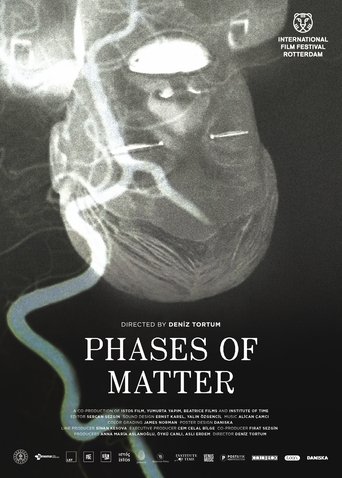
Phases of Matter follows living and inanimate residents of a teaching hospital in Istanbul, moving from the operating room to the morgue, between life and other states, the real and the virtual.
Faceless is a documentary film about the workings of an inpatient psychiatry unit, seen through the eyes of both the patients trying to get well and the staff trying to help them.
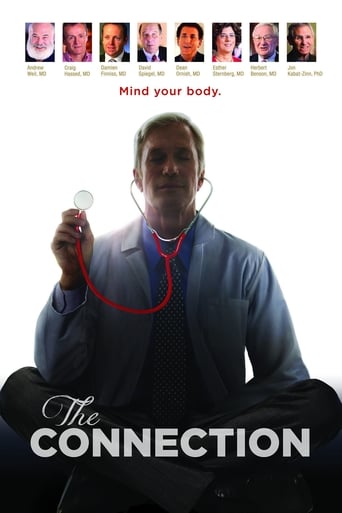
The Connection is a film about how frontier research is proving that there is a direct connection between your mind and your health.
With nutritionally-depleted foods, chemical additives and our tendency to rely upon pharmaceutical drugs to treat what's wrong with our malnourished bodies, it's no wonder that modern society is getting sicker. Food Matters sets about uncovering the trillion dollar worldwide sickness industry and gives people some scientifically verifiable solutions for curing disease naturally.
Documentary written and presented by scientist Richard Dawkins, in which he seeks to expose "those areas of belief that exist without scientific proof, yet manage to hold the nation under their spell", including mediumship, psychokinesis, acupuncture, and other forms of alternative medicine.
A documentary that explores the dangerous and sometimes deadly world of fake products. An industry that once dealt in imitation designer handbags and shoes has exploded into a global epidemic of counterfeit pharmaceuticals, foods, toys, electronic goods, car parts and microchips. COUNTERFEIT CULTURE challenges consumers to take a deeper look at what appears to be harmless knock-offs at bargain prices.
Human genetics is one of the most exciting fields in science at the moment. Not only does it advance exponentially fast, it is also a field of study that will very soon affect our daily lives. We will all have to deal with the possibilities and technologies that human genetics have to offer, today and in the coming years. Quite a few questions and dilemmas still have to be answered by us. Do I want to know everything that can be found out from my DNA? And who is allowed to use and read my genetic code? My doctor? The police? The chef of my favourite restaurant? Also, what genetic technologies do I want to use? Do I want to clone my dog, choose my children’s eye colour, or genetically modify them to give them extra talents? Do I want others in society to be allowed to do that? The current and future possibilities of human genetics are simply overwhelming. They are both promising and frightening, chilling and delightful.
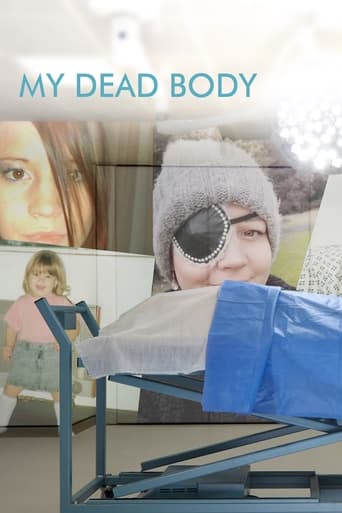
The extraordinary moving story of Toni Crews, a young mum with a rare terminal cancer who charted her illness online before donating her body for medical research and public dissection.
A historical documentary documenting the rise, function, and abandonment of a 17 story building that once housed The Rochester Psychiatric Center. This film tells the story of the building through historical footage, interviews of former staff and patients who recount their memories of the behemoth facility while also exploring the abandoned building as it is today.
A well-preserved mammoth carcass is found in the remote New Siberian Islands in the Arctic Ocean, opening up the possibility of a world-changing “Jurassic Park” moment in genetics.
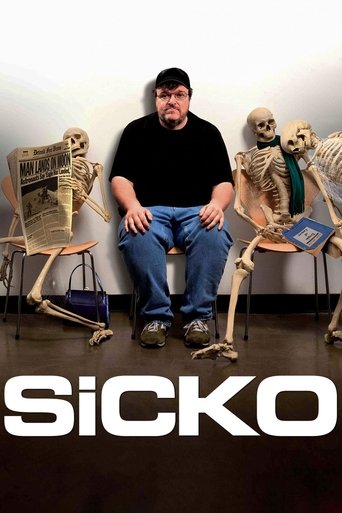
A documentary about the corrupt health care system in The United States who's main goal is to make profit even if it means losing people’s lives. "The more people you deny health insurance the more money we make" is the business model for health care providers in America.
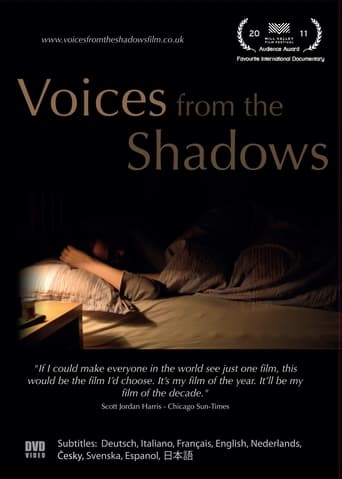
‘Voices from the Shadows’ shows the brave and sometimes heartrending stories of five ME patients and their carers, along with input from Dr Nigel Speight, Prof Leonard Jason and Prof Malcolm Hooper. These were filmed and edited between 2009 and 2011, by the brother and mother of an ME patient in the UK. It shows the devastating consequences that occur when patients are disbelieved and the illness is misunderstood. Severe and lasting relapse occurs when patients are given inappropriate psychological or behavioural management: management that ignores the severe amplification of symptoms that can be caused by increased physical or mental activity or exposure to stimuli, and by further infections. A belief in behavioural and psychological causes, particularly when ME becomes very severe and chronic, following mismanagement, is still taught to medical students and healthcare professionals in the UK. As a consequence, situations similar to those shown in the film continue to occur.
Inside the dramatic search for a cure to ME/CFS (Myalgic Encephalomyelitis/Chronic Fatigue Syndrome). 17 million people around the world suffer from what ME/CFS has been known as a mystery illness, delegated to the psychological realm, until now. A scientist in the only neuro immune institute in the world may have come up with the answer. An important human drama, plays out on the quest for the truth.
Earth teems with a staggering variety of animals, including 9,000 kinds of birds, 28,000 types of fish, and more than 350,000 species of beetles. What explains this explosion of living creatures—1.4 million different species discovered so far, with perhaps another 50 million to go? The source of life's endless forms was a profound mystery until Charles Darwin brought forth his revolutionary idea of natural selection. But Darwin's radical insights raised as many questions as they answered. What actually drives evolution and turns one species into another? To what degree do different animals rely on the same genetic toolkit? And how did we evolve?
Explores the little-known history and humanity of the unsung Filipino nurses risking their lives on the front lines of a pandemic, thousands of miles from home.
The film tells a very personal story from two perspectives: our protagonist is both doctor and patient. As a patient, he has struggled with recurring depression for years, and as a doctor he wants to find out why. The search for the origins of his illness leads him into the realm of his own genes and casts light on the fundamental changes facing modern society as a result of the tremendous progress being made in the field of genetic sequencing. Along the way, he meets a host of people – researchers, artists, visionaries – who have developed their own very individual approach to genetic coding and are drawing attention to the social significance of genetic technology. The film does not restrict itself to a scientific view of the subject but also makes use of artistic visions and more playful approaches to genetic blueprints.
Filmed and edited in intimate vérité style, this movie follows visionary medical practitioners who are working on the cutting edge of life and death and are dedicated to changing our thinking about both.
After waiting 74 years to ascend to the throne, Charles III fell ill less than a year after his coronation. The king's health is a cause for concern throughout the kingdom, and the vague statements issued by his medical team raise more questions than they answer. Michael Dixon, head of the king's medical team, is a fervent advocate of homeopathy and alternative medicine. His appointment has been highly controversial.