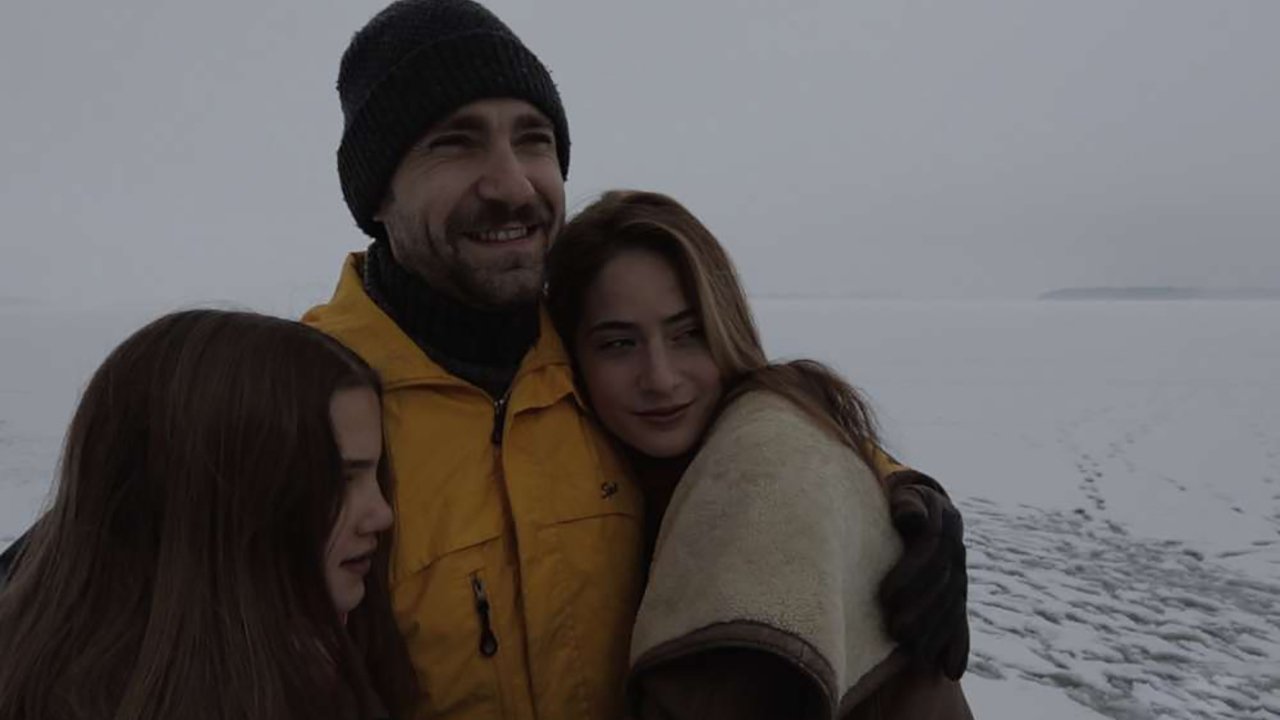
A film about people who are leaving Serbia for economic reasons.
Social & External
Antoan
Nataša
Bure
Josip
Saksofonista
Profesorka
Tamara
Adem
Mile
Sveštenik
Hasani
Devojčica flautistkinja 1
Devojčica flautistkinja 2
Narator u pozorištu
Karl Bilt
A story about rich lady who invites a poor fellow to her house with intentions to marry him. He accepts her offer, yet it soon proves that the reason were his high debts, as well as prostitute he's secretly seeing. The story becomes more complex when the lady starts an affair with their gardener.
A college professor travels to New York City to attend a conference and finds a young couple living in his apartment.
LEI and WONG clandestinely arrive to Ecuador, on their way to the port city of Guayaquil. From here LEI plans to continue her journey to New York, but CHANG, a bipolar mobster will decide her fate. WONG unwillingly gets entangled in the web of corruption that operates the encroachment of Chinese immigrants. His only objective is to bring his twelve-year-old son from China.
Urban horticulturalist Brontë Mitchell has her eye on a gorgeous apartment, but the building's board will rent it only to a married couple. Georges Fauré, a waiter from France whose visa is expiring, needs to marry an American woman to stay in the country. Their marriage of convenience turns into a burden when they must live together to allay the suspicions of the immigration service, as the polar opposites grate on each other's nerves.
A man from communist Czechoslovakia unexpectedly meets his childhood love on a flight to Cuba. When they stop over in Canada, he has a plan… but can he trust her?
A young Iranian man is desperately trying to meet women who can secure his stay in Denmark. As time runs out, he falls in love and his past catches up with him. The film deals with themes of race, class, and the struggle for a better life.
60 year old woman leaves urban life and goes to live in a village to take care of her grandchildren whose parents now live in America. There she faces lots of financial hardships as the family doesn't send any money, and tries her best to provide all for their happier childhood.
Anna, a young photojournalist from Berlin, travels to Serbia to make a photo documentary about refugees. Upon her arrival to Belgrade, Serbia's capital, Anna finds out that she can't go about her task the way she had planned. Through the cabdriver Dzeki, she meets the distrustful but interesting young refugee Maja who works at a nearby fast food restaurant. Miserable with her life in Serbia, Maja dreams of a new beginning somewhere abroad. In an attempt to successfully finish her project, Anna starts photographing Maja, secretly making a documentary about her. Blinded by the wish to change her life, Maja doesn't realize Anna's true intentions.
Three intertwining stories that take place in La Salada — the largest unregulated market in Buenos Aires: a Korean father prepares his daughter for an arranged marriage, a young Bolivian man searches for work, and a Taiwanese DVD seller tries to woo a young woman to be his girlfriend.
Three parallel love stories set in three different cities are set against some of the major international events of the last five years, in this ambitious.
A young Pakistani Briton manages a rundown laundrette with his lover while dealing with tension in his family, the local Pakistani community, and a persistent mob of skinheads.
"Baba" is a bitter melodrama set in Istambul. A father is not able to earn enough money to feed his family. He is waiting to emigrate to Germany. When his landlord's son kills a man while drunk, the father is prepared to answer for the deed himself, provided that the landlord supports his wife and children. As there is little difference for the father between ten years in prison or ten years in a foreign country, he regards this to be the best solution.
One man's journey through depressing urban environment.
Disgruntled Korean War veteran Walt Kowalski sets out to reform his neighbor, Thao Lor, a Hmong teenager who tried to steal Kowalski's prized possession: a 1972 Gran Torino.
In 1971, the Algerian government nationalized hydrocarbons. The consequences of this decision on the community of Algerians in France are numerous. The Galti family is prey to these economic problems. The father, Khaled, former member of the F.L.N. in France, does not escape the sentence. Sharazade, his wife and comrade in combat, finds herself torn between her role as wife, mother and nostalgia for a country and a bygone past. As for his son Karim, a victim of socio-cultural division, all he has left is refusal.
Three stories are intertwined in a land, Friuli, in the North-East of Italy, which extends along a triple border. The stories of Irene, a Carnian, Christian girl; Pavel, Ukrainian and Jewish; Mehdi, Iranian and Muslim. Udine. A beautiful city, but one that is perceived as cold and inhospitable by emigrants. Pavel and Mehdi are illegal immigrants, who share an apartment - and concerns about social matters - in the “ghetto” of Via Roma. In love with Pavel, Irene tries to help them, but her surge of solidarity goes perhaps too far, and she regrets it. Mehdi lives obsessed with an ancient guilt: his fragile soul is attracted to Evil. Predestination and moral choice. Two alternatives? Subjection to freedom of Good or Evil. What will the protagonists choose?
A romantic drama that charts the lives of three women from different backgrounds, forever changed when they emigrate to New Zealand as war brides.
Brother and sister Enrique and Rosa flee persecution at home in Guatemala and journey north, through Mexico and on to the United States, with the dream of starting a new life.
An undocumented immigrant, Roberto, seeks a way to become lawful, but all efforts are put on hold when he becomes a new father at the onset of the US government's 'Zero Tolerance' child separation policy at the US / Mexico border.
The movie is based on the fascinating, true story of a feral boy whom hunters found among wolves in a forest in the mountains of Bosnia-Herzegovina (BiH) in the mid-1980s. The boy was sent to the institution for children in an attempt to socialize him and got the Muslim name – Haris. Contrary to most predictions, he was developing and making friends quickly. When the war in BiH broke out in 1992, Haris got the letter from local Bosnian authorities which asked for his immediate return. Upon returning to BiH, he had nowhere to go. While wandering aimlessly, he came across a group of soldiers that gave him a gun and took him with them