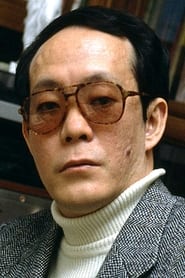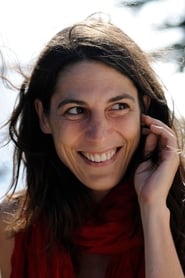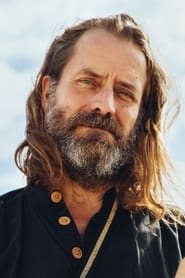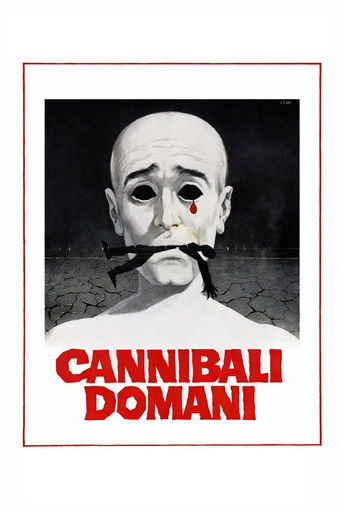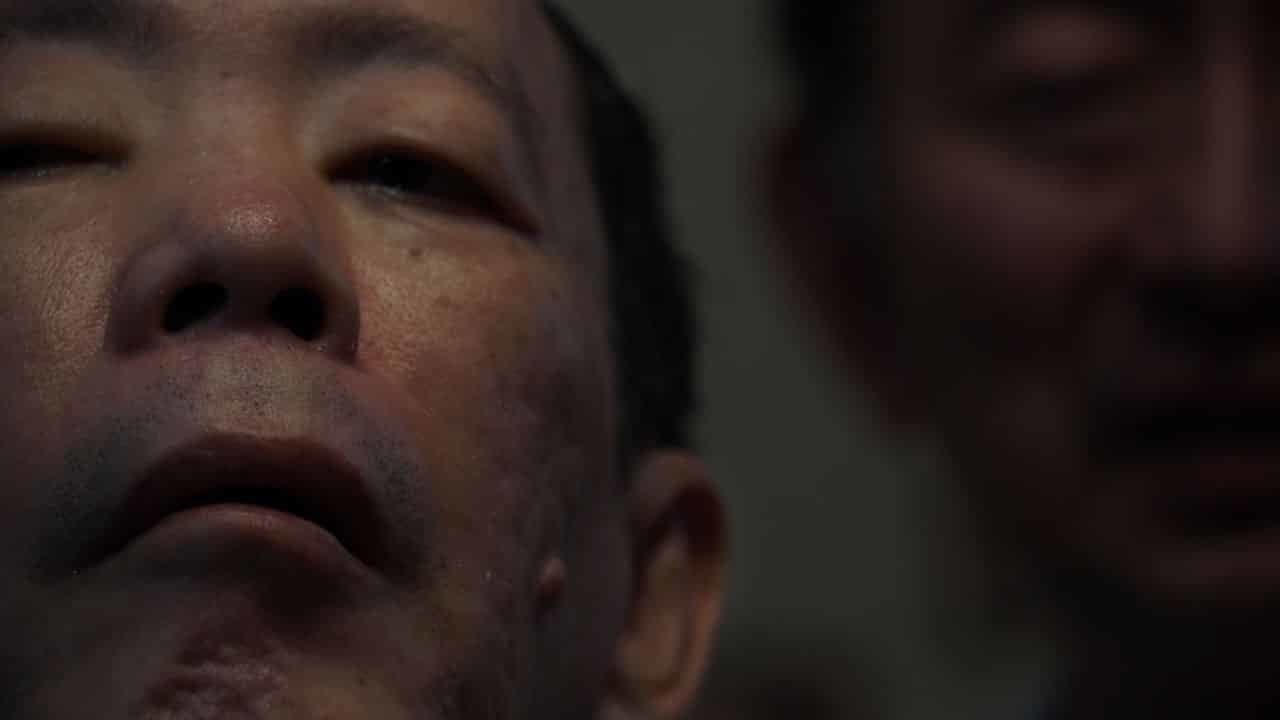
Caniba is a fresco about flesh and desire. It reflects on the discomfiting significance of cannibalism in human existence through the prism of one Japanese man, Issei Sagawa, and his mysterious relationship with his brother, Jun Sagawa.
Social & External
The people behind it
Issei Sagawa
Himself
Jun Sagawa
Himself (Brother of Issei)
Yoko Satomi
Herself
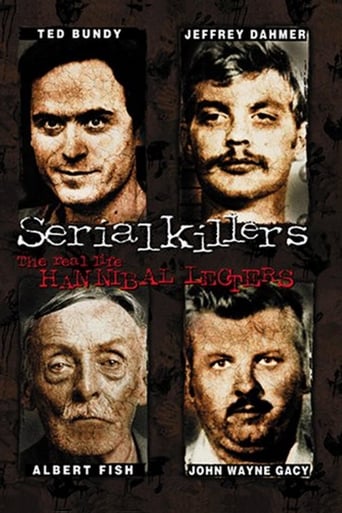
This documentary examines a selection of real life serial killers and compares them to the fictional Hannibal Lecter.
A collection of death scenes, ranging from TV material to homemade super 8 movies.
It is a documentary, which submits to the public the most dramatic, subhuman situations in which men find themselves living in all corners of the world. From India to Brazil, from the African nations of the Sahel to Bolivia, the camera ruthlessly shows the images of a humanity marginalized in a thousand ways by the so-called"civil consortium".
An interview with the Italian directors Ruggero Deodato and Umberto Lenzi at the the "Joe D'Amato Horrorfest" in Livorno, 2004.
An interview with actress Me Me Lai on her work in the three Italian cannibal-themed movies "The Man from Deep River", "Last Cannibal World" and "Eaten Alive", as well as on her participation in Lars von Trier's "Element of Crime".
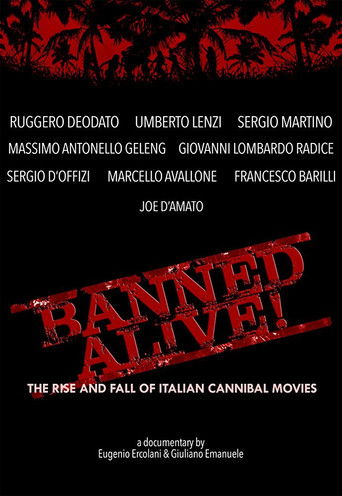
2 1/2 hour-documentary on the rise and fall of one of the most controversial Italian genres every created. Starting with Deep River Savages arriving to the infamous Cannibal Ferox.
Presents a science fiction story in which two aliens tell the story of earth after World War III, when human beings are reduced to the level of savage cannibals. Even though the man and woman fall in love, they cannot stay together because one will be food for the other
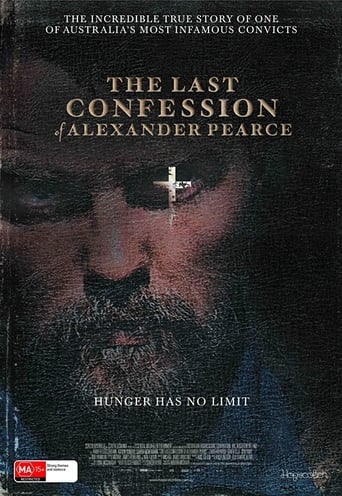
Eight men escape from the most isolated prison on earth. Only one man survives and the story he recounts shocks the British establishment to the core. This story is the last confession of Alexander Pearce.
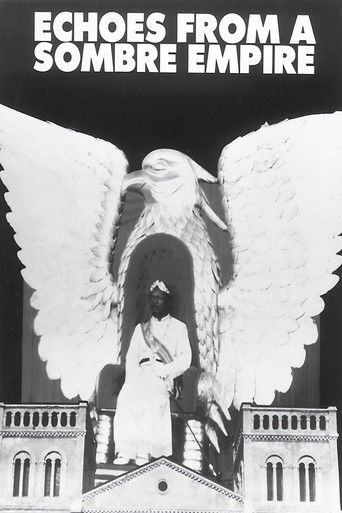
Documentary examining Bokassa's rule in the Central African Republic using the testimony of witnesses and visits to key sites.
Mondo-style documentary in which a movie crew travels to newly independent Papua New Guinea to capture the customs and culture of the cannibal natives. Prepare yourself for death rituals, war costumery, crude tattoos, animal killings, and cannibalism.
The shocking story of one of the world's most notorious cannibals, Armin Meiwes, who found a willing victim online who agreed to be dismembered and eaten for sexual pleasure. Told by those closest to the case, the documentary discusses how the killer and the victim's lives led to their fatal night together
Interview-Documentary with special effects artist Gino De Rossi on the making of "Cannibal Ferox".
The Cannibal that Walked Free (also known as Cannibal Superstar ) is a British documentary produced by Visual Voodoo for Channel Five which explores - through direct access - the bizarre psychology and twisted celebrity fame that surrounds Japanese cannibal Issei Sagawa.
Though the release date says 1956, this film consists mostly of footage from a 1931 documentary called "Gow the Killer." It was the first sound film to deal with cannibalism, as it documented the social life and customs of primitive tribes that in fact did engage in cannibalism.
An experimental documentary film that uses archival footage, interviews, and fictionalised scenarios to tell the story of the people around Jeffrey Dahmer during the summer of his arrest in 1991.
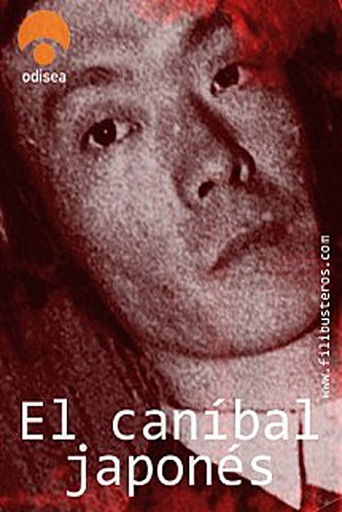
Issei Sagawa murdered an innocent woman and spent three days eating her flesh. Due to loopholes in the law, Issei is a free man to this day. Sagawa was declared insane and unfit for trial and was institutionalized in Paris. His incarceration was to be short, however, as the French public soon grew weary of their hard-earned francs going to support this evil woman-eater, and Issei was promptly deported. Herein followed a bizarre and seemingly too convenient set of legal loopholes and psychiatric reports that led doctors in Japan declaring him "sane, but evil." On August 12, 1986, Sagawa checked himself out of Tokyo's Matsuzawa Psychiatric hospital, and has been a free man ever since.
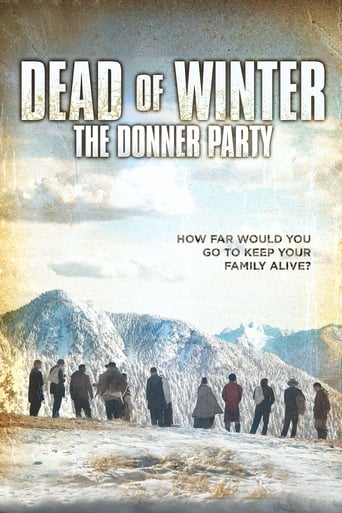
What starts out as a voyage to the West in pursuit of the American Dream quickly turns deadly for the Donner party after a series of bad decisions and severe weather. Trapped in the Sierra Nevada Mountains, this group of nearly 80 settlers fell prey to sub-zero temperatures, torrential rainfalls, extreme heat, and ten-foot snow drifts. Punishing storms trapped the party with nearly no food or shelter for 5 months in the Sierra Nevada mountains. Many died, some succumbed to cannibalism to survive, and others delved deeply into their faith while waiting to be rescued. “The Donner Party” explores this exciting journey through a hybrid of first-person narration, remarkable reenactments, expert interviews, CGI, and archival materials.
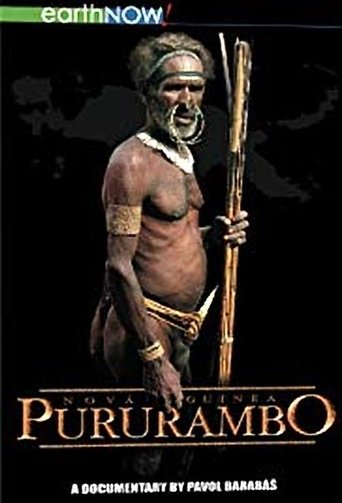
Globe-trotting Slovakian filmmaker Pavol Barabas explores Earth's biggest tropical island, New Guinea, in this breathtaking tour of a culture wholly unfamiliar with modern civilization and with no previous contact with white people. Along the way, Barabas finds people living high in trees under conditions roughly similar to those of the Stone Age. The film won the Culture Prize at the Kendal Mountain Film Festival.
Stephen Griffiths murdered three women in cold blood - one was caught on CCTV. In court he shocked everyone by calling himself, The Crossbow Cannibal.
Somewhere between Sri Lanka and the island of New Guinea, in the upper reaches of the Amazonia jungle, there is rumoured to be a lost tribe of cannibals. Assembled out of Italo cannibal mondo movies, Hollow Jungle documents their rituals, sourcing their power in narrative repetitions and analogies, before structurally locating them in the prurient pathologies of certain pseudo-ethnographies.
A string of threatening emails escalates into a revenge plot involving a newly married US marshal and his ex-girlfriend.
When Allied forces liberated the Nazi concentration camps in 1944-45, their terrible discoveries were recorded by army and newsreel cameramen, revealing for the first time the full horror of what had happened. Making use of British, Soviet and American footage, the Ministry of Information’s Sidney Bernstein (later founder of Granada Television) aimed to create a documentary that would provide lasting, undeniable evidence of the Nazis’ unspeakable crimes. He commissioned a wealth of British talent, including editor Stewart McAllister, writer and future cabinet minister Richard Crossman – and, as treatment advisor, his friend Alfred Hitchcock. Yet, despite initial support from the British and US Governments, the film was shelved, and only now, 70 years on, has it been restored and completed by Imperial War Museums under its original title "German Concentration Camps Factual Survey".
A subjective documentary that explores various theories about hidden meanings in Stanley Kubrick's classic film The Shining. Five very different points of view are illuminated through voice over, film clips, animation and dramatic reenactments.
Alex Gibney explores the phenomenon of Stuxnet, a self-replicating computer virus discovered in 2010 by international IT experts. Evidently commissioned by the US and Israeli governments, this malware was designed to specifically sabotage Iran’s nuclear programme. However, the complex computer worm ended up not only infecting its intended target but also spreading uncontrollably.
Ten of Muhammad Ali's former rivals pay tribute to the three-time world heavyweight champion.
In 1972, a seemingly typical shoestring budget pornographic film was made in a Florida hotel: "Deep Throat," starring Linda Lovelace. This film would surpass the wildest expectation of everyone involved to become one of the most successful independent films of all time. It caught the public imagination which met the spirit of the times, even as the self-appointed guardians of public morality struggled to suppress it, and created, for a brief moment, a possible future where sexuality in film had a bold artistic potential. This film covers the story of the making of this controversial film, its stunning success, its hysterical opposition along with its dark side of mob influence and allegations of the on set mistreatment of the film's star.
In this documentary, recovering addict and amputee John Wood finds himself in a stranger-than-fiction battle to reclaim his mummified leg from Southern entrepreneur Shannon Whisnant, who found it in a grill he bought at an auction and believes it therefore to be his rightful property.
The courtroom and publicity battles between the superstar wrestler and the notorious website explode in a sensational trial all about the limits of the First Amendment and the new no holds barred nature of celebrity life in an internet dominated society.
The most famous murder scene in movie history comprises 78 camera settings and 52 cuts: the shower scene in Alfred Hitchcock's Psycho. 78/52 tells the story of the man behind the curtain and his greatest obsession.
A love letter from a young mother to her daughter, the film tells the story of Waad al-Kateab’s life through five years of the uprising in Aleppo, Syria as she falls in love, gets married and gives birth to Sama, all while cataclysmic conflict rises around her. Her camera captures incredible stories of loss, laughter and survival as Waad wrestles with an impossible choice– whether or not to flee the city to protect her daughter’s life, when leaving means abandoning the struggle for freedom for which she has already sacrificed so much.
Documentary about legendary Paramount producer Robert Evans, based on his famous 1994 autobiography.
50 years after the legendary fest, Barak Goodman’s electric retelling of Woodstock, from the point of view of those who were on the ground, evokes the freedom, passion, community, and joy the three-day music festival created.
An uplifting feature documentary highlighting the transformative power of art and the beauty of the human spirit. Top-selling contemporary artist Vik Muniz takes us on an emotional journey from Jardim Gramacho, the world's largest landfill on the outskirts of Rio de Janeiro, to the heights of international art stardom. Vik collaborates with the brilliant catadores, pickers of recyclable materials, true Shakespearean characters who live and work in the garbage quoting Machiavelli and showing us how to recycle ourselves.
Through interviews with both victims and instigators, Nanfu Wang, a first-time mother, breaks open decades of silence on a vast, unprecedented social experiment that shaped — and destroyed — countless lives in China.
The definitive portrait of one of sport's most inspirational, influential figures - whose legacy lives on far beyond the football field.
A documentary on the Z Channel, one of the first pay cable stations in the US, and its programming chief, Jerry Harvey. Debuting in 1974, the LA-based channel's eclectic slate of movies became a prime example of the untapped power of cable television.
Tony Silver and Henry Chalfant's PBS documentary tracks the rise and fall of subway graffiti in New York in the late 1970s and early 1980s.
When Steve Jobs died the world wept. But what accounted for the grief of millions of people who didn’t know him? This evocative film navigates Jobs' path from a small house in the suburbs, to zen temples in Japan, to the CEO's office of the world's richest company, exploring how Jobs’ life and work shaped our relationship with the computer. The Man in the Machine is a provocative and sometimes startling re-evaluation of the legacy of an icon.
An intimate, behind-the-scenes look at how an anonymous chef became a world-renowned cultural icon. This unflinching look at Anthony Bourdain reverberates with his presence, in his own voice and in the way he indelibly impacted the world around him.
A documentary on the once promising American rock bands The Brian Jonestown Massacre and The Dandy Warhols. The friendship between respective founders, Anton Newcombe and Courtney Taylor, escalated into bitter rivalry as the Dandy Warhols garnered major international success while the Brian Jonestown Massacre imploded in a haze of drugs.