Social & External
Documentary about “Os Mulheres Negras” , the world´s third smallest big band, discussing music, aesthetics and creation in Brazil from the 80´s till nowadays.
After more than 75 years, Vicente Montejano tells us first-hand about his experience of more than 14 years in the Russian Gulag after the end of the Spanish Civil War.
After the Civil War, between 20,000 and 30,000 Spaniards went into exile in Mexico. This was the country that welcomed the most exiles, after France.
In the 1920s, former coal miner Harry Hoxsey claimed to have an herbal cure for cancer. Although scoffed at and ultimately banned by the medical establishment, by the 1950s, Hoxsey's formula had been used to treat thousands of patients, who testified to its efficacy. Was Hoxsey's recipe the work of a snake-oil charlatan or a legitimate treatment? Ken Ausubel directs this keen look into the forces that shape the policies of organized medicine.
Echo of the Mountain takes a look at the life and work of Santos de la Torre, a great Huichol artist who, like his people, lives in oblivion. Despite having made a great mural for the metro station Palais Royal – Musée du Louvre, Santos lives isolated and ignored in his country. This documentary follows his pilgrimage to Wirikuta, where he asks gods for permission to make a new mural; his journey across 385 miles of the Peyote Route, and Santos's creative process during the making of a new mural which aims to illustrate the history, mythology and religious traditions of the Huichol people.
The world of fashion, between the end of the Sixties and the beginning of the Noughties, had a key character that embodied its spirit and told the tale: journalist Anna Piaggi, living witness of that contamination between art, society and culture that changed fashion and sanctioned its success on a global scale. The daughter of a manager for La Rinascente (Milan's iconic high-end shopping mall whose foundation goes back to 1865), Karl Lagerfeld's muse, "a poet with her clothes" in the words of Bill Cunningham, her life is retraced through interviews with designers (Jean-Charles de Castelbajac, Stephen Jones, Manolo Blahnik, and more) together with archival images from four decades of fashion history.
Born in 1918 in San Diego, Williams was a latchkey child from a broken home, raised by a mother more dedicated to the Salvation Army than to her two sons, and by a father who spent more time away from home than in it. Williams found salvation by doing the one thing he loved most: hitting baseballs. In his rookie season with the Red Sox, where he would spend his entire career as a player, Williams batted .327, socked 31 homers and led the league with 145 RBI. Over the next 21 years, despite losing five seasons of his prime to active service as a U.S. Marine Corps pilot, Williams hit 521 home runs, twice captured the Triple Crown, and became the oldest man ever to win a batting title. He finished his career with a .344 lifetime batting average, was the last man to hit over .400 in a full season, batting .406 in 1941, and was a first-ballot inductee into the Baseball Hall of Fame.
Zombies are part of pop culture, but what are they? Where do they come from? To find real zombies we visit Haiti where Zombies are an integral part of the island's cultural and religious roots.
Irrepressible writer-comedian Carl Reiner, who shows no signs of slowing down at 94, tracks down celebrated nonagenarians, and a few others over 100, to show how the twilight years can truly be the happiest and most rewarding. Among those who share their insights into what it takes to be vital and productive in older age are Mel Brooks, Dick Van Dyke, Kirk Douglas, Norman Lear, Betty White and Tony Bennett.
Tells the stories of four students who are turning their lives around at the Ithuteng Trust School.
A portrait of Highlights Magazine following the creation of the cultural phenomenon's 70th Anniversary issue, from the first editorial meeting to its arrival in homes, and introducing the quirky people who passionately produce the monthly publication for "the world's most important people,"...children. Along the way, a rich and tragic history is revealed, the state of childhood, technology, and education is explored, and the future of print media is questioned.
Franco on Trial is the new film by Dietmar Post and Lucía Palacios. After the success of Franco's Settlers, their first encounter with Franco's dictatorship, they are now setting their sights on one of the darkest chapters of European history: the presumed organized extermination that took place during the coup, the war, and the subsequent dictatorship led by Franco, as well as Argentina's current effort, by invoking the principle of universal jurisdiction, to prosecute Francoists accused of committing crimes against humanity. The film is also a sore reminder of an issue that still stands today: the clear-cut accountability held by Germany, Italy, and Portugal. The film accomplishes to give both sides a voice - those against whom the killing has been directed; and the side of the perpetrators.
A film that evokes the period between the end of the First World War and the Great Depression of 1929. For some, it was the golden age of pleasure and the easy life, with memories of Charleston, short-haired tomboys, wild races in a Torpedo, and the dizzying banks of Deauville. For the rest of us, it was a time of illusions, when the carefree post-war era did little to conceal the profound upheavals that were shaking the world: the Soviet Revolution, the establishment of Fascism in Italy, German rearmament, a changing China, and finally the great economic depression of 1929, which took on the proportions of a global catastrophe.
A documentary that tells the history of Grêmio Football Porto-Alegrense from its foundation in 1903 to the triumph of the 1997 Copa do Brasil. In addition to providing the historical panorama of the achievements of the club, the documentary explores the relationship between club and supporter through testimonies of players, coaching staff, former presidents and fans.
If your bedroom has become too small a stage for your air guitar antics, take inspiration from the competitors featured here as they battle their way from the inaugural U.S. Air Guitar Championship to the world championship in Oulu, Finland. Along the way, filmmaker Alexandra Lipsitz documents the fierce rivalries that develop as would-be rock legends vie for top honors in technical accuracy, stage presence and "airness."
After his son is denied enrollment by the local elementary school for not identifying his "primary race," a multiracial father journeys through America's maze of Identity Politics to better understand our relentless preoccupation with race.
Documentary film about the Spanish Civil War.
November 26, 2005. The day Grêmio defeated his opponent in enemy territory with seven men on the pitch. Warriors covered with the ever-victorious sacred mantle of three colors. No team in the world has the determination, the spirit of claw and the bravery typical of the gaucho as the Immortal Tricolor. Facing diversities is part of the culture and history of this club that fills the Rio Grande do Sul with pride and joy. Only Grêmio would be able to overcome the difficulties of this battle and make history as Brazilian Champion of Series B. An epic that the tricolor nation will never tire of remembering, reviving and celebrating. The living, real story of who was there. Exciting testimonials and exclusive images will make you, gremista, get emotional once more, as if you were in the Estádio dos Aflitos.
The Garbage Pail Kids are 30 years old. Celebrate their gross-out greatness with artist interviews, superfan collections, and more.
When Allied forces liberated the Nazi concentration camps in 1944-45, their terrible discoveries were recorded by army and newsreel cameramen, revealing for the first time the full horror of what had happened. Making use of British, Soviet and American footage, the Ministry of Information’s Sidney Bernstein (later founder of Granada Television) aimed to create a documentary that would provide lasting, undeniable evidence of the Nazis’ unspeakable crimes. He commissioned a wealth of British talent, including editor Stewart McAllister, writer and future cabinet minister Richard Crossman – and, as treatment advisor, his friend Alfred Hitchcock. Yet, despite initial support from the British and US Governments, the film was shelved, and only now, 70 years on, has it been restored and completed by Imperial War Museums under its original title "German Concentration Camps Factual Survey".
Embark on an epic journey through time and faith with 'The Apocalypse of Saint John.' Join the Apostle John in a stunning visual narrative that unravels the visions of the End Times. Experience each vision like never before, with striking visual effects and epic scenes that immerse you in the apocalyptic narrative.
The chronicle of the political tension in Chile in 1973 and of the violent counter revolution against the democratically elected government of Salvador Allende.
An exploration —manipulated and staged— of life in Las Hurdes, in the province of Cáceres, in Extremadura, Spain, as it was in 1932. Insalubrity, misery and lack of opportunities provoke the emigration of young people and the solitude of those who remain in the desolation of one of the poorest and least developed Spanish regions at that time.
The story of the tortuous struggle against the silence of the victims of the dictatorship imposed by General Franco after the victory of the rebel side in the Spanish Civil War (1936-1975). In a democratic country, but still ideologically divided, the survivors seek justice as they organize the so-called “Argentinian lawsuit” and denounce the legally sanctioned pact of oblivion that intends to hide the crimes they were subjects of.
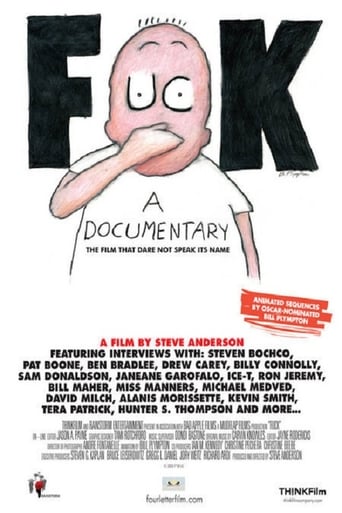
A documentary on the expletive's origin, why it offends some people so deeply, and what can be gained from its use.
This revealing documentary honors the legendary Sidney Poitier—iconic actor, filmmaker, and civil rights activist. Featuring interviews with Denzel Washington, Spike Lee, Halle Berry, and more.
The film follows adventurer Jeff Johnson as he retraces the epic 1968 journey of his heroes Yvon Chouinard and Doug Tompkins to Patagonia.
Ross McElwee sets out to make a documentary about the lingering effects of General Sherman's march of destruction through the South during the Civil War, but is continually sidetracked by women who come and go in his life, his recurring dreams of nuclear holocaust, and Burt Reynolds.
“The Soviet Story” is a story of an Allied power, which helped the Nazis to fight Jews and which slaughtered its own people on an industrial scale. Assisted by the West, this power triumphed on May 9th, 1945. Its crimes were made taboo, and the complete story of Europe’s most murderous regime has never been told. Until now...
This documentary movie is about the battle of San Pietro, a small village in Italy. Over 1,100 US soldiers were killed while trying to take this location, that blocked the way for the Allied forces from the Germans. Preserved by the Academy Film Archive in 2005.
A dreamlike conversation with the past and the present, reimagining Latasha Harlins' story by excavating intimate memories shared by those who loved her.
Through deeply personal interviews with her siblings and an examination of the photographs, letters, and belongings left behind, Mariska assembles a new portrait of her mother Jayne Mansfield, an extraordinary and complex woman.
When a daughter becomes concerned about her mother's well-being in a retirement home, private investigator Romulo hires Sergio, an 83-year-old man who becomes a new resident—and a mole inside the home, who struggles to balance his assignment with becoming increasingly involved in the lives of several residents.
A detailing of the rise to prominence and global sporting superstardom of six supremely talented young Manchester United football players (David Beckham, Nicky Butt, Ryan Giggs, Paul Scholes, Phil and Gary Neville). The film covers the period 1992-1999, culminating in Manchester United's European Cup triumph.
A compilation of over 30 years of private home movie footage shot by Lithuanian-American avant-garde director Jonas Mekas, assembled by Mekas "purely by chance", without concern for chronological order.
The most comprehensive retrospective of the '80s action film genre ever made.
Set both in Latin America and the United States, the film explores the historic and current relationship of Washington with countries such as Venezuela, Bolivia and Chile. Pilger says that the film "...tells a universal story... analysing and revealing, through vivid testimony, the story of great power behind its venerable myths. It allows us to understand the true nature of the so-called "war on terror". According to Pilger, the film’s message is that the greed and power of empire is not invincible and that people power is always the "seed beneath the snow".
Using morgue photos, newsreel footage, and a recording by Lena Horne, Cuban filmmaker Santiago Alvarez fired off 'Now!', one of the most powerful bursts of propaganda rendered in the 1960s.
Prelude to War was the first film of Frank Capra's Why We Fight propaganda film series, commissioned by the Pentagon and George C. Marshall. It was made to convince American troops of the necessity of combating the Axis Powers during World War II. This film examines the differences between democratic and fascist states.