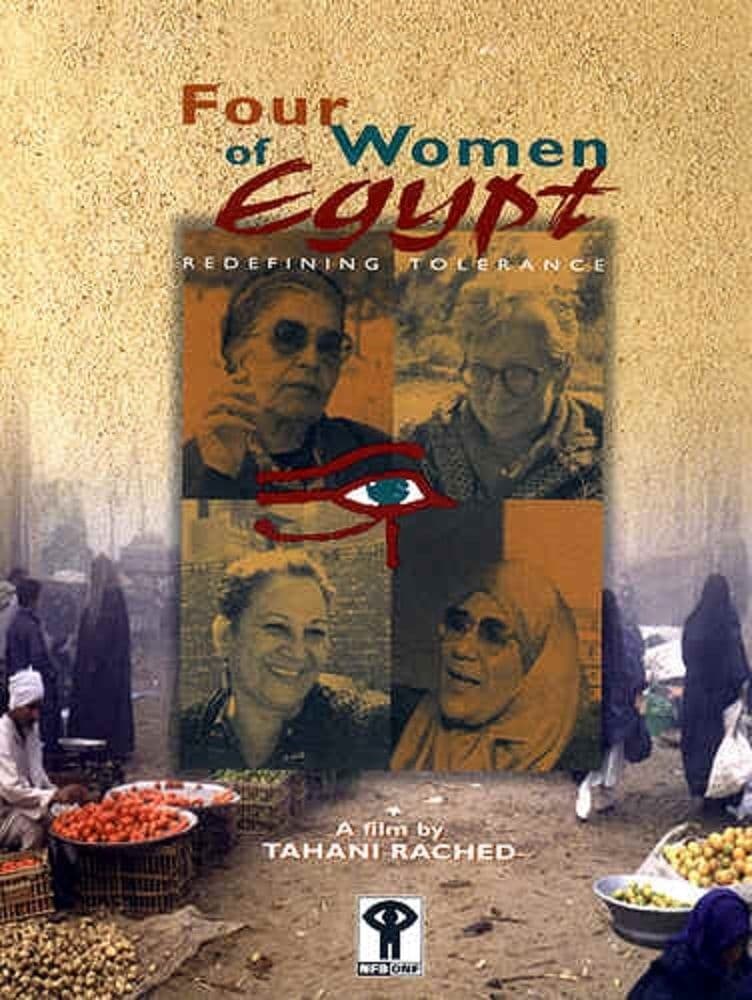
"Redefining Tolerance"
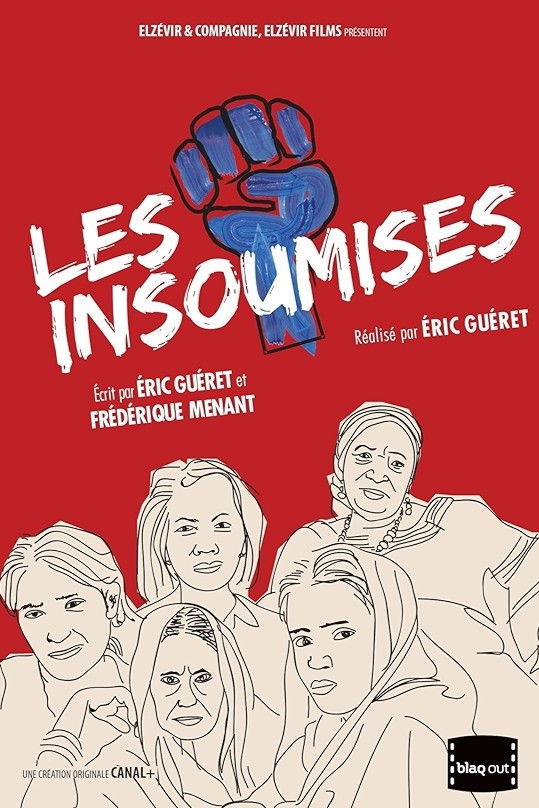
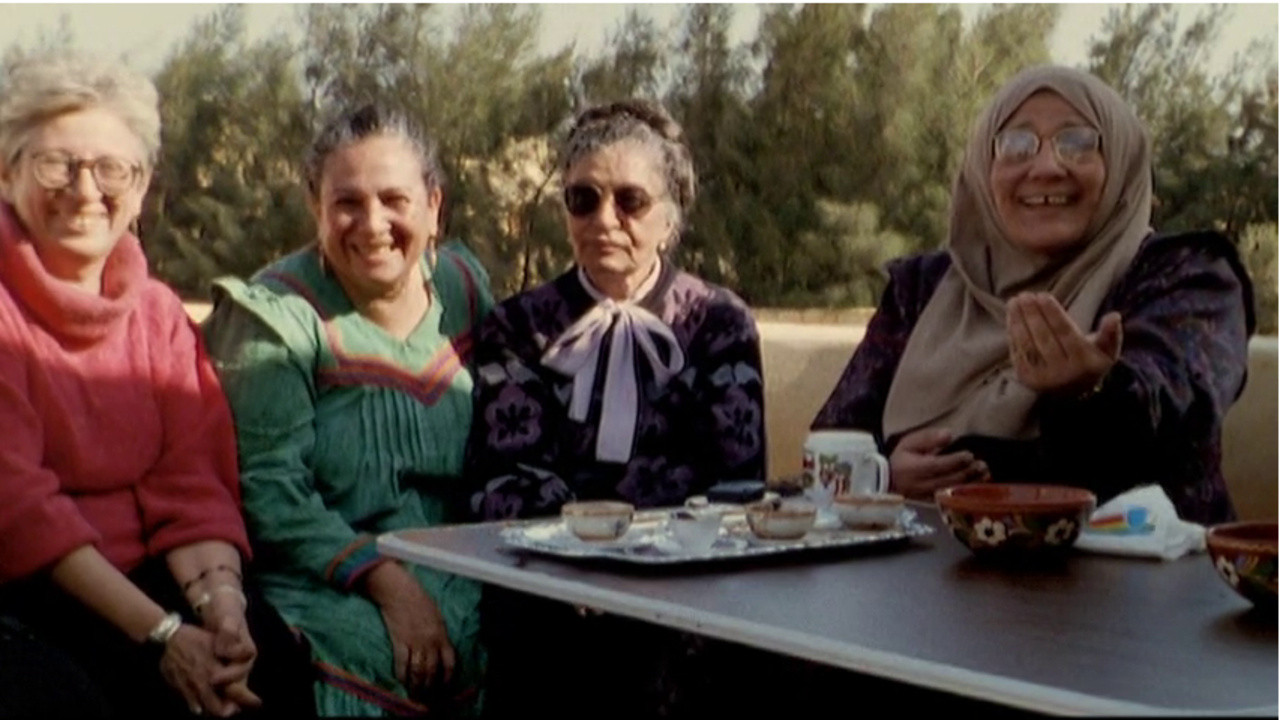
Four female friends from Egypt with opposing religious, social, and political views listen to one another's perspectives and argue openly, without ever breaking the bond that unites them.

Social & External
Self
Unknown Role
Released in 1796 posthumously, The Nun, a novel that Diderot did not dream of publishing during his lifetime, as he knew it to be revolutionary, caused the same explosion in the 19th century France as in that of the 1960s, when Jacques Rivette decided to adapt it, with Anna Karina in the title role. “This film is banned and it will remain so!” said the General de Gaulle. Exploration of an indictment of incredible modernity which, through the tragedy of the young Suzanne, locked up in the convent against her will, denounces the inequity of a society denying women all moral, political and sexual freedom.
Following a national crisis, the citizens of Iceland rallied together to collectively write the first ever crowdsourced constitution. A deeply touching account of an eclectic group of individuals reinventing democracy through the rewriting of the nation's constitution, proving that Iceland is not a broken country but instead an intricate web of concerns, ideas, and ultimately creative solutions.
In the spring of 1974, a camera team from Studio H&S succeeded against the explicit orders of the Junta’s Chancellery, entered into two large concentration camps in the north of the country - Chacabuco and Pisagua - leaving with filmed sequences and sound recordings.
When confronted with their lingerie factory (Starissima) going bankrupt, the employees attempt to take it over by forming a cooperative. Soon questions about fundamental economic and social issues pop up amidst the bras and panties. Through this adventure together they discover a new freedom.
Year after year, just after the monsoon season has finished, thousands of families travel to a bleak desert in Gujerat, India, where they will stay for an endless eight months and extract salt from the earth, using the same painstaking, manual techniques as generations before them. Director Farida Pacha spent a season with one of these families, observing the very particular rhythms of their lives.

Through previously undiscovered private letters, photos and diaries that were found in the Himmler family house in 1945, the "The Decent One" exposes a unique and at times uncomfortable access to the life and mind of the merciless "Architect of the Final Solution" Heinrich Himmler.
Bill Nye and Ken Ham debate whether creation is a viable model of origins in today's modern scientific era.
A research-based essay film, but also a very personal perspective on the history of socialist Yugoslavia, its dramatic end, and its recent transformation into a few democratic nation states.
A documentary film about the life of pianist and jazz great Thelonious Monk. Features live performances by Monk and his band, and interviews with friends and family about the offbeat genius.
Roach and Starbuck, two hardcore punks from Montreal, try to form their own political party, but run out of time due to Canada's electoral process. Instead, they decide to campaign for political office as independent candidates in a rich Montreal district called Outremont.
Documentary on the "Chicken Ranch," a legal Nevada brothel.
Nose and Tina are a couple in love. The film captures the domestic details of their life together and documents their hassles with work, money and the law. The unusual bit: He is employed as a brakeman, and she as a sex worker.
2003 documentary film produced by Oliver Stone for the HBO series America Undercover about the conflict in occupied Palestine. He speaks with Ehud Barak and Benjamin Netanyahu, former prime ministers of Israel, Yasser Arafat, late president of the Palestinian National Authority, and various Palestinian activists resisting the oppression of the zionist regime.
In 1994, the Zapatista National Liberation Army, made up of impoverished Mayan Indians from the state of Chiapas, took over five towns and 500 ranches in southern Mexico. The government deployed its troops and at least 145 people died in the ensuing battle. Filmmaker Nettie Wild travelled to the country's jungle canyons to film the elusive and fragile life of this uprising.
Rarely in the history of Western culture has there been more interest in the supernatural. Hollywood churns out movies and TV shows that deal with otherworldly themes at a rate that is unprecedented. Studies and surveys confirm that despite the growing influence of science and philosophical materialism (the idea that the material world is all that there is) belief in a spiritual world is, if anything, on the rise. But while belief in the supernatural is strong, any type of consensus about what the metaphysical world is like is on the wane. Relativism and multiculturalism have fostered the idea that it’s “whatever you think it is…as long as you’re sincere.” Well, what if it isn’t? What if spiritual realities and decrees are just a firm and immutable as the laws that govern our material world?
Filmmaker Rodrigo Dorfman goes in search of his revolutionary roots in Chile and in the process finds it in the euphoria of the Occupy Movement.
Hossein and Shaima have loved each other since childhood. As teenagers they were separated by war. They meet again in Kabul in the late 90s. Poverty forces Hossein to fight in the war. A shell splinter leaves him paralyzed. Shaima is sold into marriage with a man 40 years her senior and falls pregnant. Since Shaima's husband still owes half the dowry to her father he brings her back into the constraining patriarchal fold of the family, where she lives with her 5-year-old daughter. This situation doesn't prevent the two from seeing each other, even though this means going against their families' hard rules. In constant fear of revenge on the part of the male members of both families, they struggle to hold on to their love.
"Celso: a portrait, a place" is a documentary that emerges from a year of sporadic visits by the documentary filmmaker (until then a convinced agnostic) to the Capuchin complex, a block that is, among other things, a place to preserve the memory of the Capuchin friars in the Serra Gaúcha, southern Brazil. The daily life of the space and the ramblings of the charismatic friar and artist Celso Bordignon are interspersed in an attempt to contemplate aspects of religious life, art, and the awareness of the nuances of the action of time on matter, body and spirit.
This film chronicles how figure skater Katarina Witt fought for her future in socialist East Germany, how she faced the changes after the fall of the Berlin Wall and how she ended up both a beneficiary and victim of the East German regime.
A RECORD OF THE STRIKE AT GRUNWICK IN 1977. The story of the continuing struggle at Grunwick’s by mainly Indian workers, from July 11th, 1977 until the struggle was lost. It shows the Special Patrol Group attack on the November 7th day of action, how the leadership of the struggle was taken out of the hands of the strike committee, how some of the strike leaders were disciplined by their own union for going on hunger strike outside the TUC in protest at the TUC’s inactivity, and how the post office workers were forced by their union to end their blacking of Grunwick mail. It also shows the beginnings of the similar struggle by immigrant workers at Garner’s Steak Houses in London.