Rain Tree (Persian: درخت بارانی) is a 2001 Iranian drama film Written and directed by Hossein Shahabi.
Social & External
Saeed
Ali
Mohammad
Reza
Samir
Ahmad
Soheyla
25-year-old Arghavan lives with her parents in Tehran, and intends to marry her fiancé, Hesam. One day, her short stories win her a grant to attend a writing workshop in Germany. Soon before she is to leave, however, Arghavan is abducted and raped. In a strict, conservative society where young women are expected to be virgins before marriage, this is a social catastrophe. Plagued by gossip and finding little solace, Arghavan's life begins turning into a nightmare.
Valeh, a member of a leftist organization, is arrested by the SAVAK and sentenced to death. In prison, he reconsiders his relationships with members of his political cell, and begins to doubt the validity of the ideas for which he is condemned. At the same time, his comrades pressure him to make a sacrifice for their cause, and his beloved wife experiences personal problems and economic hardships.
Famed actress Susan Taslimi plays three roles here: Kian, who doubts her identity; Vida, the twin sister, a self-assured artist; and their mother, who gives up one child out of fear of poverty, then deprives the other of affection because she deeply regrets the child whom she has abandoned.
A young couple have problems in their marriage.
Award-winning Iranian filmmaker Rakshan Banietemad ends her eight-year hiatus from feature filmmaking with this ingenious, mosaic-like narrative, which knits together the stories of seven characters to create a microcosm of Iranian working-class society.
Revenge may have irreversible consequences.
A young toymaker tries to make sense of the impermanence of life that he has been forced to acknowledge through experiences of separation and death.
A middle-aged Tehranian man, Mr. Badii is intent on killing himself and seeks someone to bury him after his demise. Driving around the city, the seemingly well-to-do Badii meets with numerous people, including a Muslim student, asking them to take on the job, but initially he has little luck. Eventually, Badii finds a man who is up for the task because he needs the money, but his new associate soon tries to talk him out of committing suicide.
Itinerant Kurdish teachers, carrying blackboards on their backs, look for students in the hills and villages of Iran, near the Iraqi border during the Iran-Iraq war. Said falls in with a group of old men looking for their bombed-out village; he offers to guide them, and takes as his wife Halaleh, the clan's lone woman, a widow with a young son. Reeboir attaches himself to a dozen pre-teen boys weighed down by contraband they carry across the border; they're mules, always on the move. Said and Reeboir try to teach as their potential students keep walking. Danger is close; armed soldiers patrol the skies, the roads, and the border. Is there a role for a teacher? Is there hope?
In the middle of a midlife crisis, Sacha leaves his girlfriend and moves into his grandparents' Airbnb. There he meets Marjan, a married Iranian woman. The involuntary encounter becomes a moment of new possibilities.
A hacker group empty a bank account of a big strong person. The story goes on and now they must pay for that.
After seven years in prison, a female student in Tehran is hanged for murder. She had acted in self-defence against a rapist. For a pardon, she would have had to retract her testimony. This moving film reopens the case.
The uneasy relationship between a mother and daughter is made all the more turbulent by drug abuse in this downbeat drama from Iranian filmmakers Rakhshan Bani-Etemad and Mohsen Abdolvahab
Behrani, an Iranian immigrant buys a California bungalow, thinking he can fix it up, sell it again, and make enough money to send his son to college. However, the house is the legal property of former drug addict Kathy. After losing the house in an unfair legal dispute with the county, she is left with nowhere to go. Wanting her house back, she hires a lawyer and befriends a police officer. Neither Kathy nor Behrani have broken the law, so they find themselves involved in a difficult moral dilemma.
A 15-year-old Somalian boy meets a 40-year-old Iranian man in a refugee camp in Skåne, in the south of Sweden. With the threat of deportation hanging over them, they decide to take their faiths in their own hands and together they go on a journey in the Swedish summer.
Leyla and her six-year-old daughter Nila live in the holy city of Mashhad in Iran. Nila is the result of a temporary marriage, which allows a man to marry a woman even if he is already married. Children born from such a relationship are legally non-existent. As long as the father does not recognize the child, no birth certificate can be issued and Nila cannot attend school. The documentary depicts Leyla's tireless efforts to clarify Nila's legal status in order to offer her a perspective for her future. In a never-ending bureaucratic battle, Leyla fights not only against the legal system, but also against a judgmental society.
The mysterious disappearance of a kindergarten teacher during a picnic in the north of Iran is followed by a series of misadventures for her fellow travelers.
Echo (Persian: پژواك) is a 1997 Iranian Drama film Written and directed by Hossein Shahabi.
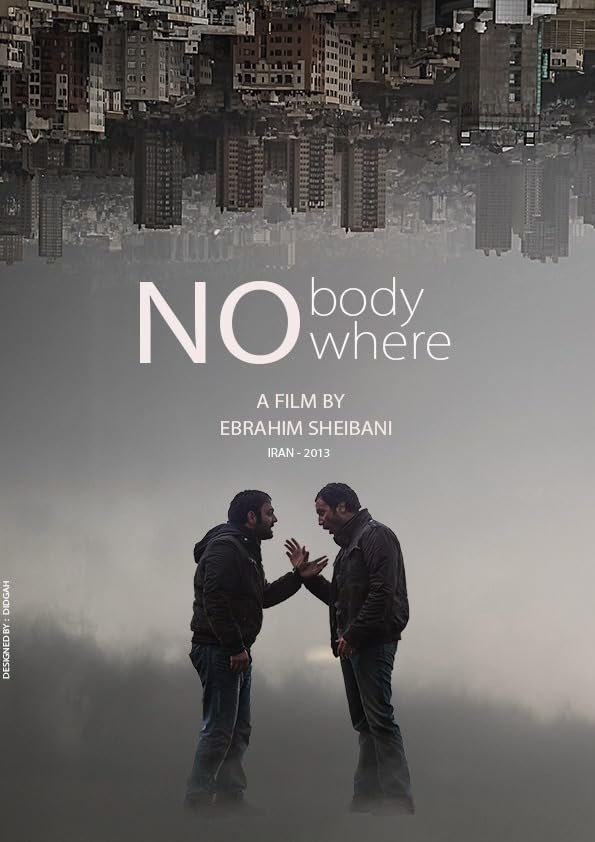
Serial killers have plagued the American landscape for decades, committing gruesome atrocities, and providing some tough cases for criminal investigators to crack. Two detectives are on the trail of a bizarre murderer intent on slaughtering his victims, then using them as real-life puppets in a tale that he is trying to tell.
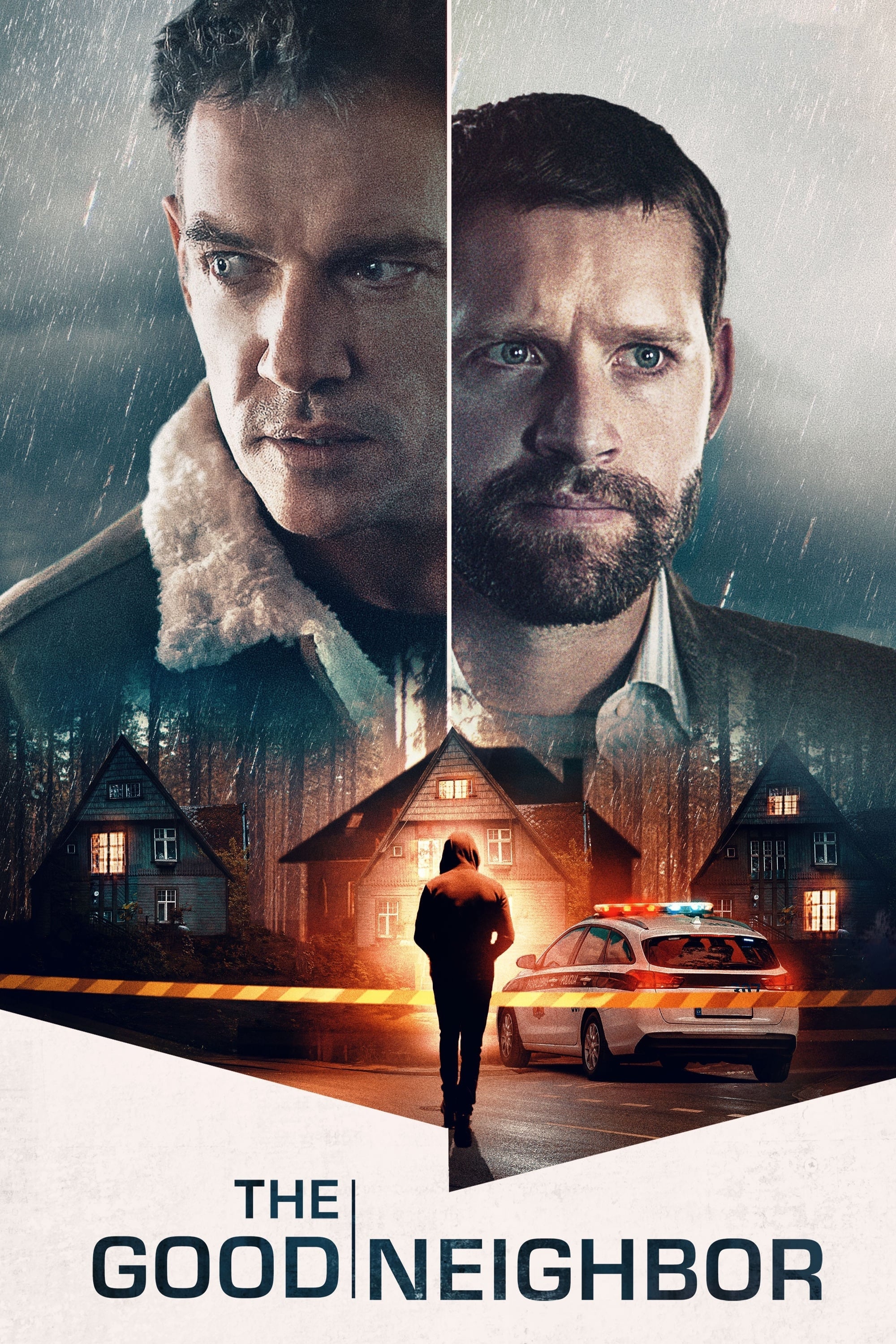
Documentary of the making of Alfred Hitchcock's classic 1955 tale.
A lonely fisherman drowns and his elderly brother Efraim is left to do an inventory of the estate. He discovers that his brother had a son, Karl-Erik. Keeping it a secret, he travels to Stockholm to employ the young man as a hired hand. Plot by Mattias Thuresson.
A poor New York plumber's wife and children hope to move "uptown" from their lower East Side neighborhood after he sells his new invention.
The world is experiencing cataclysmic earthquakes and flooding. Prem is a socially awkward man who lives alone. His house has the ultimate protection from natural disasters, 'The Invincible Gate'. When information about this is released on the news, people start showing up at Prem's house. Prem decides to ask all the women out and makes a pros and cons of being single list, to do so.
This Best Short Subject Academy Award winning film begins in the spring of 1940, just before the Nazi occupation of the Benelux countries, and ends immediately after the Japanese attack on Pearl Harbor. It chronicles how the people of "Main Street America", the country's military forces, and its industrial base were completely transformed when the decision was made to gear up for war. Original footage is interspersed with contemporary newsreels and stock footage.
A frantic young woman struggles against an unstoppable inner voice that defies logic, rhyme or reason, which finally drives her to the very edge… literally.
Inspired by Japan's butoh theatre, Crépuscule is a stop-motion animated short film about a group of creatures living in perfect symbiosis with their environment. When a man and a woman break into their boring and regulated world, their lifes are shattered forever.
Zanskar is a remote kingdom in the northwest Indian Himalaya, where local people are snow-bound for six months of the year. About 10,000 Zanskaris live in the isolated valley. In winter, mountain passes are blocked, the summer Jeep road closes and buses stop. Two decades ago, three friends founded a ski school - to enable winter travel in the valley, improve quality of life, and to encourage young people to stay in Zanskar by helping establish a culture of mountain sports. The film tells the story of this friendship, the ski school and the development of skiing in the area. Along the way a bigger question is raised. Most recently, the federal government announced a major road building project that will provide year round access to Zanskar. How can Zanskar's wilderness be preserved? It is only a matter of time before the winter road is completed, and the "Big India" rushes in.
In a remote corner of the South Pacific, National Geographic Explorer Enric Sala – one of the world’s leading marine ecologists – leads an elite team into an isolated underwater Eden. Sharks reign in the southern Line Islands, where humans rarely visit and survival is still of the fittest. Completing a daring survey of life on the reef from the micro to the mega, the research team uncovers secrets in what could be the last unspoiled archipelago on Earth.
This Icelandic tale, loosely based on the real-life experiences of director Fridrik Fridriksson tells the saga of a boyhood spent in Iceland in the 1960s.
Story, paper- mache characters, sets, animation, camera works, editing and sounds created by 12 children, ages 6-12, at the Yellow Ball Workshop. Red Grooms and Dominic Falcone were also involved with the production
A young woman, her sister-in-law and her ten year old daughter are violently traumatised by invading Austrian soldiers. Later, in Verona, both woman discover they are pregnant. After a suicide attempt, one has an abortion the other keeps her child - and both faces struggles with friends and family as they return to their homes.
Returning from the planet Venus, an errant NASA spacecraft crashes into the ocean, spilling its radioactive cargo. Enveloped by a radioactive mass, a rabid weasel is transformed into a gigantic killer mutant. Prowling the countryside, the huge weasel kills and devours victims. The creature is captured by a disturbed scientist who plans to use its regenerative blood to amass an army of similar monsters, enabling him to conquer the Earth.