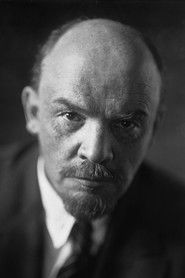
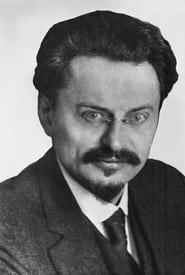
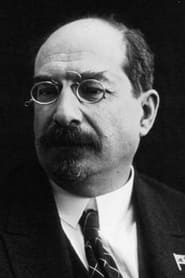
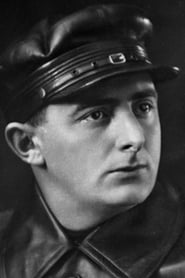
This film shows the leaders of organizations that emerged after the Russian Revolution. It is the fragment of ‘Anniversary of the Revolution’ made by Vertov in 1918.
Social & External
Self
Chris Marker and François Reichenbach document the massive anti–Vietnam War protest held in Washington, D.C., on October 21, 1967, where more than 100,000 demonstrators gathered at the Lincoln Memorial before marching on the Pentagon. Filmed amid the crowd, the short captures the tension, idealism, and growing radicalism of the American peace movement.
A look inside one of the most brutal campaigns of state repression in modern history - told by those who endured it and those who enforced it.
The free, almost naive view from the perspective of a child puts the "68ers" in a new, illuminating light in the anniversary year 2008. The film is a provocative reckoning with the ideological upbringing that seemed so progressive and yet was suffocated by the children's desire to finally grow up. With an ironic eye and a feuilletonistic style, author Richard David Precht and Cologne documentary film director André Schäfer trace a childhood in the West German provinces - and place the major events of those years in completely different, smaller and very private contexts.
Fantastic Flowers is a compilation of short silent films produced between 1906 and 1920, displaying amazing colours that were applied to each frame using the Pathécolor process, or other similar stencilling techniques. Bonsoir – La Fée aux fleurs (1906) / [Bloemenvelden Haarlem] (1909) / Les Chrysanthèmes (1907) / Le Chrysanthème, roi de l’automne (1914) / [Les Tulipes] (1907) / Les Fleurs dans les jardins (1914) / L’Après-midi d’une japonaise (1920) / The Beauty Thief ([1920]) / La Fée printemps (1906) / [Het schoonste uit de natuur] (1912?) / La Culture du dahlia (1911) / [Hollandse Tulpen en Klompen] (1920?) / Fabrication des fleurs artificielles (1911) / [Bonsoir tableau] (1906)
Short silent film about a flower garden from 1914.
David Olusoga opens secret government files to show how the Windrush scandal and the ‘hostile environment’ for black British immigrants has been 70 years in the making.
In suburban Buenos Aires, thirty unemployed ceramics workers walk into their idle factory, roll out sleeping mats and refuse to leave. All they want is to re-start the silent machines. But this simple act - the take - has the power to turn the globalization debate on its head. Armed only with slingshots and an abiding faith in shop-floor democracy, the workers face off against the bosses, bankers and a whole system that sees their beloved factories as nothing more than scrap metal for sale.
Unknown short stories from the past, the present and the future of fascism and its relation to the economic interests of each era. We will travel from Mussolini’s Italy to Greece under the Nazi occupation, the civil war and the dictatorship; and from Hitler’s Germany to the modern European and Greek fascism.
The actor Gøril Mauseth goes on a 11.000 kilometer travel with the Trans-Siberian to play Anna Karenina in a new language in Leo Tolstoj's Russia, discovering the language, and the reasons Tolstoj wrote what he wrote, changing her forever.
The night of July 15, 2016 changed the history of Turkey. On that day there were coordinated attacks by parts of the Turkish army, among others in Istanbul. The aim of the military: a coup against the government. The decisive confrontation occurred on the Bosporus Bridge. While President Erdogan was still on vacation, live at TV he called on the people who were devoted to him to stand against the military. As an enemy for the masses, he presented his adversary Fethullah Gülen, whom he branded as the coup leader. He also urged the imams of the country's mosques to condition the population to resist. And so it happens that at night thousands of agitated people take to the streets to oppose the armed insurgents. The death toll was high. 352 people died across Turkey during the attempted coup. The consequences are even more serious: Erdogan used this gift, as he called it himself, to undermine democracy, to arrange mass arrests of dissidents and to transform Turkey into a dictatorship.
The ideology of Catholic nationalism inspired and justified State terrorism in Argentina, through the association between the Catholic Church and the military. Leopoldo Nacht, an 84-year-old man, who lived through the persecution and disappearance of his friends in the 1976 dictatorship, investigates unpublished files to prevent fragments of this ideology from being reinstated in the new generations. It is his legacy. Assim, rediscovers throughout the history of the 20th century in Argentina, the main crimes and concepts of the nationalist ultra-right, mainly: anti-communist, anti-democratic and xenophobic.
Five women veterans who have endured unimaginable trauma in service create a shared sisterhood to help the rising number of stranded homeless women veterans by entering a competition that unexpectedly catalyzes moving events in their own lives.
The first woman to appear in front of an Edison motion picture camera and possibly the first woman to appear in a motion picture within the United States. In the film, Carmencita is recorded going through a routine she had been performing at Koster & Bial's in New York since February 1890.
An enlightening investigative report on Rosatom, Russia's powerful atomic energy agency and Vladimir Putin's formidable geopolitical tool for increasing his influence around the world.
Over three pivotal years in party politics, activists in the safest Labour seat in the country campaign for change under the banner of Jeremy Corbyn's 'For The Many' manifesto.
With the help of Steve Bannon and Cambridge Analytica, Trump was groomed to appeal to those who have lost faith in media and politics. Bannon has admitted that he modeled his campaign on the one crafted for Hitler, who was a puppet of dark forces. Through meticulous investigation, John Hankey explores this, and how the media circus following Trump is a strategy for dividing a "United" States.
The earliest surviving motion-picture film, and believed to be one of the very first moving images ever created, was shot by Louis Aimé Augustin Le Prince using the LPCCP Type-1 MkII single-lens camera. It was taken on paper-based photographic film in the garden of Oakwood Grange, the Whitley family house in Roundhay, Leeds, West Riding of Yorkshire (UK), on 14 October 1888. The film shows Adolphe Le Prince (Le Prince’s son), Mrs. Sarah Whitley (Le Prince’s mother-in-law), Joseph Whitley, and Miss Harriet Hartley walking around in circles, laughing to themselves, and staying within the area framed by the camera. Roundhay Garden Scene is often associated with a recording speed of around 12 frames per second and runs for about 2 to 3 seconds.
A film by Louis Aimé Augustin Le Prince, shot in late October 1888, showing pedestrians and carriages crossing Leeds Bridge.
Half blind and half deaf, ostraziced Cuban writer Rafael Alcides tries to finish his unpublished novels to discover that after several decades, the home made ink from the typewriter he used to write them has faded. The Cuban revolution as a love story and eventual deception is seen through the eyes of a man who is living an inner exile.
"Was it the President who ordered the rivers to be six meters deep?" In 2008, under President Lee Myung-bak's administration, South Korea's Four Major Rivers Restoration Project turned the country's beautiful rivers into scenes of devastation. What were once pristine first-grade waters became lifeless rivers, choked with toxic green algae emitting foul odors. Crops irrigated with this contaminated water are now served on the table of Korean people. The government disguised a grand canal project as river restoration, and the media turned a blind eye — together enabling one of the greatest environmental destructions in Korean history. The consequences of this deception will be borne by future generations. To ensure that future generations can once again run freely along the rivers, we must act—now. We must make Korea's rivers flow again.
This documentary promoting the joys of life in a Soviet village centers on the activities of the Young Pioneers. These children are constantly busy, pasting propaganda posters on walls, distributing hand bills, exhorting all to "buy from the cooperative" as opposed to the Public Sector, promoting temperance, and helping poor widows. Experimental portions of the film, projected in reverse, feature the un-slaughtering of a bull and the un-baking of bread.
A cameraman wanders around with a camera slung over his shoulder, documenting urban life with dazzling inventiveness.
Russian Federation, December 31, 1999. After President Boris Yeltsin's unexpected resignation, Prime Minister Vladimir Putin becomes acting president of the country. From that day and for a year, Vitaly Mansky's camera documented Putin's rise to power. The story of a privileged witness. The harsh explanation of the reason why politics is the art of possibility of achieving the best with the support of many, but also of giving the worst in return.
An intimate documentary delving into Rian Johnson's process as he comes in as a director new to the Star Wars universe.
The story lives forever in this feature-length documentary that charts the making of Star Wars: The Rise of Skywalker.
A look behind the lens of Christopher Nolan's space epic.
The history of cinematic sound, told by legendary sound designers and visionary filmmakers.
A subjective documentary that explores various theories about hidden meanings in Stanley Kubrick's classic film The Shining. Five very different points of view are illuminated through voice over, film clips, animation and dramatic reenactments.
This special explores the return of Obi-Wan Kenobi and Anakin Skywalker to the screen, as well as Ewan McGregor and Hayden Christensen to their classic roles. Director Deborah Chow leads the cast and crew as they create new heroes and villains that live alongside new incarnations of beloved Star Wars characters, and an epic story that dramatically bridges the saga films.
A documentary on the expletive's origin, why it offends some people so deeply, and what can be gained from its use.
A documentary that explores the downloading revolution; the kids that created it, the bands and the businesses that were affected by it, and its impact on the world at large.
When Allied forces liberated the Nazi concentration camps in 1944-45, their terrible discoveries were recorded by army and newsreel cameramen, revealing for the first time the full horror of what had happened. Making use of British, Soviet and American footage, the Ministry of Information’s Sidney Bernstein (later founder of Granada Television) aimed to create a documentary that would provide lasting, undeniable evidence of the Nazis’ unspeakable crimes. He commissioned a wealth of British talent, including editor Stewart McAllister, writer and future cabinet minister Richard Crossman – and, as treatment advisor, his friend Alfred Hitchcock. Yet, despite initial support from the British and US Governments, the film was shelved, and only now, 70 years on, has it been restored and completed by Imperial War Museums under its original title "German Concentration Camps Factual Survey".
The film goes behind the scenes of the 1999 sci-fi movie The Matrix.
Since the invention of cinema, the standard format for recording moving images has been film. Over the past two decades, a new form of digital filmmaking has emerged, creating a groundbreaking evolution in the medium. Keanu Reeves explores the development of cinema and the impact of digital filmmaking via in-depth interviews with Hollywood masters, such as James Cameron, David Fincher, David Lynch, Christopher Nolan, Martin Scorsese, George Lucas, Steven Soderbergh, and many more.
Retrospective documentary about the making of the horror cult classic "The Return of the Living Dead."
Cameramen and women discuss the craft and art of cinematography and of the "DP" (the director of photography), illustrating their points with clips from 100 films, from Birth of a Nation to Do the Right Thing. Themes: the DP tells people where to look; changes in movies (the arrival of sound, color, and wide screens) required creative responses from DPs; and, these artisans constantly invent new equipment and try new things, with wonderful results. The narration takes us through the identifiable studio styles of the 30s, the emergence of noir, the New York look, and the impact of Europeans. Citizen Kane, The Conformist, and Gordon Willis get special attention.
Documentary about the art of film editing. Clips are shown from many groundbreaking films with innovative editing styles.
As a visually radical memoir, CAMERAPERSON draws on the remarkable footage that filmmaker Kirsten Johnson has shot and reframes it in ways that illuminate moments and situations that have personally affected her. What emerges is an elegant meditation on the relationship between truth and the camera frame, as Johnson transforms scenes that have been presented on Festival screens as one kind of truth into another kind of story—one about personal journey, craft, and direct human connection.
Pete Postlethwaite stars as a man living alone in the devastated future world of 2055, looking at old footage from 2008 and asking: why didn’t we stop climate change when we had the chance?
Filmmaker Lawrence Shapiro discusses voice-over acting with the talented people behind the characters.