After a mine explosion kills her brother, a pro-coal activist joins forces with a tree-hugging grandmother to take down the most dangerous coal company in the United States.
Social & External
Dr. Helen Caldicott is the most prominent anti-nuclear activist in the world. She's been featured on CNN, 60 Minutes, CBC and Democracy Now. In the 80s, Helen Caldicott campaigned against nuclear weapons testing in the pacific (still responsible today for the majority of tritium we're exposed to), and against the notion of a winnable nuclear war. She was nominated for a Nobel Peace Prize for her efforts. She has always made inaccurate statements regarding civilian nuclear power. But, since the Fukushima-Diachii radiation release has caused (and is projected to cause) zero fatalities... http://www.unis.unvienna.org/unis/en/... ...her tone has changed when speaking to supporters. This has not been acknowledged by prime-time media, as they continue to use her as a source. Any person or media outlet should check Caldicott's history of statements (on any subject) against a domain expert before using her as a source.
Five years ago Kisilu, a Kenyan farmer, started to use his camera to capture the life of his family, his village and the damages of climate change. When a violent storm throws him and a Norwegian filmmaker together we see him transform from a father, to a community leader and activist on the global stage.
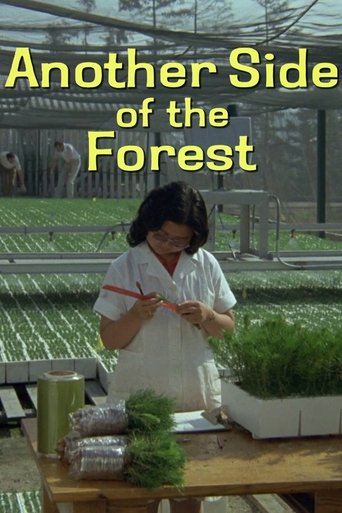
Developments in the Canadian forestry industry during the 1970s are shown being carried out both as lab experiments and in the field to protect and conserve the country's vast forests. These include turning a Newfoundland bog into woodland, fostering British Columbia seedlings that withstand mechanical planting, inoculating Ontario elms against the bark beetle, devising ways of controlling fire, and more.
Record high oil prices, global warming, and an insatiable demand for energy: these issues define our generation. The film exposes shocking connections between the auto industry, the oil industry, and the government, while exploring alternative energies such as solar, wind, electricity, and non-food-based biofuels.
The remarkable true story of three animal species rescued from the brink of extinction: California’s enchanting Channel Island Fox, China’s fabled Golden Monkey, and the wondrous migrating crabs of Christmas Island. Discover successful, heartfelt, and ingenious human efforts to rescue endangered species around the world.
The Southern Sea Otter was historically abundant along the California coastline until intense hunting pressures reduced their numbers to near-extinction levels. But now the otters are coming back, and with them they bring the potential for drastic change to the modern-day economics and ecology of the Santa Barbara Channel.
Live and Let Live is a feature documentary examining our relationship with animals, the history of veganism and the ethical, environmental and health reasons that move people to go vegan.
Since World War II North Americans have invested much of their newfound wealth in suburbia. It has promised a sense of space, affordability, family life and upward mobility. As the population of suburban sprawl has exploded in the past 50 years Suburbia, and all it promises, has become the American Dream. But as we enter the 21st century, serious questions are beginning to emerge...
Follow the shocking, yet humorous, journey of an aspiring environmentalist, as he daringly seeks to find the real solution to the most pressing environmental issues and true path to sustainability.
Documentary film about the path to Lithuania's energy independence.
Two expedition guides share their love for Antarctica with visitors, hoping to inspire understanding, connection and protection.
The story of lawsuit by tens of thousands of Ecuadorans against Chevron over contamination of the Ecuadorean Amazon.
A portrait of environmental folk hero & gay icon Bob Brown, who took green politics to the center of power. His story is interwoven with the life cycle of the ancient trees he's fighting for.
The pandemic has changed many things. Including Alfia, she is a teacher who has learned a lot from the phenomenon she saw. For Alfia, trash is no longer appropriate to be disposed of in its place.
The film shows the daily life of indigenous village Piyulaga, home of Waurá tribe --an ethnicity of 560 people who live at Xingu Park in Mato Grosso, Brazil. It also reveals how the indigenous community keeps its traditional culture while incorporating habits and technologies from the “white”.
This documentary explores an unknown civilization of the Brazilian Amazon, who risk their lives to protect their forest. In order to save the exploitation of the environment by big corporations, they have to create legal institutions.
It is happening all across America-rural landowners wake up one day to find a lucrative offer from an energy company wanting to lease their property. Reason? The company hopes to tap into a reservoir dubbed the "Saudi Arabia of natural gas." Halliburton developed a way to get the gas out of the ground-a hydraulic drilling process called "fracking"-and suddenly America finds itself on the precipice of becoming an energy superpower.
Revealing St. Louis, Missouri's atomic past as a uranium processing center for the atomic bomb and the governmental and corporate negligence that lead to the illegal dumping of Manhattan Project radioactive waste throughout North County neighborhoods.
Takes us to locations all around the US and shows us the heavy toll that modern technology is having on humans and the earth. The visual tone poem contains neither dialogue nor a vocalized narration: its tone is set by the juxtaposition of images and the exceptional music by Philip Glass.