Jean-Luc Godard's acceptance video for the 2015 'Prix d’honneur'.
Social & External
Self
A group of people are standing along the platform of a railway station in La Ciotat, waiting for a train. One is seen coming, at some distance, and eventually stops at the platform. Doors of the railway-cars open and attendants help passengers off and on. Popular legend has it that, when this film was shown, the first-night audience fled the café in terror, fearing being run over by the "approaching" train. This legend has since been identified as promotional embellishment, though there is evidence to suggest that people were astounded at the capabilities of the Lumières' cinématographe.
Between 1983 and 1987, Ouagadougou, the capital of Burkina Faso and the home city of FESPACO, one of the most important Pan-African film festivals in the world, was the scene of an exciting cinema utopia. With the support of the young president Thomas Sankara, the festival became a symbol of the cultural renaissance of a whole continent. The assassination of Sankara stifled the hopes of millions of young Africans, but the dynamism of FESPACO and African cinema did not stop.
A tribute to the late, great French director Francois Truffaut, this documentary was undoubtedly named after his last movie, Vivement Dimanche!, released in 1983. Included in this overview of Truffaut's contribution to filmmaking are clips from 14 of his movies arranged according to the themes he favored. These include childhood, literature, the cinema itself, romance, marriage, and death.
A comic, biting and revelatory documentary following a small group of prankster activists as they gain worldwide notoriety for impersonating the World Trade Organization (WTO) on television and at business conferences around the world.
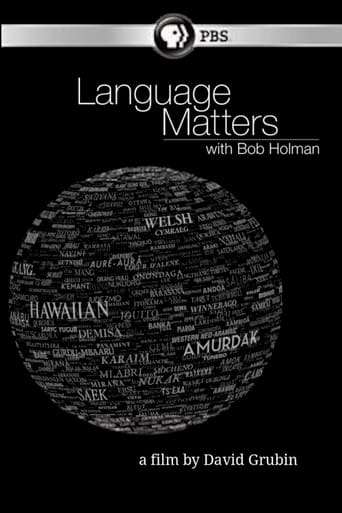
There are over 6,000 languages in the world. We lose one every two weeks. Hundreds will be lost within the next generation. By the end of this century, half of the world's languages will have vanished. Language Matters with Bob Holman is a two hour documentary that asks: What do we lose when a language dies? What does it take to save a language?
Four lives that could not be more different and a single passion that unites them: the unconditional love for their cinemas, somewhere at the end of the world. Comrades in Dreams brings together six cinema makers from North Korea, America, India and Africa and follows their efforts to make their audiences dream every night.
When Francois Truffaut approached Alfred Hitchcock in 1962 with the idea of having a long conversation with him about his work and publishing this in book form, he didn't imagine that more than four years would pass before Le Cinéma selon Hitchcock finally appeared in 1966. Not only in France but all over the world, Truffaut's Hitchcock interview developed over the years into a standard bible of film literature. In 1983, three years after Hitchcock's death, Truffaut decided to expand his by now legendary book to include a concluding chapter and have it published as the "Edition définitive". This film describes the genesis of the "Hitchbook" and throws light on the strange friendship between two completely different men. The centrepieces are the extracts from the original sound recordings of the interview with the voices of Alfred Hitchcock, Francois Truffaut, and Helen Scott – recordings which have never been heard in public before.
Released two years after James Dean's death, this documentary chronicles his short life and career via black-and-white still photographs, interviews with the aunt and uncle who raised him, his paternal grandparents, a New York City cabdriver friend, the owner of his favorite Los Angeles restaurant, outtakes from East of Eden, footage of the opening night of Giant, and Dean's ironic PSA for safe driving.
A short documentary exploring the ongoing relevance and power of 'Salò o le 120 giornate di Sodoma'.
This documentary is featured on the DVD for Captain Blood (1935), released in 2005.
In 1928, as the talkies threw the film industry and film language into turmoil, Chaplin decided that his Tramp character would not be heard. City Lights would not be a talking picture, but it would have a soundtrack. Chaplin personally composed a musical score and sound effects for the picture. With Peter Lord, the famous co-creator of Chicken Run and Wallace & Gromit, we see how Chaplin became the king of slapstick comedy and the superstar of the movies.
A documentary incorporating footage of Montgomery Clift’s most memorable films; interviews with family and friends, and rare archival material stretching back to his childhood. What develops is the story of an intense young boy who yearned for stardom, achieved notable success in such classic films as From Here to Eternity and I Confess, only to be ruined by alcohol addiction and his inability to face his own fears and homosexual desires. Montgomery Clift, as this film portrays him, may not have been a happy man but he never compromised his acting talents for Hollywood.
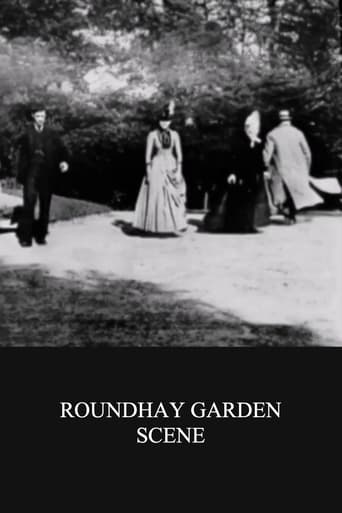
Working men and women leave through the main gate of the Lumière factory in Lyon, France. Filmed on 22 March 1895, it is often referred to as the first real motion picture ever made, although Louis Le Prince's 1888 Roundhay Garden Scene pre-dated it by seven years. Three separate versions of this film exist, which differ from one another in numerous ways. The first version features a carriage drawn by one horse, while in the second version the carriage is drawn by two horses, and there is no carriage at all in the third version. The clothing style is also different between the three versions, demonstrating the different seasons in which each was filmed. This film was made in the 35 mm format with an aspect ratio of 1.33:1, and at a speed of 16 frames per second. At that rate, the 17 meters of film length provided a duration of 46 seconds, holding a total of 800 frames.
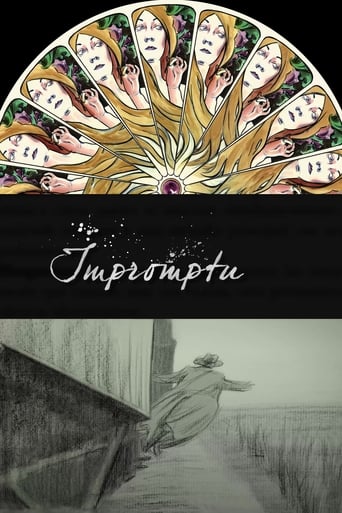
A journey to the origins of cinema, starting with its forgotten fathers: the pioneers who achieved moving images before 1895, the official year of the Lumière cinematograph. Through five studies by Frédéric Chopin, 'Impromptu' is also a tribute to the end of the 19th century, to its immortal muses, and to the fascination with movement itself.
This is not merely another film about cinema history; it is a film about the love of cinema, a journey of discovery through over a century of German film history. Ten people working in film today remember their favourite films of yesteryear.
Martin Scorsese, Robert De Niro, Joe Pesci, and Al Pacino in conversation about The Irishman.
Documentary about the making of Ordet, from the perspective of cinematographer Henning Bendtsen.
Chanda Chevannes follows scientist Dr. Sandra Steingraber as she makes speeches against fracking and gets arrested protesting “the industrialization of the Finger Lakes.”
In this revealing documentary, Ken McMullen creates an elegant portrait of artist and filmmaker Derek Jarman, based on an interview conducted by John Cartwright. The questions are unobtrusive, allowing Jarman to reflect on his major films. Despite the debilitating effects of serious illness, we see an artist with his inner vision unimpaired; still humorous, self effacing and disarmingly charming.
A dream that was "left over" from Gently Down the Stream. Like many dreams, it transformed the familiar world into something more disturbing, contradictory and amoral.
After his capture for attempted assassination of the Raikage, leader of Kumogakure, as well as killing Jōnin from Kirigakure and Iwagakure, Naruto is imprisoned in Hōzukijou: A criminal containment facility known as the Blood Prison. Mui, the castle master, uses the ultimate imprisonment technique to steal power from the prisoners, which is when Naruto notices his life has been targeted. Thus begins the battle to uncover the truth behind the mysterious murders and prove Naruto's innocence.
Assigned on a mission to capture Mukade, a missing-nin, Naruto Uzumaki sets out for the once glorious historic ruins of "Ouran", where he pursues and corners the rouge ninja. Mukade's goal is revealed to be a dormant leyline within the ruins; he unleashes the power of the leyline, causing a light to envelop Naruto, sending him into the past, 20 years before the series began. When Naruto awakens, he comes into contact with the Fourth Hokage, Minato Namikaze.
Demons that once almost destroyed the world, are revived by someone. To prevent the world from being destroyed, the demon has to be sealed and the only one who can do it is the shrine maiden Shion from the country of demons, who has two powers; one is sealing demons and the other is predicting the deaths of humans. This time Naruto's mission is to guard Shion, but she predicts Naruto's death. The only way to escape it, is to get away from Shion, which would leave her unguarded, then the demon, whose only goal is to kill Shion will do so, thus meaning the end of the world. Naruto decides to challenge this "prediction of death."
From the pen of Yoshikawa Eiji comes this exciting story. The Naruto Strait separates Tokushima from the islands of Awaji and Honshu. On Tokushima the mad lord dreams of conquest and forges a bloody revolt against the Tokugawa shogunate. A mysterious swordsman named Noriyuki Gennojo has crossed Naruto’s waters to uncover the Awa clan’s secrets. He puts his life on the line after finding a testament of Awa’s secrets, written in blood by a dying man. Joining Noriyuki are a female ninja who loves him, and the beautiful daughter of an enemy who’s sworn to kill him. Awa’s defenders willl stop at nothing to prevent the blood-soaked letter from reaching the shogun.
Naruto x UT is the eighth Naruto OVA. Approximately 200,000 copies of this OVA were distributed by Uniqlo to promote a line of Naruto-themed shirts designed by Masashi Kishimoto in conjunction with Studio Pierrot. It shows the aftermath between a fight between Naruto and Sasuke and shows clips of their times together and the story so far.
Naruto Uzumaki, Kakashi Hatake, Sakura Haruno, and Rock Lee are assigned to protect the prince of the Land of the Moon, Michiru, during his world trip; other escorts had been hired, but quit due to being treated poorly. The Land of the Moon is a very wealthy nation, so Michiru tends to buy whatever he wants, and has a very materialistic worldview. His Hikaru, also acts in much the same manner.
Naruto Shippūden Ultimate Ninja Storm Generations OVA Madara vs Hashirama is the tenth Naruto OVA. It is distributed as part of Naruto Shippūden: Ultimate Ninja Storm Generations.
Bootlegger/cafe owner, Johnny Franks recruits crude working man Scorpio to join his gang, masterminded by crooked criminal defense lawyer Newton. Scorpio eventually takes over Frank's operation, beats a rival gang, becomes wealthy, and dominates the city for several years until a secret group of six masked businessmen have him prosecuted and sent to the electric chair.
The pregnant Alice finds Freddy Krueger striking through the sleeping mind of her unborn child, hoping to be reborn into the real world.
A film-memoir about the first honest conversation between an adult daughter and the father with whom she had never had a close relationship. Several days after the meeting, her father vanishes without trace once more, this time forever.
The historical saga of American superheroes. Born in the period between the Great Depression and the World War II to combat the hobgoblins of the modern world, these mutant human beings with superhuman powers colonized the funny papers, radio dramas, television and films, to become a truly national industry in the United States: they gave expression to the fears and obsessions of the twentieth century and bolstered American ideals.
Promotional video celebrating 20 years of the Naruto animation project.
Naruto: The Cross Roads (Za Kurosurozu) is the sixth Naruto OVA. It uses the same CGI graphics as Naruto: Ultimate Ninja Storm and was released during Naruto: Shippuden. This OVA premiered at the Jump Festa Anime Tour 2009. Between the Prologue - Land of Waves and Chunin Exams arcs, Team 7 is waiting for Kakashi, who is late again, to start a new mission (B-ranked as Sasuke states). The team sets off while Kakashi explains that Genmai from the Inaho Village is missing, who has vanished in the hills.
Mecha Mutt, a revolutionary remote-controlled lunar rover resembling a large canine, goes rogue at Houston's Annual Science Expo. Scooby-Doo! Mecha Mutt Menace is the fourth in a series of direct-to-video short films.
When they were young, Min-joo and Seo-yeon cared for each other and were closer than brothers and sisters. However, she accidentally learns about Seo-yeon's tutor, Woo-hyeon, and because of this man, their 10-year friendship starts to become shaky. Meanwhile, Jeong-soo is hurt in seeing Min-joo like that, and so he distanced himself from Min-joo. Because of Min-joo and Seo-yeon's misunderstanding, Jeong-soo who couldn't care much might just leave so Min-joo tries to break up with the help of Seo-yeon. While in the process of breaking up, Min-joo and Seo-yeon went back to their close relationship. The love of women who have been separated because of man, and the two men's friendship is comically drawn.
Scooby-Doo and the Mystery Inc. gang meet up with Batman and other friends to defeat evil villains and save the day.
Based on the true story of the kidnapping of teenager Elizabeth Smart,in June 2002, by two people in Salt Lake City, Utah.
A short film by Marsha Timothy, adapted from short story “Naruto Bersyukur” by Pidi Baiq.
One day during summer vacation, a palm-sized alien named Papi appears from a small rocket that Nobita picks up. He is the president of Pirika, a small planet in outer space, and has come to Earth to escape the rebels. Doraemon and his friends are puzzled by Papi’s small size, but as they play together using the secret tool “Small Light”, they gradually become friends. However, a whale-shaped space battleship comes to earth and attacks Doraemon, Nobita and the others in order to capture Papi. Feeling responsible for getting everyone involved, Papi tries to stand up to the rebels. Doraemon and his friends leave for the planet Pirika to protect their dear friend and his home.