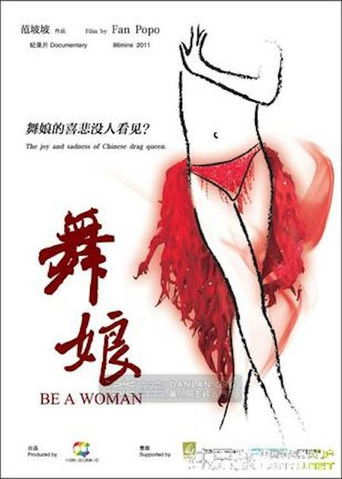
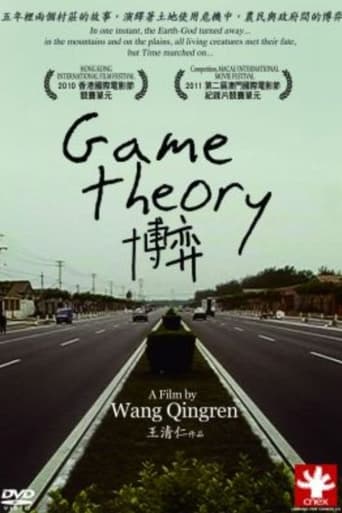
A documentary film showing the life of Niu Hongmiao, a 20-year-old country girl who is now a prostitute in Beijing. Around the time of wheat harvesting, she goes back home to Dingxing County, Hebei Province to visit her parents.
Social & External
Unknown Role
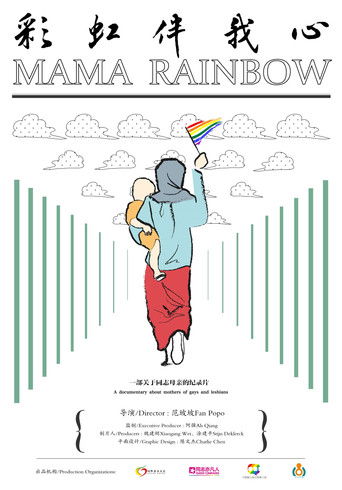
For Chinese parents, finding out that their kid is gay usually presents a major tragedy, with the big majority utterly unable to accept the homosexuality of their son or daughter. However, during recent years a fresh rainbow wind has been blowing over the Chinese mainland: a pioneer generation of Chinese parents has been stepping up and speaking out on their love for their gay kids. This documentary features 6 mothers from all over China, who talk openly and freely about their experiences with their homosexual children. With their love, they are giving a whole new definition to Chinese-style family bonds.
An ice sculpture in a northern city, a marching band, and the bitter silence on the radio.
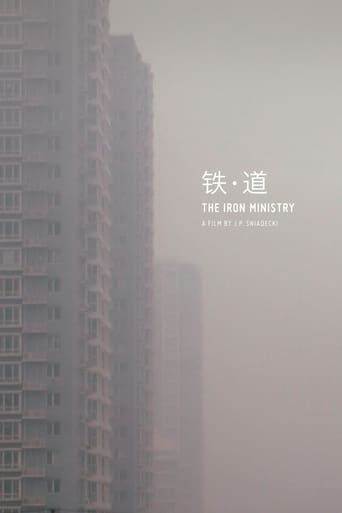
Filmed over three years on China’s railways, The Iron Ministry traces the vast interiors of a country on the move: flesh and metal, clangs and squeals, light and dark, and language and gesture. Scores of rail journeys come together into one, capturing the thrills and anxieties of social and technological transformation. The Iron Ministry immerses audiences in fleeting relationships and uneasy encounters between humans and machines on what will soon be the world’s largest railway network.
Workers, peasants, soldiers, students and merchants were five groups of Chinese society in the 1950s, after the so-called elimination of the exploited class. Borrowing this concept, the umbrella is taken as the clue to rediscover changes in various social classes after the economic reform, and to analyze the social problems in China. Workers making umbrellas, merchants selling umbrellas, students looking for jobs in the rain. Umbrella is used as a metaphor that can be seen everywhere. As the raindrop, what we see is sometimes clear, sometimes untraceable.
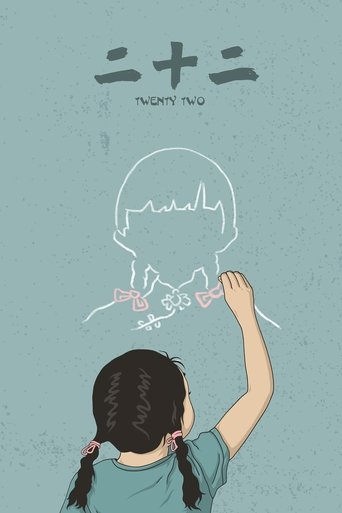
Follow the lives of the elderly survivors who were forced into sex slavery as “Comfort Women” by the Japanese during World War II. At the time of filming, only 22 of these women were still alive to tell their story. Through their own personal histories and perspectives, they tell a tale that should never be forgotten to generations unaware of the brutalization that occurred.
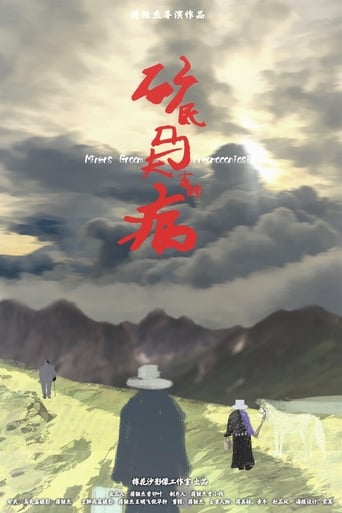
The location of Hunan's southwestern Hunan, the local economy is not active, the people either go out to work or go up the mountain to mine. Due to the constant mining disasters, despite the government's efforts to rectify and regulate, many people still illegally mine. Miners often do not pay attention to the protection of mines. Many years later, many miners have pneumoconiosis. The film started shooting in 2010 until 2018, with a filming period of nearly ten years, until the death of Zhao Pingfeng, the protagonist of pneumoconiosis, leaving young children and mentally handicapped wife.
Part mournful meditation through documentary footage, part experimental narrative. This film looks at the life of the Chinese who have been displaced within their own society.
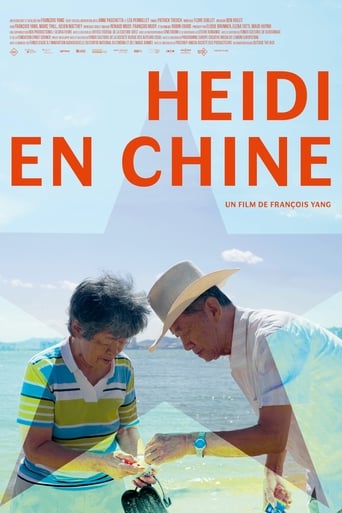
In 1946, Heidi is entrusted to a Swiss family by her father. He will never come back for her. Today, François Yang questions his mother about her past. What follows is a journey to China, a quest to reconstruct memory. Through contact with her brothers and sister, Heidi measures the extent of the drama experienced by her family that remained in China, persecuted by the Communist Party.
In his third film on life and work in the (once) heavily wooded north of China, Yu Guangyi (Survival Song) follows the lonely San Liangzi (46), who for the past ten years has been in love with a woman who doesn’t like men much. Intimate and revealing, but never rude. A moving and human portrait of a group of unemployed and above all lonely men who stayed behind when their wives moved to the city looking for work. They worked in the timber industry in the province of Heilongjiang, but deforestation has taken its toll. For instance, we see 46-year-old San Liangzi. Twelve years ago, he divorced his wife and became unemployed. For 10 years, he has had an eye on Wang Meizi, the only unmarried woman in the area. But the love is not mutual.
Interviews with Dalai Lama and some Chinese intellectuals about Tibet/China relations and related issues.
"If the old doesn't go, the new never comes" recites a teenager hanging out near a demolition site in the center of Chengdu, the Sichuan capital in western China. In Demolition, filmmaker J.P. Sniadecki deconstructs the transforming cityscape by befriending the migrant laborers on the site and documenting the honest, often unobserved, human interactions, yielding a wonderfully patient and revealing portrait of work and life in the shadow of progress and economic development.
This documentary explores the rich living experiences of bisexuals in China, and traces how a wildly diverse group of people incorporate a combination of male- and female-centered love and passion.
The film is director Gao Zipeng’s first fiction film which takes three years to complete. It premieres on March 27, 2001 in UCCA and stars the poet A Jian, Xiao Zhao and the writer Gou Zi. The film is based on a true crime of disappearance. It creates an atmosphere of what Ma Zhiyuan, a celebrated poet and playwright of Yuan Dynasty, portrays in his famous poem “Autumn Thoughts”: Over old trees wreathed with rotten vines fly evening crows/ Under a small bridge near a cottage a stream flows/ On ancient road in the west wind a lean horse goes/ Westward declines the sun/ Far, far from home is the heartbroken one.
The "Great Sichuan Earthquake" took place at 14:28 on May 12, 2008. In the days after, ordinary people salvage destroyed pig farms in the mountains, collect cheap scrapped metals, or pillaging other victims' homes. Behind the media circus of official visits is an inconsolable grief of families searching for loved ones. As the Lunar New Year approaches, vagabonds and family tell of the ill-handling of rebuilding schemes and misuse relief funds. As they prepare for another visit from a high official, the refugees are swept out of the town and into tent cities. The promise to put a roof over their heads before winter seems impossible to keep.
Two Uigur brothers and a friend are in love with parkour, a kind of extreme sport. Regardless of opposition from their worried mothers, the boys train themselves to be the best in an upcoming parkour event in Beijing while managing to iron out additional difficulties. They lose the game, but eventually they learn much more about their true selves.
A soon-to-be first-time voter, the filmmaker’s thought-provoking journey into the Rust Belt and South captures four Asian American voters’ ardent first time grassroots political participation ignited by the 2016 rise of “Chinese Americans for Trump.” FIRST VOTE is a character driven cinema verité style film chronicling the democratic participation of four Asian American voters from 2016 through the 2018 midterm elections.
In northeastern China the Songhua River flows west from the border of Russia to the city of Harbin, where four million people depend on it as a source of water. Songhua is a portrait of the varying people that gather where the river meets the city, and an ethnographic study of the intimate ways in which they play and work.
A short documentary that captures the longest total solar eclipse of the 21st century, The Yellow Bank takes you on a contemplative boat ride across the Huangpu River in Shanghai, China. Filmmaker J.P. Sniadecki, who lived and worked in Shanghai nine years earlier, uses the eclipse as a catalyst to explore the way weather, light, and sound affect the urban architectural environment during this extremely rare phenomenon.
One long tracking shot through a park in Chengdu.
A highway is waiting to go through a quiet village in Hunan, a province in central China where Mao was from. Due to the high cost of construction, construction companies and migrant workers who live on road work rush to here like the tide. In the following four years, they root in this strange place for interests, paying sweat and blood, even their lives. With their arrival, local village and peasants are forced to change their lives. Many hidden interest lines and hidden rules about road construction of the nation are unveiled, together with the shocking truth and emerging secrets.
A microcosm of China past and present flows through Xu Tong’s intimate docu “Shattered,” in which the maverick indie filmmaker continues to refine his techniques and concerns shown in his previous “Wheat Harvest” and “Fortune Teller.”
It's the end of the century at a corner of the city in a building riddled with crime - Everyone in the building has turned into zombies. After Jenny's boyfriend is killed in a zombie attack, she faces the challenge of surviving in the face of adversity. In order to stay alive, she struggles with Andy to flee danger.
Intertwined stories from the gladiator/athletes participating to the Calcio Storico Fiorentino yearly championship.
The Russian version of the movie "Fight Club" is not just a Russian version of a well-known cult film, it is the result and of the hard work of two young men and their love for cinema, Alexander Kukhar (GOLOBON-TV) and Dmitry Ivanov (GRIZLIK FILM) , who are responsible for this project, from the development of its idea and the selection of the cast, to the organization of filming and financial support. Filming lasted a whole year. Everyday work, constant trips, searching for suitable film sets and an exhausting schedule - all this was not in vain and resulted in an unusually amazing and original project - the film "Fight Club", created in the very heart of southern Russia, in the city of Krasnodar, by two young people
GCW presents Fight Club straight from the Showboat Hotel in Atlantic City, NJ! The event features the GCW World Championship match where Mox defends against Gage in a match that we have been waiting for during the last decade. Who will be the new GCW World Champion?
A young boy Selva chasing his football sports dreams suffers a major setback, grows into an angry young man who is drawn into conflicts by evil forces involving him and his family, which he must navigate and reform.
Based on the true story of Louis "Red" Deutsch. A New Jersey bar-owner is plagued with prank phone calls that prompt him to flip into psychotic, profanity-laden rages.
"This piece, with the generic title Film, is a series of short videos built around one protocol: a snippet of news from a newspaper of the day, is rolled up and then placed on a black-inked surface. On making contact with the liquid, the roll opens and of Its own accord frees itself of the gesture that fashioned it. As it comes alive in this way, the sliver of paper reveals Its hitherto unexposed content; this unpredictable kinematics is evidence of the constant impermanence of news. As well as exploring a certain archaeology of cinema, the mechanism references the passage of time: the ink, whether it is poured or printed, is the ink of ongoing human history." –Ismaïl Bahri
A group of friends have created a brand new subculture that is taking over the streets of Glasgow. They've established their very own fight club, but this is no ordinary wrestling event - this is brutal, riotous chaos. Fights don't always stay inside the ring, people are bounced off the side of buses and thrown off balconies in pubs. They now plan the biggest show of their lives. The stakes are high, will it bring them the fame and recognition they need to survive?
An archival investigation into the imperial image-making of the RAF ‘Z Unit’, which determined the destruction of human, animal and cultural life across Somaliland, as well as Africa and Asia.
Red, a shy orphan who spent most of his childhood in a girly bar, grew up to be the town's best fixer. When a rich kid was gunned down in a drug bust that went wrong, Red was hired by Art, a spoiled socialite, to fix the mess.
A duo of Edgar Allan Poe adaptations about a greedy wife's attempt to embezzle her dying husband's fortune, and a sleazy reporter's adoption of a strange black cat.
A young photographer's home is haunted by it's former residents.
An improvised hour-long fight between Brigid Berlin & Charles Rydell. Produced by Andy Warhol.
Jakob Evans suffers an emotional breakdown after the death of his wife in a car accident. His loss and pain runs deep as he claims to have found her in bed with another man just before she died. Unable to accept her death and her infidelity, Jakob decides his only chance at closure is to find the man she was sleeping with to help him comprehend what they shared. With the help of Grace, a promiscuous and troubled girl, Jakob starts to put together the pieces of the puzzle and track down his wife's lover.
Unable to move on from a breakup, Gabi, a queer Latina freelance editor, impulsively drops into an old job at an underground lap dance party, where she unexpectedly runs into a friend from her past.