In this revealing program, noted author and economic activist Naomi Klein offers a lecture and a candid interview in which she expounds on the ideas at the heart of her best-selling book.
Social & External
Herself
Seven years after the fact, the true story of Desert Storm is coming into view. Despite the dominance of the Coalition victory, the outcome was by no means certain when the fighting began. DESERT STORM: THE ULTIMATE WAR uses the testimony of many high ranking American officers to tell the complete tale of the first real test of the new military. In their remarkable stories, an intimate portrait of the war emerges, much different from the sanitized version the world saw nightly on CNN. Learn of the revolutionary weapons systems that lived up to their billing in their first real test and those that didn't. And discover how the lessons learned in Iraq have already reshaped the American military, further honing a fighting force transformed since Vietnam.
9/11 marked a new era in global terrorism, and a "War on Terror" was launched by the US. Since then, trillions have been spent on conventional warfare, counter-terrorism, secret intelligence, homeland security, cyberdefence and more, in pursuit of a sometimes indefinable enemy. We look at the costs and impact of this effort. Is there less terrorism today than before the war started? Is our world any safer?
Saddam Hussein's arsenal of "weapons of mass destruction" was George W. Bush's main justification for waging war against Iraq in 2003. After the invasion of the country, American leaders recognised that they had been mistaken, and that the Baghdad tyrant did not possess such a capability. Bush claimed it was an error and defended his good faith, denouncing the negligence of his secret services. But the brutal truth lies elsewhere: The war in Iraq was based on lies.
In the winter of 2002-'03, as the US was building its case to attack Iraq, people around the world responded with a series fo the largest peace protests in history. Shutdown: The Rise and Fall of Direct Action to Stop the War, is an action-packed documentary chronicling how DASW successfully organized to shut down a major US city and how they failed to effectively maintain the organization to fight the war machine and end the occupation of Iraq. Created by organizers involved with DASW, Shutdown combines detailed information on organizing for a mass action, critical interviews on organizing pitfalls, and the wisdom of hindsight. It is a must-see film for those engaged in the continuous struggle toward social justice.
Joel Hunt served as a combat engineer from 1998-2007, with multiple tours in Iraq. While there, he endured more than 15 roadside bombs, and experienced a traumatic brain injury (TBI). Today, with the help of his dog, Barrett, he uses sports to push through the challenges of having a TBI.
Julie Mendez was a 17 year old teenager when she saw the "be all that you can be" Army recruiting messaging and decided to enlist. Her life would change forever when she was deployed to serve in the Iraq War. Her experiences changed her and she returned home to face feelings of isolation and depression. Always a creative person, Julie turned to art to help her process her experiences and begin to heal her PTSD.
Since the late 18th century American legal decision that the business corporation organizational model is legally a person, it has become a dominant economic, political and social force around the globe. This film takes an in-depth psychological examination of the organization model through various case studies. What the study illustrates is that in the its behaviour, this type of "person" typically acts like a dangerously destructive psychopath without conscience. Furthermore, we see the profound threat this psychopath has for our world and our future, but also how the people with courage, intelligence and determination can do to stop it.
Seventeen hundred eager attendees braved a snowstorm to hear this extraordinary debate. Held at the University of Toronto in 1984 - when academics still believed that socialism was the wave of the future - this event kept the audience captivated for over 2 1/2 hours. The debate centered on moral fundamentals eliciting profoundly opposing views on issues from the nature of man to the justification of government. Don't miss this electrically charged confrontation.
The concrete costs for culture and creativity is here illustrated in punchy images.
A chronicle which provides a rare window into the international perception of the Iraq War, courtesy of Al Jazeera, the Arab world's most popular news outlet. Roundly criticized by Cabinet members and Pentagon officials for reporting with a pro-Iraqi bias, and strongly condemned for frequently airing civilian causalities as well as footage of American POWs, the station has revealed (and continues to show the world) everything about the Iraq War that the Bush administration did not want it to see.
Scott Castle served in the U.S. Marine Corps for four years. While assigned to 1st Battalion, 5th Marines, 1st Marine Division he served three combat tours in Iraq, including the First and Second Battles of Fallujah.
An in-depth look at the armaments used in the second Iraqi war. Some are familiar--such as the B-2 Stealth Bomber--while others are profiled on camera for the very first time. Experts like Michael O'Hanlon, a senior official at the Brookings Institution, and USAF Sergeant Jay Perkins offer insights into U.S. tactics and the devices that make it possible, including the state-of-the-art defensive equipment that will protect troops from biological and chemical attack.
In America, size matters. The bigger you are, the more power you have, especially in the business world. Anat Baron takes you on a no holds barred exploration of the U.S. beer industry that ultimately reveals the truth behind the label of your favorite beer. Told from an insider’s perspective, the film goes behind the scenes of the daily battles and all out wars that dominate the industry.
A documentary about the technological progress responsibility in employment destruction, analyzed by philosopher Zygmunt Bauman and others.
The film "Hurricane on the Bayou" is about the wetlands of Louisiana before and after Hurricane Katrina.
A film essay investigating the question of what “the West” means beyond the cardinal direction: a model of society inscribed itself in the Federal Republic of Germany’s postwar history and architecture. The narrator shifts among reflections on modern architecture and property relations, detailed scenes from childhood, and a passed-down memory of a “hemmed-in West Germany,” recalling the years of her parents’ membership in a 1970s communist splinter group.
Documents a 40-year relationship between Saddam Hussein and the U.S., through accounts given by those who were witness to and participants in those years of violence. It is about a man and a superpower who used each other, in a marriage of convenience between strange bed-fellows. Includes selected archival footage of Saddam's beginnings, filmed to immortalise his exploits, at 20 years of age, in 1959. Includes also images from the film, Saddam Hussein, le maître de Baghdad, directed by Michel Vuillermet (Zarafa Films)
The Netherlands, a bastion of capitalism, has struggled with unprecedented housing crises since 2018. This brings a rise of different ideologies that challenge the dominant status quo. In the city of Nijmegen, an anarchist collective JAN10 battles the ongoing housing crisis by squatting empty buildings, which poses a threat to the established capitalist interests.
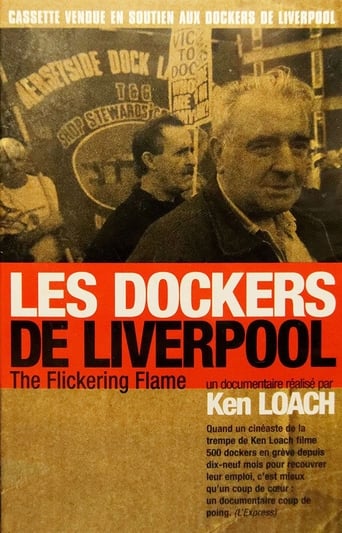
Documentary following dockers of Liverpool sacked in a labour dispute and their supporters’ group, Women of the Waterfront, as they receive support from around the world and seek solidarity at the TUC conference.
Through interviews filmed over four years, Noam Chomsky unpacks the principles that have brought us to the crossroads of historically unprecedented inequality – tracing a half-century of policies designed to favor the most wealthy at the expense of the majority – while also looking back on his own life of activism and political participation. He provides penetrating insight into what may well be the lasting legacy of our time – the death of the middle class, and swan song of functioning democracy.
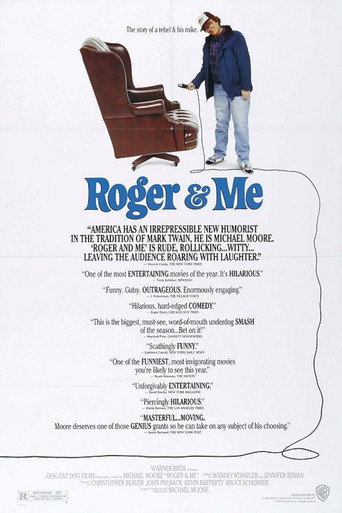
Michael Moore comes home to the issue he's been examining throughout his career: the disastrous impact of corporate dominance on the everyday lives of Americans (and by default, the rest of the world).
Over seven decades, actor and activist George Takei journeyed from a World War II internment camp to the helm of the Starship Enterprise, and then to the daily news feeds of five million Facebook fans. Join George and his husband, Brad, on a wacky and profound trek for life, liberty, and love.
THE YES MEN FIX THE WORLD is a screwball true story about two gonzo political activists who, posing as top executives of giant corporations, lie their way into big business conferences and pull off the world's most outrageous pranks.
A visual montage portrait of our contemporary world dominated by globalized technology and violence.
A film that exposes the shocking truth behind the economic crisis of 2008. The global financial meltdown, at a cost of over $20 trillion, resulted in millions of people losing their homes and jobs. Through extensive research and interviews with major financial insiders, politicians and journalists, Inside Job traces the rise of a rogue industry and unveils the corrosive relationships which have corrupted politics, regulation and academia.
Interviews with leading authors, philosophers and scientists, with an in-depth discussion of the Law of Attraction. The audience is shown how they can learn and use 'The Secret' in their everyday lives.
An exploration of technologically developing nations and the effect the transition to Western-style modernization has had on them.
BBC Arena's documentary on the Dames of British Theatre and film featuring Maggie Smith, Eileen Atkins, Judi Dench and Joan Plowright on screen together for the first time as they reminisce over a long summer weekend in a house Joan once shared with Sir Laurence Olivier.
In 1974, Chilean-French director Alejandro Jodorowsky embarked on the quixotic project of adapting Frank Herbert's influential novel Dune (1969) for the big screen. After investing two years, and millions of dollars, the gigantic project ended in failure; but the artists Jodorowsky brought together to carry it out continued to work together, and ended up laying the foundations for modern science fiction cinema.
Documentary on the legendary martial artist Bruce Lee, with a focus on the production of his unfinished film Game of Death. Using interviews and behind-the-scenes footage, Lee aficionado John Little paints a portrait of the world's most famous action hero, concluding with a new cut of Game of Death's action finale, reconstructed from Lee's notes and recently-recovered footage.
A documentary about the corrupt health care system in The United States whose main goal is to make profit even if it means losing people’s lives. "The more people you deny health insurance, the more money we make" is the business model for health care providers in America.
Lyrical and powerfully personal essay film that reflects on the deaths of her husband Lou Reed, her mother, her beloved dog, and such diverse subjects as family memories, surveillance, and Buddhist teachings.
Former Secretary of Labor Robert Reich meets with Americans from all walks of life as he chronicles a seismic shift in the nation's economy.
The authorized documentary celebrating the film that redefined Hollywood, 50 years after its premiere. Featuring rare archival footage and interviews with acclaimed Hollywood directors alongside Steven Spielberg, top shark scientists, and conservationists, the film uncovers the behind-the-scenes chaos and how the film launched the summer blockbuster, inspired a new wave of filmmakers, and paved the way for shark conservation that continues today.
Unprecedented access to Muhammad Ali's personal archive of "audio journals" as well as interviews and testimonials from his inner circle of family and friends are used to tell the legend's life story.
Based on Reich's 2010 book Aftershock: The Next Economy and America's Future, the film examines widening income inequality in the United States. U.S. Labor Secretary Robert Reich tries to raise awareness of the country's widening economic gap. He publicly argued about the issue for decades, and producing a film of his viewpoints was a "final frontier" for him. In addition to being a social issue documentary, Inequality for All is also partially a biopic regarding Reich's early life and his time as Secretary of Labor under Bill Clinton's presidency. Warren Buffett and Nick Hanauer, two entrepreneurs and investors in the top 1%, are interviewed in the film, supporting Reich's belief in an economy that benefits all citizens, including those of the middle and lower classes.
Viewers will get a look at Parker and Stone's thought process as they approach a new episode and the 24/7 grind they subject themselves to each time the show is in production. The documentary also includes in-depth interviews with Parker and Stone about their working partnership and reflections on highlights from their careers.
The definitive documentary on the history of nudity in feature films from the early silent days to the present, studying the changes in morality that led to the use of nudity in films while emphasizing the political, sociological and artistic changes that shaped that history. Skin will also study the gender inequality in presenting nude images in motion pictures and will follow the revolution that has created nude gender equality in feature films today.