This 1982 film explains the KGB infiltration of America. Who they are, what they are doing, and how well they have infiltrated North America.
Social & External
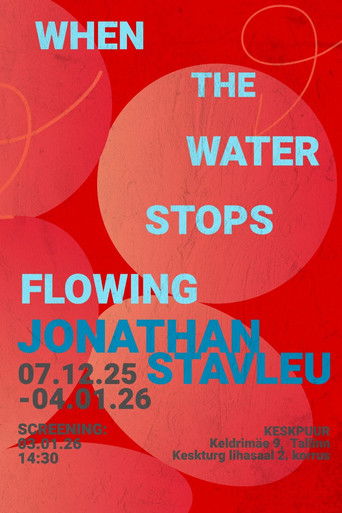
The hippie movement that captivated hundreds of thousands of young people in the West had a profound impact on the other side of the Iron Curtain. Within the Soviet system, a colorful crowd of artists, musicians, freaks, vagabonds and other long-haired drop-outs created their own system, which connected those who believed in peace, love, and freedom for their bodies and souls. More than 40 years later, a group of eccentric hippies from Estonia take a road trip to Moscow where the hippies still gather annually on the 1st of June for celebration that is related to the tragic event in 1971, when thousands of Soviet hippies were arrested by the KGB. The journey through time and dimensions goes deep into the psychedelic underground world in which these people strived for freedom.
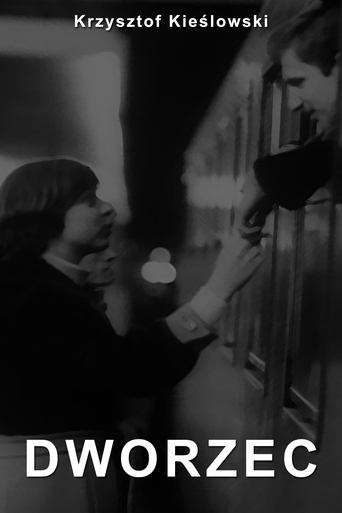
Warsaw's Central Railway Station. 'Someone has fallen asleep, someone's waiting for somebody else. Maybe they'll come, maybe they won't. The film is about people looking for something.
Albert Maysles' visual diary of the faces and places encountered along a cross country motorscooter ride through the Soviet Union in the late 1950s.
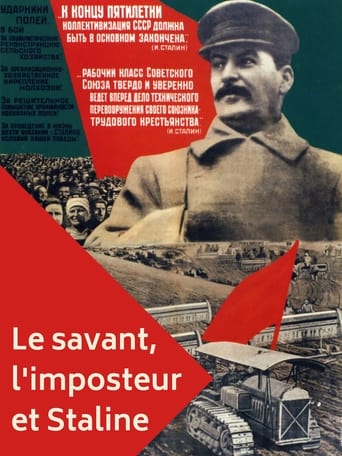
A double portrait of two dictators who were thousands of miles apart but were constantly fixated on each other.
Through vintage film clips of past Bond movie epics, and with the participation of several former "Bond Girls" as interviewees (among them Dr. No's Ursula Andress and Diamonds Are Forever's Jill St. John), the documentary traces the evolution of the typical James Bond heroine from decorative damsel in distress to gutsy (but still decorative) participant in the action.
The epic story of the Russian Civil War (1918-21): the White Terror, the counterrevolutionary uprisings, the guerrilla war, the Kolchak front, the Wrangel front and the Kronstadt rebellion. Chaos and violence, devastation and death.
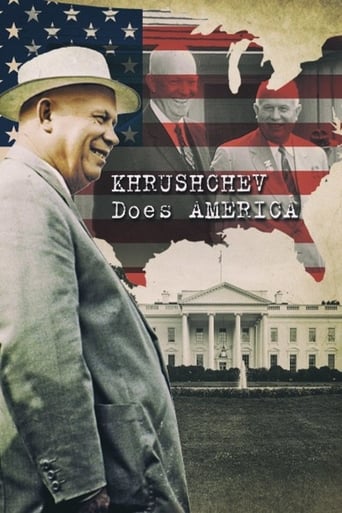
The story of the unconditional, no-holds-barred tour of America by Soviet Premier Nikita Khrushchev, leader of World Communism and America's arch nemesis, during 13 sun-filled days in the fall of 1959.
England, 1940, during World War II. An MI5 officer, codenamed Jack King, infiltrates a network of conspirators, a British fifth column sympathetic to Nazi Germany, in order to control the organization and destroy it in the event of a German invasion. But who was he? A single person or several?
Alex Jones exposes the growing militarization of American law enforcement and the growing relationship between the military and police. Witness US training with foreign troops and learning how to control and contain civilian populations. You will see Special Forces helicopter attacks on South Texas towns, concentration camps, broad unconstitutional police actions, search and seizure and more.
Alex Jones exposes the problem-reaction-solution paradigm being used to terrorize the American people into accepting a highly controlled and oppressive society. From children in public schools being trained to turn in their peers and parents, to the Army and National Guard patrolling our nation's highways, Police State: The Takeover reveals the most threatening developments of Police State control
In 1943, Noor Inayat Khan was recruited as a covert operative into Winston Churchill's Special Operations Executive. With an American mother and Indian Muslim father, she was an extremely unusual British agent. After her network collapsed, Khan became the only surviving radio operator linking the British to the French Resistance in Paris, coordinating the airdrop of weapons and agents, and the rescue of downed Allied fliers.
Film cameras cruise the Soviet Union's mighty Volga River, providing a view of the Russian people along its 2300-mile length, including looks at the fishing industry, a rural village, a manufacturing town and the wedding of two factory workers.
Documentary examining Stalin's Gulag. Between the October Revolution and Stalin's death in 1953, millions of people died in the camps. The film explores the Gulag legacy, hearing from victims and perpetrators of the system.
This documentary is also part reality show. A dozen volunteers are set a mission to fulfil, but one by one they are captured by interrogators. They are held for a weekend, blindfolded and shackled and subjected to the same interrogation techniques talked about in the documentary. One by one they crack and tell their captors everything they know. They are made to talk!
A cameraman wanders around with a camera slung over his shoulder, documenting urban life with dazzling inventiveness.
How in 1959, during the heat of the Cold War, the government of the United States decided to create a secret military base located in the far north of Greenland: Camp Century, almost a real town with roads and houses, a nuclear plant to provide power and silos to house missiles aimed at the Soviet Union.
The story of Russian writer and Soviet dissident Aleksandr Solzhenitsyn (1918-2008) and his masterpiece, The Gulag Archipelago, published in Paris in 1973, which forever shook the very foundations of communist ideology.
President Mikhail Gorbachev recounts the end of the Cold War and the reduction of nuclear arms.
Documentary movie about testing of the largest nuclear weapon in history, the Tsar Bomba. Declassified and made available to the public in 2020.