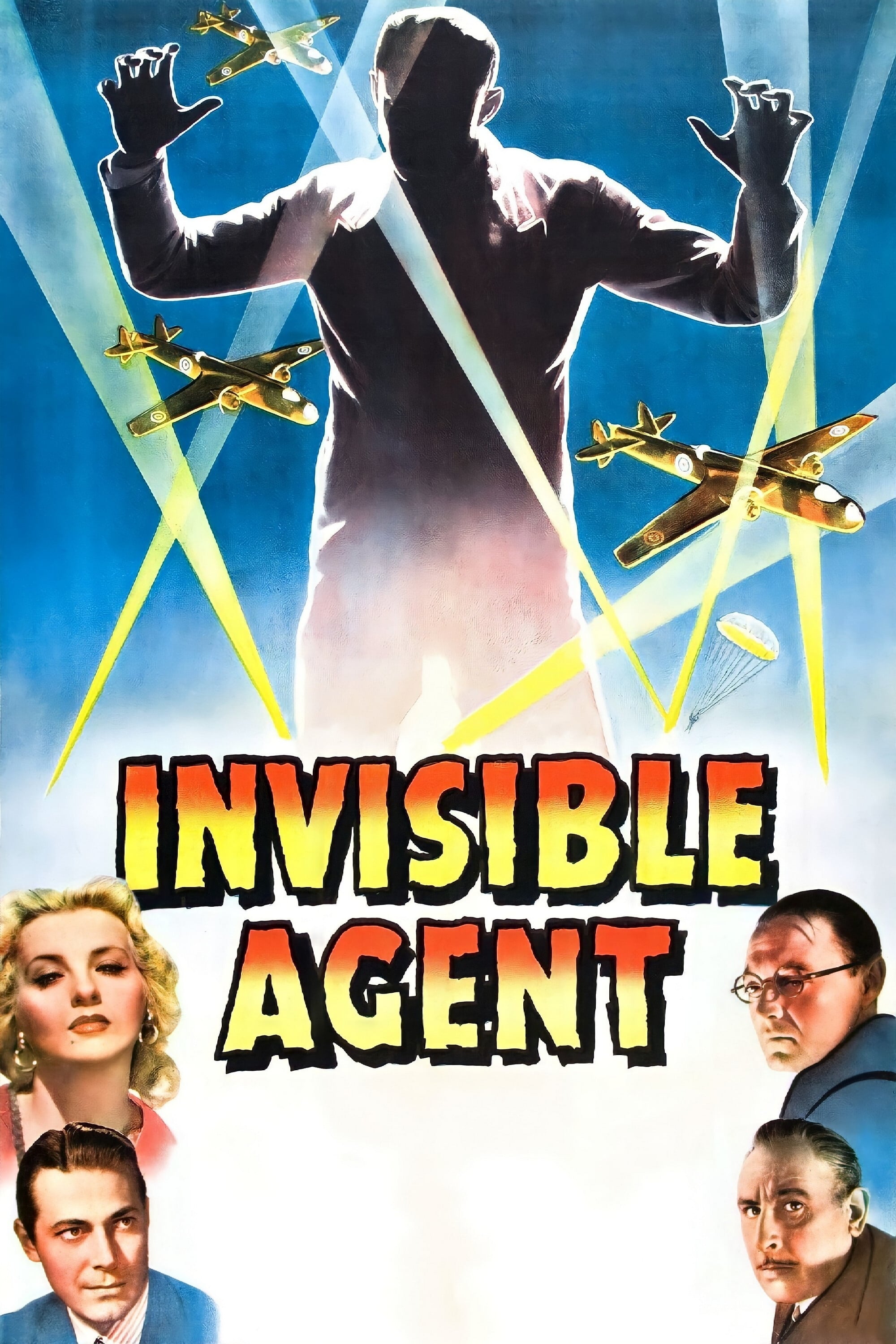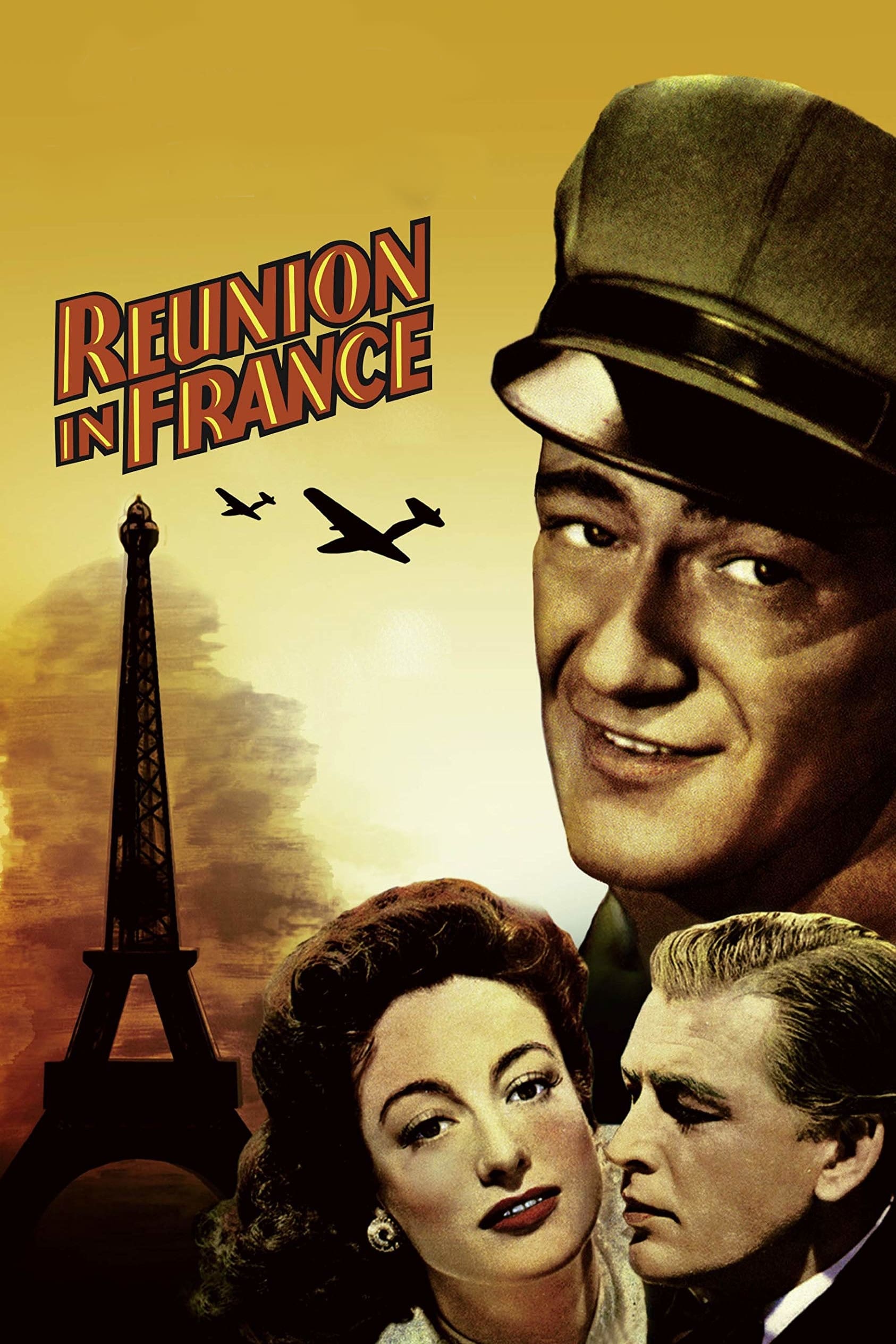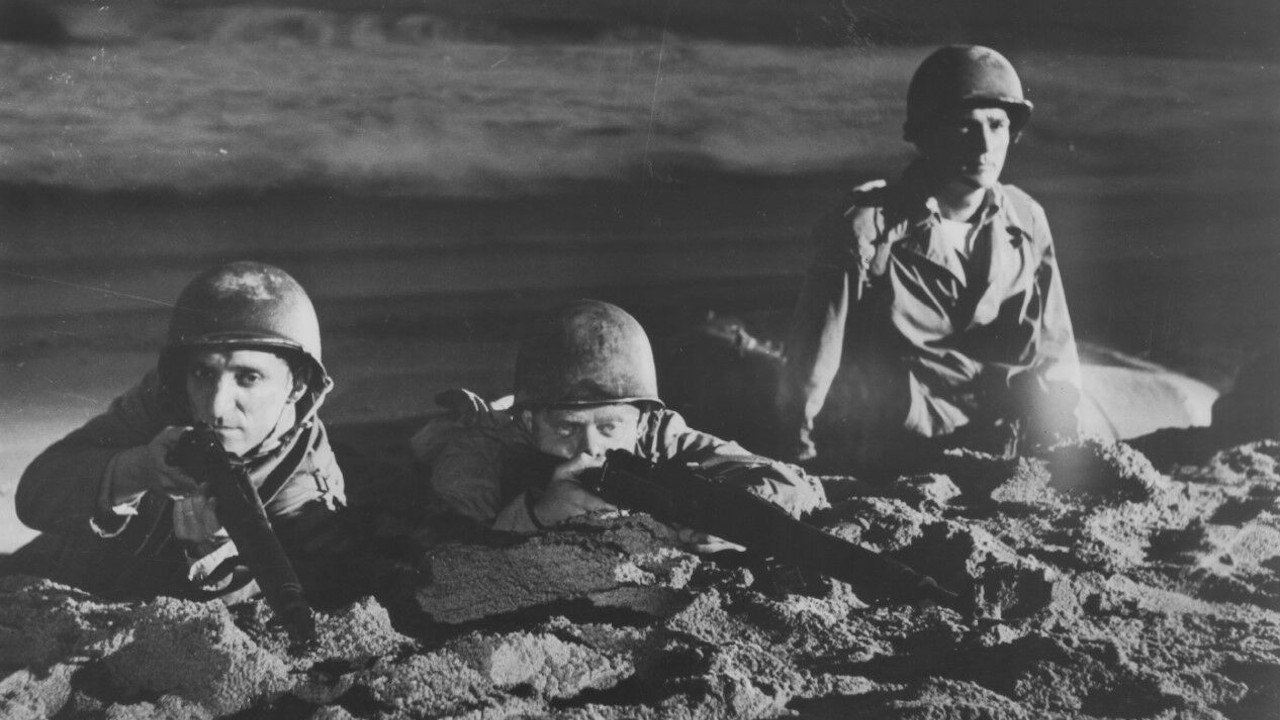
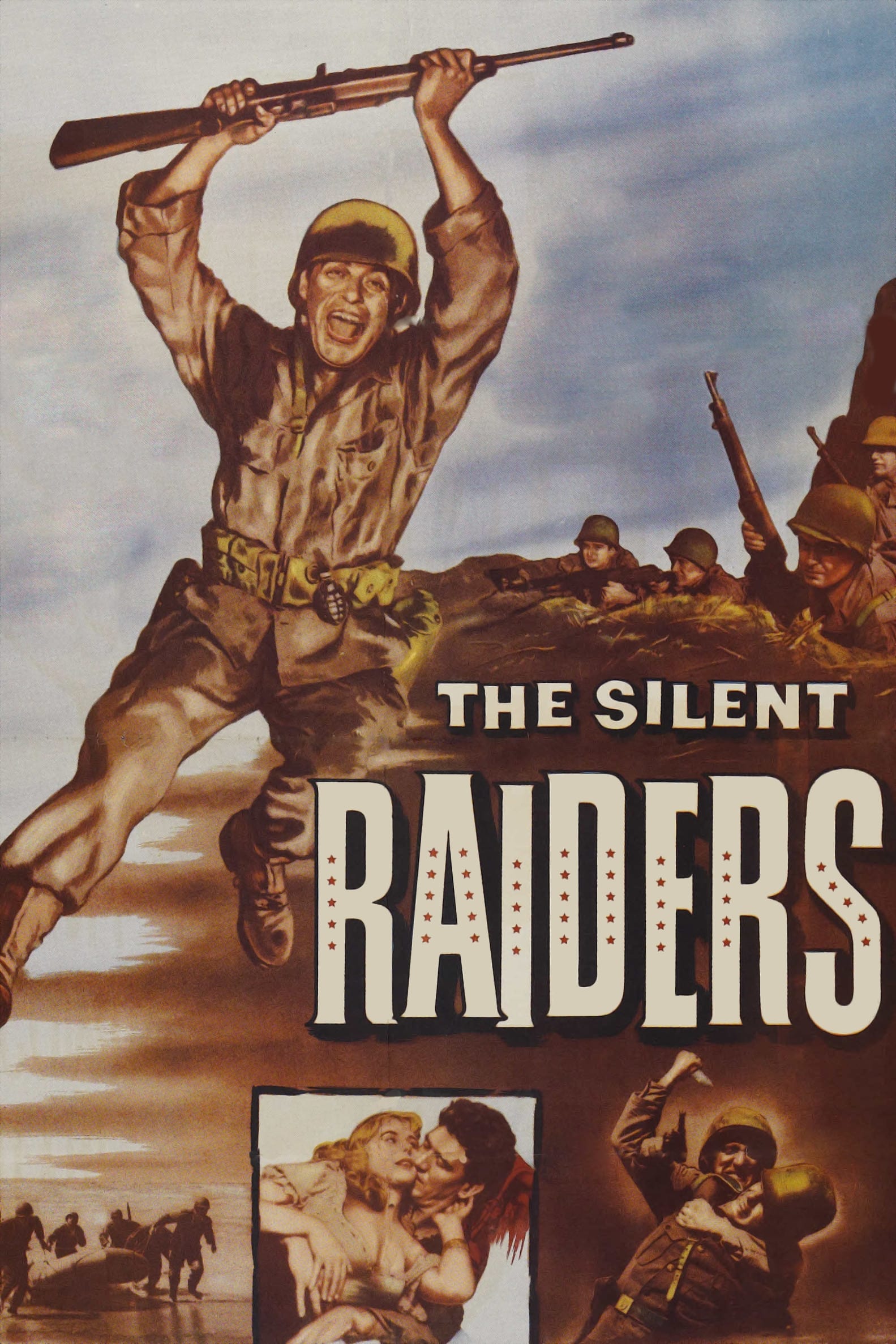
"No one could silence their courage and gallantry!"
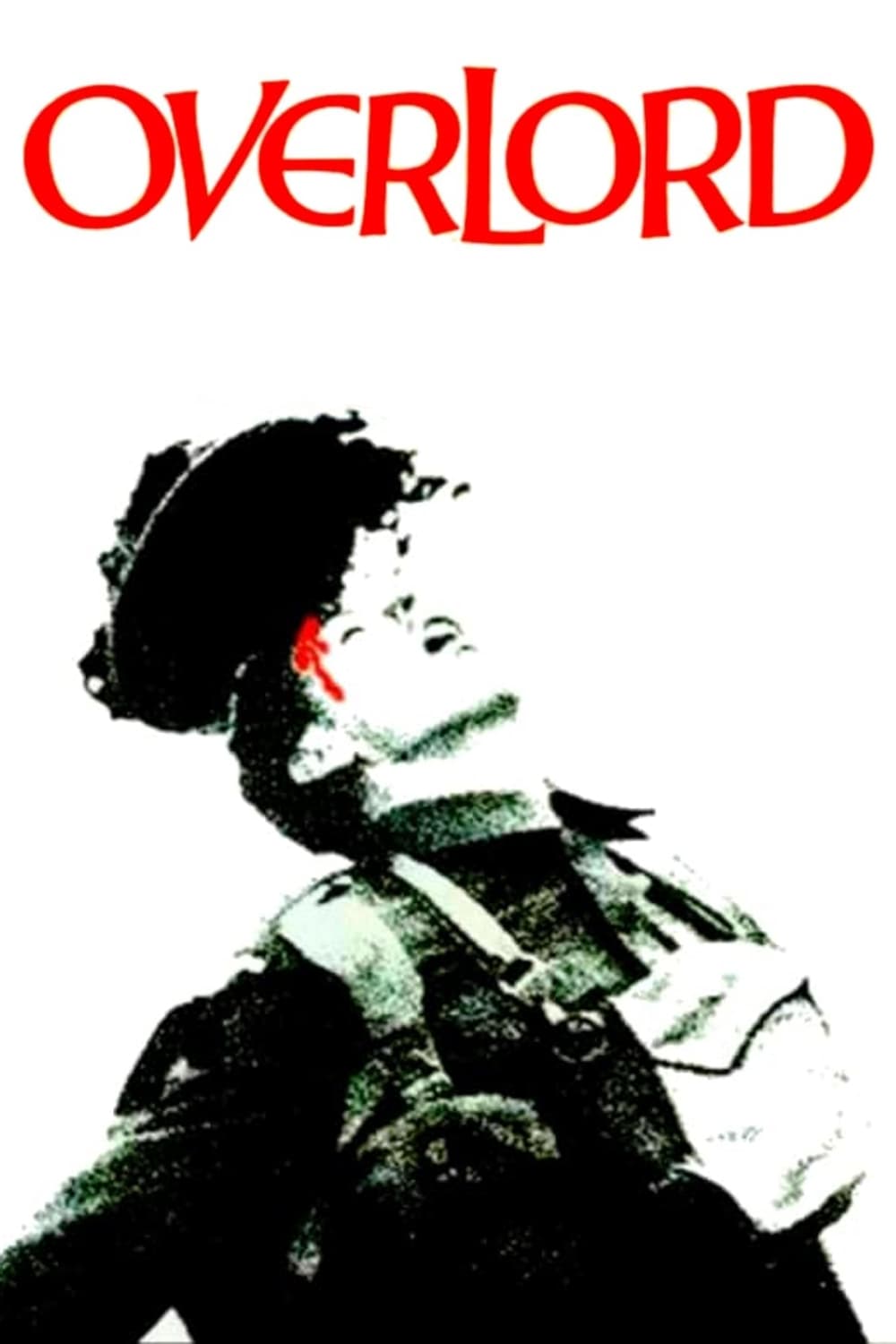
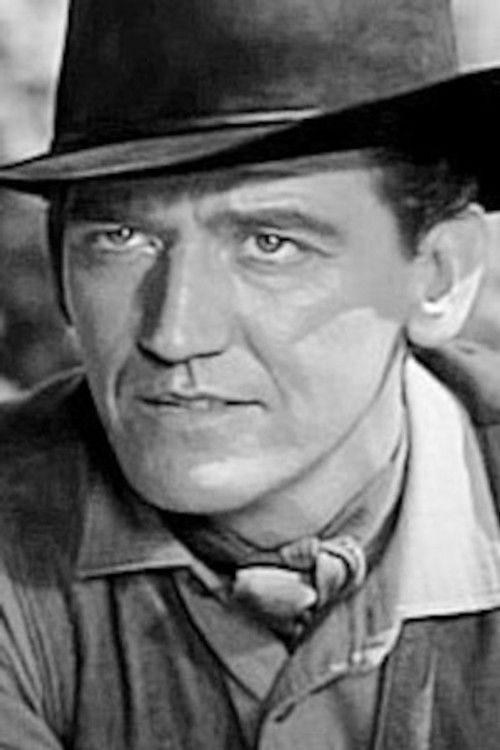
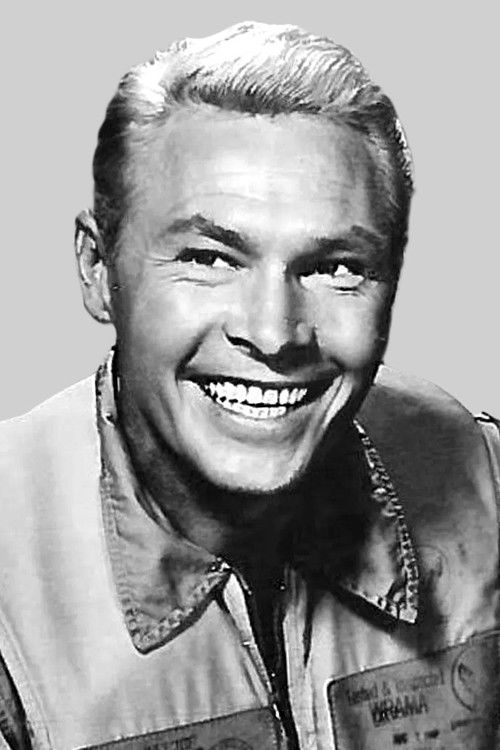
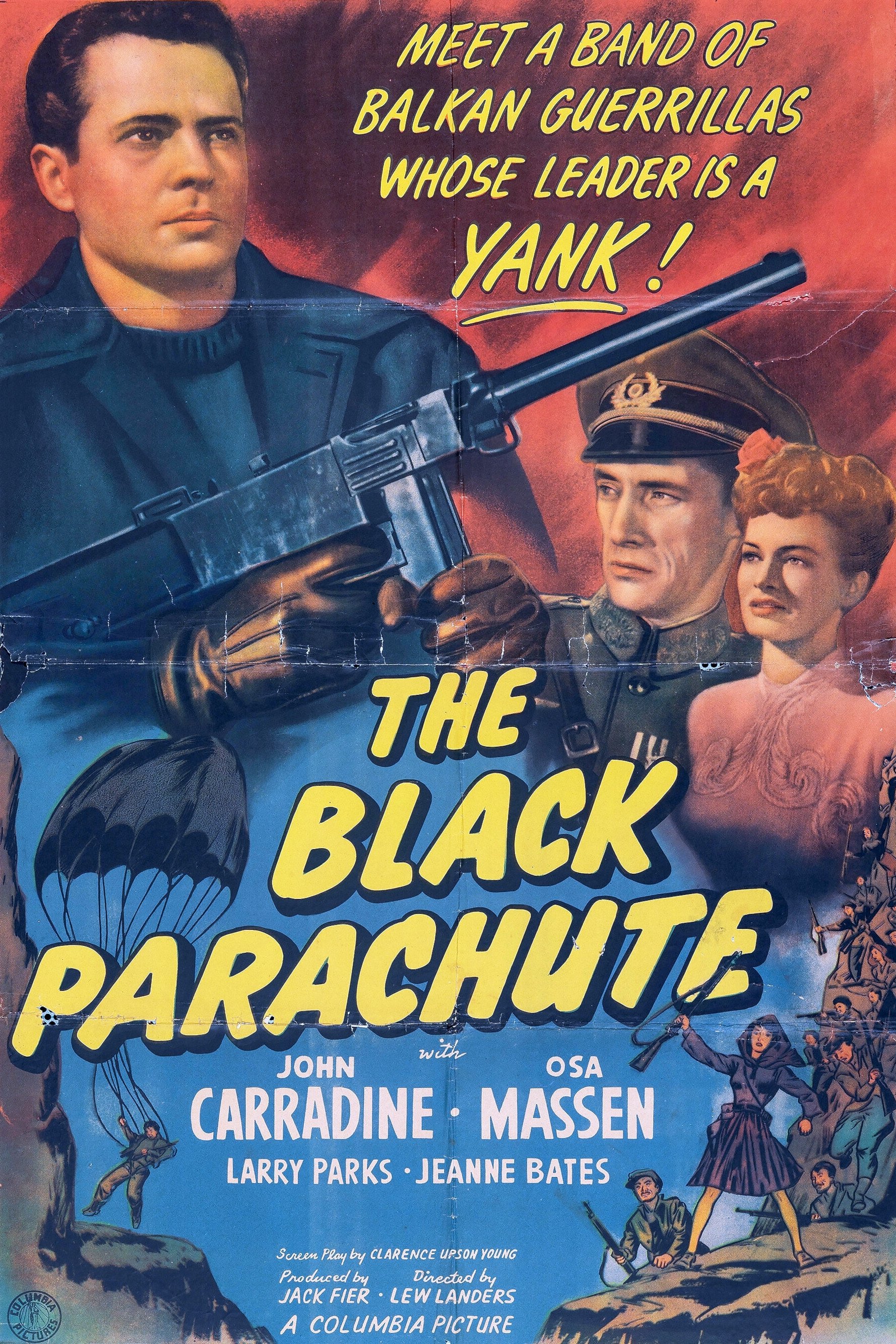
Allied commandos try to knock out Nazi communications on the French coast.
Social & External
Sgt. Jack
Sgt. Malloy
French Girl
Pepy
Lt. Finch
Chief
Horse
Wetzel
German Corporal
A touching story of an Italian book seller of Jewish ancestry who lives in his own little fairy tale. His creative and happy life would come to an abrupt halt when his entire family is deported to a concentration camp during World War II. While locked up he tries to convince his son that the whole thing is just a game.
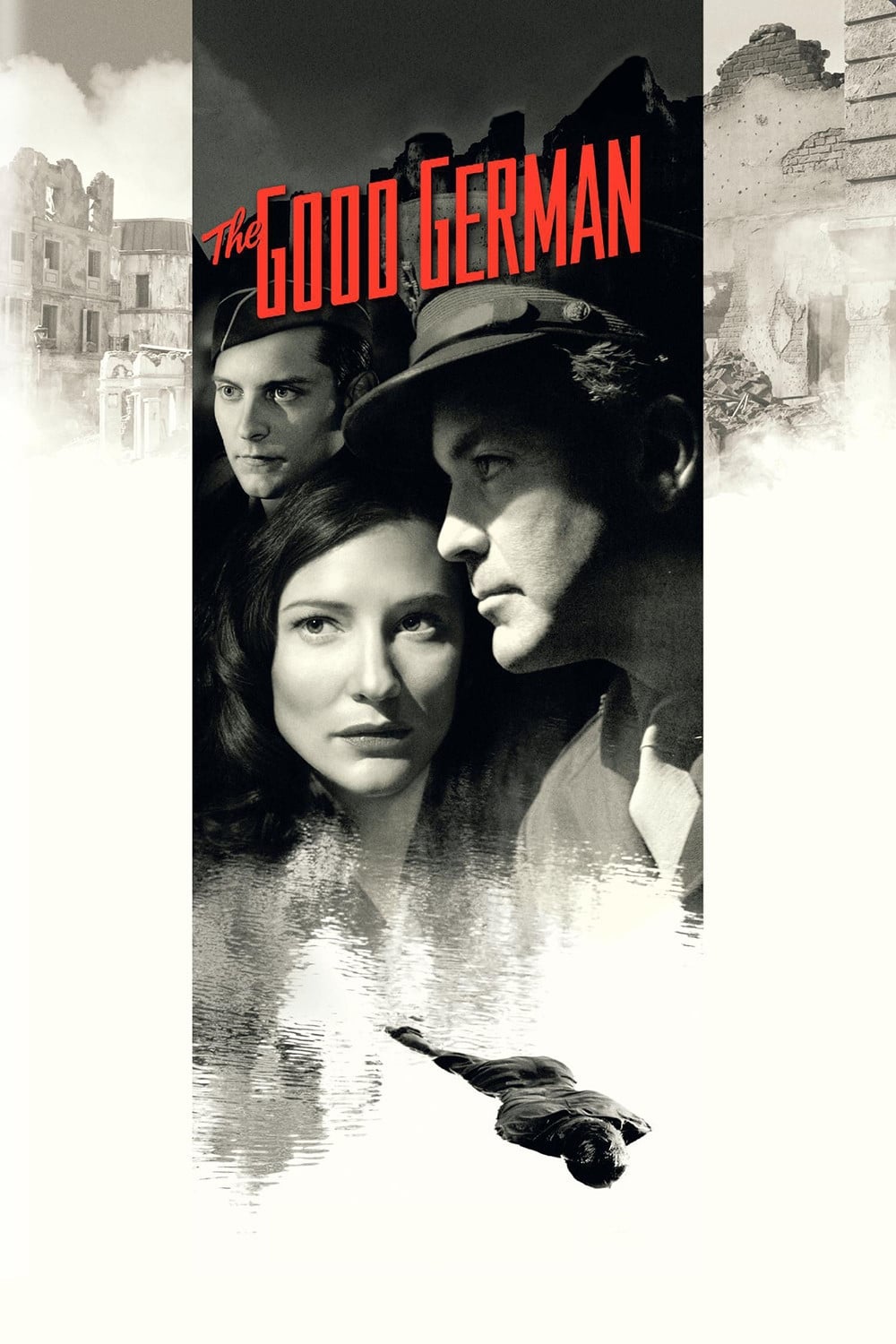
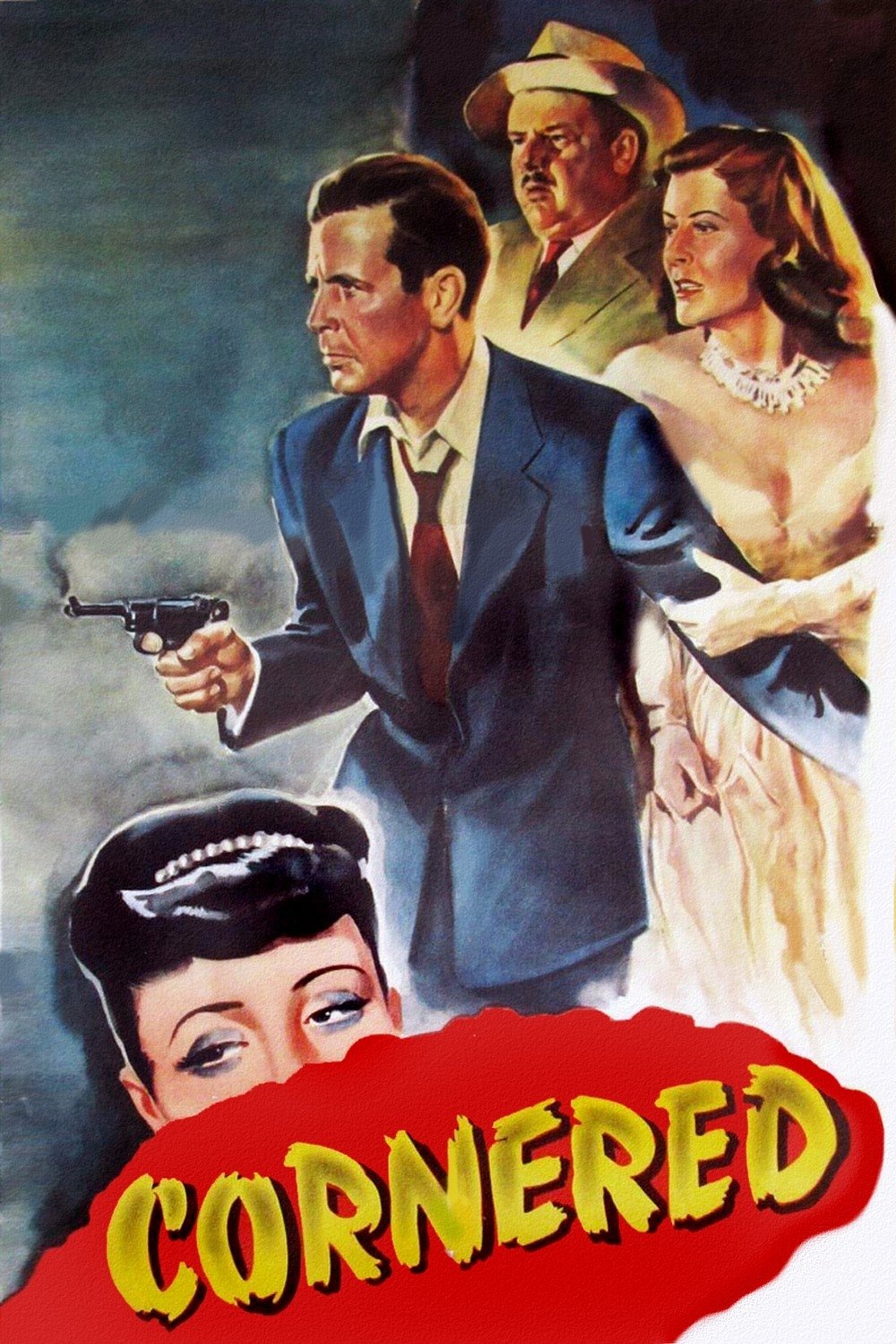
During the Nazi occupation of 1944 Rome, Resistance leader Giorgio Manfredi is pursued by the Nazis as he seeks refuge and a means of escape.
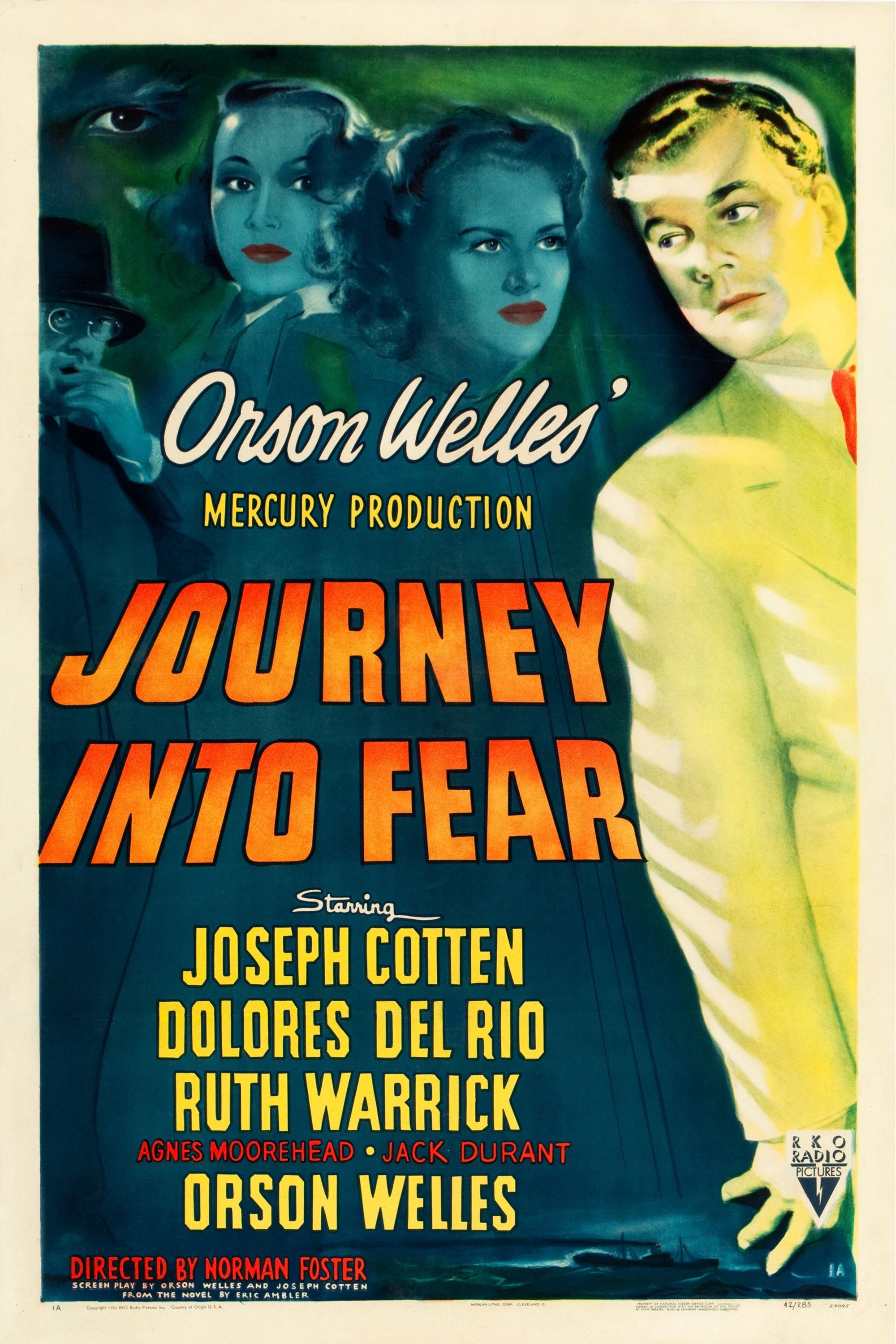
A young Jewish American man endeavors—with the help of eccentric, distant relatives—to find the woman who saved his grandfather during World War II—in a Ukrainian village which was ultimately razed by the Nazis.
The true story of pianist Władysław Szpilman's experiences in Warsaw during the Nazi occupation. When the Jews of the city find themselves forced into a ghetto, Szpilman finds work playing in a café; and when his family is deported in 1942, he stays behind, works for a while as a laborer, and eventually goes into hiding in the ruins of the war-torn city.
In 1924, Oskar Matzerath is born in the Free City of Danzig. At age three, he falls down a flight of stairs and stops growing. In 1939, World War II breaks out.
In April of 1945, Germany stands at the brink of defeat with the Russian Army closing in from the east and the Allied Expeditionary Force attacking from the west. In Berlin, capital of the Third Reich, Adolf Hitler proclaims that Germany will still achieve victory and orders his generals and advisers to fight to the last man. When the end finally does come, and Hitler lies dead by his own hand, what is left of his military must find a way to end the killing that is the Battle of Berlin, and lay down their arms in surrender.
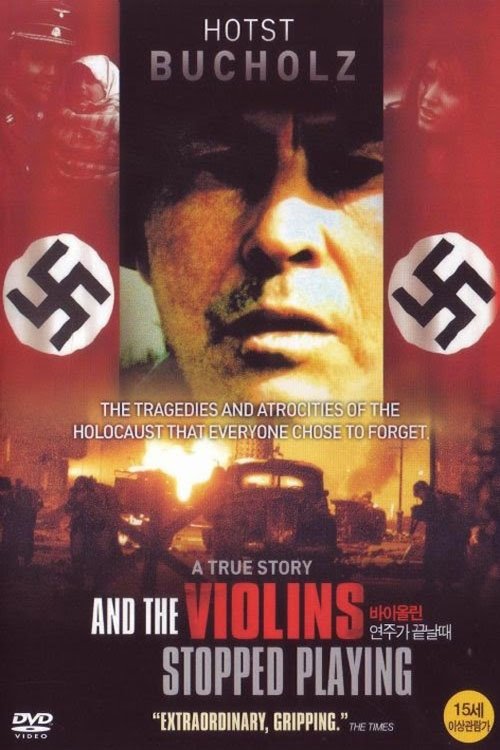
This is the true story about a group of Romani's (gypsy) in occupied Poland during World War II as they confront the atrocities and tragedies of a forgotten holocaust.
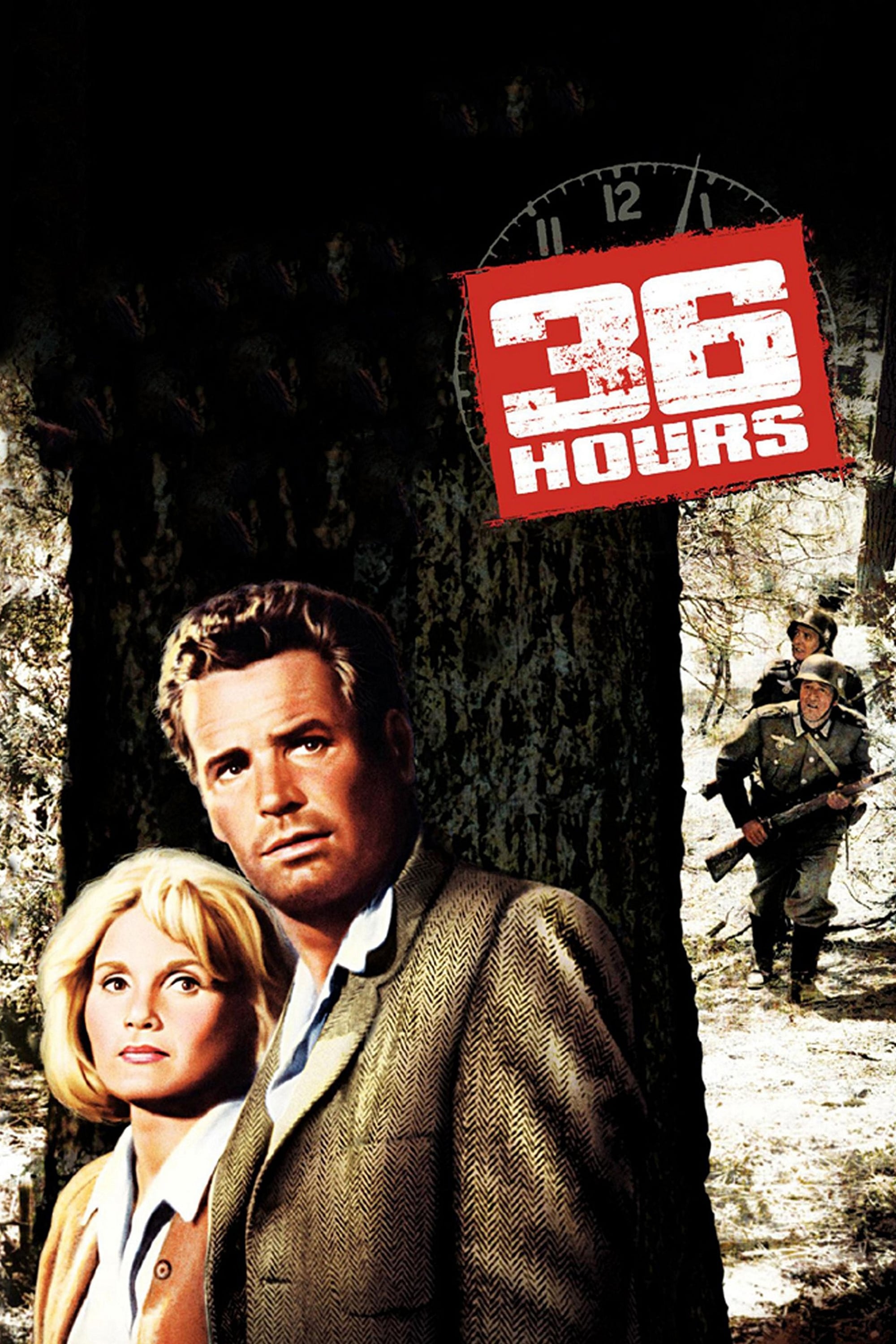
12 American military prisoners in World War II are ordered to infiltrate a well-guarded enemy château and kill the Nazi officers vacationing there. The soldiers, most of whom are facing death sentences for a variety of violent crimes, agree to the mission and the possible commuting of their sentences.
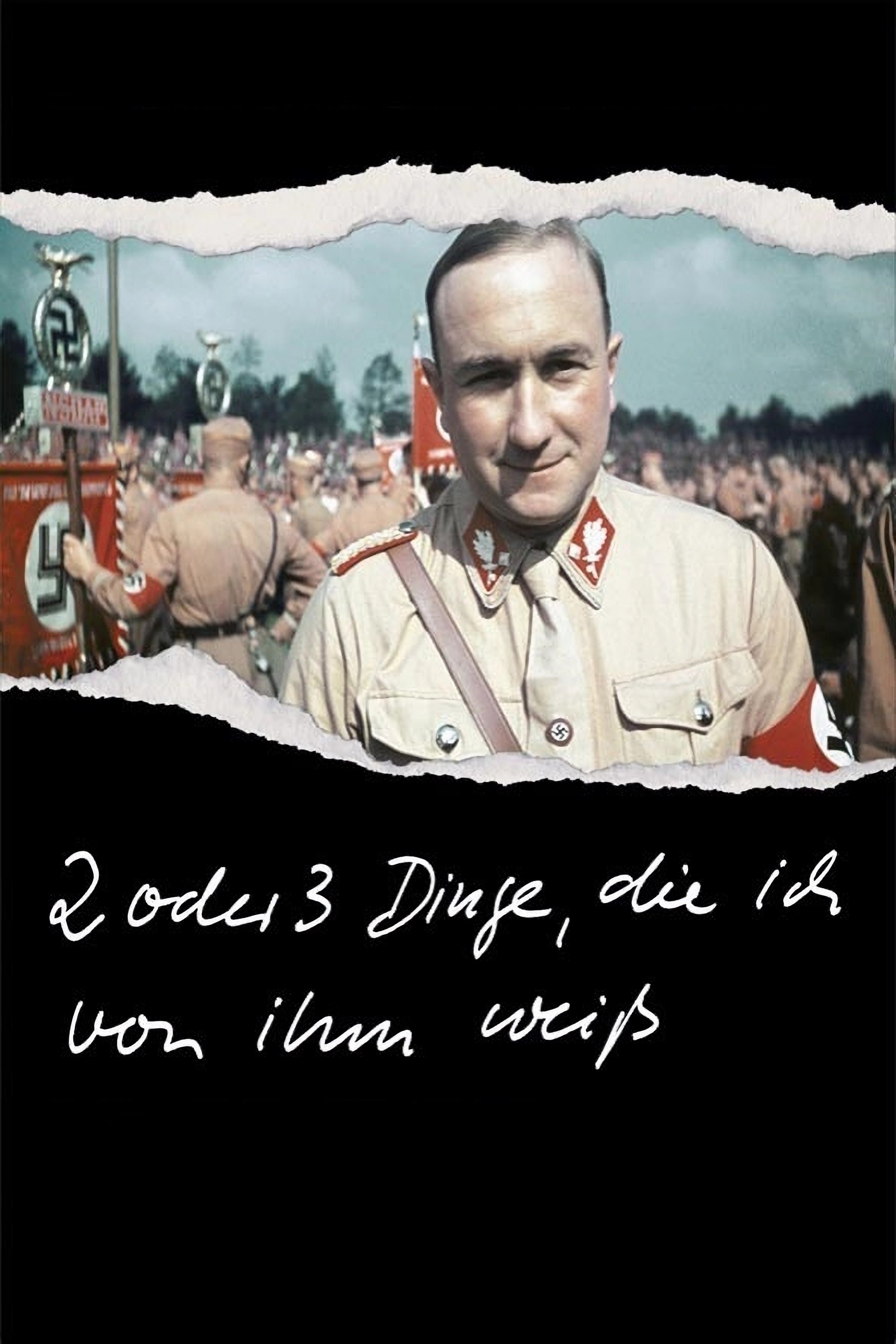
What would your family reminiscences about dad sound like if he had been an early supporter of Hitler’s, a leader of the notorious SA and the Third Reich’s minister in charge of Slovakia, including its Final Solution? Executed as a war criminal in 1947, Hanns Ludin left behind a grieving widow and six young children, the youngest of whom became a filmmaker. It's a fascinating, maddening, sometimes even humorous look at what the director calls "a typical German story." (Film Forum)
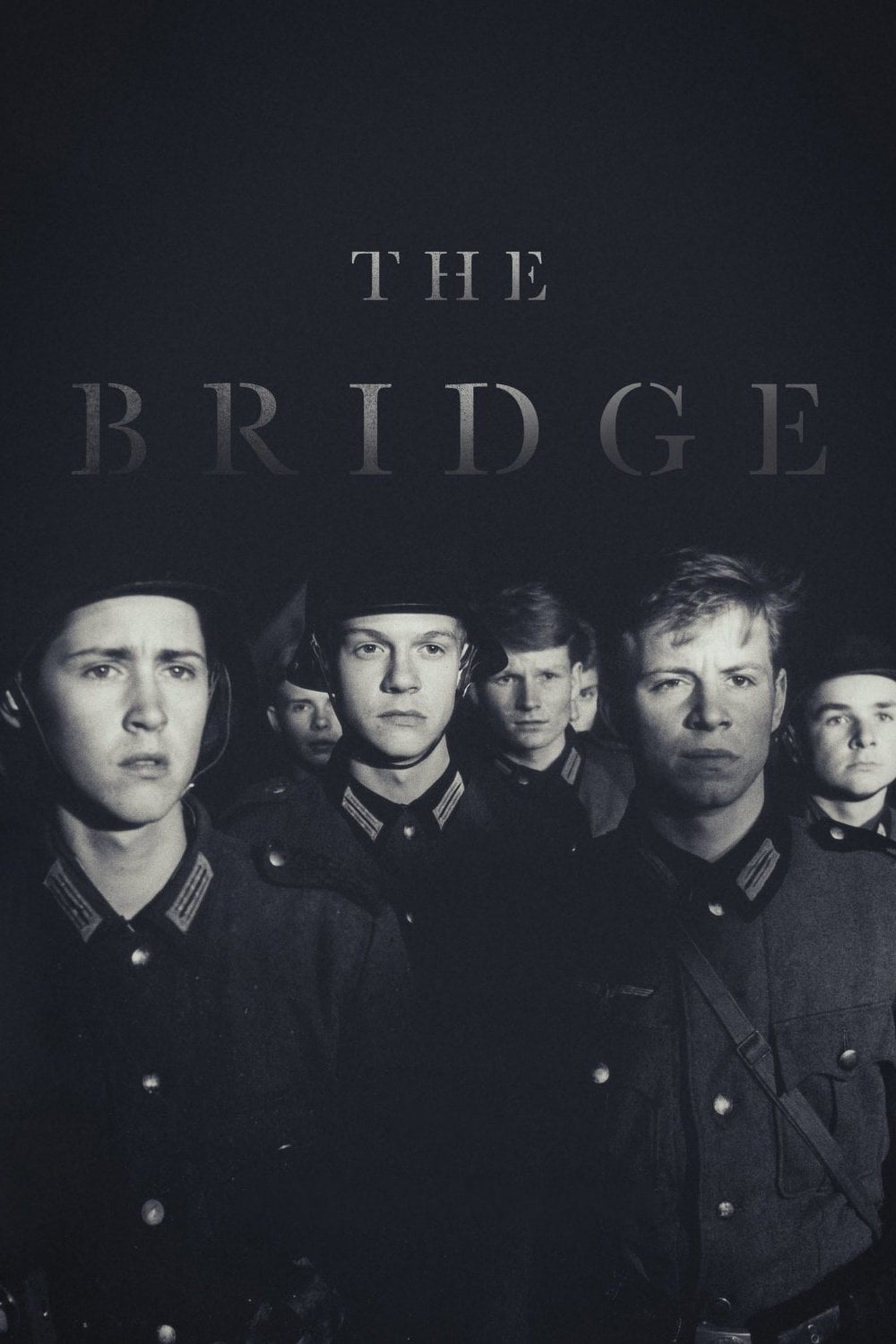
A group of German boys are ordered to protect a small bridge in their home village during the waning months of the second world war. Truckloads of defeated, cynical Wehrmacht soldiers flee the approaching American troops, but the boys, full of enthusiasm for the "blood and honor" Nazi ideology, stay to defend the useless bridge. The film is based on a West German anti-war novel of the same name, written by Gregor Dorfmeister.
Six Dutch Commandos, commanded by John de Koning and stationed in Mali, are sent to Nigeria under American orders to free the son of a wealthy Nigerian oil family from Boko Haram rebels. When the team finds out that the man is not a hostage but actually working with the terrorists - and unexpectedly find themselves responsible for a group of teenage schoolgirls - the mission gets completely out of hand. Will John be able to keep his team together and to accomplish their mission?
In 1947, four German judges who served on the bench during the Nazi regime face a military tribunal to answer charges of crimes against humanity. Chief Justice Haywood hears evidence and testimony not only from lead defendant Ernst Janning and his defense attorney Hans Rolfe, but also from the widow of a Nazi general, an idealistic U.S. Army captain and reluctant witness Irene Wallner.
Dictator Adenoid Hynkel tries to expand his empire while a poor Jewish barber tries to avoid persecution from Hynkel's regime.
After returning from a concentration camp, Susanne finds a traumatized ex-soldier living in her apartment in bombed out Berlin. Together the two try to move past their experiences during WWII.
The Roth family leads a quiet life in a small village in the German Alps during the early 1930s. After the Nazis come to power, the family is divided and Martin Breitner, a family friend, is caught up in the turmoil.
The attractive Oberleutnant Paul Wendlandt is stationed in North Africa as a fighter pilot. While in Berlin to deliver a report he is given a day's leave, and on the stage of the cabaret theatre "Skala" sees the popular Danish singer Hanna Holberg. For Paul it is love at first sight. When Hanna visits friends after the end of the performance, he follows her, and speaks to her in the U-Bahn. After the party in her friends' flat, he accompanies her home and chance throws them further together when an air raid warning forces them to take cover in the air raid shelter. Hanna reciprocates Paul's feelings, but after a night spent together Paul has to return immediately to the front. There now follows a whole series of misunderstandings, and one missed opportunity after another. While Hanna waits in vain for some sign of life from Paul, he is flying on missions in North Africa. When he tries to visit her in her Berlin flat, she is giving a Christmas concert in Paris.
In 1943, as Hitler continues to wage war across Europe, a group of college students mount an underground resistance movement in Munich. Dedicated expressly to the downfall of the monolithic Third Reich war machine, they call themselves the White Rose. One of its few female members, Sophie Scholl is captured during a dangerous mission to distribute pamphlets on campus with her brother Hans. Unwavering in her convictions and loyalty to the White Rose, her cross-examination by the Gestapo quickly escalates into a searing test of wills as Scholl delivers a passionate call to freedom and personal responsibility.
Bundeswehr soldier Klaus’ regiment is stationed in France, to take part in NATO maneuvers. The soldiers are ordered to be kind to the populace, since the West German High Command wishes the French to forget the atrocities that were committed during the Second World War. Klaus falls in love with Jeanne, the daughter of the local mayor. He discovers that his commanders intend to demolish the ruins of a local church, in which civilians were murdered by the German occupation forces at 1944. A local journalist who researches the event discovers that West German General Rucker ordered the massacre, but he is mysteriously murdered. Klaus defies his commanding officer Siebert, who instructs him to steal the documents indicting Rucker, and hands the evidence over to Jeanne.
In 1943, while the Allies are bombing Berlin and the Gestapo is purging the capital of Jews, a dangerous love affair blossoms between two women – one a Jewish member of the underground, the other an exemplar of Nazi motherhood.
At the onset of World War II, American Lt. Col. Robert Frederick is put in charge of a unit called the 1st Special Service Force, composed of elite Canadian commandos and undisciplined American soldiers. With Maj. Alan Crown leading the Canadians and Maj. Cliff Bricker the acting head of the American contingent, there is initial tension -- but the team comes together when given a daunting mission that few would dare to attempt.
A team of allied saboteurs are assigned an impossible mission: infiltrate an impregnable Nazi-held island and destroy the two enormous long-range field guns that prevent the rescue of 2,000 trapped British soldiers.
During the harrows of WWII, Jo, a young shepherd along with the help of the widow Horcada, helps to smuggle Jewish children across the border from southern France into Spain.
Prelude to War was the first film of Frank Capra's Why We Fight propaganda film series, commissioned by the Pentagon and George C. Marshall. It was made to convince American troops of the necessity of combating the Axis Powers during World War II. This film examines the differences between democratic and fascist states.
Members of the U.S. Army's 101st Airborne Division are fighting for their country amidst the rugged terrain of Bastogne, Belgium, in December 1944. Holley and his American compatriots have already seen one of their own, Roderigues, perish under enemy fire. The men try to rebuff another series of Nazi attacks, but what they really need is a change in the weather. Without clear skies, they'll never get the air support they need.
A by-the-book Captain is ordered to capture a strategic village in Italy. The Italian soldiers are willing to surrender, if they can have a festival first. The lieutenant convinces the Captain this is the only way. Because of aerial reconnaissance, they must look like they are fighting. To sort this out an intelligence officer is sent in. Meanwhile the festival gets complicated with the Mayors daughter.
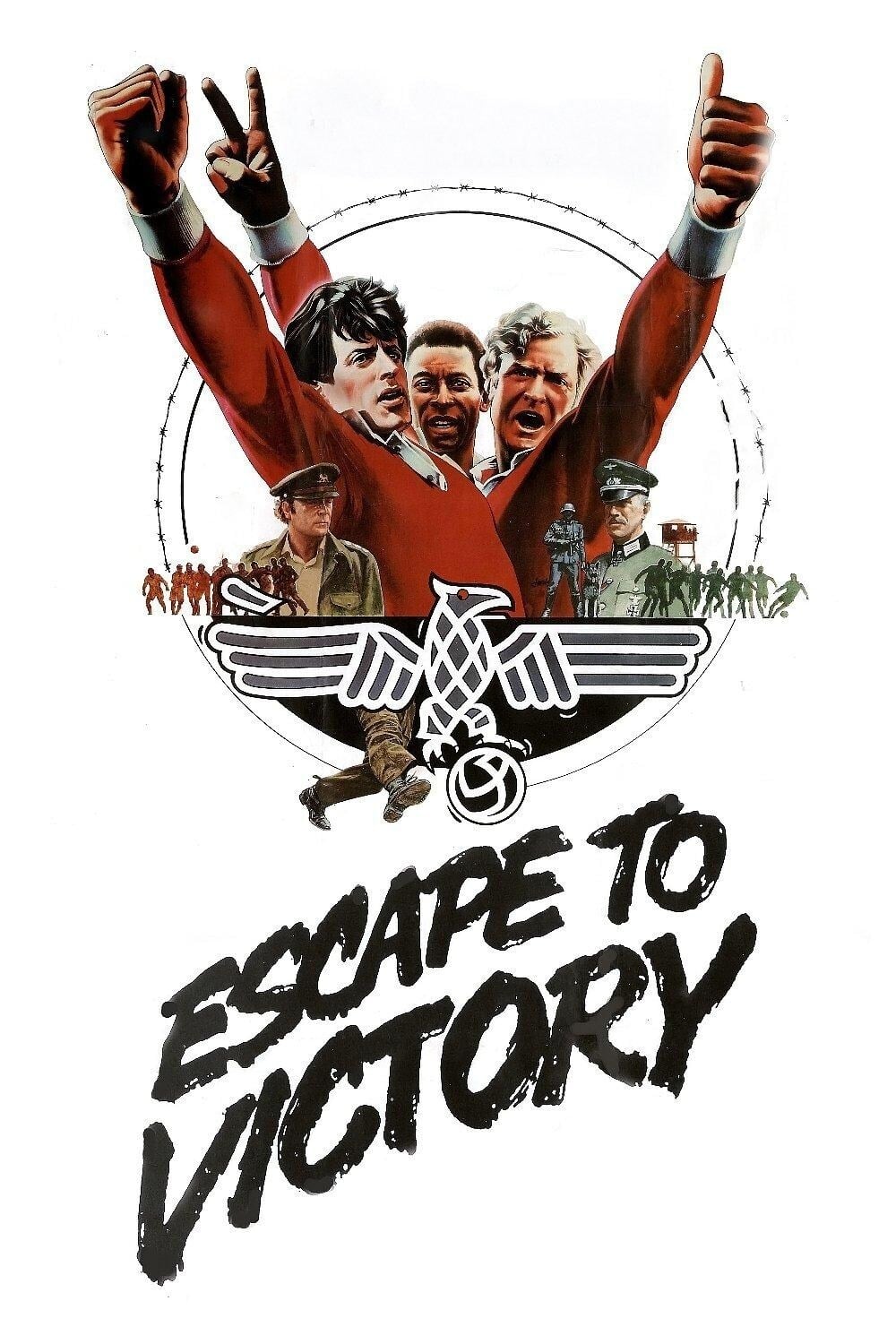
A group of POWs in a German prison camp during World War II play the German National Soccer Team in this powerful film depicting the role of prisoners during wartime.
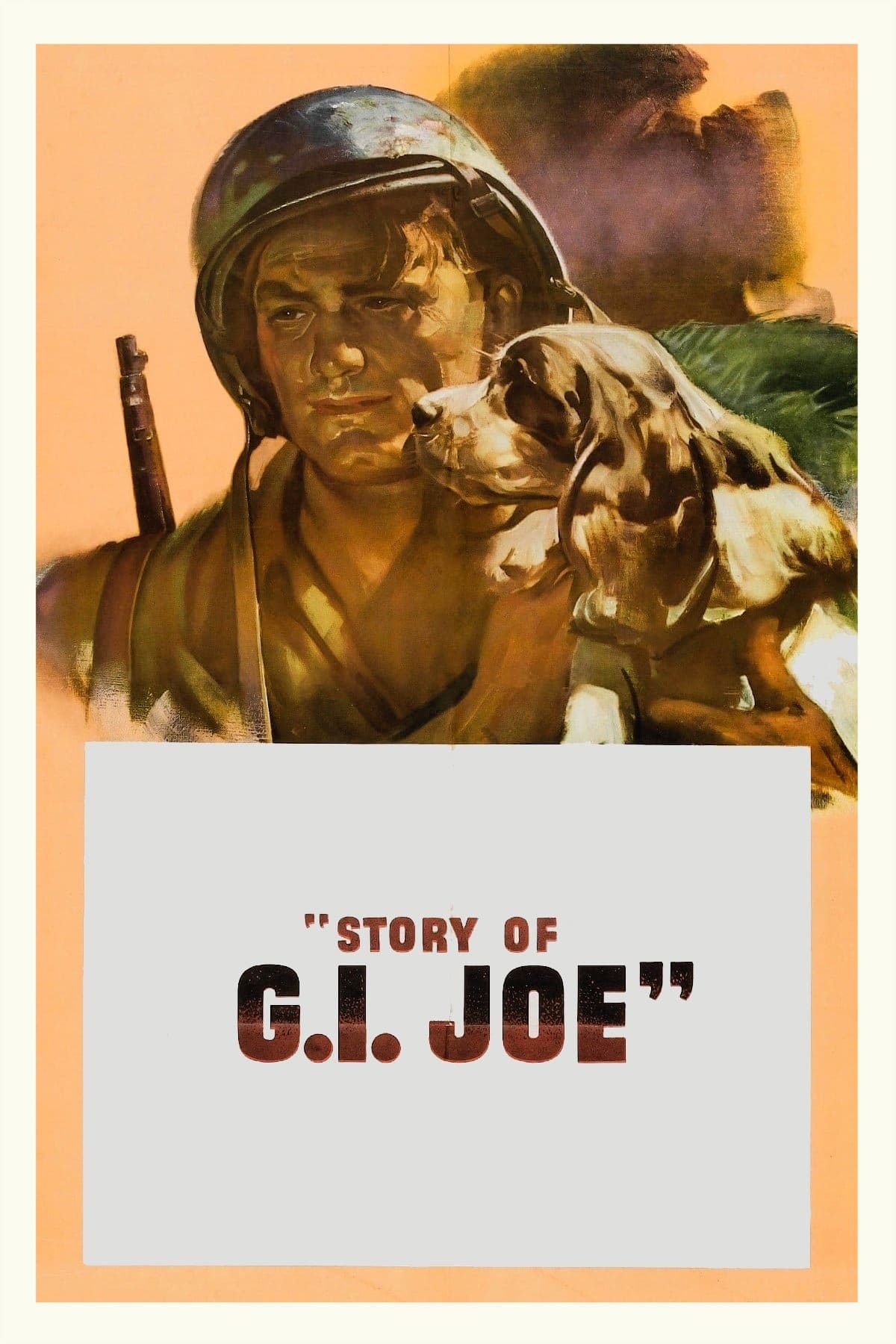
War correspondent Ernie Pyle joins Company C, 18th Infantry as this American army unit fights its way across North Africa in World War II. He comes to know the soldiers and finds much human interest material for his readers back in the States. Preserved by the Academy Film Archive in partnership with The Film Foundation in 2000.
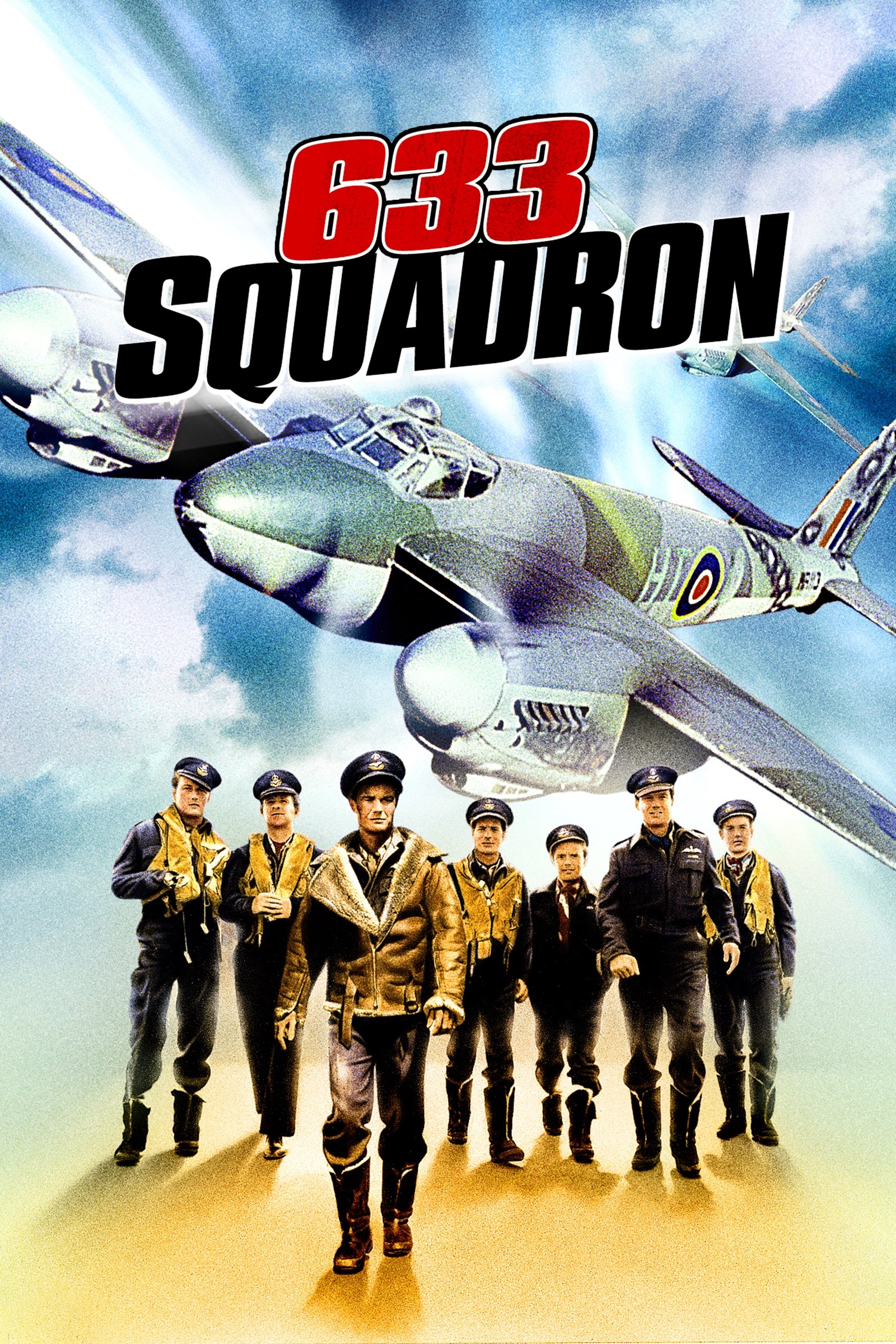
When Norwegian resistance leader Lieutenant Erik Bergman reports the location of a German V-2 rocket fuel plant, the Royal Air Force's 633 Squadron is assigned the mission to destroy it. The plant is in a seemingly-impregnable location beneath an overhanging cliff at the end of a long, narrow fjord lined with anti-aircraft guns. The only way to destroy the plant is by collapsing the cliff on top of it.
Mr. Roberts is a Navy officer who's yearning for battle but is stuck in the backwaters of World War II on a non-commissioned ship run by the bullying Captain Morton.
Georgia farm boy Will Stockdale is about to bust with pride. He’s been drafted. Will’s ready. But is Uncle Sam ready for Will?
Ilsa, a warden at a Nazi death camp that conducts experiments on prisoners, strives to prove that women can withstand more pain and suffering than men, and therefore should be allowed to fight on the frontlines.
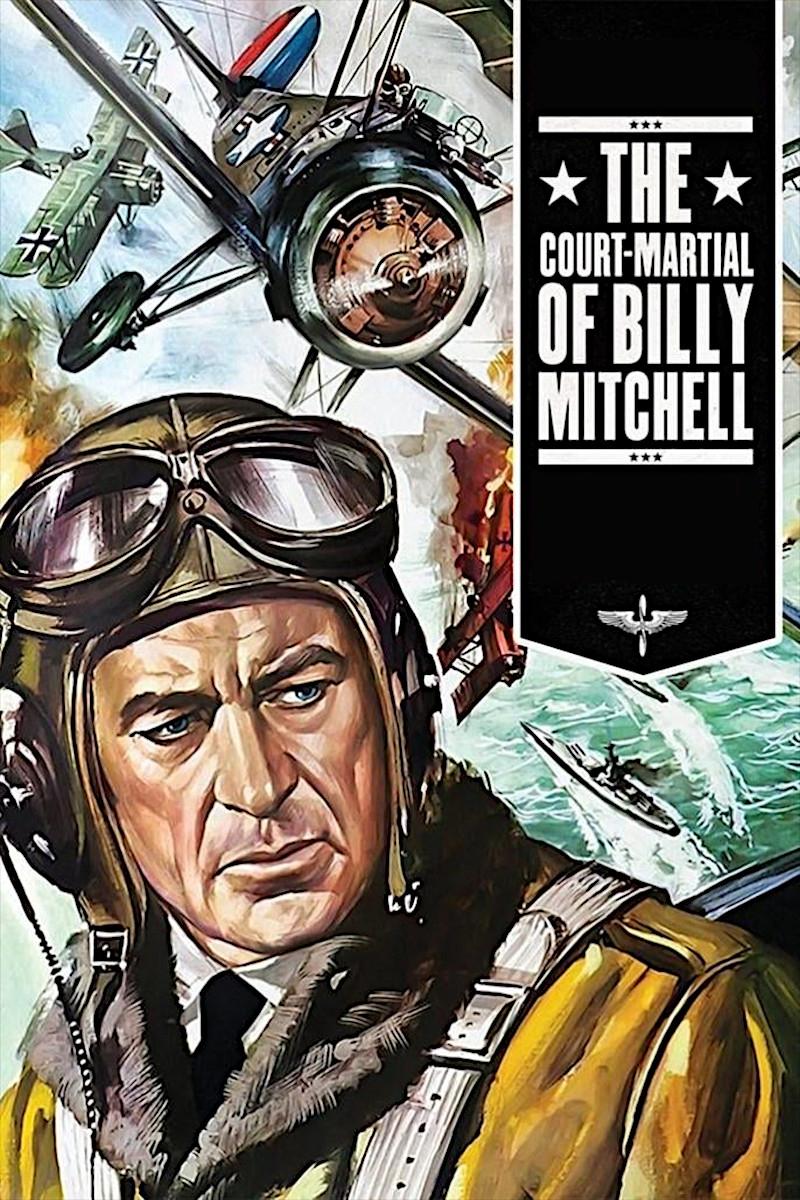
A dramatization of the American general and his court martial for publically complaining about High Command's dismissal and neglect of the aerial fighting forces.
During World War I, a group of British miners are recruited to tunnel underneath no man's land and set bombs from below the German front in hopes of breaking the deadly stalemate of the Battle of Messines.
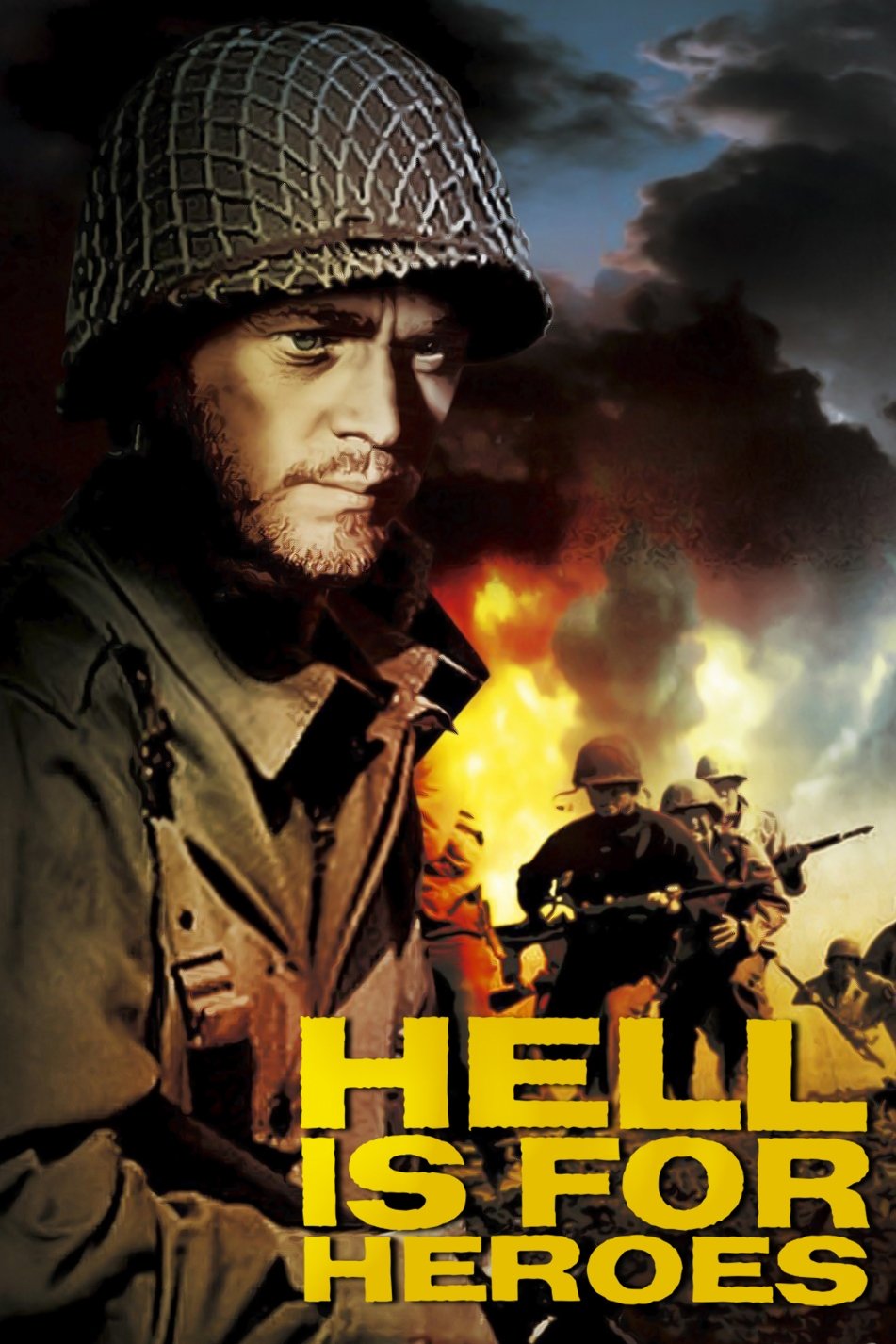
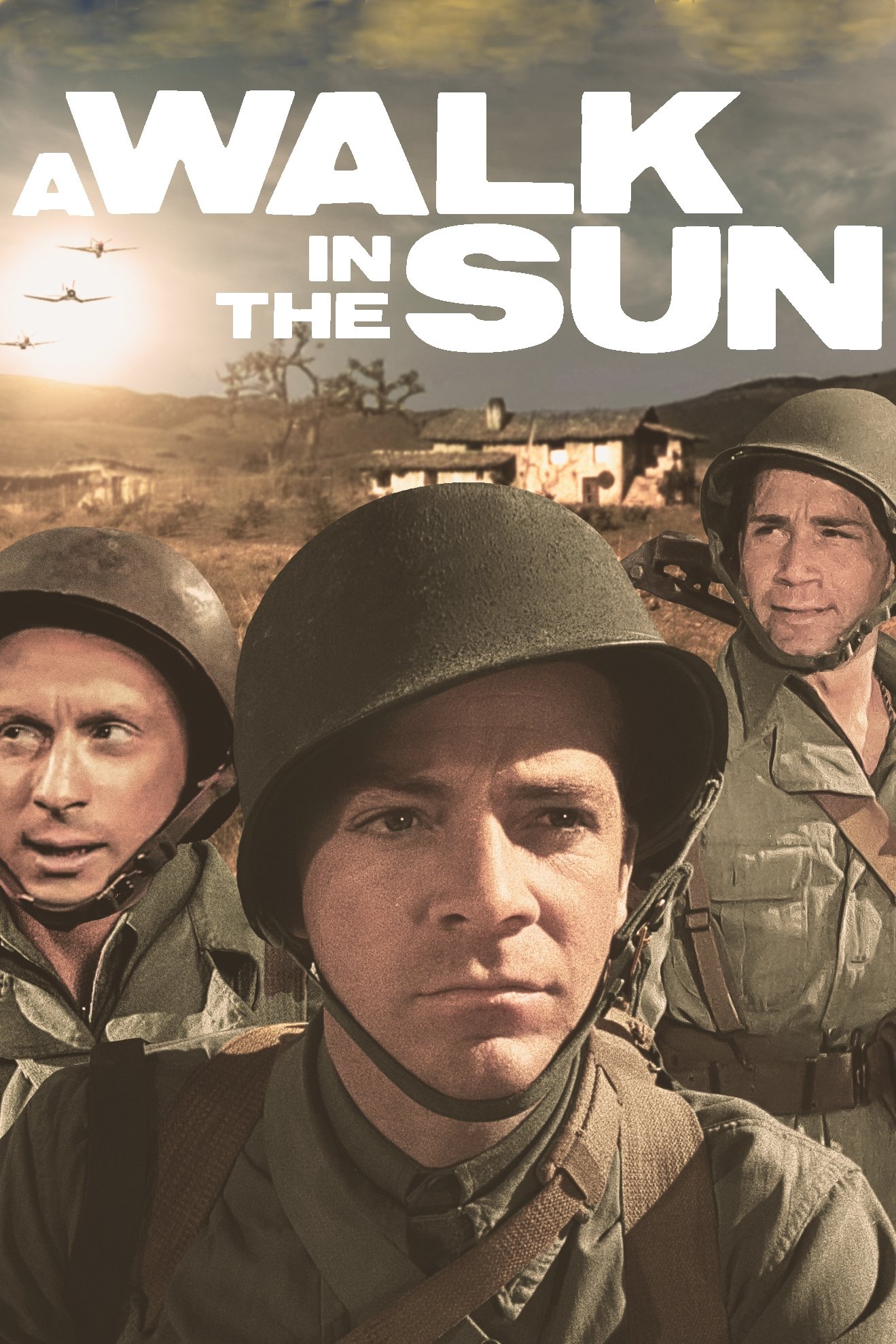
World War II drama where the action centers around a single maneuver by a squad of GIs in retaliation against the force of the German Siegfried line. Reese joins a group of weary GIs unexpectedly ordered back into the line when on their way to a rest area. While most of the men withdraw from their positions facing a German pillbox at the far side of a mine-field, half a dozen men are left to protect a wide front. By various ruses, they manage to convince the Germans that a large force is still holding the position. Then Reese leads two of the men in an unauthorized and unsuccessful attack on the pillbox, in which the other two are killed; and when the main platoon returns, he is threatened with court-martial. Rather that face the disgrace, and in an attempt to show he was right, he makes a one-man attack on the pillbox.
A young Catholic priest from Boston confronts bigotry, Nazism, and his own personal conflicts as he rises to the office of cardinal.
In the winter of 1944, the Allied Armies stand ready to invade Germany at the coming of a New Year. To prevent it, Hitler orders an all-out offensive to re-take French territory and capture the major port city of Antwerp.
In September 1942, the German Afrika Korps under Rommel have successfully pushed the Allies back into Egypt. A counter-attack is planned, for which the fuel dumps at Tobruk are a critical impediment. In order to aid the attack, a group of British commandos and German Jews make their way undercover through 800 miles of desert, to destroy the fuel dumps starving the Germans of fuel.
A commanding officer defends three scapegoats on trial for a failed offensive that occurred within the French Army in 1916.
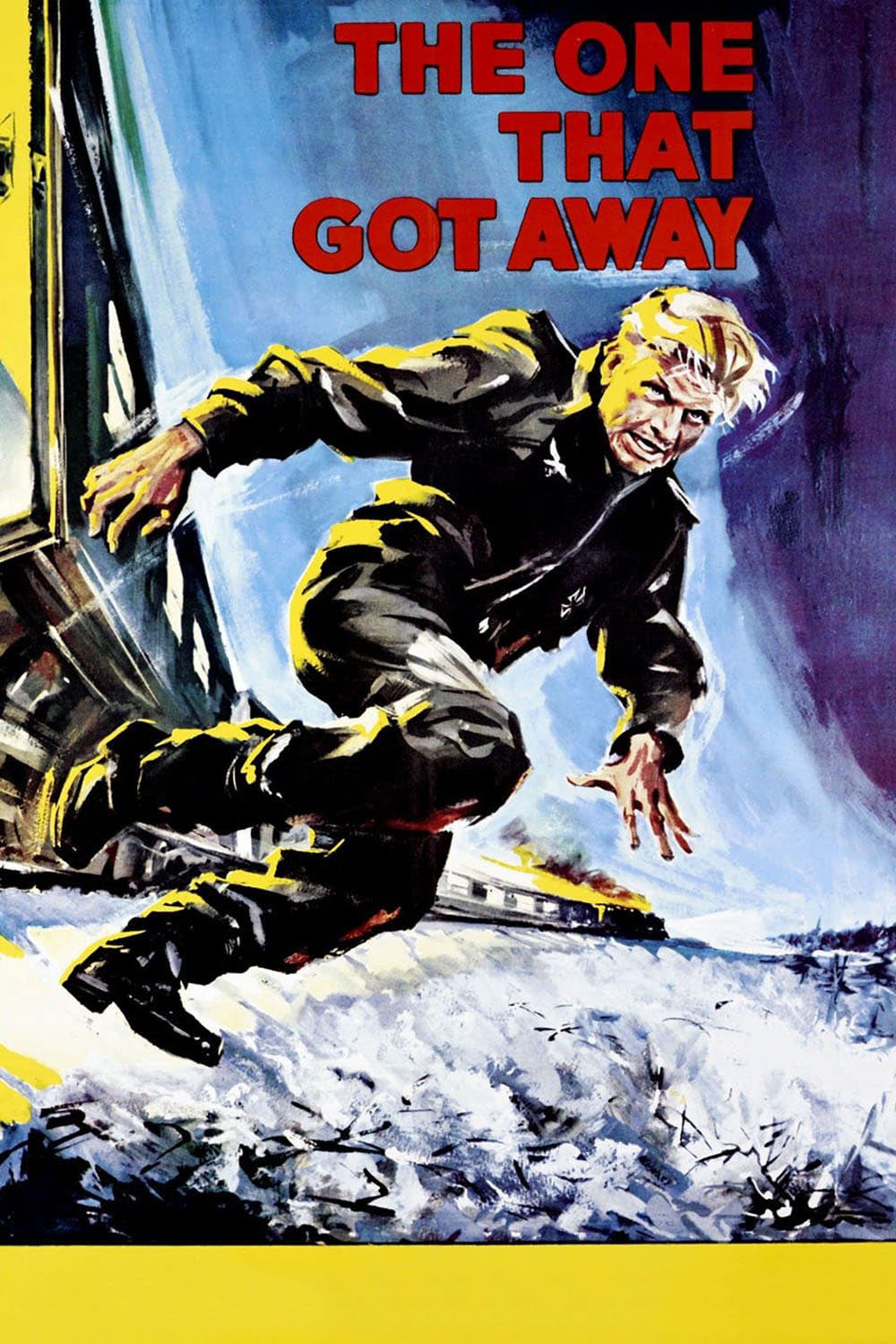
Based on the true story of Oberleutnant Franz von Werra, the only German prisoner of war captured in Britain to escape back to Germany during the Second World War.