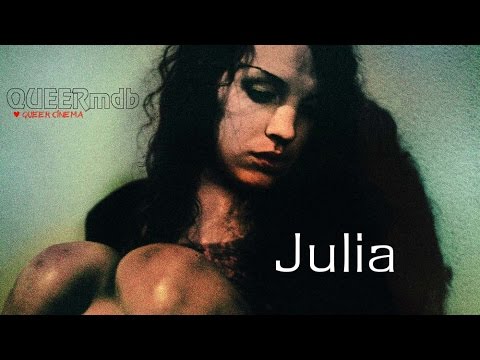
Julia is a young transgender woman who left her home country of Lithuania. Now living in Germany, she walks the streets of Berlin, working as a prostitute to survive. This documentary revisits Julia over a ten-year period of her life.
Social & External
Julia
A short documentary on the chateaux of the Loire in France was commissioned by the French Tourist Bureau.
Hungary was the site of serial murders on ethnic basis. Over the course of one year, the murderers killed and seriously injured Roma children and adults. The state charged 4 men with committing the crime with racial motivation. This historical trial started March, 2011, and ended August, 2013 in Budapest. The 167 days of hearings was only documented continuously by our crew. We had exclusive permission to use multiple cameras in the court-room. The film is a classical chamber-drama, taking place in a small, claustrophobic court room, in the middle of Europe. What will be the outcome of the marathon, 3 year-long trial?
Short biographical documentary about the life of Alfred Florstedt and his life as a progressive communist from the Weimar Republic to his death in 1985.
Finnish award-winning barista Kalle Freese travels to San Francisco with his girlfriend to start an instant coffee start-up with big goals. At stake are Kalle's health, relationship and the newly formed start-up.
Kelet is a twentysomething black trans woman, whose greatest dream is to be on the cover of Vogue magazine. For the Finnish-born and Manchester-raised Kelet, such models as Naomi Campbell and Iman served as role models giving her strength – and during the darkest times, kept her alive. After coming out, then 19-year-old Kelet was cut off from her family and she moved back to Finland on her own.
Fragmentary perspectives on Human Rights and transgender (trans*) People in Turkey. What remains at the place where a murder happened? What constitutes trans* life? How to cope with daily violence and hatred? We begin to search for traces. We follow the tracks of resistance and survival. We are collectors of the expelled. We gather fragments of trans* lives inspired by texts of Nazim Hikmet, Foucault, Benjamin and Zeki Müren. Trans*BUT is a documental research study driven by the question: “What keeps you going when all else falls away?”
The Kitades run a butcher shop in Kaizuka City outside Osaka, raising and slaughtering cattle to sell the meat in their store. The seventh generation of their family's business, they are descendants of the buraku people, a social minority held over from the caste system abolished in the 19th century that is still subject to discrimination. As the Kitades are forced to make the difficult decision to shut down their slaughterhouse, the question posed by the film is whether doing this will also result in the deconstruction of the prejudices imposed on them. Though primarily documenting the process of their work with meticulous detail, Aya Hanabusa also touches on the Kitades' participation in the buraku liberation movement. Hanabusa's heartfelt portrait expands from the story of an old-fashioned family business competing with corporate supermarkets, toward a subtle and sophisticated critique of social exclusion and the persistence of ancient prejudices.
Agnes may not seem like someone with much to laugh about. For one thing, she has albinism - a lack of pigment in the skin, hair and eyes - and her appearance has provoked prejudice from family, friends and strangers since she was born. But despite all odds, Agnes refuses to lead a life of sorrow. This fascinating and inspiring documentary also shares the stories of seven other people's individual experiences of living their lives with albinism in Kenya, a predominantly black society. While each person's story is unique, they all have one thing in common: they know what it is like to stand out uncomfortably from the crowd.
A funny walk through the life story of Billy Wilder (1906-2002), a cinematic genius; a portrait of a filmmaker who never was a boring man, a superb mind who had ten commandments, of which the first nine were: “Thou shalt not bore.”
In this heartwarming docudrama, Chilean immigrant Marilú Mallet strives to make a film about her experience of deep isolation. Her English-speaking husband, a prominent film director, criticizes her subjective approach to filmmaking; her young son, raised in Quebec, speaks only French. Interviews with Isabel Allende and other Chilean exiles reveal a deep bond in this powerful and resonant film about language and genre, exile and immigration.
Once described by the press as "one of the most controversial figures on the Australian art scene", avant-garde poet and playwright Christopher Barnett achieved a level of notoriety in the Melbourne underground theatre scene during the ‘70s and ‘80s, before self-exiling to France. He remains there today, running an experimental theatre lab working with the marginalised and underprivileged, applauded by the establishment (including former French Prime Minister Jean-Marc Ayrault) and faithful to his belief that art can change the world. These Heathen Dreams is an intimate portrait of Barnett's life and revolutionary philosophy. Combining archival footage dating back to the ‘60s with contemporary observational documentation and text from Barnett's writings, it is a poignant and inspiring study of the power of both art and political activism.
Stephen Cummings is one of Australia's most revered rock 'n' roll icons. Rising to fame as frontman of ‘70s legends The Sports, he has spent more than 30 years at the forefront of the local music scene, forging a reputation both as one of Australian rock's greatest lyrical storytellers and also one of its most incendiary critics. Based on his scathing tell-all memoir Will It Be Funny Tomorrow, Billy?, Don't Throw Stones tells Cummings' story in his own words – as well as the words of those he has so gleefully skewered. Featuring interviews with Michael Gudinski, Steve Kilbey, Joe Camilleri and many more, Don't Throw Stones is a revealing portrait of three decades of rock-world gossip, larger-than-life personalities and good, old-fashioned artistic beef.
In 1970, Melek Tez came to Berlin as a young worker from Turkey. A confident woman, she first countered racist resentments and remarks with irony and wit. Jokingly, she even referred to herself as a "Kümmeltürkin", a derogatory German term for Turkish migrants. Yet after fourteen humiliating years, her fighting spirit has given way to resignation: Melek Tez is returning to Turkey. Blending documentary, interviews and re-enacted scenes, director Jeanine Meerapfel chronicles Melek Tez' life experience.
A kaleidoscopic portrait of the English actress and singer Jane Birkin, heroine of pop culture.
This one hour documentary examines the life of the famed Sharp Shooter and Wild West performer, Annie Oakley from her birth in mid nineteenth century rural Pennsylvania to her death in 1926. Many myths are overturned and the program also features a little known trial when Annie Oakley had to sue The Hearst Newspaper chain all throughout the country for libel when they reported the activities of someone who was impersonating the famed sharpshooter and besmirching her reputation.
Pierre Mazeau has managed to unite three of his passions which seem to have nothing in common, at a very high level: mountaineering, jurisprudence and policy. The Everest mountaineer, rescued from the Freney Pillar, the passionate jurist, the former sports minister, privy counsellor, and president of the French Constitutional Court is a charismatic personality. This sensitive film portrait follows a line, which Pierre Mazeaud himself has quoted: “Alpinism belongs to those who provide themselves with means to reach their goals, to those who are fully committed to a goal, to those, who know the value of solidarity of men, and to those who are aware that true human existence can only be fulfilled by proceeding with a team of roped-partners.”
In 2024, Abdelkrim Baba Aissa, aged 75, engages in a series of filmed interviews with Algerian journalist Thoria Smati. They address the chronology of the rich and committed career of this self-taught Algerian actor, director, producer and screenwriter, who made his debut on Algerian television as an assistant director then at ONCIC as a director in the years 70.
Conflict between man and machine has been a science fiction staple for over a century. From 2001: A Space Odyssey to The Terminator the perceived threat posed by super-intelligent robots has been exploited by Hollywood for decades. But do advances in Artificial Intelligence mean we are now facing a future in which that threat could become a reality?
ŽIŽEK! trails the thinker as he crisscrosses the globe, racing from New York City lecture halls, through the streets of Buenos Aires, and even stopping at home in Ljubljana, Slovenia. All the while Žižek obsessively reveals the invisible workings of ideology through his unique blend of Lacanian psychoanalysis, Marxism, and critique of pop culture.
The tiny village in the far north of Sweden called Ensamheten (Solitude) has sixteen inhabitants. They all share an unusual passion - armwrestling.