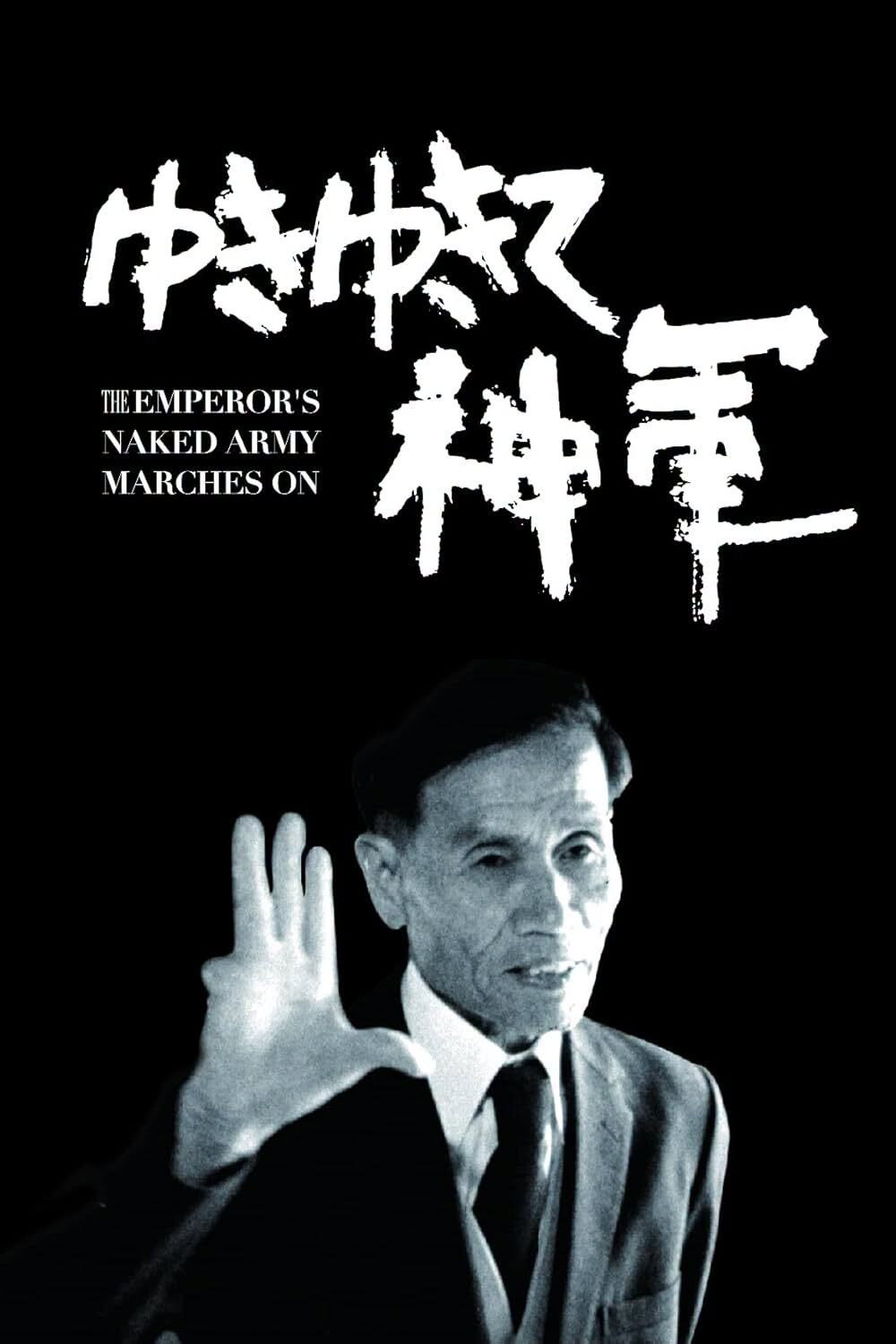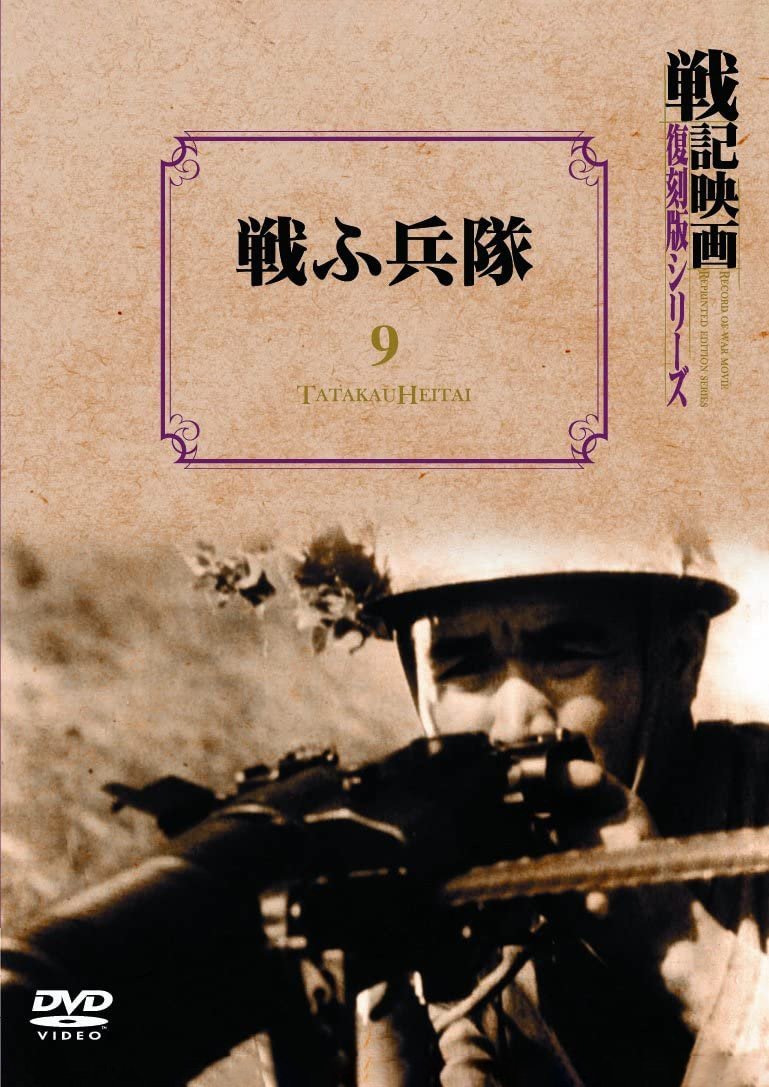
Documentary of an Imperial Japanese Army regiment's advance from Shanghai to Wuhan in 1938. This film was shelved before submission to Home Ministry censors amid rumors that Fumio was a Communist.
Social & External
Nathan Algren is an American hired to instruct the Japanese army in the ways of modern warfare, which finds him learning to respect the samurai and the honorable principles that rule them. Pressed to destroy the samurai's way of life in the name of modernization and open trade, Algren decides to become an ultimate warrior himself and to fight for their right to exist.
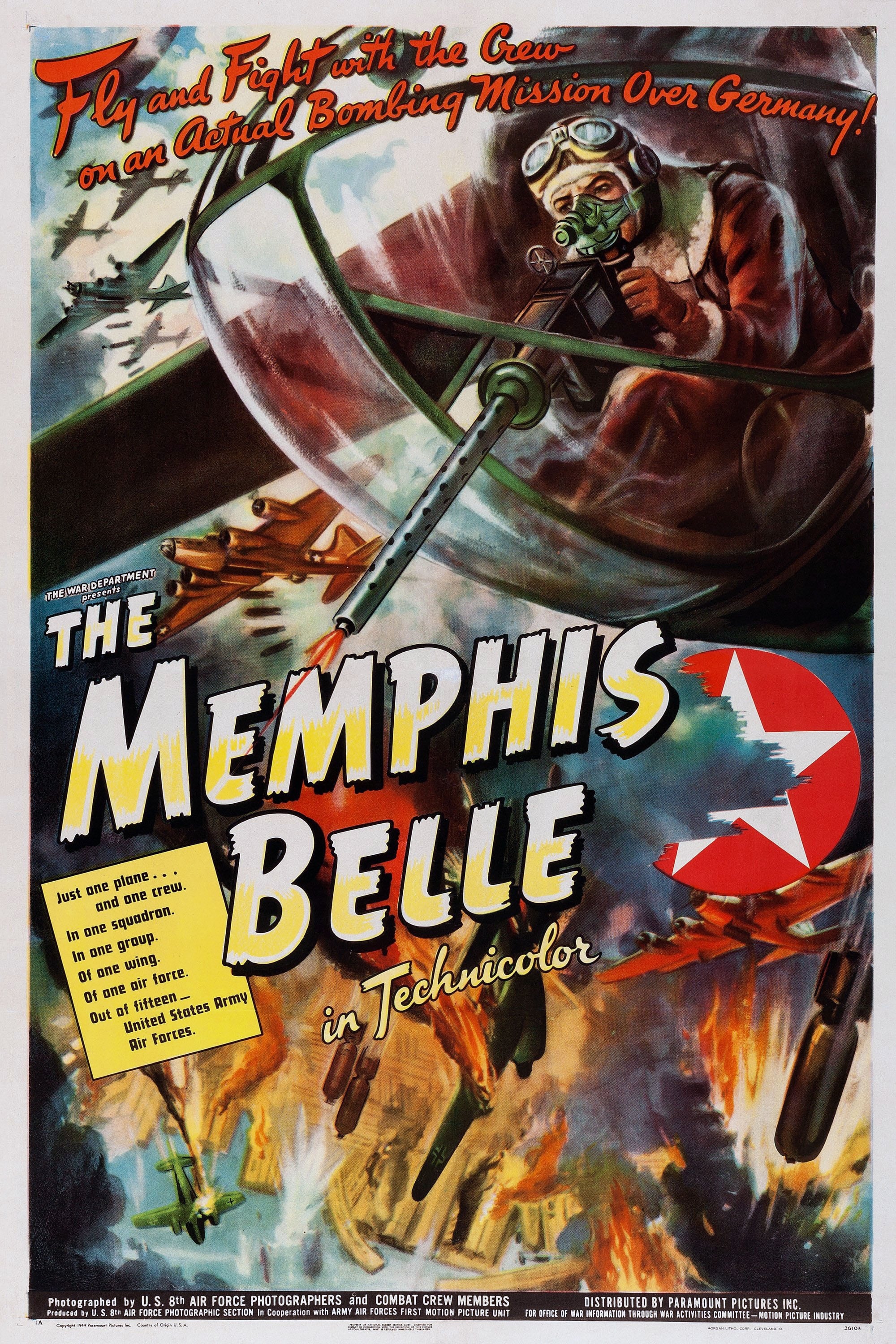
A pragmatic U.S. Marine observes the dehumanizing effects the U.S.-Vietnam War has on his fellow recruits from their brutal boot camp training to the bloody street fighting in Hue.
Filmmaker Alain Resnais documents the atrocities behind the walls of Hitler's concentration camps.
Follows the behind-the-scenes work of Studio Ghibli, focusing on the notable figures Hayao Miyazaki, Isao Takahata, and Toshio Suzuki.
A group of French soldiers, including the patrician Captain de Boeldieu and the working-class Lieutenant Maréchal, grapple with their own class differences after being captured and held in a World War I German prison camp. When the men are transferred to a high-security fortress, they must concoct a plan to escape beneath the watchful eye of aristocratic German officer von Rauffenstein, who has formed an unexpected bond with de Boeldieu.
Nazi propaganda film contrasting Germany in the days before Adolf Hitler became Chancellor with the Germany of "today" and how much better it is.
Nazi Third Reich propaganda film that used architecture as a statement about "racial accomplishment," and so called "racial superiority." Hitler claimed that between 1934 and 1940, the Nazi rule of Germany had produced architectural uniqueness, and this film was produced to shown to attempt to validate that. The opening montage gives a survey of earlier Gothic and Baroque structures in the country as an example of "architectural superiority" that the German race was said to be the sole inventor of; then moves on to deride the recent construction of the Bauhaus school (with a racially motivated score of Jazz music) and an example of German "architectural decay." Then proceeds to show off buildings constructed by the Nazi and an architectural revival, to "last 1000 years," Film also spends a great of time dwelling on massive and "busy" monuments that had been erected all over the county.
In December 2021, Hideki Kuriyama began devoting his days to one singular goal: hoisting the championship trophy at the 2023 World Baseball Classic. How did he mold his players into one of the best and strongest Samurai Japan teams in history? A close-up documentary that looks back on Samurai Japan's path to becoming world champions, along with valuable behind-the-scenes footage captured by the team's dedicated crew.
In the 1930s, Count Almásy is a Hungarian map maker employed by the Royal Geographical Society to chart the vast expanses of the Sahara Desert along with several other prominent explorers. As World War II unfolds, Almásy enters into a world of love, betrayal, and politics.
From growing potatoes in Green Park, London, to transforming rabbit crates into seed boxes – just a couple of the many ingenious ways of supporting the war effort which are covered in this film from the Ministry of Information.
This Traveltalk visit to Japan starts with a look at the country's cherry blossom trees, tulips, and ubiquitous gardens. We then see the proper manner for preparing a woman's hair and wearing a kimono.
A documentary on the dark and brutal side of the Samurai warrior clans featuring the life of peasant Masa who is pressganged into the ruthless world of the Samurai.
In 1864, the Spanish poet Gustavo Adolfo Bécquer (1836-70), suffering from health problems, retires to the monastery of Veruela. Far from the noise and worldly activity of the capital, he immerses himself in the landscape of the mysterious Moncayo mountain. There, he discovers a new world full of legends that converge in a small village located at the foot of the mountain: Trasmoz, the Village of the Witches, the only officially cursed village in Spain.
The true story of pianist Władysław Szpilman's experiences in Warsaw during the Nazi occupation. When the Jews of the city find themselves forced into a ghetto, Szpilman finds work playing in a café; and when his family is deported in 1942, he stays behind, works for a while as a laborer, and eventually goes into hiding in the ruins of the war-torn city.
Based on a real-life story, this drama focuses on a small group of Allied soldiers in Burma who are held captive by the Japanese. Capt. Ernest Gordon, Lt. Jim Reardon and Maj. Ian Campbell are among the military officers kept imprisoned and routinely beaten and deprived of food. While Campbell wants to rebel and attempt an escape, Gordon tries to take a more stoic approach, an attitude that proves to be surprisingly resonant.
A soldier is informed that enemies are headed towards his post, only moments before they arrive.
A Japanese food writer embarks on her quest to cook the perfect Sunday roast. Her gravy evokes a taste of home both gently Japanese and quintessentially English. Blending her passion for British food with the memories that accompany each dish, it is a labor of love with all the trimmings.

Yugoslav Partisan propaganda film about the liberation of Istria at the end of the World War II.
As World War II rages, the elite Sixth Ranger Battalion is given a mission of heroic proportions: push 30 miles behind enemy lines and liberate over 500 American prisoners of war.
It’s 1940, and the population of Japan is divided over its entry into World War II. Satoko, the wife of a fabric merchant, is devoted to her husband but is beginning to suspect he’s up to something. Soon she allows herself to be drawn into a game in which she enigmatically conceals her intentions.
Kaji, sent to the Japanese army labeled Red, witnesses cruelties in the army and revolts against the abusive treatment against a fellow recruit. He also sees his friend Shinjô defecting to the Russian border, and he ends in the front to fight a lost battle against the Russian tanks division.

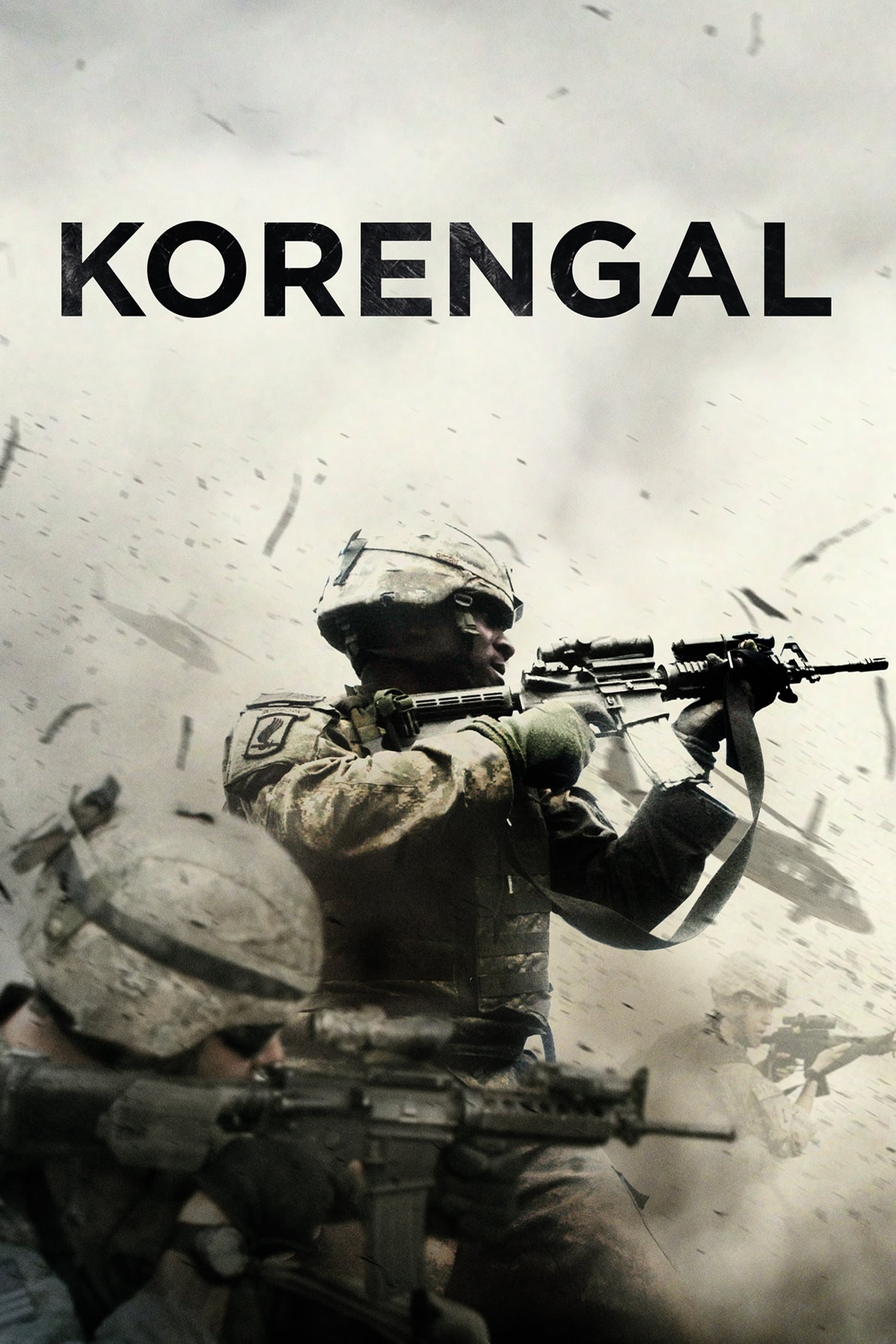
After the Japanese defeat to the Russians, Kaji leads the last remaining men through Manchuria. Intent on returning to his old life, he faces great odds in a variety of different harrowing circumstances as he and his men sneak behind enemy lines.
Akira Kurosawa's lauded feudal epic presents the tale of a petty thief who is recruited to impersonate Shingen, an aging warlord, in order to avoid attacks by competing clans. When Shingen dies, his generals reluctantly agree to have the impostor take over as the powerful ruler. He soon begins to appreciate life as Shingen, but his commitment to the role is tested when he must lead his troops into battle against the forces of a rival warlord.
After handing in a report on the treatment of Chinese colonial labor, Kaji is offered the post of labour chief at a large mining operation in Manchuria, which also grants him exemption from military service. He accepts and moves with his newlywed wife Michiko, but when he tries to put his ideas of more humane treatment into practice, he finds himself at odds with scheming officials, cruel foremen, and the military police.
A bitter battle is fought between Australian and Japanese soldiers along the Kokoda trail in New Guinea during World War II.
Jamie Graham, a privileged English boy, is living in Shanghai when the Japanese invade and force all foreigners into prison camps. Jamie is captured with an American sailor, who looks out for him while they are in the camp together. Even though he is separated from his parents and in a hostile environment, Jamie maintains his dignity and youthful spirit, providing a beacon of hope for the others held captive with him.
The background to and depiction of a watershed battle in Japanese history, at Sekigahara in 1600, when Tokugawa Ieyasu's Army of the East defeated the Army of the West of Ishida Mitsunari. The story includes the intrigues and shifting loyalties of the various retainers, family members, and samurai.
As the Japanese surrender at the end of WWII, Gen. Fellers is tasked with deciding if Emperor Hirohito will be hanged as a war criminal. Influencing his ruling is his quest to find Aya, an exchange student he met years earlier in the U.S.
There were five Marines and one Navy Corpsman photographed raising the U.S. flag on Mt. Suribachi by Joe Rosenthal on February 23, 1945. This is the story of three of the six surviving servicemen - John 'Doc' Bradley, Pvt. Rene Gagnon and Pvt. Ira Hayes - who fought in the battle to take Iwo Jima from the Japanese.
The story of the battle of Iwo Jima between the United States and Imperial Japan during World War II, as told from the perspective of the Japanese who fought it.
Brigadier General Frank D. Merrill leads the 3,000 American volunteers of his 5307th Composite Unit (Provisional), aka "Merrill's Marauders", behind Japanese lines across Burma to Myitkyina, pushing beyond their limits and fighting pitched battles at every strong-point.
To defend their kingdom against a sudden invasion, a mighty general returns to the battlefield alongside a war orphan, now grown up, who dreams of glory.
An American sniper and his spotter engage in a deadly cat-and-mouse game with an Iraqi sniper.
In the summer of 1941, the United States and Japan seem on the brink of war after constant embargos and failed diplomacy come to no end. "Tora! Tora! Tora!", named after the code words used by the lead Japanese pilot to indicate they had surprised the Americans, covers the days leading up to the attack on Pearl Harbor, which plunged America into the Second World War.
In 1868, after the Bakumatsu war ends, the ex-assassin Kenshin Himura traverses Japan with an inverted sword, to defend the needy without killing.
In the early days of World War II, a German U-boat is sunk in Canada's Hudson Bay. Hoping to evade capture, a small band of German soldiers led by commanding officer Lieutenant Hirth attempts to cross the border into the United States, which has not yet entered the war and is officially neutral. Along the way, the German soldiers encounter brave men such as a French-Canadian fur trapper, Johnnie, a leader of a Hutterite farming community, Peter, an author, Philip and a soldier, Andy Brock.
Diplomats, soldiers and other representatives of a dozen nations fend off the siege of the International Compound in Peking during the 1900 Boxer Rebellion. The disparate interests unite for survival despite competing factions, overwhelming odds, delayed relief and tacit support of the Boxers by the Empress of China and her generals.
Miracle at St. Anna chronicles the story of four American soldiers who are members of the all-black 92nd "Buffalo Soldier" Division stationed in Tuscany, Italy during World War II.