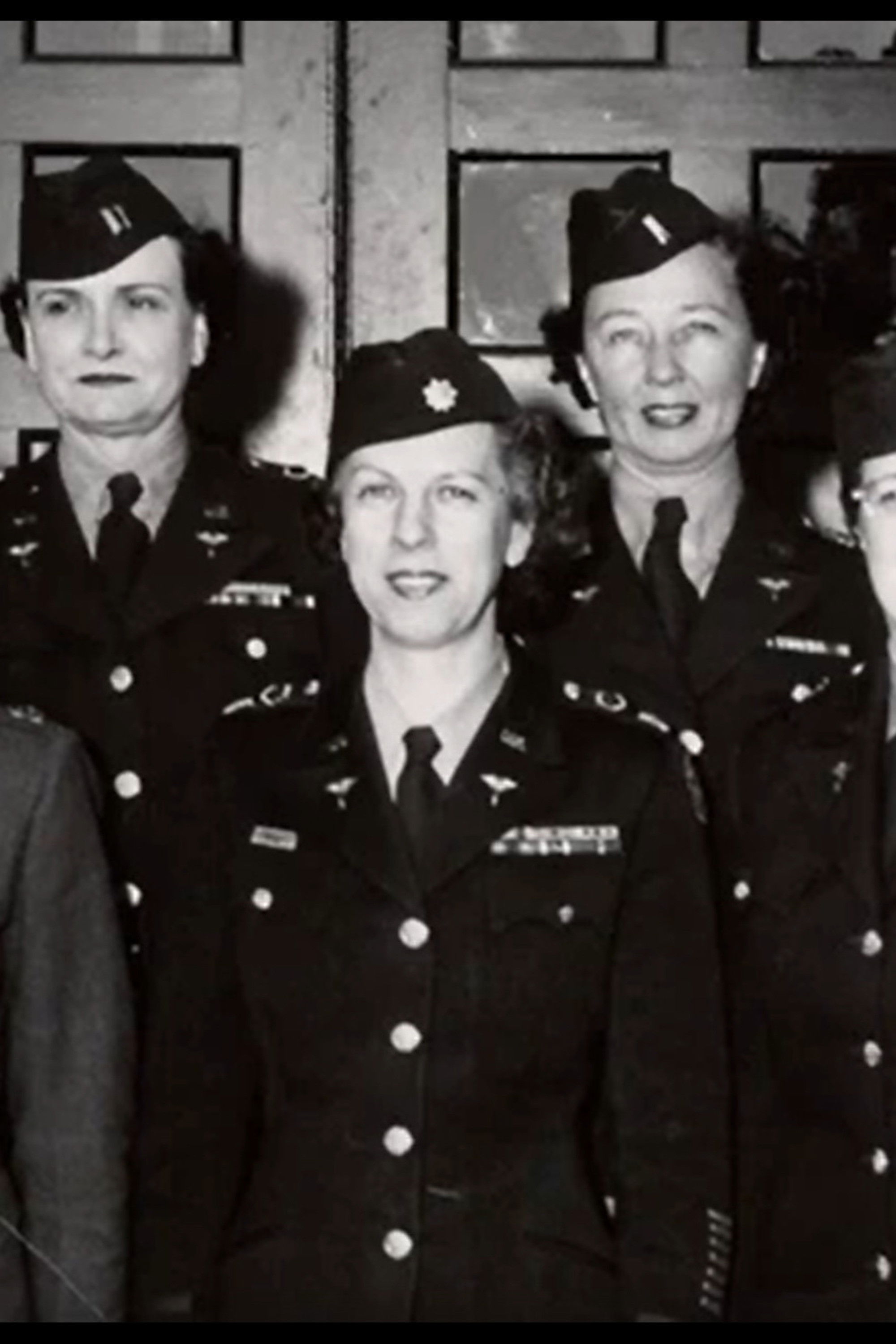
Hortense McKay teaches the lesson of caring even in the worst of times.
Social & External
Different factions in WWII-era Holland race to find a stash of Nazi gold.
The true, harrowing story of a young Jewish girl who, with her family and their friends, is forced into hiding in an attic in Nazi-occupied Amsterdam.
A couple sets up an African game preserve, only to have British and Italian armies fight over the waterholes.
The film is a search for Peter Gasparik's grandfather Stefan Truban, who was a resistance fighter and concealed the persecuted, defectors and Jews during World War II. Through private history we get to global history.
The epic tale of a class struggle in twentieth century Italy, as seen through the eyes of two childhood friends on opposing sides.
There were five Marines and one Navy Corpsman photographed raising the U.S. flag on Mt. Suribachi by Joe Rosenthal on February 23, 1945. This is the story of three of the six surviving servicemen - John 'Doc' Bradley, Pvt. Rene Gagnon and Pvt. Ira Hayes - who fought in the battle to take Iwo Jima from the Japanese.
A young Catholic priest from Boston confronts bigotry, Nazism, and his own personal conflicts as he rises to the office of cardinal.
Drama set in the Second World War, focused on Jean Moulin, hero, martyr and symbol of the French resistance and the patriotism during the dark years of Nazi occupation.
Two people, a Frenchman and a Jewish German woman, meet on a train while escaping the German army entering France.
In Montauban in 1944, Julien Dandieu is a surgeon in the local hospital. Frightened by the German army entering Montauban, he asks his friend Francois to drive his wife and his daughter in the back country village where Julien has an old castle. One week later, Julien decides to meet them for the week end, but the Germans are already occupying the village.
In 1911, a willful and determined man from peasant stock named Charles Saganne enlists in the military and is assigned to the Sahara Desert under the aristocratic Colonel Dubreuilh.
On the morning of June 6, 1944, thousands of ships reached the French coast of Normandy as part of an Allied operation to take back France from the Germans. For the next 85 days, U.S., British, and Canadian soldiers engaged in conflicts of unimaginable violence, conquering and liberating the region's cities, but at the cost of hundreds of thousands of lives. From the D-Day invasion to the final Nazi surrender in Argentan, this is the definitive story of the three-month Battle of Normandy as it's never been seen before.
James Holland moves beyond the D-Day beaches to reassess the brutal 77-day Battle for Normandy that followed the invasion. Challenging some of the many myths that have grown up around this vital campaign, Holland argues that we have become too comfortable in our understanding of events, developing shorthand to tell this famous story that does great injustice to those that saw action in France across the summer of 1944.
Das radikal Böse is a German-Austrian documentary that attempted to explore psychological processes and individual decision latitude "normal young men" in the German Einsatzgruppen of the Security Police and SD, which in 1941 during the Second World War as part of the Holocaust two million Jewish civilians shot dead in Eastern Europe.
A dying man in his forties recalls his childhood, his mother, the war and personal moments that tell of and juxtapose pivotal moments in Soviet history with daily life.
The incredible story of Bruno Lüdke (1908-44), the alleged worst mass murderer in German criminal history; or actually, a story of forged files and fake news that takes place during the darkest years of the Third Reich, when the principles of criminal justice, subjected to the yoke of a totalitarian system that is beginning to collapse, mean absolutely nothing.
Part of the Canada Carries On series, this short film portrays the First Division of the Canadian Active Service Force in Aldershot, England. Using an intimate letter home as a narrative device, this film reveals how the troops were received, what their living conditions were like, how they would get along with their English allies and how they spent their leisure time.
In 1943, six disparate souls are sent on a secret government mission to produce pornographic propaganda films for the boys on the front, each one struggling under the weight of their own conscience in this war-torn world, and it's not about to get any easier.
When Allied forces liberated the Nazi concentration camps in 1944-45, their terrible discoveries were recorded by army and newsreel cameramen, revealing for the first time the full horror of what had happened. Making use of British, Soviet and American footage, the Ministry of Information’s Sidney Bernstein (later founder of Granada Television) aimed to create a documentary that would provide lasting, undeniable evidence of the Nazis’ unspeakable crimes. He commissioned a wealth of British talent, including editor Stewart McAllister, writer and future cabinet minister Richard Crossman – and, as treatment advisor, his friend Alfred Hitchcock. Yet, despite initial support from the British and US Governments, the film was shelved, and only now, 70 years on, has it been restored and completed by Imperial War Museums under its original title "German Concentration Camps Factual Survey".
Cameramen and women discuss the craft and art of cinematography and of the "DP" (the director of photography), illustrating their points with clips from 100 films, from Birth of a Nation to Do the Right Thing. Themes: the DP tells people where to look; changes in movies (the arrival of sound, color, and wide screens) required creative responses from DPs; and, these artisans constantly invent new equipment and try new things, with wonderful results. The narration takes us through the identifiable studio styles of the 30s, the emergence of noir, the New York look, and the impact of Europeans. Citizen Kane, The Conformist, and Gordon Willis get special attention.
Prelude to War was the first film of Frank Capra's Why We Fight propaganda film series, commissioned by the Pentagon and George C. Marshall. It was made to convince American troops of the necessity of combating the Axis Powers during World War II. This film examines the differences between democratic and fascist states.
WWII from Space delivers World War II in a way you've never experienced it before. This HISTORY special uses an all-seeing CGI eye that offers a satellite view of the conflict, allowing you to experience it in a way that puts key events and tipping points in a global perspective. By re-creating groundbreaking moments that could never have been captured on camera, and by illustrating the importance of simultaneity and the hidden effects of crucial incidents, HISTORY presents the war's monumental moments in a never-before-seen context. And with new information brought to the forefront, you'll better understand how a nation ranked 19th in the world's militaries in 1939 emerged six years later as the planet's only atomic superpower.
This documentary movie is about the battle of San Pietro, a small village in Italy. Over 1,100 US soldiers were killed while trying to take this location, that blocked the way for the Allied forces from the Germans. Preserved by the Academy Film Archive in 2005.
Diaries, audiotapes, videotapes and testimonials from friends and colleagues offer insight into the life and career of Gilda Radner -- the beloved comic and actress who became an icon on Saturday Night Live.
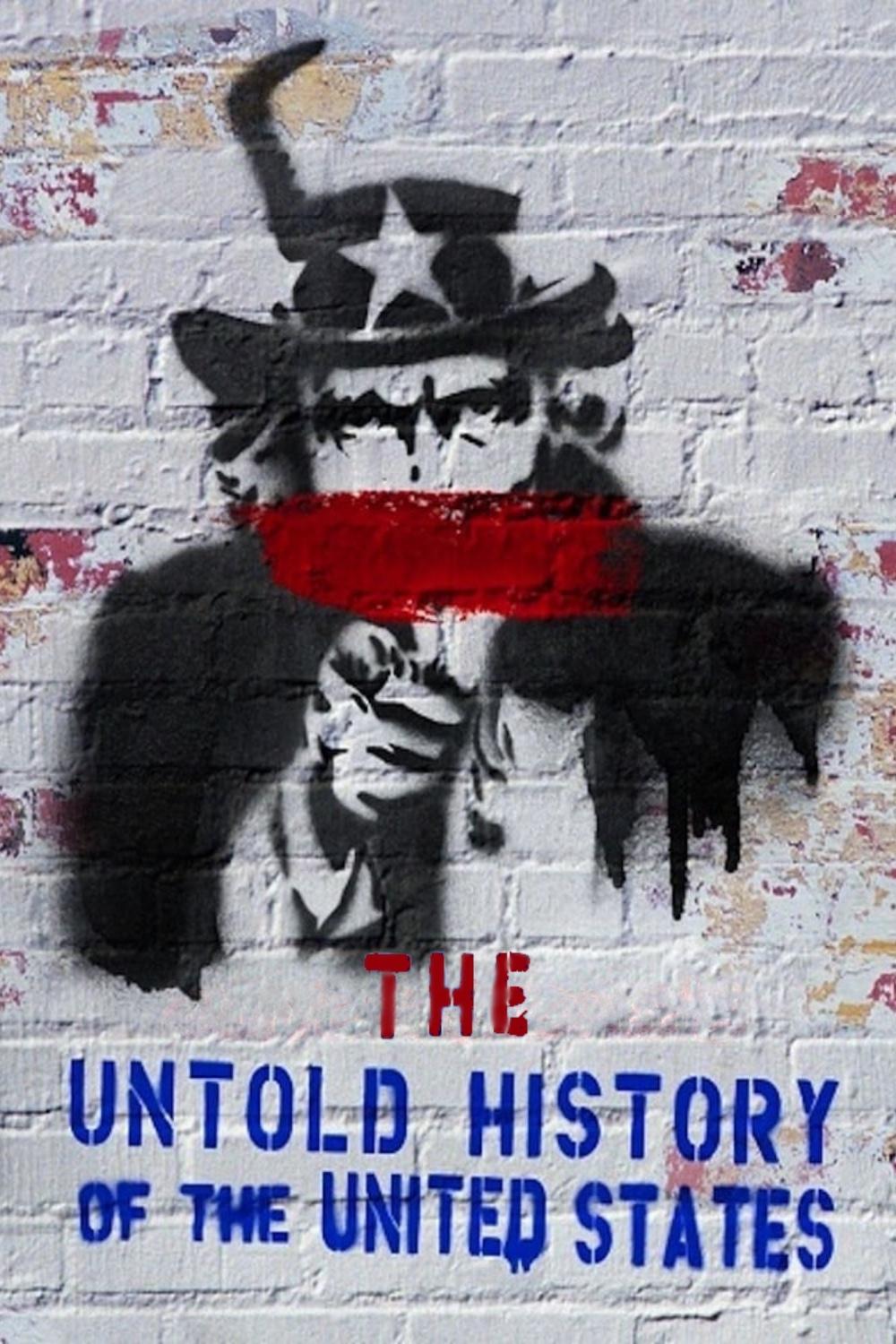
Oliver Stone charts the history of the United States from the Second World War to the present.
Documentary about the art of film editing. Clips are shown from many groundbreaking films with innovative editing styles.
The extraordinary story of how Hollywood changed World War II – and how World War II changed Hollywood, through the interwoven experiences of five legendary filmmakers who went to war to serve their country and bring the truth to the American people: John Ford, William Wyler, John Huston, Frank Capra, and George Stevens. Based on Mark Harris’ best-selling book, “Five Came Back: A Story of Hollywood and the Second World War.”
Set both in Latin America and the United States, the film explores the historic and current relationship of Washington with countries such as Venezuela, Bolivia and Chile. Pilger says that the film "...tells a universal story... analysing and revealing, through vivid testimony, the story of great power behind its venerable myths. It allows us to understand the true nature of the so-called "war on terror". According to Pilger, the film’s message is that the greed and power of empire is not invincible and that people power is always the "seed beneath the snow".
The history of cinematic sound, told by legendary sound designers and visionary filmmakers.
When Sgt. First Class Brian Eisch is critically wounded in Afghanistan, it sets him and his sons on a journey of love, loss, redemption and legacy.
From its distinctive neighborhoods to its architectural homes, Los Angeles has been the backdrop to countless movies. In this dazzling work, Andersen takes viewers on a whirlwind tour through the metropolis' real and cinematic history, investigating the myriad stories and legends that have come to define it, and meticulously, judiciously revealing the real city that lives beneath.
Produced and presented as evidence at the Nuremberg war crimes trial of Hermann Göring and twenty other Nazi leaders, this film consists primarily of dead and surviving prisoners and of facilities used to kill and torture during the World War II.
A subjective documentary that explores various theories about hidden meanings in Stanley Kubrick's classic film The Shining. Five very different points of view are illuminated through voice over, film clips, animation and dramatic reenactments.
A behind-the-scenes documentary about the Clinton for President campaign, focusing on the adventures of spin doctors James Carville and George Stephanopoulos.
A documentary about the legendary series of nationally televised debates in 1968 between two great public intellectuals, the liberal Gore Vidal and the conservative William F. Buckley Jr. Intended as commentary on the issues of their day, these vitriolic and explosive encounters came to define the modern era of public discourse in the media, marking the big bang moment of our contemporary media landscape when spectacle trumped content and argument replaced substance. Best of Enemies delves into the entangled biographies of these two great thinkers, and luxuriates in the language and the theater of their debates, begging the question, "What has television done to the way we discuss politics in our democracy today?"
The life and career of one of comedy's most inimitable modern voices, Mr. Gilbert Gottfried.
A documentary highlighting the Soviet Union's legendary and enigmatic hockey training culture and world-dominating team through the eyes of the team's Captain Slava Fetisov, following his shift from hockey star and celebrated national hero to political enemy.
An in-depth investigation into the private world of the American writer J. D. Salinger (1919-2010), who lived most of his life behind the impenetrable wall of a self-imposed seclusion: how his dramatic experiences during World War II influenced his life and work, his relationships with very young women, his obsessive writing methods, his many literary secrets.