Social & External
Self (archive footage)
Let's look back at the 18th presidential vote. The 13,500 ballot boxes were taken to 251 ballot count locations and were sorted by 1,300 automatic ballot openers. The chairman announced the sorted data and soon it was announced to the public. But something strange happened. The 251 ballot count locations found 'a number' that have the same pattern. Scientists, mathematicians, statistician and hackers from all over the country start looking into the secret of 'this number'. The result is tremendously shocking...
A Japanese-American director digs deep into the controversial 'comfort women' issue to settle the debate on whether the women were paid prostitutes or sex slaves, and reveals the motivations and intentions of the main actors pushing to revise history in Japan.
The story of the Cuban Missile Crisis in 1962—the nuclear standoff with the USSR sparked by the discovery by the Americans of missile bases established on the Soviet-allied island of Cuba.
Italy, founder of fascism, still tolerates its sympathies. Is its government allowing the past to live on? With the far-right set to gain in European elections, is the extreme becoming mainstream?
Fabiana, Carlo, Claudio and Vincenzo… I met them in 1982 in Mercatale, their village in Tuscany, near Florence. They were aged between 25 and 45 and were cheerful militants in the Italian Communist Party, that strange party which has made its mark on history and which was both a school and a family for them. I have filmed in Mercatale every two or three years for over 20 years (1982/2004). The fi lm takes the “long view” of their political and personal development against the backdrop of village life. Stories with both human and political interest spanning over a quarter of a century with relevance for present day issues: what has become of the plans to change the world in Berlusconi’s Italy? From a more global perspective: what else can politics do? When the time comes to take stock the paths of their rich and varied personal lives cross once more with all their doubts and allegiances.
The detailed timeline of events surrounding the deadly siege of the U.S. Capitol and violence in Washington, D.C. on January 6, 2021.
49 Up is the seventh film in a series of landmark documentaries that began 42 years ago when UK-based Granada's World in Action team, inspired by the Jesuit maxim "Give me the child until he is seven and I will give you the man," interviewed a diverse group of seven-year-old children from all over England, asking them about their lives and their dreams for the future. Michael Apted, a researcher for the original film, has returned to interview the "children" every seven years since, at ages 14, 21, 28, 35, 42 and now again at age 49.In this latest chapter, more life-changing decisions are revealed, more shocking announcements made and more of the original group take part than ever before, speaking out on a variety of subjects including love, marriage, career, class and prejudice.
This is a documentary about an honest search for the truth about the Federal Reserve Bank and the legality of the Internal Revenue System. Through extensive interviews with recognised experts and authority, the director shows an astonishing revelation of how the Federal Government and the Bankers have fooled the American public by taking thier wages and putting it in the pockets of the super-rich.
Zeitgeist: Addendum premiered at the 5th Annual Artivist Film Festival. Director Peter Joseph stated: "The failure of our world to resolve the issues of war, poverty, and corruption, rests within a gross ignorance about what guides human behavior to begin with. It address the true source of the instability in our society, while offering the only fundamental, long-term solution."
Paris to Pittsburgh brings to life the impassioned efforts of individuals who are battling the most severe threats of climate change in their own backyards. Set against the national debate over the United States' energy future - and the Trump administration's explosive decision to exit the Paris Climate Agreement - the film captures what's at stake for communities around the country and the inspiring ways Americans are responding.
This timely, bold set of one-on-one interviews presents two of the most venerable figures from the American Left—renowned historian Howard Zinn and linguist and philosopher Noam Chomsky—each reflecting upon his own life and political beliefs. At the age of 88, Howard Zinn reflects upon the Civil Rights and anti–Vietnam War movements, political empires, history, art, activism, and his political stance. Setting forth his personal views, Noam Chomsky explains the evolution of his libertarian socialist ideals, his vision for a future postcapitalist society, the Enlightenment, the state and empire, and the future of the planet.
The Final Days concerns itself with the final months of the Richard Nixon presidency.
Donghak Rebellion (Donghak Peasant Movement) takes place in Hongjuseong (now Hongseong). Manhae, a boy who participates in the Donghak Rebellion as a 16-year-old, steals 1,000 nyang and sends it to military funds. At the age of 55, at Simujang in Seongbuk-dong, Manhae remarried while staying in a boarding house. While making a living by sewing his wife's wages, Manhae continues to resist Japanese imperialism by participating in the movement against the name change of the Chang clan and against the dispatch of Korean student soldiers along with writing. He takes over the military funds from Madam Baekhwa of Myeongwol in Yongjing. Lee Hwa-yeong hands over the military funds with Man-hae. In 1944, Manhae passed away at the age of 66. As the poem "Your Silence" flows, Manhae's achievements are introduced as highlights, and his subtitles flow.
The Grand Canal project was one of the key pledges of the former President Lee. He first said that he was carrying out a project to save the four rivers but it was a lie. He eventually proceeded the project which was a hotbed of all kinds of irregularities. After ten years, now the river is dying. Some people collaborated to the past regime, and some resisted it. On whom will we stand?
Filmmakers Laura Mulvey and Mark Lewis use rare archival footage and interviews with artists, art historians, and museum directors to examine the fate of Soviet-era monuments during successive political regimes, from the Russian Revolution through the collapse of communism. Mulvey and Lewis highlight both the social relevance of these relics and the cyclical nature of history. Broadcast on Channel Four as part of the 'Global Image' series (1992-1994).
We came to the end of the road. We told you the story of the establishment of a democracy throughout 9 episodes... We witnessed the collapse of a one-party regime. We witnessed the disappearance of the national chiefdom. Together we experienced the holding of the first free general elections and the raising of democracy in pain. And finally, we told you about the birth, rise and fall of a new power. Where we ended up was a military intervention. Whatever the reasons, the storm of revolution had blown once. Now the task of the officers who seized power on the morning of May 27 was to contain that storm. But it didn't. After a while, the storm started to drag the revolutionaries in front of it. The historical scenario was repeated. The Revolution ate some of their children. The revolution was now speaking its own language...
The spring of 1950 was also the spring of the multi-party regime in Turkey. A new 10 years, a new regime, a new government. The first test of democracy was beginning. The National Chief of the single-party period had returned to his Pink Mansion. The address of the opposition was clear now. When it comes to power... Power was shared by a tripartite trivet from the first day: DP Group in the Parliament. Celal Bayar in the Mansion and Adnan Menderes in the Prime Ministry..
Shut Up and Sing is a documentary about the country band from Texas called the Dixie Chicks and how one tiny comment against President Bush dropped their number one hit off the charts and caused fans to hate them, destroy their CD’s, and protest at their concerts. A film about freedom of speech gone out of control and the three girls lives that were forever changed by a small anti-Bush comment
Life in the isolated town of Charrúa is dominated by the presence of a large power plant that distributes energy to most of Chile. A little boy hunts rabbits, residents demand better electrical coverage at a town meeting, a woman waters the plants outside her house and a local radio station relays the day's happenings. At night, wildlife is captured on camera, along with strange bursts of light that momentarily illuminate a countryside criss-crossed with pylons and cables. And ever present is the insidious hum of electricity.
The Netherlands, a bastion of capitalism, has struggled with unprecedented housing crises since 2018. This brings a rise of different ideologies that challenge the dominant status quo. In the city of Nijmegen, an anarchist collective JAN10 battles the ongoing housing crisis by squatting empty buildings, which poses a threat to the established capitalist interests.
Over a 4 day period, a fierce battle takes place between Korean independence militias and imperialist Japanese forces in Manchuria, China. The militia includes a master swordsman and an expert marksman.
Two best friends, So-yool and Yeon-hee, dream of becoming the top artists in Seoul together. But their friendship doesn't last long as Yoon-woo, So-yool's first love and songwriter, falls in love with Yeon-hee and her voice. So-yool's feeling of jealousy and inferiority towards Yeon-hee grows by the day, and she eventually makes a drastic decision to bring the two lovers down.
In the Joseon Dynasty, two friends who grew up together — one the master and one the servant — reunite post-war as enemies on opposing sides.
Song Woo-seok is a lawyer with no clients. When his friend's son is falsely accused of a crime and tortured, he takes up the case and the course of his life changes for good.
In 1909, several years after Korea is forced into becoming a Japanese colony, freedom fighters plot the daring assassination of Japan's prime minister during their quest for independence.
After the assassination of President Park, martial law has been declared. A coup d'état bursts out by Defense Security Commander Chun Doo-gwang and a private band of officers following him. Capital Defense Commander Lee Tae-shin, an obstinate soldier who believes the military should not take political actions, fights against Chun Doo-gwang to stop him. The conflict between the two grows while military leaders are holding their decision and Defense Minister is gone. In the midst of chaos, the spring of Seoul that everyone longed for heads to unexpected direction.
Set in the late 1920s, The Age of Shadows follows the cat-and-mouse game that unfolds between a group of resistance fighters trying to bring in explosives from Shanghai to destroy key Japanese facilities in Seoul, and Japanese agents trying to stop them.
The Imjin War reaches its seventh year in December of 1598. Admiral Yi Sun-shin learns that the Wa invaders in Joseon are preparing for a swift withdrawal following the deathbed orders of their leader Toyotomi Hideyoshi. Determined to destroy the enemy once and for all, Admiral Yi leads an allied fleet of Joseon and Ming ships to mount a blockade and annihilate the Wa army. However, once Ming commander Chen Lin is bribed into lifting the blockade, Wa lord Shimazu Yoshihiro and his Satsuma army sail to the Wa army's rescue at Noryang Strait.
Under the oppressive Japanese colonial rule, Deok-hye, the last Princess of the declining Joseon Dynasty, is forced to move to Japan. She spends her days missing home, while struggling to maintain dignity as a princess. After a series of failed tries, Deok-hye makes her final attempt to return home with help of her childhood sweetheart, Jang-han.
Mu Myeong is a Joseon dynasty headhunter who meets and falls in love with lady Ja Yeong who will become the future Empress Myseongseong. A few years later, Ja Yeong enters the royal palace to marry King Gojong. Mu Myeong still having feelings for Ja Yeong and in an attempt to get closer to her becomes her personal body guard.
Oliver Stone charts the history of the United States from the Second World War to the present.
After the death of their father, two siblings are raised by their father's best friend. However, when one gets kidnapped just before her wedding, the other rises against the Manchus.
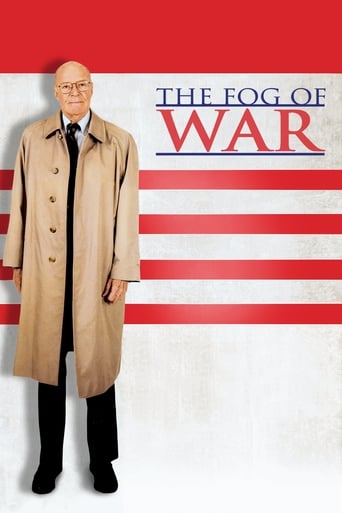
Using archival footage, cabinet conversation recordings, and an interview of the 85-year-old Robert McNamara, The Fog of War depicts his life, from working as a WWII whiz-kid military officer, to being the Ford Motor Company's president, to managing the Vietnam War as defense secretary for presidents Kennedy and Johnson.
During the invasion of Normandy the photograph of a slim Korean man in German uniform was found. It transpired that the man had served as a soldier in the Japanese, Russian and German armies. His incredible story inspired director Kang Je-Gyu to create this epic war drama.
An exceptionally talented face reader becomes entangled in a bloody power struggle between a child king and his uncle who plans to usurp the throne.
The citizens of Gwangju lead a relatively peaceful life, until one day the military takes over the city, accusing the residents of conspiracy and claiming that they are communist sympathisers preparing a revolution against the current government. Seeing as the soldiers beat defenceless people, mainly students, to death, the citizens are in for retaliation and form a militia.
On October 26, 1979, President Park Chung-hee, who had ruled South Korea since 1961, was assassinated by his director of intelligence. The film depicts the events of that night.
Diplomats from the North and South Korean embassies in Somalia attempt a daring joint escape from Mogadishu when the outbreak of civil war leaves them stranded.
A courageous pastor uses his underground network to rescue and aid North Korean families as they risk their lives to embrace freedom.
In 1947, Lord Mountbatten assumes the post of last Viceroy, charged with handing India back to its people, living upstairs at the house which was the home of British rulers, whilst 500 Hindu, Muslim and Sikh servants lived downstairs.