Social & External
A story of the LGBT struggle from the 1960s to the present, after the Stonewall riot sparked the militant action in New York that was to spread around the world. From San Francisco to Paris via Amsterdam, between the first Gay Pride, the election of Harvey Milk, the French "decriminalization", the AIDS epidemic and the first homosexual marriages, these few decades of struggle are embodied through numerous testimonies of actors and actresses of this revolution rainbow.
Women are sexually insulted and threatened by men every day. Experts around the world are registering an anti-feminist backlash that seems to be on the verge of becoming socially acceptable. Particularly affected: women in publicly visible positions – such as politicians, actresses or entrepreneurs. Who is behind the attacks and what are the motives?
When the Chinese Communist Party backtracks on its promise of autonomy to Hong Kong, teenager Joshua Wong decides to save his city. Rallying thousands of kids to skip school and occupy the streets, Joshua becomes an unlikely leader in Hong Kong and one of China’s most notorious dissidents.
Ten years after the film Home (2009), Yann Arthus-Bertrand looks back, with Legacy, on his life and fifty years of commitment. It's his most personal film. The photographer and director tells the story of nature and man. He also reveals a suffering planet and the ecological damage caused by man. He finally invites us to reconcile with nature and proposes several solutions
An intimate look at the human faces of America's current opioid epidemic. Seen through the eyes of a mother and the lens of a small town.
An analysis of the rise of the European far-right, increasingly present in both politics and everyday life: an inquisitive journey through France, Germany and Belgium.
Documentary on Les Charlots, known as The Crazy Boys in the English-speaking world, a group of French musicians, singers, comedians and film actors who were popular in the 1960s, 1970s, and early 1980s.
This film is part of a project that has listened to over 40,000 people on masculinity issues and has resulted in a documentary and a tool book based on this publicly available study through an agreement with the Social Information Consortium (CIS) of the University of São Paulo.
What does the looming A.I. revolution mean for us as individuals and as a society?
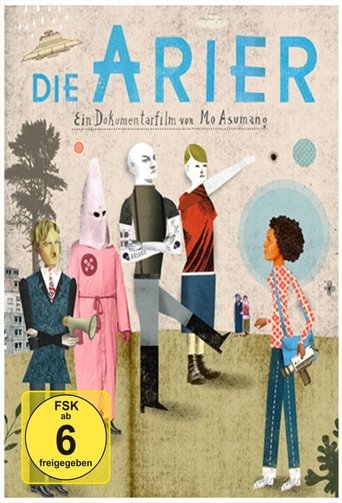
For four years (1977-1981) Esaias Baitel documented a violent Parisian neo-Nazi gang. Having gained their trust, he was able to get close to them. Living among the gang members, he witnessed horrific events, and while hiding his real identity, he photographed a one-of-a-kind collection of gripping stills. Over thirty years have passed. Esaias Baitel has laid his camera down. He returns to the dark nights he spent in the City of Lights, the city where he lived a double life, going back and forth from the gang to the young family he had just started.
"Bias" challenges us to confront our hidden biases and understand what we risk when we follow our gut. Through exposing her own biases, award-winning documentary filmmaker Robin Hauser highlights the nature of implicit bias, the grip it holds on our social and professional lives, and what it will take to induce change.
The history of the Teatro Amazonas in Manaus, an opera house located in the middle of the Amazon rainforest, whose construction, between 1884 and 1896, depended on the labor exploitation of the local indigenous populations, provides an insight into the cultural, social and political situation in Brazil.
Why is it prohibited to sit in food courts if you will not order foods? Why did Isko Moreno, newly elected Mayor of Manila, suddenly withdrew the licenses of bars near university establishments? What is life at night in Poblacion, Makati for Prostitutes? These are the questions that intrigued the group of students from Adamson University from tapping the nameless dilemma of the business industry and figuring in the end if they are ethical or not.
MOLE MAN follows RON, a 66-year-old autistic man who has spent the last five decades building a 50-room structure in his parents' backyard. Using no nails or mortar, Ron instead creates perfectly balanced structures from scavenged materials he finds in the woods outside his Western Pennsylvania home. When Ron's father passes away, leaving him living alone with his 90-year-old mother, Ron's siblings are left to figure out what's best for Ron - who has never been officially diagnosed with autism - when his mother can no longer care for him. In an effort to find the money to keep Ron in his home, his friends team up in search of a mythical mansion Ron insists lays abandoned in the forest. But will they be able to find it? And, more importantly, does it even exist? This is the story of an extraordinary life, a family, and the beauty of thinking differently.
Since the enactment of the Anti-Boryokudan Act and Yakuza exclusion ordinances, the number of Yakuza members reduced to less than 60,000. In the past 3 years, about 20,000 members have left from Yakuza organizations. However, just numbers can’t tell you the reality. What are they thinking, how are they living now? The camera zooms in on the Yakuza world. Are there basic human rights for them?
Cruelty, psychological and sexual violence, humiliations: reality television seems to have gone mad. His debut in the early 2000s inaugurated a new era in the history of the audio-visual. Fifty years of archives trace the evolution of entertainment: how the staging of intimacy during the 80s opened new territories, how the privatization of the biggest channels has changed the relationship with the spectator. With the contribution of specialists, including philosopher Bernard Stiegler, this documentary demonstrates how emotion has made way for the exacerbation of the most destructive impulses.
In 1992 – 500 years after the beginning of Spain's global empire with the discovery of America – Spain proudly presented itself to the international community as a modern, developed, dynamic country through the Olympic Games in Barcelona and the Expo in Seville. But for filmmaker Luis López Carrasco (1981, Murcia), 1992 was also the year in which the regional parliament building in Cartagena was razed during furious protests against the threatened closure of various local industries. El año del descubrimiento revives this almost forgotten history in a typical Spanish bar in Cartagena, where different generations come together to drink, eat, smoke and talk. Stories from witnesses, demonstrators and strikers from back then and discussions among younger café visitors on themes such as class consciousness, the economic crisis and the role of unions percolate to the surface amidst talk of other life issues.
16-year-old Bella and Vipulan are part of a generation convinced its very future is in danger. Between climate change and the 6th mass extinction of wildlife, their world could well be inhabitable 50 years from now. They have sounded the alarm over and over, but nothing has really changed. So they’ve decided to tackle the root of the problem: our relationship with the living world. Over the course of an extraordinary journey, they come to realize just how deeply humans are tied to all other living species. And that by saving them… we’re also saving ourselves. Humans thought they could distance themselves from nature, but humans are part and parcel of nature. For man is, after all, an Animal.
Documentary following some stoner friends over the course of roughly a day. Featured here is Bill, a guy who got kicked out of the Marines for doing dope steadily for six years (I'm not gonna do it forever--or maybe I will, who knows?) and Barry, a forklift-driving doper who wins the Employee of the Month plaque while stoned (Live for yourself--live today and then worry about tomorrow when it gets here--that's the way I go).
Aging parents of disabled adults, they worry about their child's life after their disappearance. A moving insight into the daily life of a family home in the Vendée region, which offers them the prospect of a peaceful future.
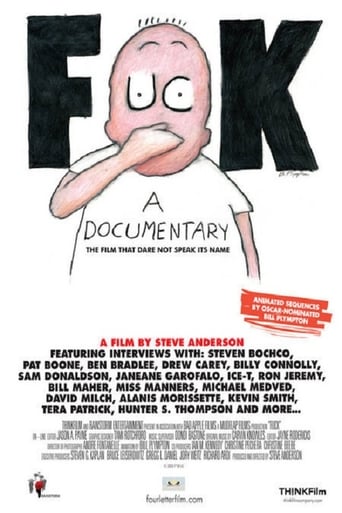
A documentary on the expletive's origin, why it offends some people so deeply, and what can be gained from its use.
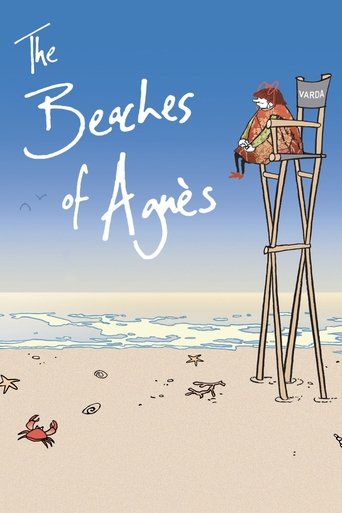
Filmmaking icon Agnès Varda, the award-winning director regarded by many as the grandmother of the French new wave, turns the camera on herself with this unique autobiographical documentary. Composed of film excerpts and elaborate dramatic re-creations, Varda's self-portrait recounts the highs and lows of her professional career, the many friendships that affected her life and her longtime marriage to cinematic giant Jacques Demy.
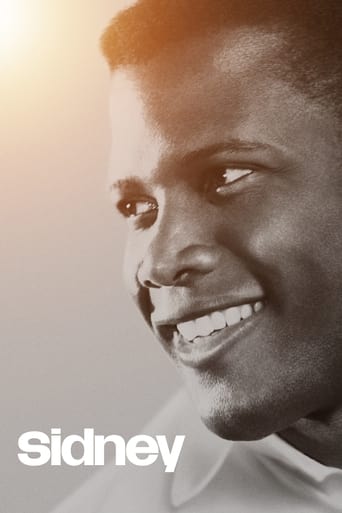
This revealing documentary honors the legendary Sidney Poitier—iconic actor, filmmaker, and civil rights activist. Featuring interviews with Denzel Washington, Spike Lee, Halle Berry, and more.
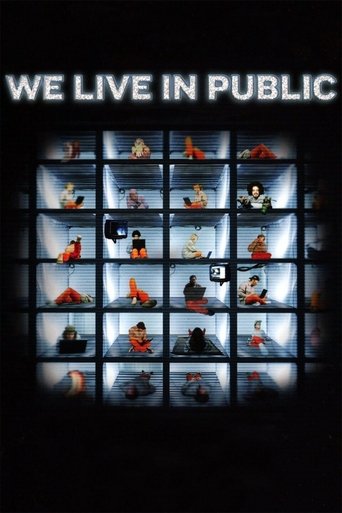
In 1999, Internet entrepreneur Josh Harris recruits dozens of young men and women who agree to live in underground apartments for weeks at a time while their every movement is broadcast online. Soon, Harris and his girlfriend embark on their own subterranean adventure, with cameras streaming live footage of their meals, arguments, bedroom activities, and bathroom habits. This documentary explores the role of technology in our lives, as it charts the fragile nature of dot-com economy.
A compilation of over 30 years of private home movie footage shot by Lithuanian-American avant-garde director Jonas Mekas, assembled by Mekas "purely by chance", without concern for chronological order.
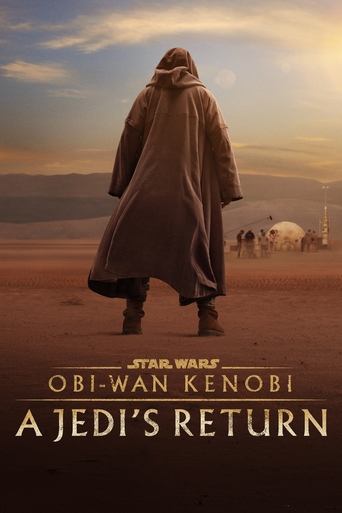
This special explores the return of Obi-Wan Kenobi and Anakin Skywalker to the screen, as well as Ewan McGregor and Hayden Christensen to their classic roles. Director Deborah Chow leads the cast and crew as they create new heroes and villains that live alongside new incarnations of beloved Star Wars characters, and an epic story that dramatically bridges the saga films.
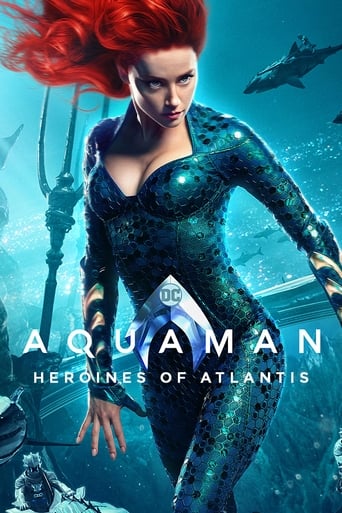
Amber Heard and Nicole Kidman discuss their characters Mera and Atlanna.
Lyrical and powerfully personal essay film that reflects on the deaths of her husband Lou Reed, her mother, her beloved dog, and such diverse subjects as family memories, surveillance, and Buddhist teachings.
Stars of "The Walking Dead," Andrew Lincoln and Danai Gurira, walk down memory lane and visit iconic locations where pivotal moments between their characters, Rick and Michonne, were filmed.
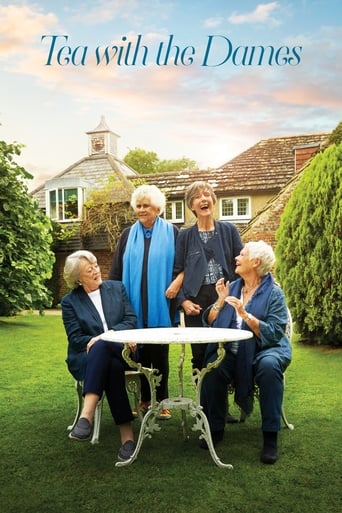
BBC Arena's documentary on the Dames of British Theatre and film featuring Maggie Smith, Eileen Atkins, Judi Dench and Joan Plowright on screen together for the first time as they reminisce over a long summer weekend in a house Joan once shared with Sir Laurence Olivier.
This documentary focuses on the actors and their journey over two summers to create the remake to the original IT, by Stephen King. The documentary originally released as bonus material, bundled with IT: Chapter Two.
The definitive 3½-hour documentary about the troubled creation and enduring legacy of the science fiction classic 'Blade Runner', culled from 80 interviews and hours of never-before-seen outtakes and lost footage.
Working men and women leave through the main gate of the Lumière factory in Lyon, France. Filmed on 22 March 1895, it is often referred to as the first real motion picture ever made, although Louis Le Prince's 1888 Roundhay Garden Scene pre-dated it by seven years. Three separate versions of this film exist, which differ from one another in numerous ways. The first version features a carriage drawn by one horse, while in the second version the carriage is drawn by two horses, and there is no carriage at all in the third version. The clothing style is also different between the three versions, demonstrating the different seasons in which each was filmed. This film was made in the 35 mm format with an aspect ratio of 1.33:1, and at a speed of 16 frames per second. At that rate, the 17 meters of film length provided a duration of 46 seconds, holding a total of 800 frames.
A visual montage portrait of our contemporary world dominated by globalized technology and violence.
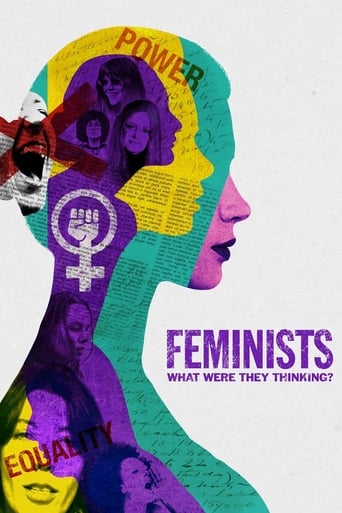
In 1977, a book of photographs captured an awakening - women shedding the cultural restrictions of their childhoods and embracing their full humanity. This documentary revisits those photos, those women and those times and takes aim at our culture today that alarmingly shows the need for continued change.
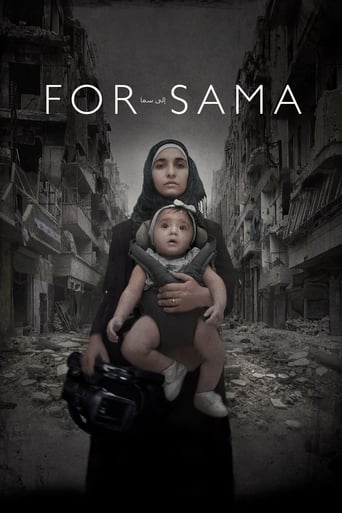
A love letter from a young mother to her daughter, the film tells the story of Waad al-Kateab’s life through five years of the uprising in Aleppo, Syria as she falls in love, gets married and gives birth to Sama, all while cataclysmic conflict rises around her. Her camera captures incredible stories of loss, laughter and survival as Waad wrestles with an impossible choice– whether or not to flee the city to protect her daughter’s life, when leaving means abandoning the struggle for freedom for which she has already sacrificed so much.
Fox Rich, indomitable matriarch and modern-day abolitionist, strives to keep her family together while fighting for the release of her incarcerated husband. An intimate, epic, and unconventional love story, filmed over two decades.
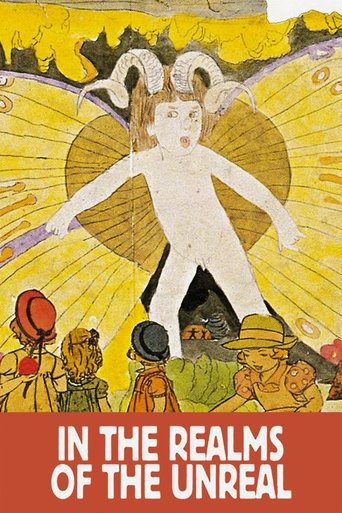
In the Realms of the Unreal is a documentary about the reclusive Chicago-based artist Henry Darger. Henry Darger was so reclusive that when he died his neighbors were surprised to find a 15,145-page manuscript along with hundreds of paintings depicting The Story of the Vivian Girls, in What is Known as the Realms of the Unreal, of the Glodeco-Angelinnian War Storm, Cased by the Child Slave Rebellion.
Martin Scorsese, Robert De Niro, Joe Pesci, and Al Pacino in conversation about The Irishman.
A detailing of the rise to prominence and global sporting superstardom of six supremely talented young Manchester United football players (David Beckham, Nicky Butt, Ryan Giggs, Paul Scholes, Phil and Gary Neville). The film covers the period 1992-1999, culminating in Manchester United's European Cup triumph.