Social & External
Unknown Role
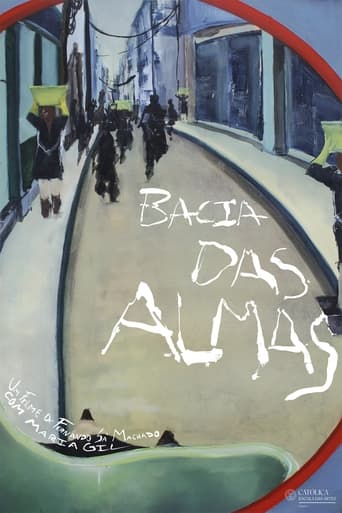
Rua de Santa Catarina, a street that was formerly home to dozens of local businesses and hundreds of Porto residents, now sees a crowd of tourists attracted by the cheap, disposable amenities that are popping up everywhere at once. Gentrification has decontextualized Portuguese culture, rendering the landscape uncanny. The Basin Woman, a symbol of the female workers of the historic Bolhão Market, is chased down by seagulls in the midst of this transcendent chaos.
Three juxtaposing stories taking place in Portugal, Austria and Cuba create an intimate and poetic portrait of the daily lives and struggles of the elderly in an unstable world, seen through the eyes of their grandchildren.
An old hostel, located in the center of Porto, served for many years as a hostel for people with few possessions, prostitutes and people passing through who made that place a more or less prolonged residence.
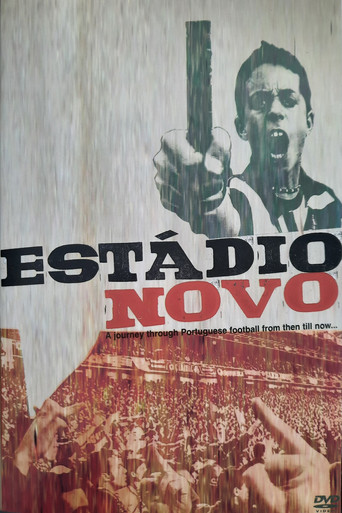
"Estadio Novo is about Portugal, its football and its fans. As hordes of supporters descend on the ten brand new stadiums for Euro 2004, this lively and informative documentary takes a look at their impact. Examining the role of football in Portugal before and the revolution of 1974 it asks... what's really going on?"
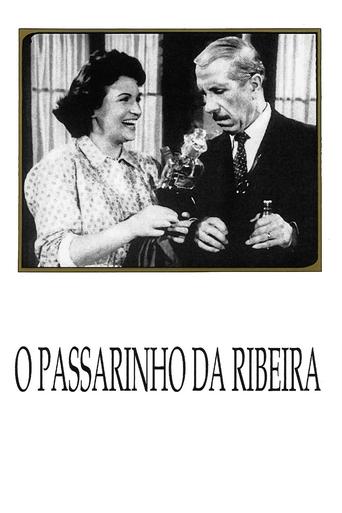
Popular in the riverside area of Porto, Micas raised her daughter, Madalena, at the cost of sacrifice, as her father emigrated to Brazil. With a happy voice, Madalena works on unloading the coal, seeing her loves thwarted by her humble condition. Barata, another typical figure who makes a living from expedients, helps Madalena's father - meanwhile returned, to "register" her - in a kidnapping plan capable of facilitating her reconciliation with Micas, who is reluctant... Things get complicated, but happiness ends up triumphing.
Olívia, a fashion executive, and José, a photographer, gets together in Paris, having casual sex and talking a little about relationships. And, in some days, they meet again in another city. And another one. And another... Latitudes is a trip around the world, the love and the poem of living.
Follows the fictional rivalry between two of Portugal's most prominent football teams - Invicta e Castelo and how their mutual disdain has spread further than the pitch.
Anastácio lives in Lisbon and is fanatic for Sporting CP, one of the city's football teams. When the team travels to face Porto, he follows it with the family, staying in house of his friend, Mr. Barata, pretending to be rich.
Two schoolboys, Carlitos and Eduardo, fight for the affection of a girl, Teresinha.
1907. The Porto Chamber has just been won by the Republicans, in full monarchy, three years away from the revolution. Republican ideas are taking hold and monarchical institutions are beginning to be shaken. However, the Sociedade Gastronómica de Lisboa resists and apparently is one of the strongest bastions of the monarchy. But winds of change blow within the walls of the traditional and conservative Society. A young member, Dr. Duarte Rodrigues, decides to run for president, held by the mysterious Prositt, who made his fortune in Africa. Duarte, stating that he does not want to betray the illustrious president, but as he is somewhat worn out and hopelessly dazzled by the leadership, he is able to artfully convince others to convince him, Duarte, to move forward, serving them for this. , in a dinner of taking power, a dish of unexpected excellence and very original.
Maria spends her daytime sewing and cleaning, while at night she works as a prostitute in Oporto's streets. Years ago her path crossed with José, a married man who became her most faithful client but who couldn't help her to escape the hard life. Today this old prostitute continues showing off her body through the long city's nights, though the clients are almost gone. José is still there, but he failed at what she desired the most: a son. In a very intimate and raw portray of a woman, MARIA disclosures how love and getting older can feels like.
On the outskirts, residents feel marginalized from society, as if they had no identity, and this is reflected in the surrounding buildings, anonymous in their neglect. The first character is one of these residents, who, while wandering around the city, finds a wallet lying on the ground. The moral duty to return the wallet conflicts with the vision of a new future, far from the shadow of the suburbs, through the assumption of a new identity.
Two married people fall in love and everything else breaks apart. A infidelities story told in a female voice.
Os Azeitonas ao Vivo no Coliseu do Porto
Maybe you've seen or heard these phrases on Instagram, in a coffee shop, at an event, from friends, maybe you even use the app and already provide your grandparents with food baskets every month. Just six months ago, no one knew about "Help" and how easy it really is to help. But thanks to a group of people who have decided that they will talk about helping others in the language of technology and modern media, we are increasingly seeing a circle held by two brackets in different cities of the country. This film contains a brief history of "Help" for those who do not know anything about it, an introduction to the team that is mad in its bravery, as well as the cycle of events that is happening with "Help" now. A trip to Sasha Gudkov's hometown, a trip and a performance of the team at the Avaz festival in Kazan, where they work in a car, on a boat, walking around the city, coming to concerts and talk a lot about "Help".
More goals, more trophies, more followers; for Cristiano Ronaldo life is about being number one, about standing alone. New documentary explores how Ronaldo has overcome adversity to reach unparalleled heights and examines his journey to become the most followed person on the planet. Has he redefined what it means to be an icon in the 21st Century? And at 36, will he rest on this legacy?
Lauren Bacall discusses her life and career with Turner Classic Movies host Robert Osborne.
On the 5th of March 1985, a crowd gathered in a South Yorkshire pit village to watch a sight none of them had seen in a year. The villagers, many of them in tears, cheered and clapped as the men of Grimethorpe Colliery marched back to work accompanied by the village’s world-famous brass band. The miners and their families had endured months of hardship. It had all been for nothing. The miners had lost the strike called on March 6th 1984. They would lose a lot more in the years to come. But was it a good thing for the country that the miners lost their last battle?
After the start of mass protests in Belarus, demonstrators also appeared in Moscow - at the Belarusian embassy.