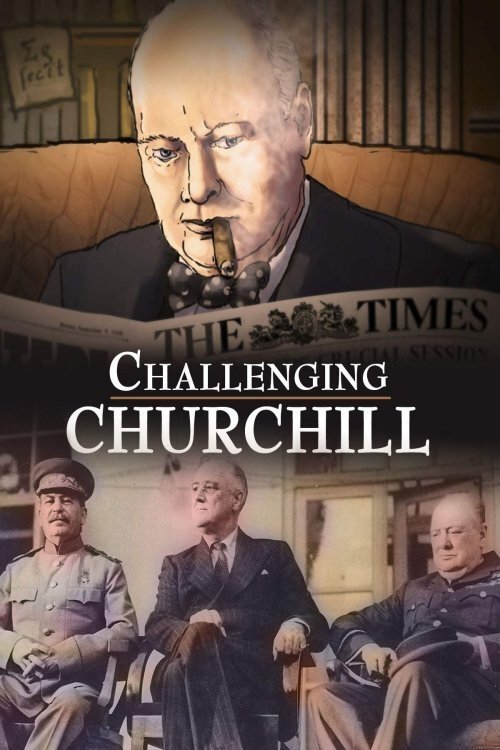
This short film gives background on the Free French movement during World War II.
Social & External
Self
Self (as Julian Jackson)
While exploring the Baltic Sea in 2006, a Polish oil firm stumbled upon the remains of Germany’s first – and last – aircraft carrier at 80 meters depth off the coast near Gdansk. It was a discovery that solved an enduring maritime mystery that had baffled experts for over half a century. The Graf Zeppelin has finally been found! This film tells the incredible story of the lead ship of the German "Kriegsmarine", from its construction to its sinking and its amazing discovery over five decades later. The Graf Zeppelin was a war ship of massive proportions that was never used for its intended purpose and eventually fell into the hands of the Russians, who used it for target practice off the coast of Poland. The program features rare access to private Graf Zeppelin archives, state-of-the-art animation, dramatic reconstructions and a high-tech underwater shoot at the mysterious site of the sunken wreck.
Pulitzer Prize -- winning journalist John Hersey caused a sensation when he published "Hiroshima", the first account for American readers of the horror experienced by victims of the 1945 Hiroshima atomic bomb attack. "Hiroshima" stunned readers with its descriptions of the terrible aftermath of the bombing, yet Hersey never spoke about his experience in Hiroshima.
Made famous by the 1957 Hollywood movie, the bridges of the River Kwai emblematize one of the most misunderstood events in history. Contrary to the romanticized film version, the structures represent a period of terror, desperation, and death for over 16,000 POWs and 100,00 local slaves. The Thailand - Burma Railway was the vision of the Japanese Imperial Army: a 250-mile track cut through dense jungle that would connect Bangkok and Rangoon. To accomplish this nearly impossible feat, the fanatical and ruthless Japanese engineers used POWs and local slaves as manpower. Candid interviews with men who lived through the atrocity - including Dutch, Australian, British, and American POWs - illuminate the violence and horror of their three-and-a-half-year internment. From Britain's surrender of Singapore the enduring force of friendship, The True Story Of The Bridge On The River Kwai narrates a moving and unforgettable account of a period in history that must be remembered.
On the 29th September 1945, the incomplete rough cut of a brilliant documentary about concentration camps was viewed at the MOI in London. For five months, Sidney Bernstein had led a small team – which included Stewart McAllister, Richard Crossman and Alfred Hitchcock – to complete the film from hours of shocking footage. Unfortunately, this ambitious Allied project to create a feature-length visual report that would damn the Nazi regime and shame the German people into acceptance of Allied occupation had missed its moment. Even in its incomplete form (available since 1984) the film was immensely powerful, generating an awed hush among audiences. But now, complete to six reels, this faithfully restored and definitive version produced by IWM, is being compared with Alain Resnais’ Night and Fog (1955).
Nazi troops massacre 30,000 Jews over a three-day period in September 1941. Babyn Yar ravine in Kyiv, Ukraine.
This chilling, vitally important documentary was produced to mark the 40th anniversary of the liberation of Auschwitz Concentration Camp. The film contains unedited, previously unavailable film footage of Auschwitz shot by the Soviet military forces between January 27 and February 28, 1945 and includes an interview with Alexander Voronsov, the cameraman who shot the footage. The horrifying images include: survivors; camp visit by Soviet investigation commission; criminal experiments; forced laborers; evacuation of ill and weak prisoners with the aid of Russian and Polish volunteers; aerial photos of the IG Farben Works in Monowitz; and pictures of local people cleaning up the camp under Soviet supervision. - Written by National Center for Jewish Film
In this documentary, experts dissect the Battle of Britain, which took place on Sept. 15, 1940 — a day that determined the fate of the nation.
The background to, events of and consequences of the Battle of Mers-El-Kebir on 3 July 1940. In that battle, Royal Navy ships fired on the French Fleet in order to prevent it from falling into German hands. A French battleship was sunk and several other ships damaged. Nearly 1,300 French sailors were killed.
Documentary on the main principles of Sun Tsu "Art of War" illustrated with examples from the second world war, the Vietnam war and the American civil war.
On the Pacific front, towards the end of World War II, Japan's imperial armed forces launched 'kamikaze' attacks - suicide missions by aircraft laden with bombs. It was a mad operation with no hope of returning alive, but the nation went wild, and the attacks continued for ten months, literally until the very last day of the war. Close to 4,000 Japanese airmen died, and nearly 7,000 Allied military personnel were killed, and thousands more were injured by the attacks. How could this happen? Utilising 15 years' worth of extensive interviews with US and Japanese World War II veterans, Takayuki Oshima’s film delves into the mechanism of how a crazed madness swept through an entire nation.
The destruction of the traditional legal system is probably one of the lesser-known yet essential goals of the Nazi state. The aim was to establish the supremacy of the "people's community" over the individual by subjugating the judicial system. The documentary looks at the careers of four people who were actively involved or became victims.
The Hawker Hurricane was the first fighter monoplane to join the Royal Air Force and the first combat aircraft adopted by that arm capable of exceeding 300 mph in level flight. The Hurricane shouldered the lion s share of Britain s defence during the Battle of Britain. This program portrays the history of this legendary aircraft which was to form an immortal partnership during the infamous battle.
The past drags itself into the present day, taking us back to the era of the Dominican Republic's greatest dictator, while we explore the traces of Nazism in the corners of the island. This short documentary borders on a dark and little-known aspect of Dominican history, taking the viewer on a subversive journey through time and memory.

In the midst of World War II, the 6888th Central Postal Directory Battalion, an all-female African-American unit, undertook the monumental task of sorting and delivering a massive backlog of mail for the U.S. military. Despite facing deplorable working conditions and the pervasive dual discrimination of race and gender, these women served their country with unbreakable determination and pride. Led by the formidable Major Charity Adams, they not only achieved their mission in half the expected time but also broke barriers, standing firm against inequality and inspiring future generations. Tragically overlooked for years, the story of the 6888th sheds light on a remarkable, untold chapter of American history, reflecting both the triumphs and injustices that shaped the nation's path towards civil rights. Their courage and resilience continue to resonate, a poignant reminder of the societal strides still needed to fully recognize and honor their invaluable contribution.
In the small town of Rechnitz a terrible crime against humanity was performed during the holocaust. Until now, no-one dares to talk about it.
Nikšić, Montenegro, September the 9th, 1943. Few moments after the dawn, the artilleryman Sante Pelosin, nickname Tarcisio, fires the first cannon shot against a German column that was proceeding towards Italian placement. In the following weeks about 20000 Italian soldiers decide to not surrender and join Jugoslavian Resistance. The partisans of the Garibaldi Division narrated in this documentary are simple heroes, that fought the freeze, the hunger, and a crushing typhus fever epidemy, paying with tremoundous sufferings a valiant and aware choice of field .
A wartime documentary following Canadian convoy operations and naval escort duties in the North Atlantic during the early years of World War II.
A WWII film about children evacuated from Britain and sent to Canada for their safety. The film begins in England with children seeking shelter as anti-aircraft guns roar outside. On their arrival in Canada, they are thrilled by the brightly lit cities, powerful Canadian trains, hot dogs and ice cream. They find, too, that instead of becoming Mounties or cowboys, they have to go to school. The closing sequence shows them learning to ski and skate and preparing for Christmas in their new homes.
When Allied forces liberated the Nazi concentration camps in 1944-45, their terrible discoveries were recorded by army and newsreel cameramen, revealing for the first time the full horror of what had happened. Making use of British, Soviet and American footage, the Ministry of Information’s Sidney Bernstein (later founder of Granada Television) aimed to create a documentary that would provide lasting, undeniable evidence of the Nazis’ unspeakable crimes. He commissioned a wealth of British talent, including editor Stewart McAllister, writer and future cabinet minister Richard Crossman – and, as treatment advisor, his friend Alfred Hitchcock. Yet, despite initial support from the British and US Governments, the film was shelved, and only now, 70 years on, has it been restored and completed by Imperial War Museums under its original title "German Concentration Camps Factual Survey".
When a high-ranking war planner is captured and held in a German prisoner of war camp, a team of specialists take on the dangerous mission of trying to break him out. Trouble is, he doesn't want to be rescued.
A detailing of the rise to prominence and global sporting superstardom of six supremely talented young Manchester United football players (David Beckham, Nicky Butt, Ryan Giggs, Paul Scholes, Phil and Gary Neville). The film covers the period 1992-1999, culminating in Manchester United's European Cup triumph.
Prelude to War was the first film of Frank Capra's Why We Fight propaganda film series, commissioned by the Pentagon and George C. Marshall. It was made to convince American troops of the necessity of combating the Axis Powers during World War II. This film examines the differences between democratic and fascist states.
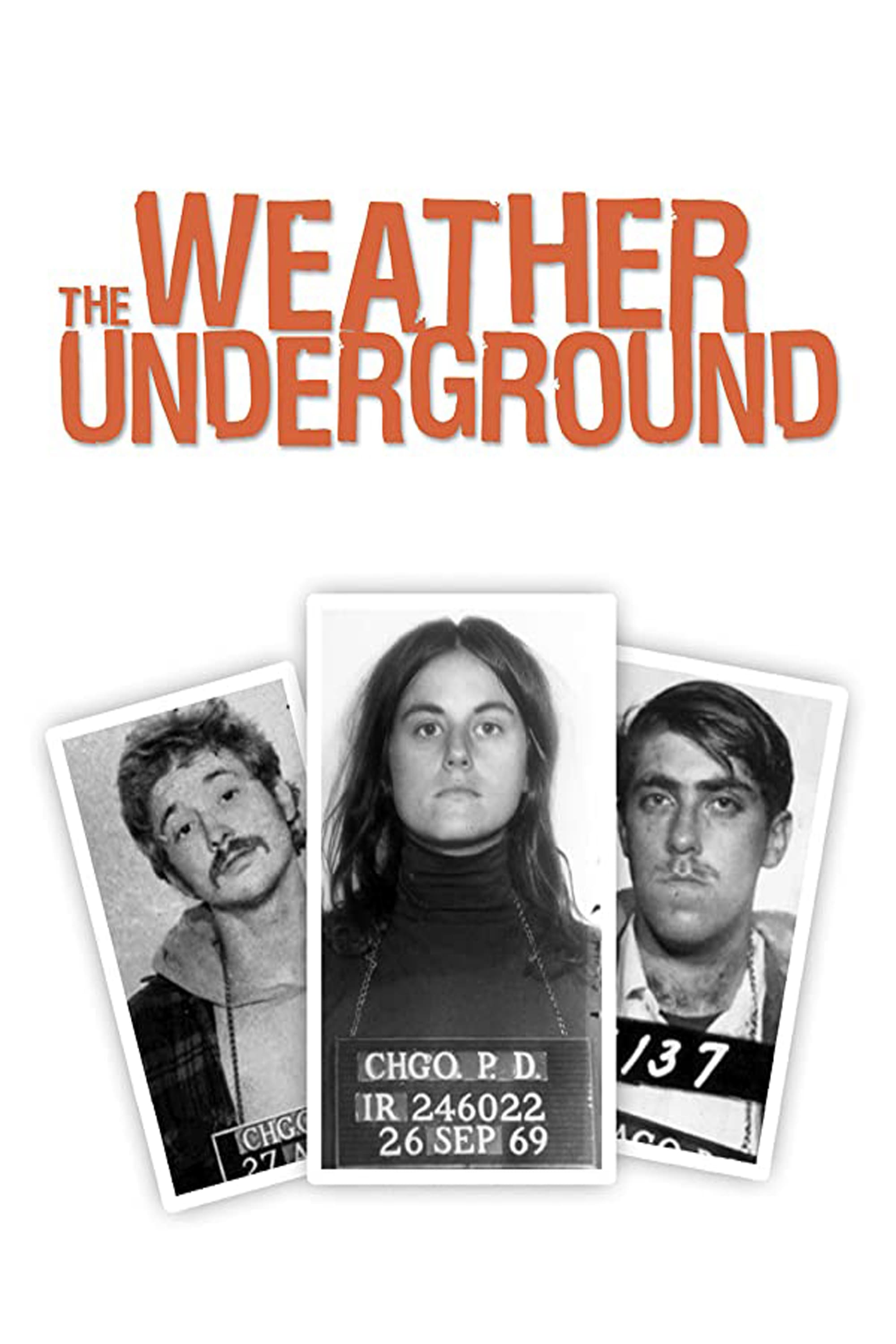
The remarkable story of The Weather Underground, radical activists of the 1970s, and of radical politics at its best and most disastrous.
This documentary focuses on the actors and their journey over two summers to create the remake to the original IT, by Stephen King. The documentary originally released as bonus material, bundled with IT: Chapter Two.
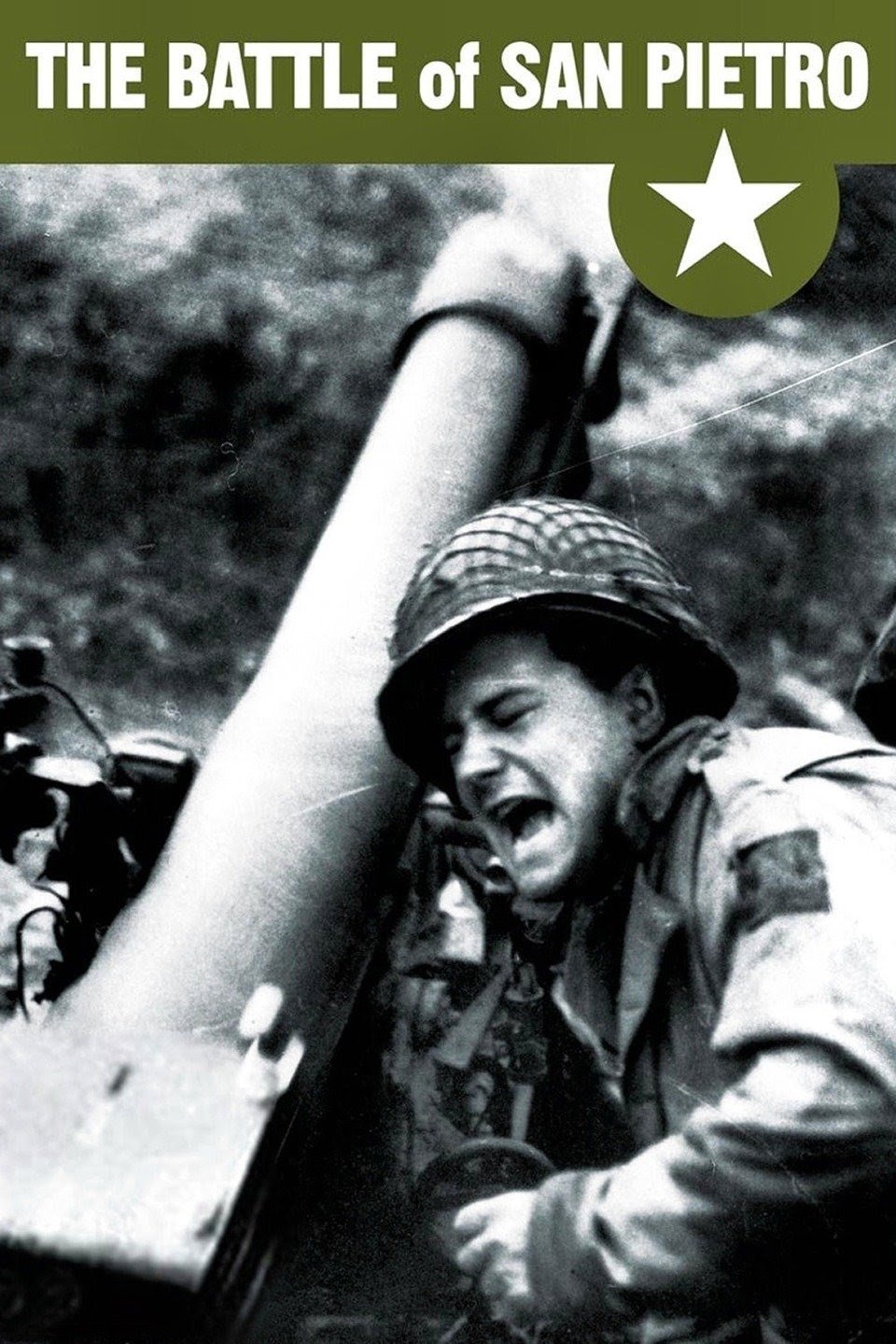
This documentary movie is about the battle of San Pietro, a small village in Italy. Over 1,100 US soldiers were killed while trying to take this location, that blocked the way for the Allied forces from the Germans. Preserved by the Academy Film Archive in 2005.
Inspired by the real-life German special operations unit KG 200 that shot down, repaired, and flew Allied aircraft as Trojan horses, "Wolf Hound" takes place in 1944 German-occupied France and follows the daring exploits of Jewish-American fighter pilot Captain David Holden. Ambushed behind enemy lines, Holden must rescue a captured B-17 Flying Fortress crew, evade a ruthless enemy stalking him at every turn, and foil a plot that could completely alter the outcome of World War II.
Amber Heard and Nicole Kidman discuss their characters Mera and Atlanna.
After being freed from a Vietnamese war prison, French Lt. Col. Pierre Raspeguy is sent to help quell resistance forces in Algeria. With the help of the Capt. Esclavier, who has grown weary of war, and Capt. Boisfeuras, who lives for it, Raspeguy attempts to convert a rugged band of soldiers into a formidable fighting unit, with the promise of marrying a beautiful countess if he's made a general.
Daniel Craig candidly reflects on his 15 year adventure as James Bond. Including never-before-seen archival footage from Casino Royale to the upcoming 25th film No Time To Die, Craig shares his personal memories in conversation with 007 producers, Michael G Wilson and Barbara Broccoli.
A look at the origins, history and conspiracies behind the "Majestic 12", a clandestine group of military and corporate figureheads charged with reverse-engineering extraterrestrial technology.
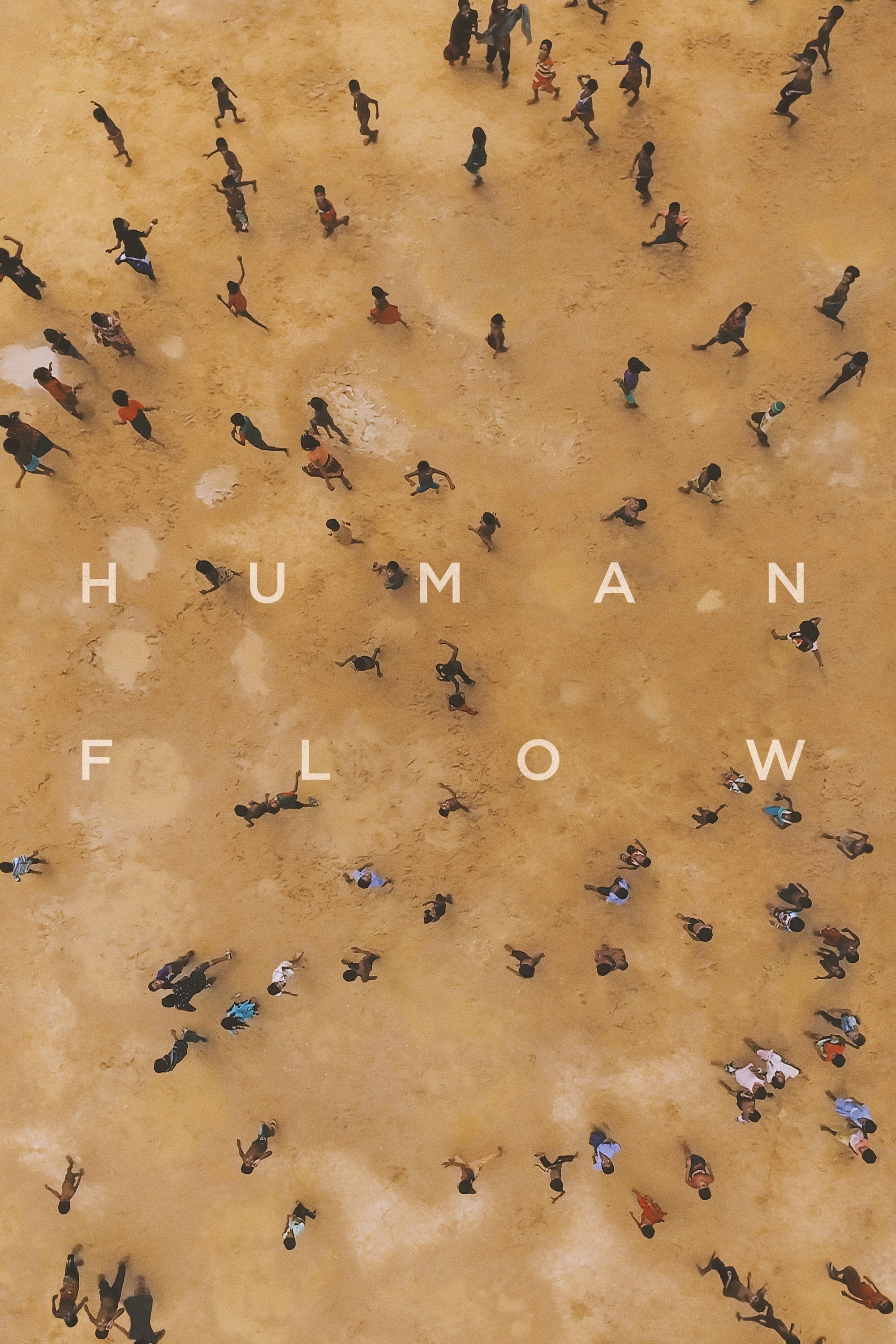
More than 65 million people around the world have been forced from their homes to escape famine, climate change and war, the greatest displacement since World War II. Filmmaker Ai Weiwei examines the staggering scale of the refugee crisis and its profoundly personal human impact. Over the course of one year in 23 countries, Weiwei follows a chain of urgent human stories that stretch across the globe, including Afghanistan, France, Greece, Germany and Iraq.
Those who knew iconic funnyman John Candy best share his story, in their own words, through never-before-seen archival footage, imagery, and interviews.
A documentary about how a dominant cultural and demographic institution both sustains their traditional activities and adapts to the digital revolution.
A documentary about the making of season five of the acclaimed AMC series Breaking Bad.
A documentary focused on plastic pollution in the world's oceans.
A documentary on the expletive's origin, why it offends some people so deeply, and what can be gained from its use.
Amid the failing counteroffensive, a journalist follows a Ukrainian platoon on their mission to traverse one mile of heavily fortified forest and liberate a strategic village from Russian occupation. But the farther they advance through their destroyed homeland, the more they realize that this war may never end.
At the height of Hitler's infamous U-boat war, the crew of the U.S.S. Swordfish were heading home after months at sea. They never made it. Now prisoners of war aboard U-boat 429, a small group of American survivors will find their loyalties put to the ultimate test when they're forced to join their German captors to fight for their very lives.