Social & External
Unknown Role
Werner Herzog's documentary film about the "Grizzly Man" Timothy Treadwell and what the thirteen summers in a National Park in Alaska were like in one man's attempt to protect the grizzly bears. The film is full of unique images and a look into the spirit of a man who sacrificed himself for nature.
Raised in the small all-Black Florida town of Eatonville, Zora Neale Hurston studied at Howard University before arriving in New York in 1925. She would soon become a key figure of the Harlem Renaissance, best remembered for her novel, Their Eyes Were Watching God. But even as she gained renown in the Harlem literary circles, Hurston was also discovering anthropology at Barnard College with the renowned Franz Boas. She would make several trips to the American South and the Caribbean, documenting the lives of rural Black people and collecting their stories. She studied her own people, an unusual practice at the time, and during her lifetime became known as the foremost authority on Black folklore.
This film is an attempt to disclose if Raul Brandão has left any trace, in Nespereira, Gumarães.
Doctors of the Dark Side is the first feature length documentary about the pivotal role of physicians and psychologists in detainee torture. The stories of four detainees and the doctors involved in their abuse demonstrate how US Army and CIA doctors implemented the Enhanced Interrogation Techniques and covered up signs of torture at Guantanamo and Abu Ghraib. Interviews with medical, legal and intelligence experts and evidence from declassified government memos document what has been called the greatest scandal in American medical ethics. Based on four years of research by Producer/Director Martha Davis, written by Oscar winning Mark Jonathan Harris, and filmed in HD by Emmy winning DP Lisa Rinzler, the film shows how the torture of detainees could not continue without the assistance of the doctors.
A stark documentary about young male prostitutes in Prague, aged 15 to 18, who work the streets, train stations, and clubs. Through candid interviews and behind-the-scenes footage of gay porn shoots, the film explores their lives, struggles, and dreams, touching on themes of exploitation, identity, AIDS, and survival.
Based on the model of documentary fiction (alternating period films, interviews and re-enactments with actors), the film begins on September 8, 1961 with the failure of the Pont-sur-Seine attack on a road convoy carrying Charles de Gaulle, then President of the Republic, and continues with the slow preparation, the occurrence and the consequences of the Petit-Clamart attack on August 22, 1962.
Meet Andrew Lindy: a man with a camera and sex on his mind. Andrew is a New Yorker who travels the world to capture beauty for various freelance jobs. Andrew chases beauty but he longs for a connection. On an assignment for ELLE magazine, Andrew travels to Cuba and brings his camera and appetite for women with him. This is a look at the lack of sexual taboo in Cuba, as well as the financial difficulties that lead to prostitution in some Cubans, for the purpose of survival.
Olly Alexander is preparing to fulfil one of his biggest life ambitions - to represent the United Kingdom in the much-loved Eurovision Song Contest. Ahead of the grand final in May, Olly joins fellow Eurovision lover and commentator Graham Norton to talk candidly about competing in Sweden. As an extra treat for Eurovision fans, Olly reveals the first full play of the music video on TV for his Eurovision song Dizzy.
The multi-award-winning Finnish documentarian Mika Kaurismäki, brother of Aki Kaurismäki (The Man Without a Past), helms the nonfiction work Sonic Mirror -- a protracted exploration of rhythm as one of life's driving forces. Revered drummer Billy Cobham serves as host, taking the audience on a long musical journey around the world and through a myriad of musical genres and styles. Cobham, Kaurismäki, and co. segue from Western concert halls and stages to the music of African tribes performed by Brazilian street children to the distinct music of autistic patients. Along the way, the filmmakers raise serious questions about the function of music as an identifying force, a means of communication, and an emotional release; they also probe the enduring connections between group awareness and self-awareness. The film ultimately builds to a hugely affirming and cathartic expression of music as collective expression that unifies its performers in spirit.
Featuring interviews with his accomplices and victims alike, this deep dive explores how a master con man scammed French elites out of millions of euros.
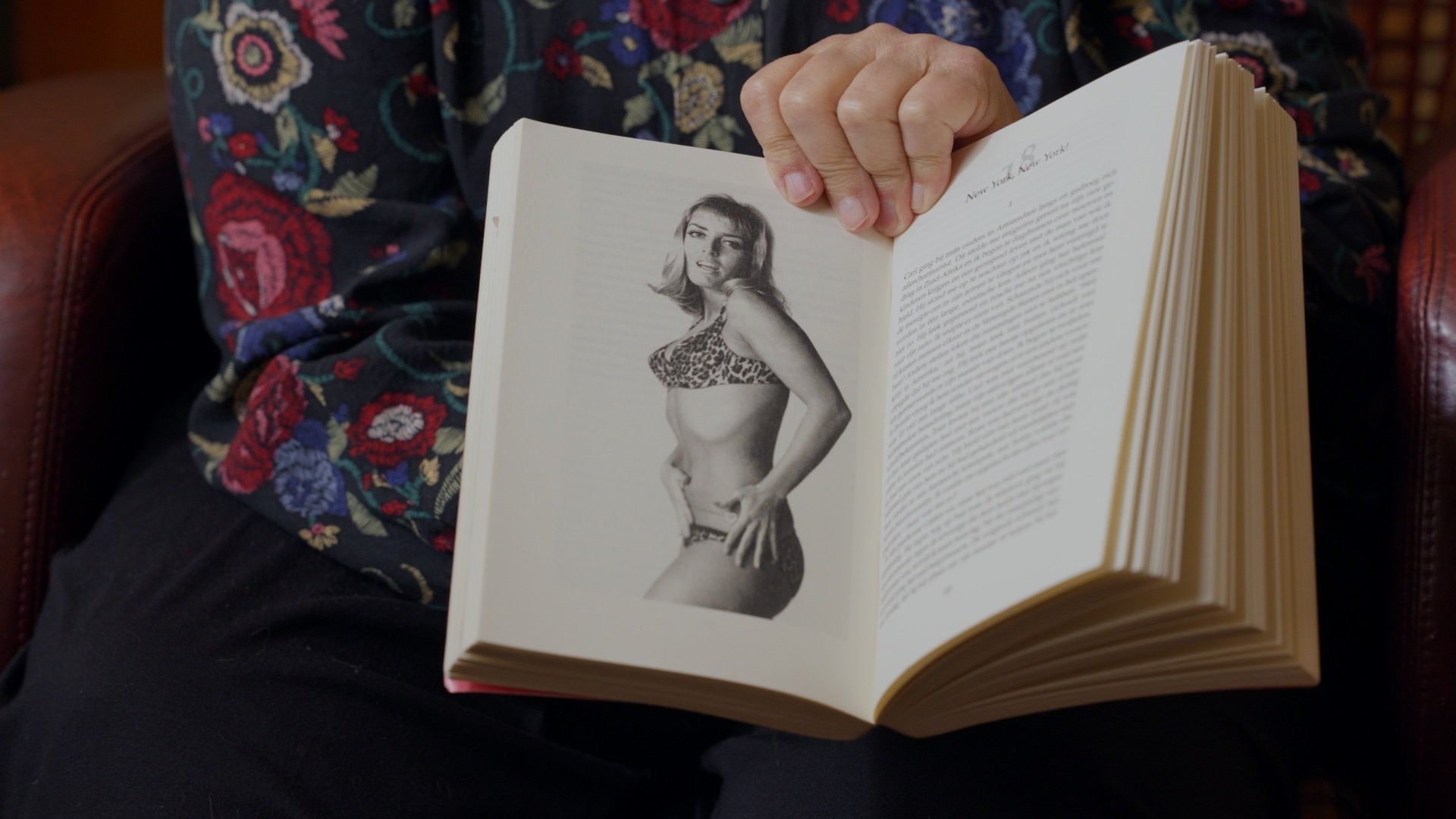
The author Carl-Göran Ekerwald has written more than 50 books. At the age of 87, a new chapter in his life begins when he meets the journalist and author Sigrid Kahle. Ekerwald is a man of eductation and lust.
Documentary about Moa Martinson.
A program originally produced for the BBC, and aired on television several times in 1986. Originally conceived as a long-form promotional piece for «Press to Play», the BBC staffer (Richard Skinner) persuades Macca to talk about much more, including one of the more in-depth interviews about Wings. All of the interview bits were done at Abbey Road studio 2, leading to some reminiscing on Paul's part. Scattered among the interview are some nice McCartney film rarities (including rarely seen promo clips/videos, concert footage from both the 1973 and 1976 tours, and even a bit of the never released "One Hand Clapping" film).
Documentary about filmmakers of the New German Cinema who were members of the legendary Filmverlag für Autoren (Film Publishing House for Authors). Among them are Werner Herzog, Rainer Werner Fassbinder, and Wim Wenders.
Documentarians Andre Heller and Othmar Schmiderer turn their camera on 81-year-old Traudl Junge, who served as Adolf Hitler's secretary from 1942 to 1945, and allow her to speak about her experiences. Junge sheds light on life in the Third Reich and the days leading up to Hitler's death in the famed bunker, where Junge recorded Hitler's last will and testament. Her gripping account is nothing short of mesmerizing.
For ten years, Raymond Depardon has followed the lives of farmer living in the mountain ranges. He allows us to enter their farms with astounding naturalness. This moving film speaks, with great serenity, of our roots and of the future of the people who work on the land. This the last part of Depardon's triptych "Profils paysans" about what it is like to be a farmer today in an isolated highland area in France. "La vie moderne" examines what has become of the persons he has followed for ten years, while featuring younger people who try to farm or raise cattle or poultry, come hell or high water.
Part documentary, part drama, this film presents the life and work of Jack Kerouac, an American writer with Québec roots who became one of the most important spokesmen for his generation. Intercut with archival footage, photographs and interviews, this film takes apart the heroic myth and even returns to the childhood of the author whose life and work contributed greatly to the cultural, sexual and social revolution of the 1960s.
The Hugo's Brain is a French documentary-drama about autism. The documentary crosses authentic autistic stories with a fiction story about the life of an autistic (Hugo), from childhood to adulthood, portraying his difficulties and his handicap.