Social & External
Mulher
Marido
Profissional Arquivista
After Mallory disrupts nature, nature begins disrupting her.
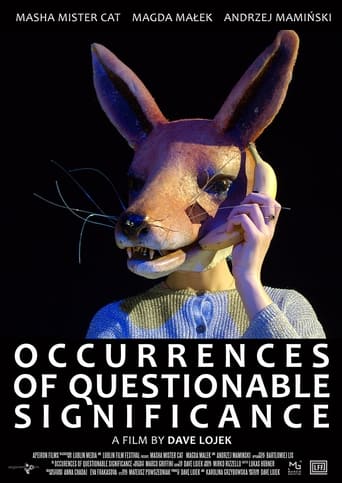
When forest animals invade our cities, the world is in disarray. Office vixen Fiona struggles with her banana phone addiction. Will she succumb to it? Temperamental bunny Barbara only gives her stag sugar daddy Nestor his special massage, after he dines her and plays the big spender. This obscure short film pinpoints postmodern tropes of consumerism, eroticism, and art with an homage to the theater stage and references to literature. This work uses a fantasy language and needs no subtitles.
This is the story of the “smoke jumpers,” specially trained by the Forest Service to reach forest fires when they are in the inaccessible areas of US National Forests. A cabin in the woods is set on fire after an over stimulated kitten upsets an oil lantern.
In a modern version of Ibsen's stage play, we meet TV-celebrity Tomas Stockman returning to his native village to produce the world's purest bottled water. The plant will bring new life and hope to the village, but unexpected trouble occurs.
Against the backdrop of the sixth mass extinction, an all-woman team of biologists set out to save bats from a deadly fungal disease, but when the COVID-19 pandemic interrupts their work, they are sent down a path of discovery that illuminates the connections between bat conservation and the spread of infectious disease.
Hosted by Keeley Hawes, star of the popular television series The Durrells, this documentary reveals the adventures of the eccentric Durrell family once they left Corfu, Greece.
A surrealistic look at the future if man does not learn to control pollution.
Anita Chitaya has a gift: she can help bring abundant food from dead soil, she can make men fight for gender equality, and maybe she can end child hunger in her village. Now, to save her home in Malawi from extreme weather, she faces her greatest challenge: persuading Americans that climate change is real. Traveling from Malawi to California to the White House, she meets climate sceptics and despairing farmers. Her journey takes her across all the divisions that shape the USA: from the rural-urban divide, to schisms of race, class and gender, and to the American exceptionalism that remains a part of the culture. It will take all her skill and experience to help Americans recognise, and free themselves from, a logic that is already destroying the Earth.
Developments in the Canadian forestry industry during the 1970s are shown being carried out both as lab experiments and in the field to protect and conserve the country's vast forests. These include turning a Newfoundland bog into woodland, fostering British Columbia seedlings that withstand mechanical planting, inoculating Ontario elms against the bark beetle, devising ways of controlling fire, and more.
Mountain Gorilla takes us to a remote range of volcanic mountains in Africa, described by those who have been there as ""one of the most beautiful places in the world"", and home to the few hundred remaining mountain gorillas. In spending a day with a gorilla family in the mountain forest, audiences will be captivated by these intelligent and curious animals, as they eat, sleep, play and interact with each other. Although gorillas have been much-maligned in our popular culture, viewers will finally ""meet the legend"" face to face, and learn about their uncertain future.
Follows amateur botanist Antonius Moscal's raft journey down the Franklin River (Tasmania, Australia).
An epic story of Australian and international scientists who are racing to understand our greatest natural wonder and employing cutting edge science in an attempt to save it.
In a world that spins faster and faster, bibliomaniacs take refuge from the rush and the noise inside the library. Amid whispers, they confess the meaning of life. A celebration of thought and obsession, where libraries reveal their inhabitants
A group of conservationists take on the task of revitalizing the Balancán, Tabasco, research station and protect the howler monkey.
A Maasai human rights lawyer fights to stop the evictions of his people from their homelands in Tanzania. On the outskirts of Serengeti National Park in East Africa, Maasai face eviction from their land to make way for international tourism and hunting grounds. Human rights lawyer Joseph Oleshangay campaigns for his community to remain on its homeland as it has done for generations. While he represents Maasai communities in court, Joseph also remains close to his traditions among the cattle at his rural home near the Ngorongoro Crater. Risking his life to gather evidence from recently depopulated villages, Joseph battles in court where he leads the fight to resist the evictions.
Lydia Jennings is a member of the Huichol (Wixaritari) and Pascua Yaqui (Yoeme) Nations and holds a doctorate in soil microbiology. Her work is dedicated to environmental science and the essential role of Indigenous communities in these spaces. Her hope is to create more inclusive academic and environmental landscapes. In place of her graduation, which was canceled as a result of the pandemic, Lydia instead celebrated by running 50 miles in honor of the Indigenous scientists and knowledge keepers who came before her. It’s a run to honor the past and present while looking towards the future.
With regenerative management techniques, we can improve soil health and help mitigate climate change, by reducing atmospheric CO2 levels through long-term soil carbon sequestration. “Regenerative Renegades” presents a clear choice: Continue down the path of soil depletion or support agriculture that regenerates the land, combats climate change, and improves our economic vitality. Dig into the research and the collective consciousness behind a unique group of ranchers that make up the resilient, regenerative, renegade way at Thousand Hills. By working with nature and not against it, they have found a renewed joy in farming and a method that renews the land and our planet’s health.
A doctor's efforts to live a green life near the Appalachian Mountains lead to the development of a radical idea to use green burials to conserve one million acres of land and to create wildlife reserves.