Social & External
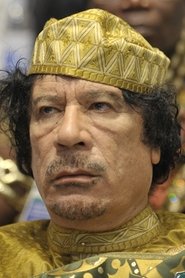
Él mismo
Who is Kim Yo-jong? In a context of maximum tensions between North Korea and the United States, Pierre Haski paints an unprecedented portrait of the little sister of Kim Jong-un, whose influence in Pyongyang is growing stronger day by day.
A film about dreams and ambitions in the Belarus through the eyes of the younger generation. An insight into the recent history of Belarus and the growing movement for change in 'Europe's last dictatorship'.
This revealing portrait of Cuba follows the lives of Fidel Castro and three Cuban families affected by his policies over the last four decades.
In Maija Blåfield’s documentary, eight former North Koreans talk about what it was like to watch illegal films in a closed society. In addition to the 'waste videos', South Korean films were also smuggled into the country via China.
A semi-fictional correspondence between two women: one goes to Iran in 1979 to topple the Shah; the other experiences the onerous years of Ceaușescu’s Romania. Their biographies run in parallel via images of everyday life and videograms of revolution.
Fernando Lemos, a Portuguese surrealist artist, fled from dictatorship to Brazil in 1952 searching for something better. The movie follows the last moments of his journey and the struggle for the preservation of his legacy, trying to fulfill his last great desire: to be a good dead man.
Images of Argentinian companies and factories in the first light of day, seen from the inside of a car, while the director reads out documents in voiceover that reveals the collusion of the same concerns in the military dictatorship’s terror.
During the first days after the 1973 Chilean coup d’état, the political leadership of the Popular Unity government was arrested and transferred to Dawson Island, Magallanes Region, extreme south of Chile and the mainland. The wives of the then political prisoners began an incessant effort to find out the whereabouts of their husbands and then try to return them alive. In these circumstances, they meet and spontaneously organize into a group they call the “Dawsonianas.”
It follows Chilean writer Antonio Skármeta as he celebrates the end of the autocrats. Cheerful farewell rituals accompany others facing political persecution on their way to fly home.
Four lucid grandmothers tell their story forgotten by history: the militancy and resistance of the young women of the leftist youth against the dictatorship of Marcos Pérez Jiménez.
After the World War I, Mussolini's perspective on life is severely altered; once a willful socialist reformer, now obsessed with the idea of power, he founds the National Fascist Party in 1921 and assumes political power in 1922, becoming the Duce, dictator of Italy. His success encourages Hitler to take power in Germany in 1933, opening the dark road to World War II. (Originally released as a two-part miniseries. Includes colorized archival footage.)
The recent democratic revolutions throughout Eastern Europe—Serbia in 2000, Georgia in 2003, and the Ukraine in 2004—all seemed to follow a quick and easy pattern: the exposure of rigged elections, followed by massive street protests, and a regime that collapsed without a fight. But THE DEMOCRATIC REVOLUTIONARY HANDBOOK reveals the lengthy and meticulous preparations behind these seemingly spontaneous demonstrations, showing how modern marketing techniques have combined with revolutionary politics to transform the region's governments.
The story of the tortuous struggle against the silence of the victims of the dictatorship imposed by General Franco after the victory of the rebel side in the Spanish Civil War (1936-1975). In a democratic country, but still ideologically divided, the survivors seek justice as they organize the so-called “Argentinian lawsuit” and denounce the legally sanctioned pact of oblivion that intends to hide the crimes they were subjects of.
Florian Hartung and Dirk Pohlmann have reconstructed a previously unknown dimension of the collaboration between Nazis and the CIA in the Cold War. Drawing upon recently released documents, the film exposes for the first time a perfidious, worldwide net that reaches deep into the power structures of the Federal Republic of Germany. Lending their authority to the fact-finders’ mission are high-ranking statesmen, journalists and historians.
There was a time in Argentina, not so long ago, when the army wasn't only one, official, but many and made up by civilians. In those times of courageous youths determined to fight to the death for that cause upheld around Peronism as wll as some left-wing postulates, revolutionary Cubas was a beacon of hope in the world scheme -a Montonero nation. "A House in Cuba" seeks to recover the curious adventure of a couple of Montonero parents and their small children, who were lovingly sent into exile in order for their parents to take up arms.
In 1977, Silvia Suppo was kidnapped and raped under the last Argentine civil-military dictatorship. As a consequence, she became pregnant, and the repressors performed an abortion on her "to correct the mistake." In 2009, her testimony was key to achieving the first conviction for crimes against humanity of a federal judge, Víctor Brusa, and his task force. Three months later, she was brutally murdered in her shop in Rafaela (Santa Fe / Argentina). Today her murder remains unpunished. This documentary reconstructs Silvia in the dimension of her woman, mother and friend, in her political character and in her sensitivity, so that we all know her cause. We seek a truth that does justice to her death and rescues her, above all, the value of her life.
At the end of the last civil-military dictatorship, a camouflage operation took place in the Information Service, an office of the former Rosario Police Headquarters that operated as a clandestine detention center in the heart of the city. This architectural intervention, not recorded in the plans, obscures the survivors' accounts and hides the traces of crimes against humanity. Drawing on images, previously unpublished archives, and survivor testimonies, the documentary explores the scars of political repression and highlights the importance of preserving memorial spaces to ensure the transmission of fundamental events in our contemporary history.
Several decades after the collapse of the communist system, nostalgia for the former regime has reached unimaginable proportions in almost all former communist European countries. The documentary Nostalgia for Dictatorship does not limit itself to presenting this genuine syndrome of "longing for dictatorship", but, in parallel with the opinions and motivations of ordinary citizens living in the former communist space, it advances explanations by researchers from various fields, sociologists, psychologists, political scientists, ethologists, etc., regarding the intimate motivations of such a paradoxical feeling.
Audiovisual experiment, on the role of photography and its authors, during the last civic-military dictatorship in Argentina. A documentary that makes clear the complicity of the hegemonic media with the military government and the fundamental role played by the militants, in this case photographers, to document what was really happening in Argentina during the period 1976/1983.