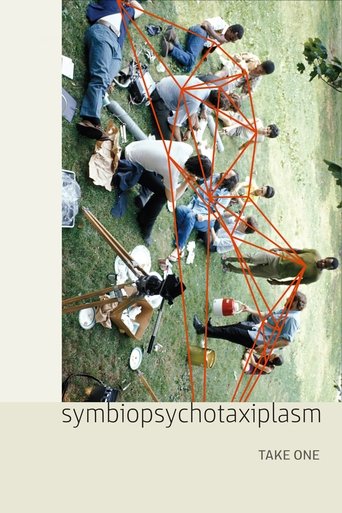
"FILM TO PASS TIME"
Experimental documentary dissecting artistic inspiration through raw imagery and collage, aiming to answer a defining question for artists: What to film?
Social & External
Narrator
A frenetic found-footage documentary made entirely from “lost” unlabeled media on YouTube - weaving together nearly a thousand raw videos, each mistakenly or mindlessly uploaded under a generic filename (e.g., IMG 1326, IMG 5493…).
Cormac McCarthy has spent the last 25 years writing his novels at the mountain top retreat of the Santa Fe Institute (SFI) in New Mexico. An institute dedicated to the formal analysis of complex systems. In this documentary filmed at the library at SFI (and in the desert), Cormac in conversation with his colleague David Krakauer, reflects on isolation, mathematics, character, and the nature of the unconscious
Through his own photographs, the Basque artist Néstor Basterretxea (1924-2014) is portrayed by the art critic and exhibition curator Peio Aguirre, a great connoisseur of his work and personal archives.
A filmmaker canoes up North Carolina’s Black River to the Three Sisters Swamp, chasing light through ancient bald cypress groves. What begins as a familiar act of observation and recording takes an uncanny turn. Using past footage and sound, the film reconstructs what was seen, what was heard—and what cannot be explained.
Every day in Sutton, scientists from The Institute of Cancer Research at The London Cancer Hub try to discover what will defeat cancer. In the summer of 2022, communities in Sutton came together to celebrate their incredible research through the creation of a short community film celebrating this science. The resulting film showcases choreographed dance sequences as creative yet recognisable interpretations of scientific concepts.
A man sees mountains and sets out to recreate them. During a traverse across the Western United States, we observe familiar sites in a new light, and the world gets lost in the fold.
A trip that the author makes to a distant beach trying to find the place where his grandfather made a painting years ago.
Searching for life in daily rituals, Losing Touch undertakes a shift in perception and presents the city as an ugly yet ecologically rich landscape. The film depicts the internal dialogue on coping with the grief and fear of ecological degradation, using the local streets of Berlin as a means to materialise and confront these emotions. As both the body and mind begin to wander, encounters with the landscape over a 24 hour period are transformed into an overstimulating and emotionally charged journey. Camcorder footage, film developed in beer and cyanotype create sensational and playful depictions of the surroundings, joining the rats scurrying on the ground and fleeing the night lights with the moths. Creatures of metal and flesh interact within and between the frames, coming together as an ugly yet vibrant community. Subverting the nature-culture dichotomy, a new image of nature is formed, not only as a romantic, distant place, but rather a dirty, omnipresent force.
Set against a vibrant tapestry of music and movement, Tem Fé poetically explores female energy, resilience, and ancestral roots. Through striking visuals and soundscapes, the film celebrates the strength of women and their spiritual bond across generations.
An experimental documentary looking at the transgender experience around the world over two hemispheres, three continents and with four interviewees. The film employs limited B roll shots or edits during the interviews, instead opting to have the interviews mostly uncut, with the goal of creating both a level of sincerity and a conversational narrative between any one of the interviewees and the audience.
A personal meditation on Rumble Fish, the legendary film directed by Francis Ford Coppola in 1983; the city of Tulsa, Oklahoma, USA, where it was shot; and its impact on the life of several people from Chile, Argentina and Uruguay related to film industry.
An intimate portrait of the lives of Delvys and Carlos, siblings who live alone with their elderly mother in a rural part of a small Cuban town. The film portrays a family engulfed in their inner worlds. Between the sacrifices they make out of love for those who are present, and their longing for things that are absent, they struggle to find meaning as they reflect, contemplate, and carry the weight of existence, trying together, to move forward.
A look at the Brazilian black movement between 1977 and 1988, going by the relationship between Brazil and Africa.
Experimental self portrait
An experimental short film about wind and sunlight sweeping across tree leaves.
Filmed over a period of a week, Drizzle showcases nature and our world in an experimental lens and through different days and weather conditions. The plot remains stagnant while the message remains clear.
FUGAZI is an experimental short film that explores the genesis of space through the presence of sound. Inspired by Leibniz’s relational theory, the film suggests that space only exists when it is inhabited, in this case, by sound. Through a sensory and progressive montage, sound reveals, transforms, and collapses space, guiding the viewer through cycles of creation and dissolution. It is an audiovisual experience about the invisible becoming visible when heard.
Twenty-five films from twenty-five European countries by twenty-five European directors.
This documentary aims to register this unknown side of James Joyce: His Greek Notebooks. Trieste. Bloomsday, 2013. Dance in slow motion, accompanied by text. By deconstructing the body, we turn it into a memory: of the body, of life, of texts. The biographical references to Joyce and Mando Aravantinou, combined with the diagonal slicing of the image, cancel the realism of the landscape, including that of the Narrator’s space/study. As a culmination, Joyce’s letter “A request for a loan in Greek” functions as a timely denunciation. Various routes through cities, such as Trieste, London, New York, and Athens; languages such as Greek and English. In addition to the primal myth of Ulysses, there is another issue: Greek is “the language of the subject of Ulysses”
A visual montage portrait of our contemporary world dominated by globalized technology and violence.
As his life comes to its end, famous Hollywood director Orson Welles puts it all on the line at the chance for renewed success with the film The Other Side of the Wind.
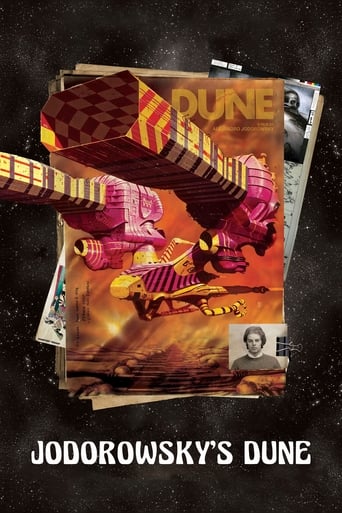
In 1974, Chilean-French director Alejandro Jodorowsky embarked on the quixotic project of adapting Frank Herbert's influential novel Dune (1969) for the big screen. After investing two years, and millions of dollars, the gigantic project ended in failure; but the artists Jodorowsky brought together to carry it out continued to work together, and ended up laying the foundations for modern science fiction cinema.
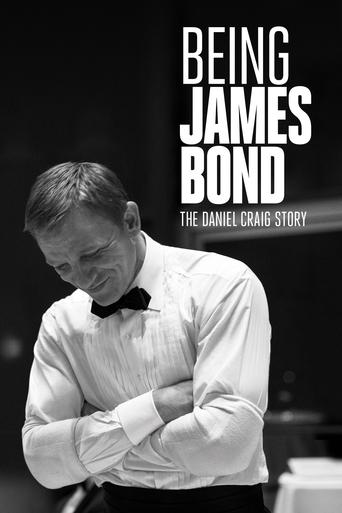
Daniel Craig candidly reflects on his 15 year adventure as James Bond. Including never-before-seen archival footage from Casino Royale to the upcoming 25th film No Time To Die, Craig shares his personal memories in conversation with 007 producers, Michael G Wilson and Barbara Broccoli.
Told through performances, TV interviews, home movies, family photographs, private letters and unpublished memoirs, the film reveals the essence of an extraordinary woman who rose from humble beginnings in New York City to become a glamorous international superstar and one of the greatest artists of all time.
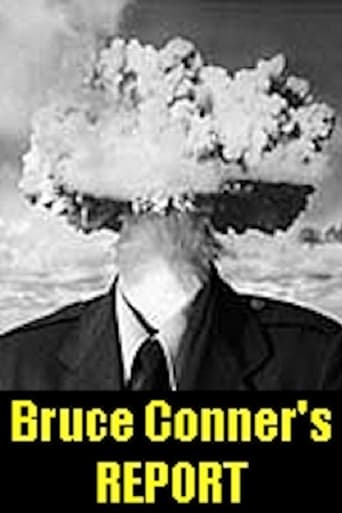
Bruce Conner’s most celebrated film for a reason: it takes historical moments that were replayed over and over on television—chilling repetition of Kennedy assassination coverage—and repurposes them into a meditation on how the media tries to exert authority and apply a sense of order to the anarchic. And though it may sound perverse to say so, the film is also—not incidentally—a thrill to watch. -- The A.V. Club
Against a plain, unchanging blue screen, a densely interwoven soundtrack of voices, sound effects and music attempt to convey a portrait of Derek Jarman's experiences with AIDS, both literally and allegorically, together with an exploration of the meanings associated with the colour blue.
Retrospective documentary about the making of the horror cult classic "The Return of the Living Dead."
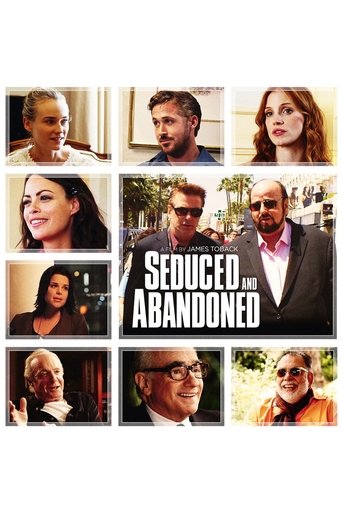
SEDUCED AND ABANDONED combines acting legend Alec Baldwin with director James Toback as they lead us on a troublesome and often hilarious journey of raising financing for their next feature film. Moving from director to financier to star actor, the two players provide us with a unique look behind the curtain at the world's biggest and most glamourous film festival, shining a light on the bitter-sweet relationship filmmakers have with Cannes and the film business. Featuring insights from directors Martin Scorsese, 'Bernando Bertolucci' and Roman Polanski; actors Ryan Gosling and Jessica Chastain and a host of film distribution luminaries.
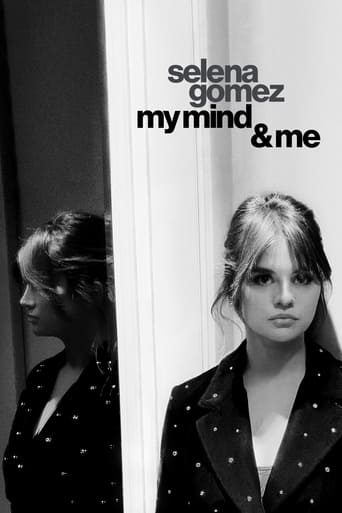
After years in the limelight, Selena Gomez achieves unimaginable stardom. But just as she reaches a new peak, an unexpected turn pulls her into darkness. This uniquely raw and intimate documentary spans her six-year journey into a new light.
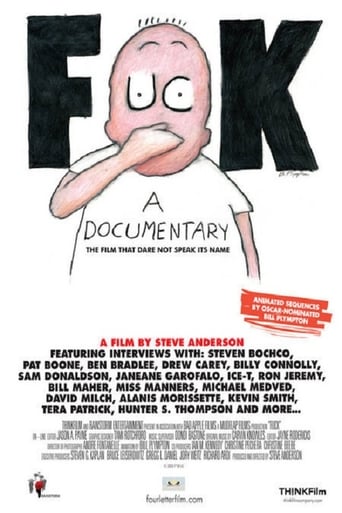
A documentary on the expletive's origin, why it offends some people so deeply, and what can be gained from its use.
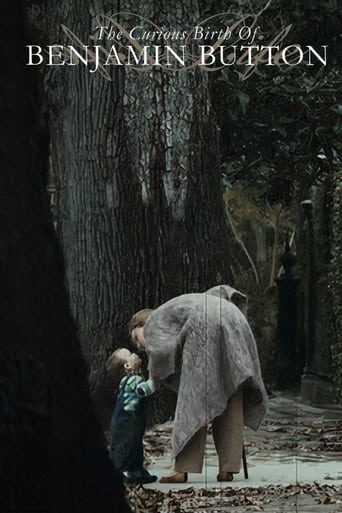
A documentary about the making of David Fincher's 2008 film THE CURIOUS CASE OF BENJAMIN BUTTON. Virtually every element in the evolution of the Fincher's film is documented here, from the project's attachment to numerous other directors during the 1990s, to its shoot in 2006 and 2007 in New Orleans, to its complex, CGI-intensive postproduction process.
The authorized documentary celebrating the film that redefined Hollywood, 50 years after its premiere. Featuring rare archival footage and interviews with acclaimed Hollywood directors alongside Steven Spielberg, top shark scientists, and conservationists, the film uncovers the behind-the-scenes chaos and how the film launched the summer blockbuster, inspired a new wave of filmmakers, and paved the way for shark conservation that continues today.
Since the invention of cinema, the standard format for recording moving images has been film. Over the past two decades, a new form of digital filmmaking has emerged, creating a groundbreaking evolution in the medium. Keanu Reeves explores the development of cinema and the impact of digital filmmaking via in-depth interviews with Hollywood masters, such as James Cameron, David Fincher, David Lynch, Christopher Nolan, Martin Scorsese, George Lucas, Steven Soderbergh, and many more.
An intimate documentary delving into Rian Johnson's process as he comes in as a director new to the Star Wars universe.
This special explores the return of Obi-Wan Kenobi and Anakin Skywalker to the screen, as well as Ewan McGregor and Hayden Christensen to their classic roles. Director Deborah Chow leads the cast and crew as they create new heroes and villains that live alongside new incarnations of beloved Star Wars characters, and an epic story that dramatically bridges the saga films.
As Australian cinema broke through to international audiences in the 1970s through respected art house films like Peter Weir's "Picnic At Hanging Rock," a new underground of low-budget exploitation filmmakers were turning out considerably less highbrow fare. Documentary filmmaker Mark Hartley explores this unbridled era of sex and violence, complete with clips from some of the scene's most outrageous flicks and interviews with the renegade filmmakers themselves.
Stars of "The Walking Dead," Andrew Lincoln and Danai Gurira, walk down memory lane and visit iconic locations where pivotal moments between their characters, Rick and Michonne, were filmed.
The story lives forever in this feature-length documentary that charts the making of Star Wars: The Rise of Skywalker.
A look behind the lens of Christopher Nolan's space epic.