Social & External
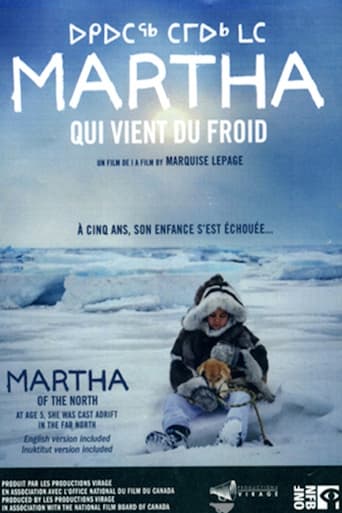
This pioneering documentary film depicts the lives of the indigenous Inuit people of Canada's northern Quebec region. Although the production contains some fictional elements, it vividly shows how its resourceful subjects survive in such a harsh climate, revealing how they construct their igloo homes and find food by hunting and fishing. The film also captures the beautiful, if unforgiving, frozen landscape of the Great White North, far removed from conventional civilization.
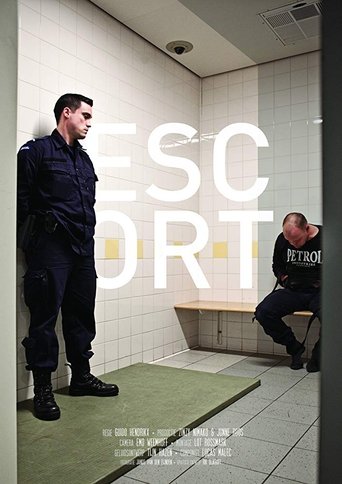
Young, inexperienced members of the Dutch Boarder Patrol undergo an intensive training on escorting refused asylum seekers to their homeland.
In Canada and Alaska, the consequences of global warming are being keenly felt by brown bears - but in different ways by different populations. Their survival depends mainly on the quantity of wild salmon available in the region, as it is the fruit of their catch that enables the bears to accumulate fat reserves for the winter. While salmon populations off Canada's Pacific coast continue to decline year after year, in the immense Bristol Bay in western Alaska, as well as on Kodiak Island, they are increasing considerably. The water temperature in the North Pacific is now ideal for salmon development. From Canada to Alaska, the documentary follows different bear populations over a two-year period.
For Ababacar and Mbaye - two Senegalese immigrants who met and established a great friendship in Buenos Aires - the challenge goes beyond adapting to the customs and living conditions in Argentina, or dealing with the indifference and racism they suffer on a daily basis: both came to an instance of their lives in which they must define a course, and in turn accept that their identities and needs have become more complex. The decision to leave their country was driven by the urgent objective of financially supporting their families, but the stay in Buenos Aires crossed them with new people, new ways of seeing things, and even an economic situation different from that which they found at home. Their different ways of seeing things allow them to see in each other a different version of themselves.
In the final weeks of WW2, as the Nazis are on the verge of surrender, a young British stenographer is faced with a difficult decision when his commanding officer orders him to write a letter authorizing an airstrike that could result in thousands of civilian deaths.
The Weight of Sight is a playful and very personal essay where director Truls Krane Meby, through a massive archive of his own material - anything from DV-tapes to 35mm - explores the last 20 years of digital development - how it’s influenced the images we make, and our bodies. What kind of images do we get of the world now that everyone is a photographer, and what does it do with how we unfold our identities? How has the internet both captured and freed us? And will Truls even dare to show this film?
Discover the untold story of Pinball and Arcade in Australia in this heart-warming, and at times heart-breaking, nostalgic journey through the golden era of gaming.
The first of a documentary serie about rural France.
As historic ships vanish from British waters, a group of passionate volunteers fights to save the Balmoral—a 1949 passenger vessel moored in Bristol’s iconic harbour—battling time, bureaucracy, and financial struggles to preserve a piece of maritime history before it’s lost forever.
Per Persson left Sweden 40 years ago. In Pakistan he fell in love and became the father of two daughters. Trouble starts when the girls grow up and the family decides to emigrate to Sweden. When they end up living in a caravan outside Hässleholm, all their expectations are dashed.
This feature documentary retraces the century of haggling by successive federal and provincial governments to agree on a formula to bring home the Canadian Constitution from England. This film concentrates on the politicking and lobbying that finally led to its patriation in 1982. Five prime ministers had failed before Prime Minister Pierre Elliott Trudeau took up the challenge in the early 1970s. Principal players in this documentary are federal Minister of Justice Jean Chrétien, Prime Minister Trudeau, 10 provincial premiers and a host of journalists, politicians, lawyers, and diplomats on both sides of the Atlantic.
The Spruce Forest explores one of the darkest pages in Romanian history. Inspired by the drama of Fântâna Albă on April 1, 1941, the film reconstructs the fate of a Romanian community in Bessarabia, massacred in a desperate attempt to find refuge from the Soviet occupation. The testimony of a survivor of this genocide becomes the backdrop against which archival images and his wife's memories of Siberia are superimposed, in a dizzying game of mirrors that questions the notion of historical truth and reveals forgotten traumas with potentially devastating consequences in the present.
Canada was led to war by a bigoted, ignorant, self-obsessed Minister of Militia, who may well have been clinically insane, but the importance of Canada's contribution in that war owes a great deal to him. The man of course, was Colonel - later made Lieutenant General by his own hand - Sam Hughes. Sam's Army is a compelling portrait of a complex man and the formidable military he built. Sam Hughes was not your standard-issue military leader. Canada's World War I Minister of Militia and Defence concentrated power in his own hands, insisted that the Canadian military use the ill-conceived Ross rifle and liberally promoted his cronies. But there was no denying Hughes was a visionary. He assembled the world's largest-ever volunteer army and bucked superiors to keep his ferocious fighting force together in one Canadian Corps.
A two-hour documentary which recreates for the viewer one of the greatest battles in Canadian military history. The film was made to show that Canadian character at its best, forging an identity for a country that before the First World War had been seen only as a British colony - an identity and a character that became recognized and respected throughout Europe.
Canadian military accomplishments in the last hundred days of World War I, when the German Army was destroyed, surpassed those of any other army. The Canadian success was, in no small measure, due to Arthur Currie, whom a recent British historian describes as "the most successful Allied General and one of the least well known."
It was assisted by the Qing army and some traitors (Fan Cheng-En), who captured Guangzhou and massacred the civilians for three days until Sun Yat-Sen established the Republic of China and Chiang Kai-Shek succeeded in the Northern Expedition.
"Ellis Island Tales" - From 1892 to 1924, nearly 16 million emigrants from Europe passed through Ellis Island, a small block of land where a transit center was built, near the New York Statue of Liberty. "Ellis Island Tales, Stories of Wandering and Hope" - the book is composed of three major parts. Georges Perec and Robert Bober visited Ellis Island and with the help of texts and documents, restored what everyday life was about what some called "the island of tears".
Since the late 18th century American legal decision that the business corporation organizational model is legally a person, it has become a dominant economic, political and social force around the globe. This film takes an in-depth psychological examination of the organization model through various case studies. What the study illustrates is that in the its behaviour, this type of "person" typically acts like a dangerously destructive psychopath without conscience. Furthermore, we see the profound threat this psychopath has for our world and our future, but also how the people with courage, intelligence and determination can do to stop it.
Is the solution to Switzerland's future to integrate Germany into the confederation? After all, like Michael Ringier, CEO of the Ringier media group, says, blithely ignoring all minorities, we're very close in culture and language. Oskar Freysinger takes out his guitar and sings his answer. Politicians from French-speaking Switzerland and Ticino think expanding will help the country survive. The former German foreign minister thinks the two countries' traditions are too different. The banker Oswald Grübel is worried about Germany's debts, although he'd be prepared to take over its assets. With serious interviews interspersed with gags (boat people on Lake Constance, the last Habsburger as a peasant), Giaccobbo gathers off-the-cuff reactions which reveal a lot about the different mentalities. The movie laughs at preconceived notions, redefines neutrality and reflects on what designates a nation. Switzerland, which loves to teach the world a lesson, will soon helvetize the planet, oder?