Documentary about the poet Miguel Ramón Utrera.
Social & External
Self
After World War II a group of young writers, outsiders and friends who were disillusioned by the pursuit of the American dream met in New York City. Associated through mutual friendships, these cultural dissidents looked for new ways and means to express themselves. Soon their writings found an audience and the American media took notice, dubbing them the Beat Generation. Members of this group included writers Jack Kerouac, William Burroughs, Allen Ginsberg. a trinity that would ultimately influence the works of others during that era, including the "hippie" movement of the '60s. In this 55-minute video narrated by Allen Ginsberg, members of the Beat Generation (including the aforementioned Burroughs, Anne Waldman, Peter Orlovsky, Amiri Baraka, Diane Di Prima, and Timothy Leary) are reunited at Naropa University in Boulder, CO during the late 1970's to share their works and influence a new generation of young American bohemians.
Combining the authenticity of Indigenous writer Rebecca Thomas' narrative, the power of poetry, and stunning animation, "I Place You into the Fire" invites viewers to consider their roles in fostering understanding, compassion and justice.
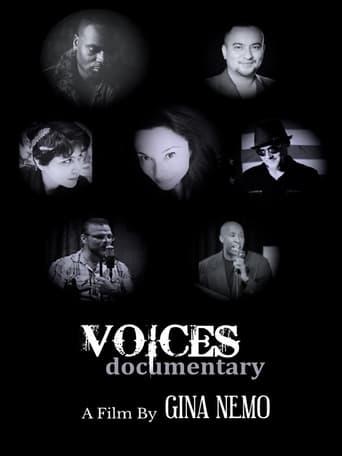
Five gay Black men who are HIV-positive discuss how they are battling the double stigmas surrounding their infection and homosexuality.
It's a sensitive, moving doc chronicling the life of Tétrault's brother Philip , a Montreal poet, musician and diagnosed paranoid schizophrenic. A promising athlete as a child, Philip began experiencing mood swings in his early 20s. His extended family, including his daughter, share their conflicted feelings love, guilt, shame, anger with the camera. They want to make sure he's safe, but how much can they take?
Documentary about Venezuelan writer and intellectual Orlando Araujo.
A poem about mania written by Omar Zefier. His second film.
A biography of the poet W. B. Yeats and his contribution to the Irish independence movement as a Protestant nationalist.
This documentary takes us on a sensorial and atmospheric journey through the experiences, words and thoughts of the Venezuelan essayist and poet Armando Rojas Guardia. His early connection with the divine, the gradual inner maturation of a mystical experience that he manages to glimpse in his early adulthood, the determining and complex influence of his father (also a writer), his first crush on a young high school classmate, the profound experience of homoeroticism, the abysses of the psychotic crisis. All experiences pushed to the limit and which make up some of the singular elements of a unique artistic and intellectual quest with a broad universal scope.
Documentary about Venezuelan poet Juan Sánchez Peláez.
Poetic stroll in the work of Jean Genet.
Eldar Ryazanov reads his poetry. An introspective movie on his multifaceted work.
A short film by Barry Lowe and Dino Mahoney, starring Pauline Burton as Anna. The film is an introduction to the great Soviet era modernist poet, Anna Akhmatova; shot in winter in Saint Petersburg (Leningrad), it contains rare interviews with people who knew her, academics, and dramatized readings of some of her poems.
In this portrait film, we meet Inger Christensen in her apartment in Østerbro, Copenhagen, where she tells of her life and work, and reads excerpts from her major works.
The documentary is titled after Arkadaş Z. Özger’s poem “Hello My Dear” which had caused much controversy in the period it was first published. Considered to be in defiance of heteronormativity, the said poem includes references to the poet’s personality, his family, his relationship to the society, and his “unexpected” death, which came three years after its publication. Today, 50 years after it was written, the documentary follows these same lines in the poem utilising cinematic elements. The documentary also rediscovers the poetics; reaches out to the family, the comrades, the friendships, departing from the official historical accounts, cognizant of his experience of otherness, in pursuit of the “lost” portrait of Arkadaş Z. Özger.
An exploration on Paz's poetry by Paz himself, his childhood, his ideas about love and the nature of art
A short film, based on a series of poems, about childhood, the break with parental, and war.
Cacaso, a Brazilian poet, lived in Rio de Janeiro. Born Antonio Carlos de Brito (1944-1987) he was one of the leaders of the marginal poetry movement. Cacaso filled notebooks not only with poems but reflections, drawings and collages. He also became a lyricist and partner of celebrated songwriters such as Tom Jobim, Edu Lobo, Toninho Horta, João Donato and Sivuca.
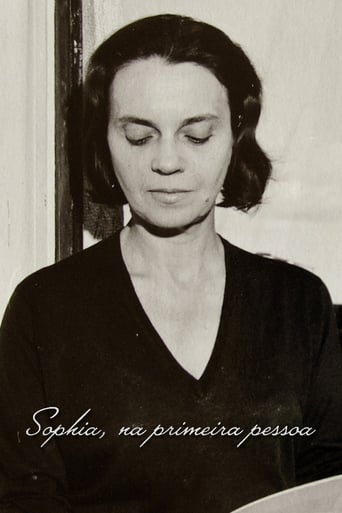
Using the author's personal estate, current images of places where she lived or were dear to her, and archival images of television and film; using parts of her prose and poetry always with first-person testimonies; from Porto to Lisbon, from Granja to Lagos, from the Atlantic Sea to the Mediterranean, from Greece to 25 April: the passions and disappointments of a life and work dedicated to the search for the real, freedom and justice.
This documentary highlights the evolution of Brazil's Circo Voador venue from homespun artists' performance space to national cultural institution.