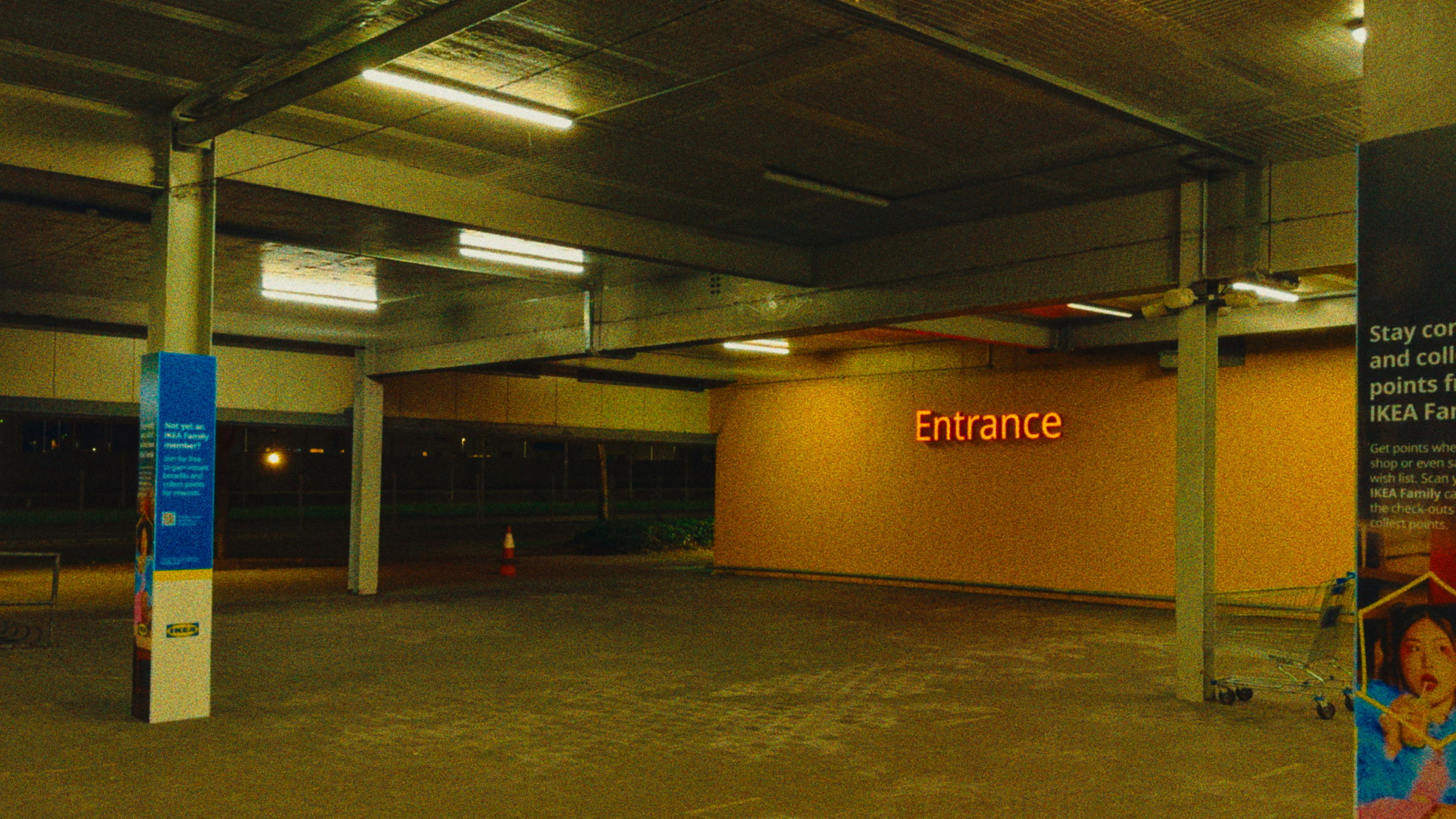
"BEAUTY OF THE MUNDANE."
A very short film on the exploration of textural nuances through the city of Dublin. Shot on iPhone. Accompanied by a score.
Social & External
Unknown Role
Errol Morris examines the incidents of abuse and torture of suspected terrorists at the hands of U.S. forces at the Abu Ghraib prison.
Documentary celebrating the life and career of world-renowned Magnum photographer David Hurn, possibly Wales's most important living photographer.
A documentary about surrealist artist Salvador Dali, narrated by Orson Welles.
An artist had a vision for art and expressed it in his paintings, fashion designs, and photographs. He created a virtual reality exhibition and virtual reality artworks that people could experience and feel.
"This project consists a visual fluidity of construction, harmony and thoughts taking colors and length from this body of autonomy. Different images between figuration and abstraction are created by meaning and phenomenon letting the decoupage revealing a piece of a strange underworld. I built it like a window opened to the fresh air of improvisation by familiar landscapes, those exact moments articulating a connection between light and movement."
Here, where even monsters are political, the topography has its own memory. It has the mythological blues. Meanwhile, old gods are upset with us, and I am upset with my father.
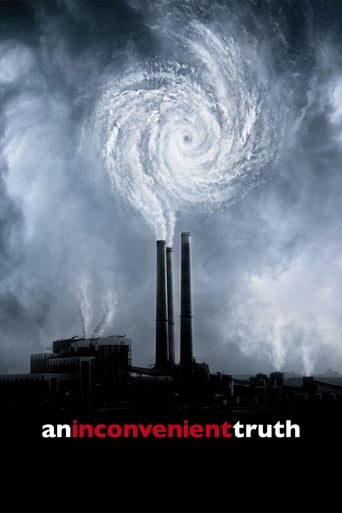
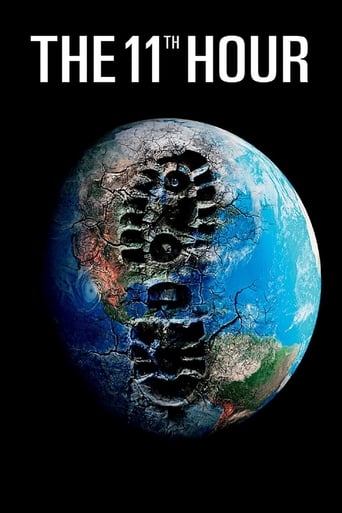
A look at the state of the global environment including visionary and practical solutions for restoring the planet's ecosystems. Featuring ongoing dialogues of experts from all over the world, including former Soviet Prime Minister Mikhail Gorbachev, renowned scientist Stephen Hawking, former head of the CIA R. James Woolse
For six years, Melati, 18, has been fighting the plastic pollution that is ravaging her country, Indonesia. Like her, a generation is rising up to fix the world. Everywhere, teenagers and young adults are fighting for human rights, the climate, freedom of expression, social justice, access to education or food. Dignity. Alone against all odds, sometimes risking their lives and safety, they protect, denounce and care for others. The earth. And they change everything. Melati goes to meet them across the globe. At a time when everything seems to be or has been falling apart, these young people show us how to live. And what it means to be in the world today.
16-year-old Bella and Vipulan are part of a generation convinced its very future is in danger. Between climate change and the 6th mass extinction of wildlife, their world could well be inhabitable 50 years from now. They have sounded the alarm over and over, but nothing has really changed. So they’ve decided to tackle the root of the problem: our relationship with the living world. Over the course of an extraordinary journey, they come to realize just how deeply humans are tied to all other living species. And that by saving them… we’re also saving ourselves. Humans thought they could distance themselves from nature, but humans are part and parcel of nature. For man is, after all, an Animal.
a poem. trees. fragments of fritz. love—and nothing besides!
On April 1st, 2022, my grandfather passed away and i felt lost. I think my path changed when, some days after he passed away, i was offered a small VHS camera. "Moving Memories" is a visual journey that makes the viewer reflect on our momentary presence on earth and questions the nature of memory. Throughout this journey, we get to the conclusion that memories are more than just static photographs in our minds, they're alive and in constant movement, changing while we evolve as individuals. These memories have influence and help us to move on.
In this poetic portrayal of Luigi Ghirri (1943–1992), a master of contemporary photography, the director gives voice and, in particular the image, to the protagonist. The photographer takes the audience on a tour of the outskirts of daily life as seen from the corner of his eye, the area in between what is artificial and authentic or grand and small – the meso-scale.
Marie-Hélène, my mother, is retiring and takes with her her memories, her anxieties and the mental burden of having raised three children while working full time. As she works her last shift as a home nurse, her thoughts jostle and harmonize in a whirlwind similar to a panic attack.
Biologist Scott Gillingwater works to prevent the extinction of the endangered Queensnake.
The action is placed in a cramped flat in Warsaw’s district of Ochota. A father and a son, both bedridden, live in a fascinating symbiosis. The son, a well‑known photographer Bernard ben Dobrowolski, is lying in bed because a chronic condition has deformed his body and immobilized him. The father, Dominik, has recently suffered from a stroke. Now they are taking care of each other and crowds of visitors move through their room.
A children's film about the largest mass suicide of the 20th century reconstructs the 1978 event. The Reverend Jim Jones forced nearly a thousand followers of his People's Temple sect to drink poison in the settlement of Jonestown, Guyana, South America. A third of them were children. Jan Bušta gives sadists, voyeurs, and necrophiliacs one minute to leave the cinema. His self-reflective documentary, which is the result of ten years of time-lapse filming, does not depict dramatic scenes. To the sound of an audio recording from that fateful day, we see a collage of child ghosts preaching about escaping the corruption of the world.
Amie Siegel’s film installations often reveal the hidden narratives behind architecture and design, investigating the mechanisms by which objects, materials, and spaces accrue meaning and value. The Architects examines the processes of architectural creation, using the artist’s signature slow, parallel tracking shots to offer insight into the inner workings of multiple architecture firms, slicing through them laterally like an architect’s section plan... Siegel not only punctures the myth of the singular “master architect” but also poses questions around creative autonomy, the sociopolitics of labor, and the circulation of capital. (Source: MoMA)
"Bagong Buhay" is a short experimental film that dispels the common belief that packing up and moving to a new place will magically improve one's quality of life. The film challenges this presumption by portraying two contrasting ways of life through objects and locations, encouraging viewers to think critically about the complexities of what makes a better life. In the Philippines, it's believed that relocating to a new area will bring about positive changes in one's existence. True satisfaction is a complex and multifaceted notion, and "Bagong Buhay" encourages us to ponder that relocating to a new place is not a surefire way to attain it.