Social & External
O Rizo
In the mountains of Colombia's Coffee Triangle, a family faces the shadow of armed conflict. Years later, a son reconstructs the inherited fear, amidst echoes of the past and invisible scars. A sensory journey into memory, where the unspoken still resonates.
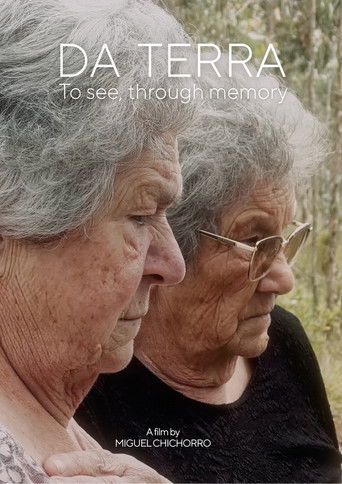
Province of Lugo, Galicia, Spain. A year in the life of A Fonsagrada, a rural region whose inhabitants live both near and far from urban civilization; a praise of the distance that crosses the four seasons of the year, whose inevitable passage transforms both the natural environment and the existence of people, a simple, dignified and peaceful existence.
Through the experiences of two women in Paris and London, Ghost Dance offers an analysis of the complexity of our conceptions of ghosts, memory and the past. The film focuses on the French philosopher Jacques Derrida, who observes, 'I think cinema, when it's not boring, is the art of letting ghosts come back.' He also says that 'memory is the past that has never had the form of the present.'
An unnamed passer-by is forced to trace a circular route inside an abandoned tram station, facing loss and time. The broken walls act as a channel, transmitting fragmentary, blurred and analogical memories.
With great expressive freedom, Diana Toucedo transports us to a seaside village in Galicia. We are invited to observe the work of the women who collect shellfish, and hear from their own voices their relationship with their trade, the heritage of matriarchy and their sense of belonging. Sailors at sea complement this genuine and devoted community of workers.
A voice says, “Start the car, I killed him!”, and a car speeds away. A basketball court, a family table, a school, and a public plaza begin as ordinary, empty spaces, gradually filling with life—though always marked by an absence. This short film retraces the life of Franco Castro López, a 16-year-old who enjoyed everyday life with his family and friends, doing what he loved and moving through the places he called his own. As national news outlets begin reporting on the deaths of several young people whose families are demanding justice, Franco’s case resurfaces. Through news footage, home videos, testimonies, voices, and photographs, a story once silenced becomes visible again. More than ten years after his killing, his face still covers the walls of Mar del Plata—carrying the hope that he was the last.
After threatening his ex-partner for years, Marcos M. murders his 11-year-old son with a shovel. A year later a popular jury condemns him for murder, to kill making full use of his faculties, and determines that the crime against the child did not seek anything other than to punish the mother. In the fact on which we base ourselves, violence, harassment, the murder of a child to harm the mother and the death threat that still hangs over the woman concur.
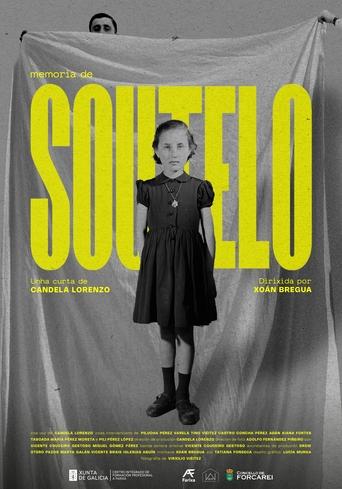
After collecting multiple records related to a painful family tragedy, Victor dives into the archive in search of answers about what really happened on January 26, 1983
Living among the percebeiros of the Coast of Death (Galicia), this documentary shows a unique relationship between man and his surroundings, man and the sea. At the end of Europe, years after the Prestige oil spill disaster, these fishermen face an uncertain future.
During the Second World War, the Allies threaten to attack Spain, an allegedly neutral country, if the Francoist regime keeps allowing Nazi Germany to extract Galician tungsten, a strategic mineral, paramount to the war effort.
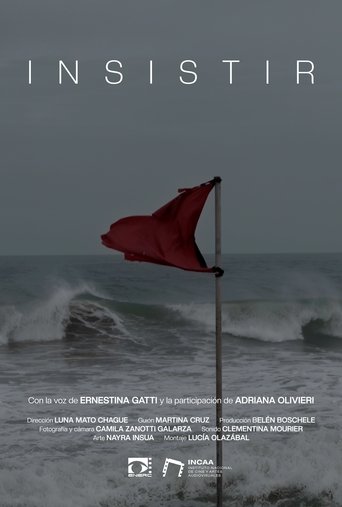
A story that explores the role of women in the Malvinas War. The protagonist, leader of a group of veteran nurses, commits suicide while this documentary is being filmed. Her companions took on her legacy and continue the fight for recognition in the face of the silence of history and the Argentine Navy.