Social & External
Unknown Role
As master of ceremonies, Eric Antoine brought together on stage the most irreverent and unpredictable comedians of the moment: Jarry, Jérémy Ferrari, Bun Hay Mean, Donel Jack'sman, as well as Guillaume Bats, Thomas Wiesel, and Redouanne Harjane.
Jimmy Carr refutes the idea that you can't joke about anything these days with his edgy takes on gun control, religion, cancel culture and consent.
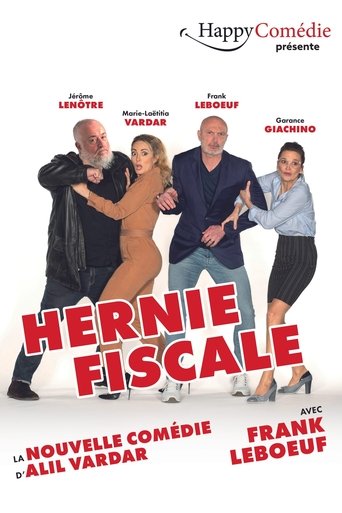
The colorful Maria Bodin and her son Christian are over the moon: they have just been chosen by the Belgian royal family to organize a gala in honor of their 25th wedding anniversary. The gala will be held at the Royal Palace in front of the royal family themselves. Unfamiliar with the workings of the Belgian monarchy, mother and son will have to learn the ropes, get organized, and prepare to join the aristocratic ranks.
Émile and Fredo are two crooks who have just committed an armed robbery in a Paris bank. To escape the police, Émile, accompanied by his friend Lulu, takes refuge in the apartment of Antoine Perrin, a peaceful civil servant at the Ministry of Agriculture and amateur musician with the group Les Joyeux Colibris. Lulu offers to seduce him in order to prevent him from getting hit on the coffee pot.
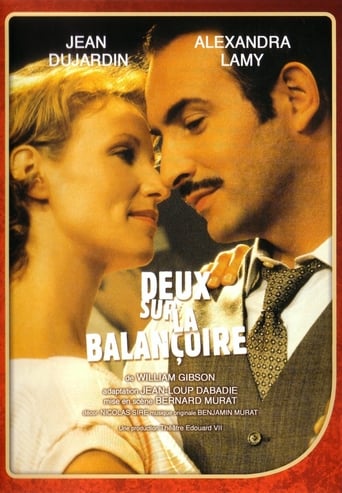
Jerry Ryan, a lawyer, is devastated after his divorce. Desiring to make a change in his life, Jerry moves to New York in the hopes that it will be good for him. Jerry's life takes a different turn when he meets Clara Mosca, a free-spirited woman in New York.
In the final special of her historic career, Ellen gets candid about fame, parallel parking and her life since getting "kicked out of show business".
Sherlock and Doctor Watson are back and investigate the curious disappearance of an exceptional diamond in a hotel room. A theater adaptation of one of the 56 short stories featuring the detective Sherlock Holmes.
Fary is back on stage to probe, uncompromisingly, the torments of couples and love. After two previous shows broadcast in over 190 countries, he returns with a new show: "Love me if you can". With this new performance, Fary demonstrates an extraordinary ability to reinvent himself while continuing to subtly address the themes that are dear to him.
Le Roi Soleil is a French musical about the life of Louis XIV. It premiered on 22 September 2005 at the Palais des Sports in Paris. The musical’s contemporary Rock music and spectacular dances drew 1.7 million audiences in two years.
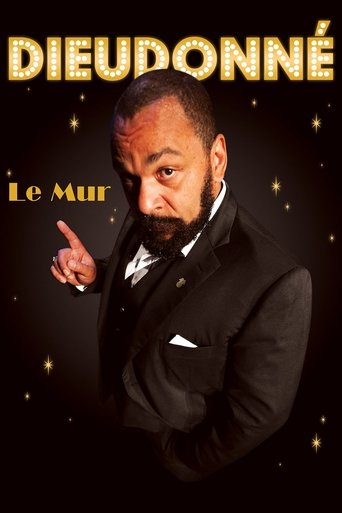
Dieudonné returns with "Mahmoud", in what can be described as "a contemporary artistic testimony with a strong humorous content." He tells us about the incredible events that led him to meet the Iranian president, Mahmoud Ahmadinejad. He takes us back in time and transports us to the 16th century on a plantation in Martinique to discuss the courteous relationships between masters and their slaves. He also talks about the all-powerful and revered field of medicine... only to mock it, of course. And it feels good!
From politics to politicians, from the media to the justice system, from your neighbor to even himself, Dieudonné really targets everyone in an uncompromising portrait of our society, tinted with vitriol.
Dieudonné receives his friend Patrick. The latter is in the midst of a depression following his divorce from his wife Sandrine. Dieudonné then comes to talk about couples' problems, romantic encounters, the effects of several years of married life, the role of a parent, children in the midst of divorce. In the course of his development, he even comes to the subject of war, religions, the attacks of September 11. In short, a whole program!
Dieudonné celebrates the 100th anniversary of the Law on the Separation of Church and State, which was intended to dissolve sectarianism and lead the Republic toward universalism, only to observe its failure... while attempting to analyze the reasons why with humor.
Patrick and Sandrine Boulard have been separated for several years now. Patrick cannot get over the breakup and breaks into his ex-wife's house one night. She files a complaint. The trial begins. After leading the public to believe that the show had been canceled, on the pretext that he had lost his "license to make people laugh," Dieudonné explains his weariness with controversy and his decision to choose a lighter subject. He thus reprises the character of Patrick, drawn from Patrick's divorce, and has the judge, the lawyers, and Patrick himself speak during the trial. This is followed by a series of sketches dealing, as a whole, with the relationship between men and women.